THE Army Equitation School’s centenary interview series by Michael Doherty tells the story of the School through the people who lived it. Rather than presenting a simple chronology of achievements, the series explores a century of Irish equestrian excellence through riders, grooms, instructors and leaders whose experiences span several generations. Among the standout interviews are those featuring Lieutenant Colonel Gerry Mullins, Commandant John Ledingham, Dee and Des O’Sullivan, and the concluding episode with Lieutenant Colonel Tom Freyne and Lieutenant Colonel Sharon Crean. Here, Melanie Young presents a number of curated interview excerpts to demonstrate the tone of the series.
Lieutenant Colonel Gerry Mullins
Lieutenant Colonel Gerry Mullins’ introduction to ponies came in an informal way and was shaped by a family interest. “My father was always interested in horses,” he recalls. “Willie was always interested too, because his family in Co Limerick had horses at one stage.”
That interest led to early riding school experiences, first in Tallaght and later in Leixlip. Looking back now, he sees those years as formative in ways he didn’t fully appreciate at the time, not just in riding, but in learning to manage himself. “I was quite nervous,” he admits. “Not afraid of the horses, but of being in public. I used to feel quite sick before going, not because of riding or jumping, but just the idea of being there.”
It is a reflection that now resonates in his current role as a coach, where he recognises similar anxieties in young riders and understands the importance of helping them through it.
Formal competition played only a small role in the early years. Instead, much of his development came through chance opportunities and informal arrangements, including barter-style lessons.
A pivotal influence came through Pam Stokes in Maynooth, who offered riding instruction in exchange for labour. “I would paint, clean cattle sheds, and then get lessons in return,” he explains. “It was very much a bartering system at the time.”
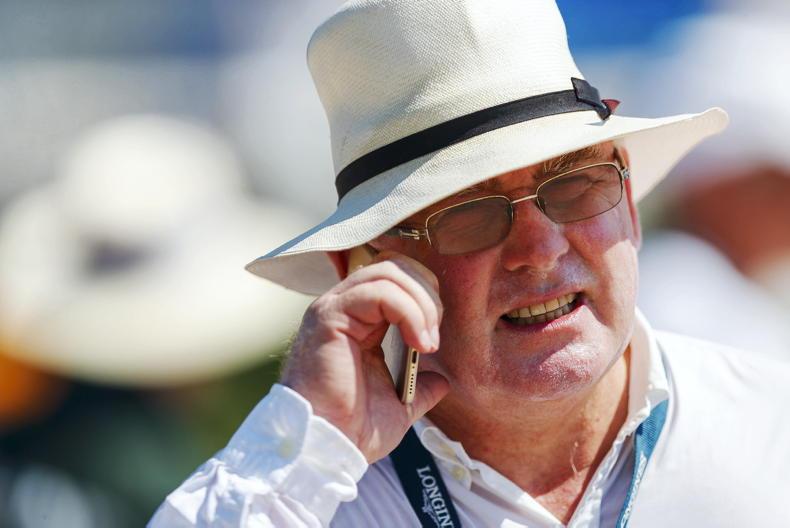
Gerry Mullins at WEG 2018 \ Tomas Holcbecher
Cadet training and life in the Curragh
When speaking about his initial arrival at the Curragh, Mullins describes the time as “a bit of an unknown.” “You’re at home with your mother and father, everything normal, and then one day you get into a car, drive over to the Curragh, and they throw you out. And that’s it, they’re gone.”
The physical and mental discipline of Army training was, Mullins recalls, one of the most formative aspects of his early career, long before he ever considered it as such. “I used to run in from the Curragh into Newbridge every night and back again,” he recalls. “There was pressure every day; to be fit, to be organised, to make sure everything was right.”
Routine and inspection culture created a structure that left little room for complacency. But beyond fitness, it was the wider demands of military training that proved unexpectedly influential. “You had courses on courtesy and etiquette, public speaking, even Irish,” he says. “At the time I was very weak at Irish, and a lot of instruction was through Irish, which added another layer of pressure.”
One exercise, a timed public talk delivered in front of instructors and peers, stands out. “You might have a 10-minute talk on something like population explosion, in Irish. That definitely pushed you.”
Looking back, Mullins can see the value in these uncomfortable moments. “It was always about making you think quicker, organise better, communicate better. Those are skills that stay with you.” He also recognises how unusual it was for riders to be exposed to that kind of development, skills which in current careers carry huge value. “In a way, you were being trained in public speaking and media skills before you ever needed them.”
Commandant John Ledingham
Waterford-born Commandant John Ledingham grew up in a family of 14 children, where horses were simply part of everyday life. “One of our jobs as children on the farm was bringing in the cows, always on a pony. If we used a saddle, we had to clean it afterwards, so we didn’t bother. A headcollar would do. The ponies knew the routine and loved it.”
Long before entering the Army Equitation School himself, Ledingham was already exposed to high-performance riding through his older sister Christine. Her time in McKee Barracks brought back standards and methods that few young riders would have encountered at the time. “She was at the cutting edge of the professionals,” he recalls. “Anytime she was back, we got the benefit of her knowledge and how things should be done correctly.”
That early access to elite thinking provided what he describes as “an excellent start” and laid important foundations for what would follow.
Ledingham also recalls his time in West Waterford Pony Club with great fondness. “It was a very good, very healthy pony club. The standards were high, tack had to be immaculate. The horsemanship was serious, but the reward at the end of a pony camp was swimming the ponies. You’d ride down to the beach bareback in a headcollar, it was just pure joy.”
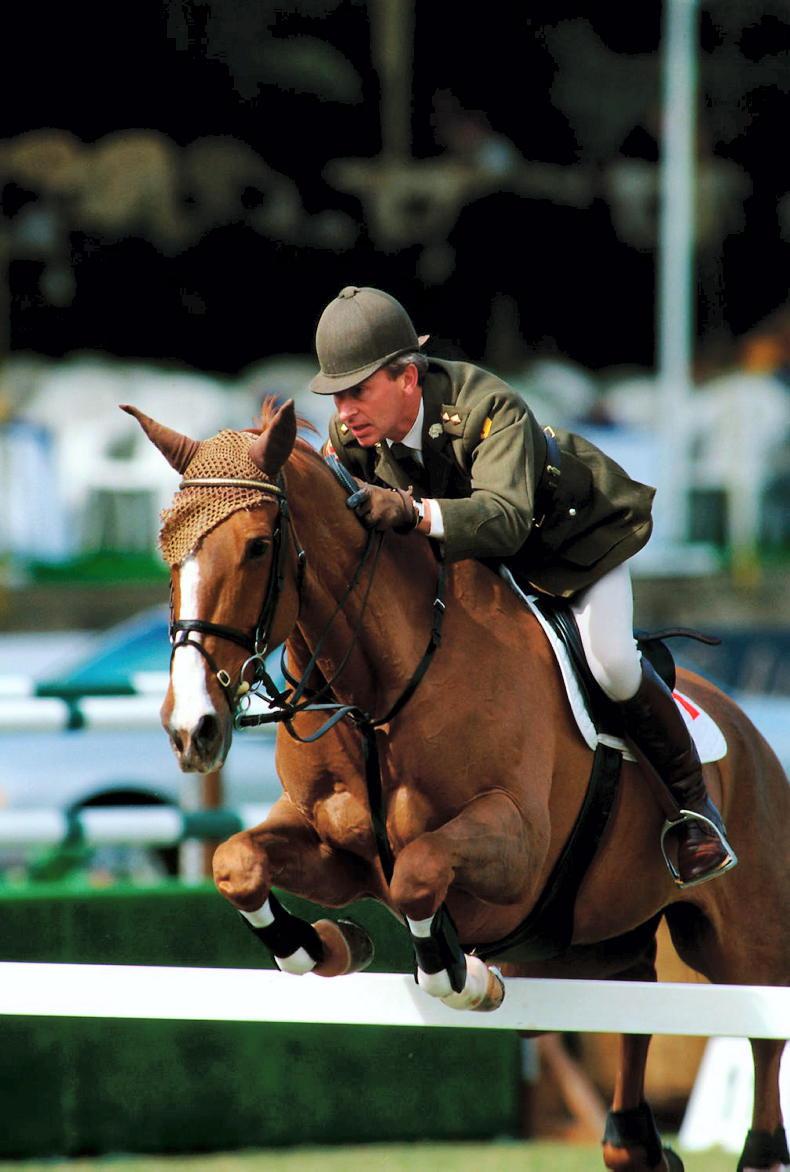
Capt. John Ledingham riding Millstreet Ruby to victory in the 1997 Monterrey Derby in Mexico
Mentorship and role models are a recurring thread in his recollection of those years. “My real spark was Colonel Ned Campion,” he says. “I spoke to him at a show and he couldn’t have been more generous, not just explaining the Army, but taking time with a young rider. Seeing those figures in your own local show ring made all the difference.”
At the other end of his career, Ledingham gave that time and respect to a young Johnny Murtagh who would go on to huge success in the racing industry. Ledingham recalls a meeting with multiple Group 1-winning flat jockey at Royal Ascot, where a remark brought the connection into focus.
“He said to me I was the only one who stopped to sign his autograph at the Dublin Horse Show. You don’t realise at the time who you’re talking to, there are so many people at shows, but I’ve always believed you should stop and spend time with people.”
Under Ned Campion’s foresight, Ledingham was part of the group that helped establish Ireland’s formal coaching framework, working with Gerry Mullins, Liam Moggan and others through the Sports Council and University of Limerick. The aim was to build a structured system of certified coaching levels to raise standards across the sport.
“The first person you meet on a horse is a very important person,” he reflects. “If they’re educated and qualified, it really helps and ups the standard.” That idea of structure and influence has continued to shape his approach to coaching and rider development.
Dee and Des O’Sullivan
Dee and Des O’Sullivan were part of the Irish Army Equitation School during an important period in its history, working behind the scenes with some of Ireland’s leading international riders.
Dee grew up around ponies and horses, spending time on the hunting field and in teaching roles, but by her teenage years it was clear where her real interest lay. “I remember being at the Dublin Horse Show years ago, standing up in the stand in the old Simmonscourt, looking down into the pocket. I said to the lads beside me, I’d love to be down there grooming. I always preferred looking after the ponies and horses rather than riding them.”
Though women had begun to enter the Army in the 1980s, it was a call for grooms to the Equitation School in 1990 that provided her opportunity. “I couldn’t believe it when I actually got accepted and I joined. There were 10 girls specifically chosen in that group but there were 30 of us all together that went into the Equitation School to train.”
After initial training, Dee explains: “Inside the Equitation School, everybody does the groom’s course. It sets the tone from the start. The standard of care was exceptional, I had never seen horses so well looked after.”
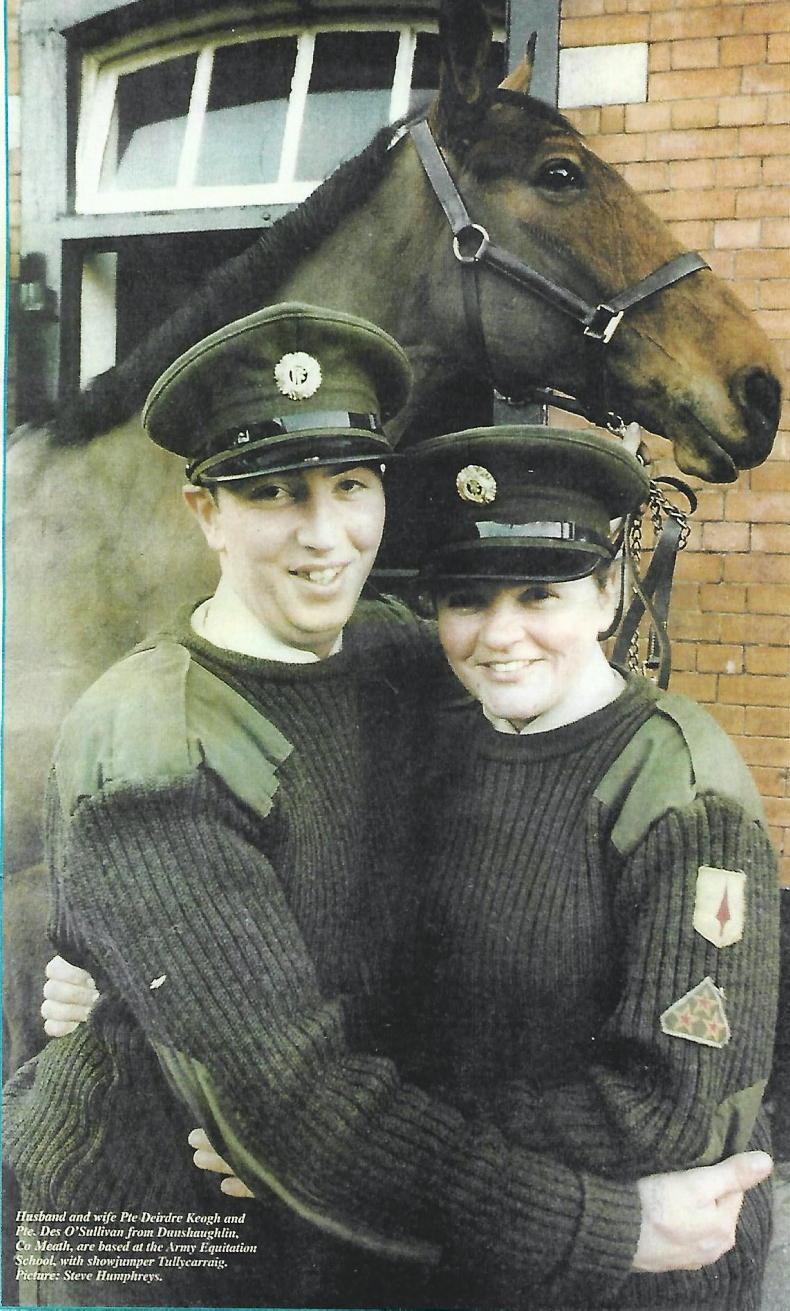
Dee and Des O’Sullivan were part of the Irish Army Equitation School
For Des, the pathway into the system came through a mixture of family influence and military tradition, with his first taste of international travel arriving early in his career. “My first overseas trip was with Commandant Mullins,” he says. “We were looking after Glendalough, Mosstrim and Lismore. We did Hickstead, Aachen and Wiesbaden, before coming back. After that I returned to Capt Hayes, and it was the following year that I started working with Capt Ledingham.”
A defining feature of life in the Army Equitation School, that both recall, was the relationship between riders and grooms, built on close knowledge of a small, carefully managed string of horses. “We knew the horses inside out because we didn’t have an awful lot of horses to look after, but we knew the horses that we had,” Dee explains. That familiarity gave grooms a genuine voice in decision-making.
“Even if there was the tiniest little bit of filling in their legs, you weren’t afraid to say it to your rider.” Rather than hierarchy getting in the way, decisions were shared in the interest of the horse. “He’d always say, whatever you think… we’ll save the horse today and there’s always another day.” Dee reflects that there was “a great understanding between the groom, the horse, the rider, everything,” built on trust and a shared belief that listening, to the horse and to each other, made the whole system stronger.
Celebrating 100 years
Throughout the series, the Army Equitation School emerges as far more than a riding academy. It is a place of transformation on multiple levels. It is clear from the conversations that every member, regardless of rank or role, undergoes a shared military training experience that builds resilience, leadership and professionalism.
As Lieutenant Colonel Sharon Crean explains: “Military training is a transformational experience. It’s designed to take you from civilian to professional soldier.” She adds: “Military training requires resilience, but it also builds it. Every course is designed to equip you for the job ahead, and by the end of it you have the confidence to take on responsibility and know you’re capable of doing it.”
In this sense, while the horses represent the outward image of the School, it is personal development that forms its enduring legacy.
Building on the relationships explored throughout the series, the role of the groom is also brought into sharp focus. Often working behind the scenes, it is a position of fundamental importance within the organisation. Lt Col Crean describes it as a promoted career path within the structure of the School, underlining its significance at the highest level of the sport.
“It doesn’t happen unless the groom has done their job. At the highest level of the sport, the margins for error are so small. Attention to every detail matters.”
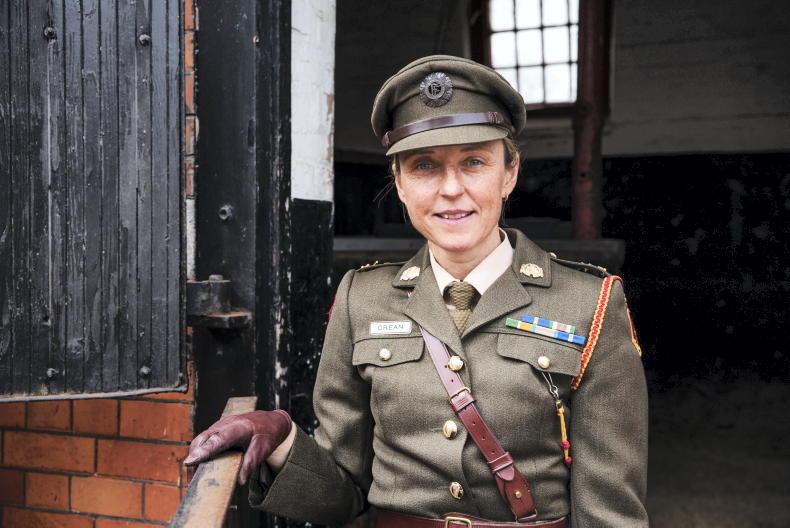
Lt Col Sharon Crean, Commanding Officer of the Army Equitation School \ Claire Nash
The wider purpose
While the series looks back over the past 100 years, there is an equally strong emphasis on what comes next. The Army Equitation School is presented not as a historical institution resting on past success, but as a modern organisation with a clear contemporary role; supporting Irish breeders, promoting Irish horses internationally, and creating meaningful career pathways for young people.
As Lt Col Crean notes: “The big piece is our relevance going forward. We are still carrying out the mission that was given to us in 1926, and it remains just as relevant today. We demonstrate that through our actions in the ring, but also through everything we do to support the industry, Irish breeders, the Defence Forces, and the promotion of Ireland and equestrianism by competing Irish horses at the highest international level. Promoting Ireland and equestrianism by competing Irish horses at the highest international level, that’s the big picture.”
The series can be viewed free of charge on YouTube by searching ‘Irish Army Equitation School’
This article is taken from The Irish Field’s Dublin Horse Show Magazine 2026. Order your copy HERE