“
IT’S a noose around our neck” was one of the chilling comments made during The Irish Field’s annual Business Breakfast on day one of the Dublin Horse Show where attendees were invited to discuss the state of grassroots equestrianism. The crippling costs of being charged commercial council rates as well as towering insurance premiums were the top two culprits attributed to the loss of 50 centres in the last decade.
Introducing the topic was Sue Foley, Vice Chair of the Association of Irish Riding Establishments (AIRE). “We’re the port of call for somebody who wants to learn to ride, and from there the sky’s the limit,” she said. “You can go horse racing like Rachael Blackmore, or you could go to the Olympics like Cian O’Connor, and we’re very glad that we’re a part of that journey for everybody. But it’s a difficult business. The same issues affect us as every small business in the country – rates, insurance, staffing. We’re rated as commercial businesses, but really, we’re agricultural – we care for animals. That re-classification alone would help so much. We’ve lobbied and lobbied, and we’re just not getting anywhere with the rates or with the insurance.
“In other countries, the government supports horse riding centres and that helps to keep up the numbers. Also, there’s a lot of family businesses, so there’s succession issues, the same as with farming. The second generation don’t want to run the business, it’s too hard.
“Parents make huge sacrifices to get their children riding. It isn’t a cheap sport, but still our fees are not really reflective of the cost of doing business. Our margins are really, really tight. What we have noticed though is that even when the economy is taking a dive, people still come riding because it’s good for the brain and that is now being recognised. Therapeutic riding and assisted equine services is a really beautiful space to be in. It doesn’t make us fortunes, but it’s really important.
“We do bring our issues and difficulties to some very good people at Horse Sport Ireland and they help us get grants through the Department of Agriculture. The thing that would help us more is some more supports around the training of the people coming into the sport. The girls and guys that start in the yard, they have to have progression so we need to upskill them, keep them in education, give them good jobs to come into and maintain that.”
Survey results

A survey conducted by The Irish Field on the matter was then presented prior to a lively discussion which identified both the problems and a number of paths out of this downward spiral.
The survey, attracted over 500 respondents, 51% of whom came from an equestrian background and 49% who did not. 87% started their journey in a riding centre and 97% rode in a riding centre at some point in their riding journey. An overwhelming 96% said this had a positive impact on their life.
Some 52% of respondents said the riding centre they attended was still in operation while 48% said it was not. Of the 65% of respondents who said they own or run a riding centre, only 63% said it was a viable business. Asked if they felt grassroots equestrianism has a solid foundation for the future, only 32% said yes.
Colin Hannan, Chair of AIRE and owner of Glen Aire Stables, Co Cork, said the results were not a huge surprise to him. “We have 150 centres, all roughly servicing about 100 or 150 students a week,” he said. “You’re talking nearly 200,000 children a week, so it really is the first taste of equestrian for most. Without riding centres, without AIRE regulating it, there won’t be a future for horse riding.
“We all talk about social license, but I feel the population of Ireland is getting farther and farther away from the horse and the pony and it will continue to go that way if they don’t have access, at a very local level, to engaging with ponies and horses through riding centres. So to me, it is crunch time. We’re very thankful to HSI for the support they give us but more is needed, especially in terms of lobbying for the rates to be changed to agricultural. A lot of centres have got letters in the last couple of weeks about re-evaluating properties again and they are very worried.”
Denis Duggan, CEO of Horse Sport Ireland, was asked about the governing body’s work on the topic. He said they recently published ‘The business of Horsepower’ report which produced a startling figure that 65% of equestrian businesses have no identified successor. “A similar survey showed 48% of dairy farmers had no successor, so Sue is very correct in what she said earlier - the equine industry has a significantly challenging problem there.
“Rates is a complex one,” Duggan added. “I know there was some work done on it a number of years ago, but there hasn’t been any movement at all within government or any kind of flexibility so unfortunately the chances are the re-evaluation Colin mentioned will be upwards rather than downwards.”
Asked if a campaign to lobby for a change on the rates classification could work, Duggan said: “Absolutely, and now is the time to be doing it. If you’re lobbying at Kildare St in October it’s far too late. The politicians are on break at the moment in their home constituencies, so it’s a great time to be contacting a local TD and making representations for it.”
Rita Dunne of Kells Equestrian Centre and former chair of AIRE said she felt major barriers for riding centres were litigation, unregulated operations engaging in unsafe practises and, of course, rates. “Why should you have commercial rates on what is an educational facility done in agricultural buildings?” she asked.
“When there are big farm buildings now that would swallow up our indoors, and they’re paying no rates? There’s also a social value add whereby the travelling community are really getting a lot out of attending riding schools as well as people on the autistic spectrum.
"It is educational and it is therapeutic; it should not be rated commercial.”
Tim Feeney of Feeney’s Riding Centre in Galway also spoke about rates. “If you have an indoor arena, the rates are really expensive but if you don’t, you don’t have a viable business either. I’m trying to build an indoor - that’s costing about €300,000, it’s a lot of money and we charge €30 per lesson, which is on par with the area so we can’t charge more. We are looking at rates of around €10,000 which is huge but without it, we are cancelling lessons for weeks at a time due to weather.”
Legislative change
Former Minister of State Lucinda Creighton, CEO of Vulcan Consulting, argued that the rates issue could be solved ‘with the stroke of a pen’ if we had the listening ear of a Minister. “The problem is that it’s in the hands of local authorities, and there’s upward pressure. And you can’t blame local authorities because they’re completely, grossly underfunded to provide all of the services they’re supposed to provide. We did actually previously have a Minister who was open to amending the legislation but he was moved on. I don’t think there’d be a huge amount of opposition from the mainstream parties.
“I myself learned to ride in Hanley’s at Claremorris, a genuine family business, and I just think that if we neglect the grassroots of the industry, we will not have the people to support our industry in the future.
So, it really becomes a self-fulfilling prophecy in a very negative downward spiral fashion. This needs to be a priority for all stakeholders.”
Linda Young of AIRE drove home the point of decline. “In 2012, we had 220 approved riding centres around Ireland. Today, we have 150 - so that’s how serious it is. We’re losing 10 to 12 centres every year. This year alone, in January, two centres had calls that the rate man was going to come and visit them and evaluate them. They closed their doors the following week. I know of another centre in Cork that’s probably going to close because of rates.
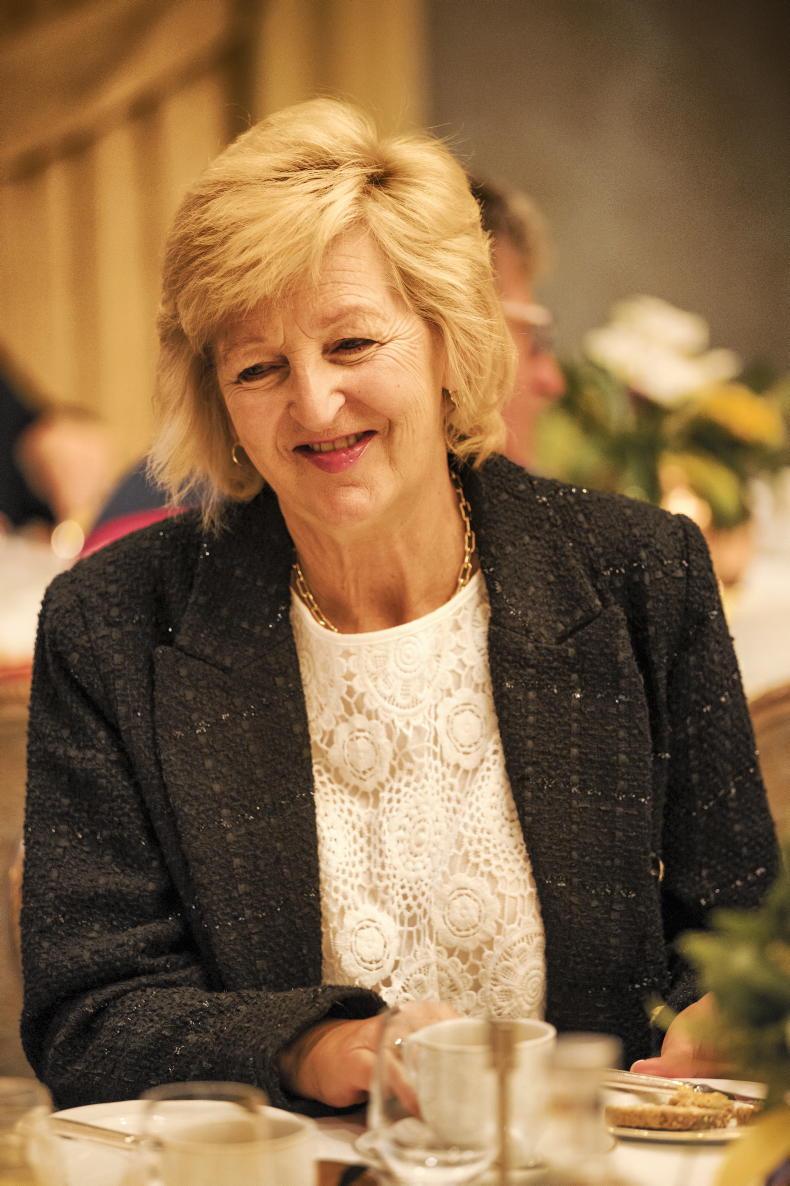
“We have to get riding centres aligned with the agricultural sector. It’s so important for all of the affiliates, because the children start with us, we ignite the passion, we teach them how to love ponies and horses, we teach them about animal care and welfare, we teach them to ride. They then go out into the world and they might work in show jumping, in riding centres, they might go to the Army, they may go into the bloodstock industry. They’re the grooms, they’re the horse box people. The Thoroughbred industry is facing the same issues with rates, so we should be getting together and working this out or we will lose more and more centres.”
In conclusion, MC Brendan McArdle asked Denis Duggan to make a commitment to go back to his team with the issues that had been discussed and to report back in two months’ time with an update of what Horse Sport Ireland can do to help as well as what is needed from the stakeholders present to make positive change. “Absolutely, we can do that,” Duggan replied.
“Horses taught me responsibility and empathy. They remain a key part of maintaining my mental health through college and my working life.”
“I’m autistic and always struggled with that but being in the riding school, it didn’t matter. I always felt like I belonged there. It gave me purpose and a really strong work ethic and helped my confidence enormously.”
“I have invested hundreds of thousands into my 40-acre property, on facilities, horses, machinery needed, etc. It is non-stop work, all for less than minimum wage.”
“I survive... just about. I work very long hours. I’m 55 years old, I didn’t start a pension until recent years. I can’t see how I can ever retire.”
“Insurance costs are increasingly prohibitive and rates on indoor buildings are absolutely ridiculous.”
“Riding schools give people the chance to experience and be involved in a sport that is not widely available to all. Closures of centres would result in a massive decline in equestrian sport.”