THE 2018 SALE-TOPPERS
OVERALL
Jason Higgins’ Unnamed three-year-old gelding by OBOS Quality (dam by Ghareeb) €59,000.
TOP-PRICED OLDER HORSE
Felicity Cousins’ Boleybawn Freedom, five-year-old gelding by Dignified Van’t Zorgvliet (dam by Courage) €40,000
TOP-PRICED FOUR-YEAR-OLD
Jason Higgins’ Master Class Ramiro, four-year-old gelding by Ramiro B (dam by Fiery Master) €49,000.
TOP-PRICED THREE-YEAR-OLD
Jason Higgins’ Unnamed three-year-old gelding by OBOS Quality (dam by Ghareeb) €59,000.
TOP-PRICED TRADITIONALLY BRED
Brandon View Stud’s FMSH Highway, three-year-old gelding by Pointilliste (dam by Carrick Diamond Lad) €46,000.
TOP-PRICED FOAL
Luke Cafolla’s filly foal by Cornet Obolensky (dam by Cassini 1) €18,000.
TOP-PRICED MARE/FILLY
Marian Tighe’s Kiltubrid Candy, four-year-old filly by Sligo Candy Boy (dam by Lombardo) €40,000
HEALTHY top-end prices, improved clearance rates and bumper attendances were among the positives to emerge from the sport horse sales in 2018. Amid the uncertainty over Brexit, and the resulting devaluation of sterling against the euro, overseas buyers remained loyal to the Irish horse, strongly influencing the returns throughout the year.
The past 12 months was crowned by the successful specialist renewals, which will be remembered both for the levelling of the foal market and for a ground-breaking three-year-old trade. Closing the year in a spectacular fashion, there were a cluster of significant returns, and just as importantly, a consistently strong trade for the best of the remainder.
While this is obviously all good news for the industry, it is tempered by the fact that the market in the country is notably polarised, and secondly, that the sales’ entries are decreasing year by year. Applications for sales (specialist sales excluded) are significantly lower than they were five years ago, while the returns from the country illustrate a big divide in the quality on offer.
Addressing the former, there are obviously fewer horses being bred, while social media generated private sales now account for much of the day-to-day trade.
The resulting deficit has affected all the auction houses, with Cavan running predominantly one-day fixtures in 2018, and the Goresbridge September renewal, which was staged over 10 days five years ago, was, this year, reduced to six days.
Clearance rates, however, rose throughout the year, illustrating that vendors had the appetite to sell and there were buyers to accommodate them. In contrast and on closer inspection, the average prices from the general sales were generally disappointing, largely mirroring those of five years ago.
The contentious issue of radiographs may also be a contributory factor to the average returns, as without them, many buyers prefer to limit their outlay. This however is subjective, and while the sales companies encourage vendors to have a veterinary report and to make the X-rays available for inspection, there were plenty of good returns for those without them.
The polarised trade is nothing new, but its continuance has to be frustrating. Despite notably improved turnout and production, indiscriminate breeding has led to a worrying shortage of athletic, commercial horses that the better market requires. This is a concern for all in the industry, and according to the pundits at the varying foal sales, signs of improvement are still some way ahead.
THE TABLES
Analysing the end of year tables, which are strongly influenced by the specialist sales, it appears that the returns from the three sectors (thoroughbred sires, continental sires and Irish sport horses) broadly illustrate an improved price range to those of 12 months ago. Although the year did not deliver any six-figure returns, there was a welcome levelling and consistency to the market.
The figures from the Monart Event Horse sale in November are not included in the tables. Monart were requested to submit their ratified returns, complete with breeding but did not respond by time of going to press.
The most obvious disparity stemmed from the foal divisions, both from the continentally-bred foals and those by Irish Sport Horses. Twelve months ago, an unparalleled trade for show jumping foals saw three foals make in excess of €20,000, while this year, it steadied to illustrate a top return of €18,000.
Overall, the statistics illustrate that 77 (72 in 2018) stallions sired the 123 horses listed in the tables. In monetary terms, the combined totals of the popular young sire Sligo Candy Boy topped the list to realise a total of €143,400, while four entries by the Kennedy Brothers’ consistent OBOS Quality changed hands for €108,500.
Represented by an unprecedented 12 progeny, Padraig Howley’s ISH sire Sligo Candy Boy has had, by any standards, a phenomenal year. Featuring in three of the four tables for the second year in succession, the Balou de Rouet-sired stallion was responsible for the top-priced four-year-old at €40,000 and notably headed both the three-year-old and the foal tables in the same category.
The prolific OBOS Quality meanwhile, has dominated the numerical stallion lists this year, and his season was crowned when at €59,000, Jason Higgins’ unnamed three-year-old, was the country’s top-priced horse of 2018.
Only two stallions appeared in every age table, namely the thoroughbred sires Pointilliste (9) and his stablemate Golden Master (7). The Slyguff Stud-based duo made a big impact, especially Pointilliste, who sired the top three-year-old in his sector at €46,000. This is quite a feat for the Co Carlow-based pair, who only cover naturally.
OLDER HORSES
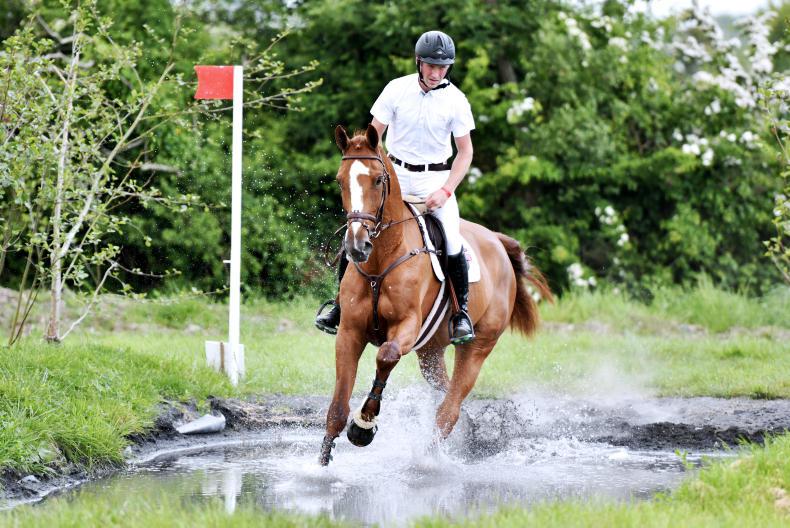
Co Wexford’s Sophie Richards may not have matched her €130,000 return of 12 months ago, but her familiar polished production once again produced the country’s top older horse at €40,000. Sold at the Goresbridge Go For Gold sale in November, the Felicity Cousins-owned Boleybawn Freedom is a five-year-old by Dignified Van’t Zorgvliet out of Boleybawn Corbell by Courage. Bred by Ronan Rothwell, the lightly campaigned gelding had won on his only event outing at Grove, and gaining more admirers, progressed to head the event horse Master Class at the Kilguilkey international in July. From the family of the show jumper Ardenteggle Flight, he was in high demand, and eventually secured by Irish silver medal-winning event rider Cathal Daniels.
The tables for those sired by Irish Sport horses showed a significant price increase, assisted by some notable returns from the TIHA sale in September. Staged for the first time at the growing venue of Mullingar, this new venture was well attended, and creditably featured four lots in the sector.
The year’s top sale meanwhile, at €24,000, emerged from the Goresbridge Go For Gold sale and went to the Elizabeth Ahern-owned winning event horse EPA Murray (by Luke Skywalker), bred by Alan Duggan out of Dohenny Lass (Big Sink Hope).
Although the thoroughbred sires have made up good ground this year, they were let down in older ranks. None realised five figures, and the best return at a disappointing €5,300 was for a gelding by Market Square at Goresbridge in July.
In the country there was a solid, if largely unremarkable trade, for the older horses. The market for warranted, up-to-weight hunters remained steady throughout the year, while genuine school-masters and competition horses from any discipline sold well. Several realised five-figures, the best of which, at €14,500, went to a show jumping mare by Lancelot who sold at Goresbridge in July.
FOUR-YEAR-OLDS
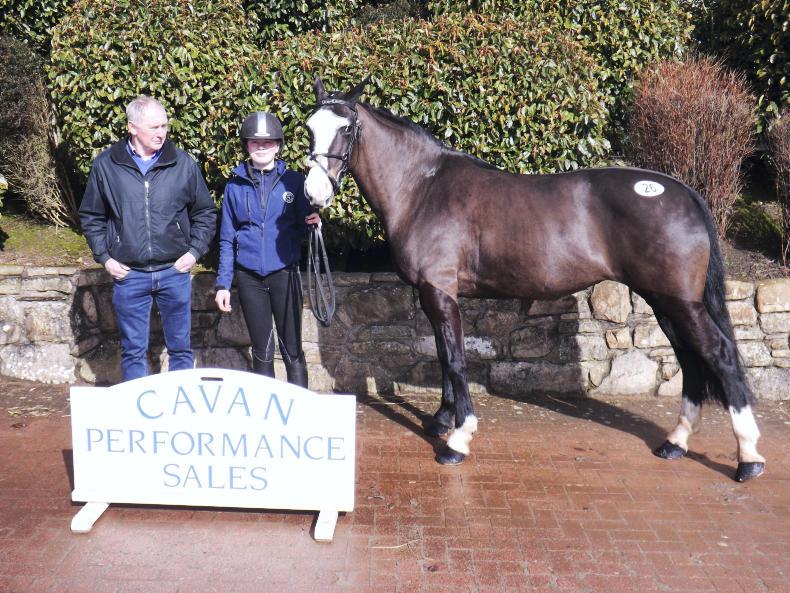
Although the quality was extremely mixed, there were some absolutely top-drawer four-year-olds on offer throughout the year, and encouragingly plenty of buyers for them. The highest return emerged early in the season, when at €49,000, Jason Higgins’ gelding by Ramiro B went under the hammer at the Goresbridge/Tattersalls sale of event horses in May. Bred by Maria Kavanagh in Co Wicklow out of Fiery Master (Dow Jones Courcel), the gelding was one of just 15 pre-selected horses which lined up at this inaugural joint venture. A successful initiative by the two auction houses and staged for the first time during the international horse trials, 10 lots changed hands, with eight notably featuring in the rankings.
Heading the ISH tables, Sligo Candy Boy received his biggest progeny return to date when the filly Kiltubrid Candy realised €40,000 at the Goresbridge Go For Gold. Home-bred by her vendor Marian Tighe and professionally produced by Henry Foley, the well-related filly is a half-sister to the Mark Todd-ridden Kiltubrid Rhapsody (CCI4*) who placed sixth at Badminton this spring.
The thoroughbred Emperor Augustus needs no introduction as a show horse sire, but he is also proving popular in eventing circles. As a result, his stock made an impact on the figures, and none more so than the gelding MBF All In Time, who at the Go For Gold sale topped the thoroughbred-sired tables at €30,000. Consigned jointly by Meabh Bolger and Jason Higgins, and produced by the former, the Alan Farrar-bred gelding is out of Cunniamstown Wilma Jean by Ballinatogher Leo.
In comparison, and with only a few exceptions, the four-year-old trade in the country and throughout the year was modest. Just a handful realised a five-figure return, the best of which at €16,500 emerged from Goresbridge in October, and went to Henry Bellinger’s gelding by Russel out of an unnamed mare by Cruising.
THREE-YEAR-OLDS
Strengthening as the year progressed, the three-year-old trade opened steadily, and closed on a high. Both the specialist sales and those around the country delivered much improved clearances, and while buyers were selective, there was a great market for the well-produced, athletic individual, and many breeders/producers were well rewarded.
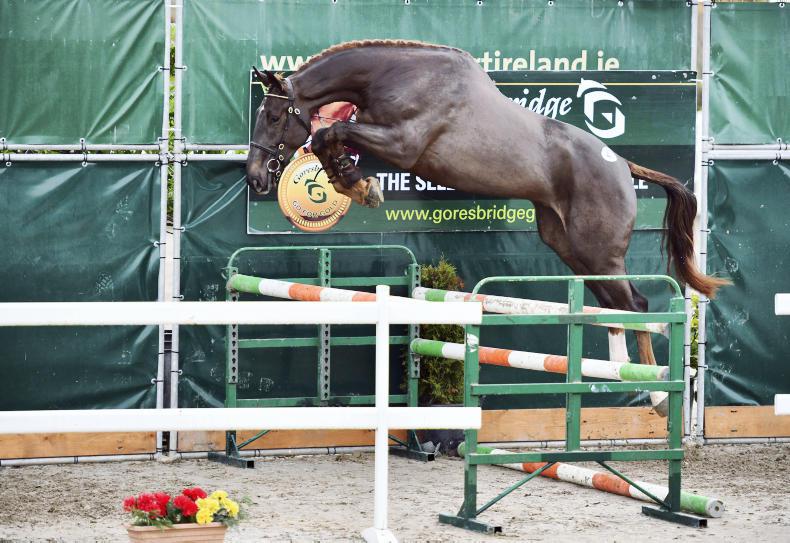
By any standards, Co Wexford producer Jason Higgins had an outstanding year. His stock dominated the sales’ results throughout, so it was almost fitting that his three-year-old by OBOS Quality, should not only head the Goresbridge Go For Gold sale in November but also the overall rankings for the year. Realising €59,000, this eye-catching bay was bred by bred locally by Michael Hutchinson, out of the Ghareeb-sired dam God Mother. A pre-sales catalogue pick, and living up to his hype in the flesh, he was knocked down to owners of British international event rider Sam Ecroyd.
It was a busy night for Ecroyd, who also accounted for Brandon View Stud’s home-bred gelding by Pointilliste. Topping the thoroughbred sire lists at €49,000, the traditionally bred gelding is out of the similarly home-bred Sally’s Pearl by Carrick Diamond Lad.
As he had done for much of the year, Sligo Candy Boy proved to be a major influence in the ISH-sired tables. Picking up five placings, his top lot, at €21,000, was at Cavan in August when Noel Ruane’s well-related Castle Candy Jaco out of Castle Jacomar by Jacomar headed the Elite age group sale. One of the few of the top returns to go down the show jumping route, this smart sort was secured by home buyer Gabriel Tunney.
It was also pleasing to see the regular sport horse sales featuring in the tables. A glut of three-year-olds made in excess of €10,000, including Fiona Sheridan’s colt by Chill Out out of Lion Coco (VDL Douglas), who at €20,000, headed the Cavan sales in November.
There is no doubt that the demand remains at its strongest for the Irish-bred event horse, and there is also quite a divide between horses deemed suitable for competition up to two-star and those aimed for the championship ranks.
As a result, and following the rigours of Badminton, Burghley, and the world championships, many top riders are seeking a good quota of thoroughbred blood. The importance of this, and its decline in the pedigrees, was highlighted at the recent HSI Breeding conference, where both Padraig McCarthy and Chris Bartle voiced their concerns in the in the strongest terms.
It was significant therefore to note the emergence of sires such as Pointilliste and Golden Master at the top end of the tables. Largely due to the efforts of the Traditional Irish Horse Association, thoroughbred coverings have increased, but it is a tough call for breeders when there is only a modest demand for these animals (especially fillies) as foals. In contrast, the three-year-old prices are attractive, and if breeders are selective with their stock – and if it were logistically possible for them, this could be an alternative.
FOALS
While the event horse buyers dominate the older horse returns, so it is that the best foal trade largely belongs to the show jumpers. Entering into an entirely different climate, the autumn foal sales once again delivered some outstanding prices. This year however, the divide was less and while the bubble hasn’t quite burst, trade has levelled massively since the returns of 12 months ago. The well-bred show jumping foals still garnered the best returns, but the year’s top price of €18,000 was nearly half of that of 2017.
By pre-selecting, the Cavan Elite sale and the Goresbridge Select sale at Barnadown probably had the first pick of the foals, and certainly delivered the best returns. The year’s top price emerged from the latter when Luke Cafolla’s well-related filly by Cornet Obolensky realised €18,000. Bred entirely on continental lines, out of the imported mare Tosca by Cassina 1, the filly is a sibling to Aivazovsky (1.40m) and Undercover (1.35m) and is one of six 2018 foals (by embryo transfer) out of the dam. Signing the docket at €18,000, the successful buyer was Anthony Ryan from Ballina, Tipperary, who is building up a high-class herd of foundation broodmares at his Ballycorrigan Stud.
A new foal sale on the calendar was organised by the Mayo Roscommon Breeders group, and was held at Mullingar in October. A good initiative, and well run, the sale produced a number of notable returns and was the recipient of many plaudits.
Foals by Irish sport horses and thoroughbred sires met with mixed fortunes. The ascent of Sligo Candy Boy (6) and Pointilliste (6) made a significant difference to their respective tables, but disappointingly, the thoroughbred-sired prices have made virtually no advancement, largely mirroring those from five years ago.
Nevertheless, the returns in these sectors may not be as gloomy as they appear on paper. Modest stud fees taken into account, the percentage of profit probably stands up reasonably well in comparison. On the other side of the coin, many breeders who travelled down the more expensive imported semen route with moderately bred mares struggled to find either the buyers or the returns to cover their costs.
While the clearance rates for the general foal sales remain low, too many buyers are failing to fill their order books. Poor breeding choices have led to lack of correctness and blood, and in defence of the sale companies, they cannot create a market where one doesn’t exist.
Presentation is another tricky area. There were some lovely foals on offer, but equally there were also far too many that were very poorly presented and accompanied by similarly produced mares. In the absence of a pedigree, the individual itself has to shine and to be exhibited and promoted in the best possible way.
PONIES
Not for the first time, the best of the pony trade took place at Cavan, where Noel Cosgrave’s jumping pony Mohill Magic headed the year’s trade at €10,000. Although not quite emulating the good figures of 2016, ponies with form sold consistently throughout the year, notably to buyers from home turf and from Sweden.