LAST year Horse Sport Ireland, Teagasc and the Royal Dublin Society authored a report titled Reaching New Heights (RNH). The report focused collectively on the future of the sport horse industry and how it needs to evolve. Among the aims is for the industry to utilise the most sophisticated science and skills to breed and produce horses of the highest international standards by 2025.
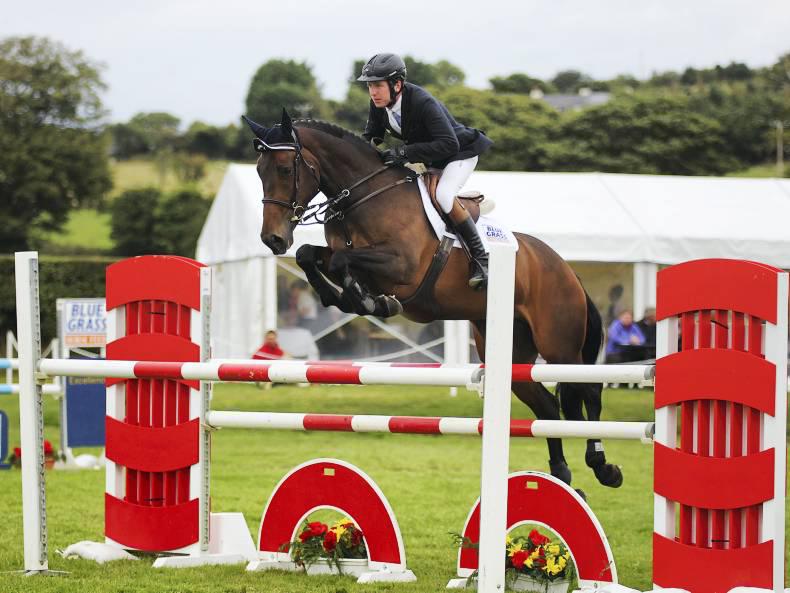
Ballypatrick Stables, the home of international showjumper Greg Broderick and his sister, sport horse breeder Cheryl Broderick, is way ahead of the programme and here is why:
Few would dispute that the Brodericks are qualified to advise fellow horse owners on how they can maximise the success of their operation, on whatever scale that may be. I took a trip to Ballypatrick earlier this week and it gave me an invaluable insight into how a successful equine business is run, acquiring tips and advice that could not only be applied by breeders but by the sport horse industry as a whole.
MAXIMISING POTENTIAL
What is evident from the results outlined above is that the Ballypatrick business is operating successfully across the board. Five aspects of Ballypatrick’s operation stood out as key to their success. They were as follows:
Work ethic

Ballypatrick is responsible for the care of almost 200 horses, from foals right up to elite show jumpers. The business encompasses breeding, producing, competing, selling and coaching. When I asked Greg Broderick how Ballypatrick can make all of this work his reply was simple: “Every man only has two hands, you can only do so much. The people who make up the team here are equally as important to the success of this operation.
“I couldn’t compete internationally and give my full attention to running a breeding enterprise. Each area requires knowledge and dedication and that’s what my team offer.” Evidently this is the same for a number of top Irish riders as Bertram Allen, Michael Quirke and Kevin Babington have sent their own broodmares to Ireland to be cared for by the team at Ballypatrick Stables.
Another key trait of the Ballypatrick enterprise is patience. Broderick explained: “MHS Going Global showed great ability as a young horse and there was a lot of interest in him, but he didn’t win a class until he was an eight-year-old. We employ a quiet method of production here at Ballypatrick, we don’t like to rush things and we have found this helps produce a horse to its fullest potential.
“The young horse classes are very competitive and the standard is very high. Some horses are ready to be competitive at a young age and others, who are bigger, need more time. It’s up to the rider to know which ones you can try and win on at a young age and which will be better as an older horse over the bigger fences.”
Cheryl echoed this when discussing the breeding operation. “We would have a number of late foals each year, sometimes as late as October which means the foal will have missed out on summer grass, however, we are content to give that foal all the time it needs to develop.
“The young stock stay in the breeding yard until the age of three ,where they will be well handled and lunging left and right over small jumps, before moving into the competition yard to be broken. Most horses move to the competition yard during the winter as a three-year-old. A well educated young horse saves a lot of time when they progress to being backed and ridden.”
Value of learning and knowledge transfer

Cheryl Broderick explained that communication between rider and breeder is key to producing horses of the highest international standards. “Here at Ballypatrick, Greg has ridden a lot of our breeding mares so he is aware of what areas the mare may need to improve upon. Greg and his cousin Daragh McCarthy also attend the auctions and young horse classes around Europe, from which they bring back knowledge of crosses that are working well and what stallions are breeding the most consistent and commercial young stock.
“Breeders shouldn’t be isolated from shows. Riders are more than happy to talk to breeders and I would encourage them to contact riders for advice as riders get a true feeling of a horse from their back, an insight the breeder may not have, and, at the end of the day they are the ones that will be riding the horses.”
Attending these events also acts as a showcase for young stallions which Greg and Cheryl may choose to use on the broodmares at Ballypatrick before the stallion goes on to compete at higher levels.
Greg mentioned the young Hanoverian stallion, Cinsey, produced in Germany by Laura Klaphake.
The young stallion, by Contendro I out of a For Pleasure mare, caught his eye at a young age. “I liked the overall look of him, he is a nice modern type with a balanced way of going and he had a snaffle mouth, I believed he would produce a commercial type.” Cheryl intends to use Cinsey as part of the breeding programme at Ballypatrick Stables this year.
An eye for opportunity

In the past, show jumping mares had to finish out their jumping careers before starting their new life as a broodmare. Many top-class Irish mares were sold out of the country as their competitive careers were just beginning, resulting in the permanent loss of valuable Irish dam lines.
The Brodericks saw an opportunity that could rectify this issue in the future. “At Ballypatrick we wanted to take foals from the top performance mares early in their career.
“We decided in order to speed up our breeding programme and keep the strong pedigree, embryo transfer was the way forward.
“Many of the mares we take embryos from are at the peak of their show jumping careers and taking time out from the sport to have a foal is not an option. Embryo transfer allows the mares to continue jumping while reproducing, and sometimes even produce multiple foals per year.
“Our first attempt at doing embryo transfers was after Ballypatrick Mystique won a bronze medal at the World Breeding Championships in Lanaken, Belgium. She had a fantastic pedigree and strong results so keeping her pedigree in Ballypatrick was important and embryo transfer made that possible. At the time we were lucky to get a twin flush (two foals) from her. Two filly foals, both by Indoctro, were born 11 months later and they are now part of our breeding programme.”
Ballypatrick also breed a number of well-bred mares prior to their jumping careers. For example a three-year-old mare by Emilion has a colt foal by Vigo at foot and once the foal is weaned she will continue on to a show jumping career. “This allows us to be producing a foal while the mare is out proving herself on the competition circuit, hopefully making that foal more valuable as time goes on.”
Even though Ballypatrick is now operating an all inclusive sport horse production system, the dealing and selling part of the business is very important and requires constant monitoring. The Brodericks are constantly keeping an eye out for new stock and will often buy horses in Ireland and Europe.
Quality control
The market for top-level sport horses demands a horse that is free from any developmental abnormalities. At Ballypatrick only high-quality mares and stallions with good conformation are selected for breeding. At Ballypatrick all the horses are X-rayed as two-year-olds. In this way any issues are highlighted and can be addressed as early as possible. Cheryl pointed out: “We keep a very good record of X-ray results. If we find that horses by a certain stallion or out of a certain mare are producing similar issues under X-ray we will eliminate that horse from the breeding programme so as not to keep passing on undesirable traits.”
Top on-site facilities

Every element of the business at Ballypatrick utilises the latest in modern facilities. Just recently Greg Broderick built a large indoor arena (100 x 220 ft.)and outdoor grass arena with a derby bank. This enables his horses to be comfortable competing on a range of different surfaces. The competition yard also has a separate loose jumping ring and indoor horse walker.
Ballypatrick Stables have also invested in state of the art breeding facilities. The new facilities include stocks for the breeding yard and a temperature controlled laboratory. The stocks are entirely padded and there is a another padded area at the front of the stocks where a foal can be managed safely. Ballypatrick Stables have the first private laboratory for carrying out embryo transfer and artificial insemination. Greg Broderick explained the benefits of having these facilities on-site: “When it comes to breeding, it is so important that the mare doesn’t become stressed or anxious, often the travel to stud or the upset caused by being kept in an unfamiliar place causes issues, there is also a higher risk of disease. By having the facilities here, the mares are completely comfortable in their surrounding and we can reduce the risk of disease as much as possible.”
SUSTAINABLE DEVELOPMENT
According to the Reaching New Heights report, sustainable development of the Irish sport horse industry requires fully appreciating the link between breeding strategies and sporting success in both eventing and show jumping and consequent return on investment. Cheryl Broderick advises communication between rider and breeder is key to producing horses of the highest international standards. Again, the report states that an effective breeding strategy must combine the following key elements:
As former Minister for Agriculture Simon Coveney stated in the foreword to the 10-year strategy: “It now falls to all involved to respond positively to the findings and ideas which have been distilled into this report and work to turn what it deems possible and desirable into a reality.” Ballypatrick Stables is a solid example of how effective this type of strategy can be.
