Gillian Burke
Can you talk us through your background in horses?
Horses have been part of my life for as long as I can remember. I started off riding ponies, and those years taught me some great life lessons and also grounded my love for showjumping.
We did a lot of showing too which was great for learning about type and conformation. The Irish Pony Society had great initiatives for young people interested in learning more practical skills such as Young Handlers and Young Judges classes.
During school, I would take any opportunity to go to the sales with my dad. Swapping catalogue notes on conformation and having to form an opinion at a young age was a great grounding. My dad is obsessed with pedigrees – he’s an encyclopaedia! So, he is also a tough nut to crack when looking for a nod of approval. Nothing beats learning by doing and 2019 was the first year that I went to the sales to buy foals on my own.
Who do you look up to as a breeder and why?
There are so many breeders who I admire in the sport horse world. One resource which has really opened my eyes and ears to other breeders’ processes in running their breeding programmes has been Michael Doherty’s podcast ‘Big Talk for Breeders’. It is a great insight into the different perspectives on sport horse breeding in Ireland, Europe and across the globe.
Without singling out anyone in particular, the breeders who stand out to me are people who have developed strong maternal lines and produce sound, quality horses rather than chasing trends or breeding with what is ‘in fashion’.
What are your aspirations as a breeder and where do you see yourself in 10 years?
I would like to strengthen our prefix ‘Glidawn’, which was dormant for a few years, and to leave behind a similar legacy for the next generation like my grandfather did with Glidawn Diamond.
The dream is to either breed or have traded a horse that will compete at the highest level of the sport. I will try my best to get there in 10 years!
What courses have you done that have helped your equine education?
Through the Equine Young Breeders Programme, I received the most incredible mentoring and training to improve my handling and also my knowledge on conformation and loose jumping. I am incredibly grateful for the support I was given by Wendy Conlon, Seán Keane, Tiernan Gill, Philip Scott and Andrew Hughes.
I was lucky enough to be selected for the team that travelled to the WBFSH International Young Breeders World Championships held at Stutteri Ask in Denmark. I came to the programme with mostly thoroughbred experience but it surpassed all of my expectations.
More recently, I try to attend the panel discussions organised by the ITBA Next Generation committee. While not directly relevant to sport horses, a lot of the advice is transferable.
What challenges are facing sport horse breeders?
The quality of the young horses we are competing against in Ireland is exceptional. The biggest challenge for sport horse breeders, I think, is getting a return on the young horses they produce to an extremely high standard.
We always want to produce the young horses for as long as we can, but you need to keep selling in order to keep producing. Sometimes you have to make tough decisions in order to stay in the game.
What is your approach when pairing a mare and stallion?
My earliest memory of selecting stallions was part of a concerted effort to keep my brilliant 12.2hh pony by putting her in foal! It didn’t work but since then I enjoy searching for stallions and finding the best for the budget.
Everyone always says that the first step is to know what you want to breed. If you want to breed the best you have to try to use the best. It is an amazing industry in that you can access the best stallions in the world for a relatively low stud fee, particularly when compared to the thoroughbred industry, for example.
I always look for blood in the stallion, regardless of the type of mare. Size and scope are important, too, and I like to see that the stallion has a good dam line themselves.
‘An ounce of breeding is worth a ton of feeding’ – agree or disagree?
These days, there are very few horses that slip through the cracks, so it’s just not realistic to expect a 1.40m+ horse to come from a pedigree of average horses with limited ability.
Obviously, there are exceptions to that but that’s what they are in my opinion – exceptions. You have to feed them all – the good and the bad - so you might as well try to breed or buy good ones!
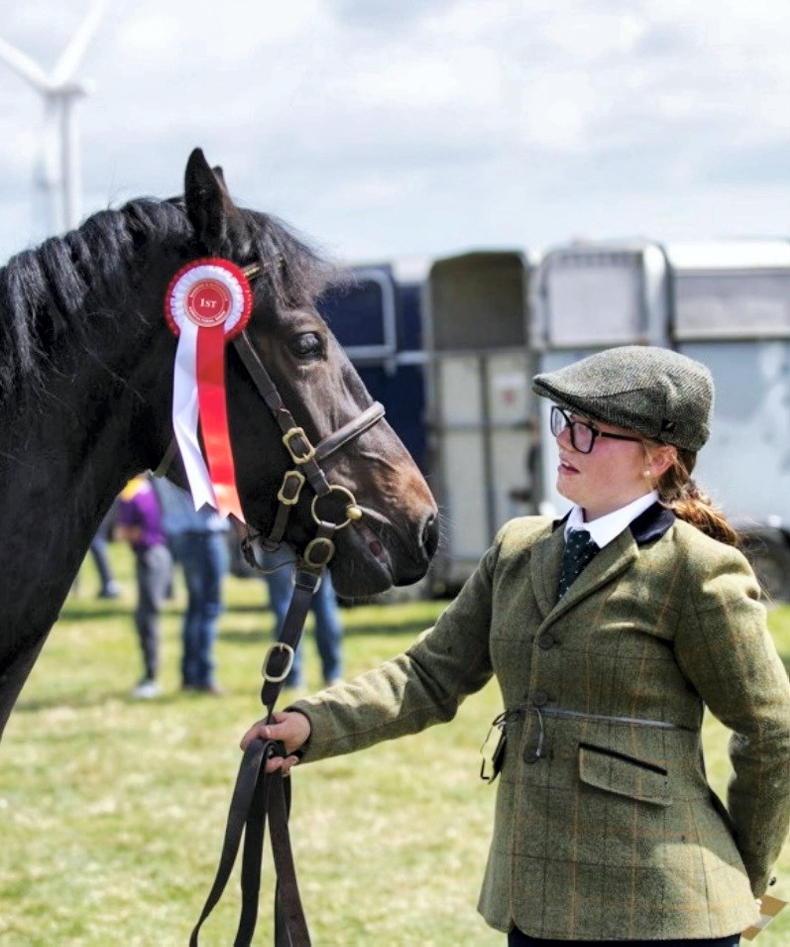
Young breeder Emily Johns
Emily Johns
Can you talk us through your background in horses
I started off in a riding school and that is when I got hooked! From there I went on to riding out racehorses and following horse racing. Back in 2019 I started working for Daphne Scholts producing and grooming ponies and this is where I caught the showing bug.
It wasn’t until Deborah McCann’s Connemara Stallion ‘Kippure Little Big Chief’ started standing at stud in the yard that I became really interested in breeding.
I completed the equine artificial insemination course in Twemlows Stud in the UK and ever since then it has broadened my knowledge and hopefully will lead to my being able to assist smaller scale breeders with breeding programmes.
Who do you look up to as a breeder and why?
Olive and Iver Broderick of Kylemore Stud. Their extensive knowledge and dedication to sport horse breeding is admirable.
What are your aspirations as a breeder and where do you see yourself in 10 years?
While I’m not currently breeding horses, I plan on continuing to develop my knowledge within the industry and hope to be able to assist small scale breeders with their breeding programmes.
In 10 years’ time, ideally I would like to be involved in running a successful breeding programme and potentially begin breeding on a small scale myself.
What courses have you done that helped with your equine education and how do you feel you have benefited?
The equine artificial insemination course in Twemlows Stud was a big step in my equine education. It really broadened my knowledge.
I learned about the practical side of breeding, evaluating genetics and choosing the right stallion for the mare. It gave me the confidence to approach breeding thoughtfully and responsibly.
What do you feel are some of the challenges facing sport horse breeders?
Dramatic increases in costs across the board, sustainability and overproduction without careful consideration, leading to horses with problems and struggling to find suitable careers.
What is your approach when it comes to pairing a mare and stallion?
I start by looking at the mare, what she does well and what she could do better. I choose a stallion that balances her out, whether that be temperament, athletic capability or conformation, also making sure both are genetically compatible.
‘An ounce of breeding is worth a ton of feeding’ - agree or disagree and why?
Agree to a certain extent. Good genetics lay the foundation of your horse but good education and proper feeding builds the horse.
Even a well-bred horse still needs a lot of training and adequate feeding to reach its full potential.
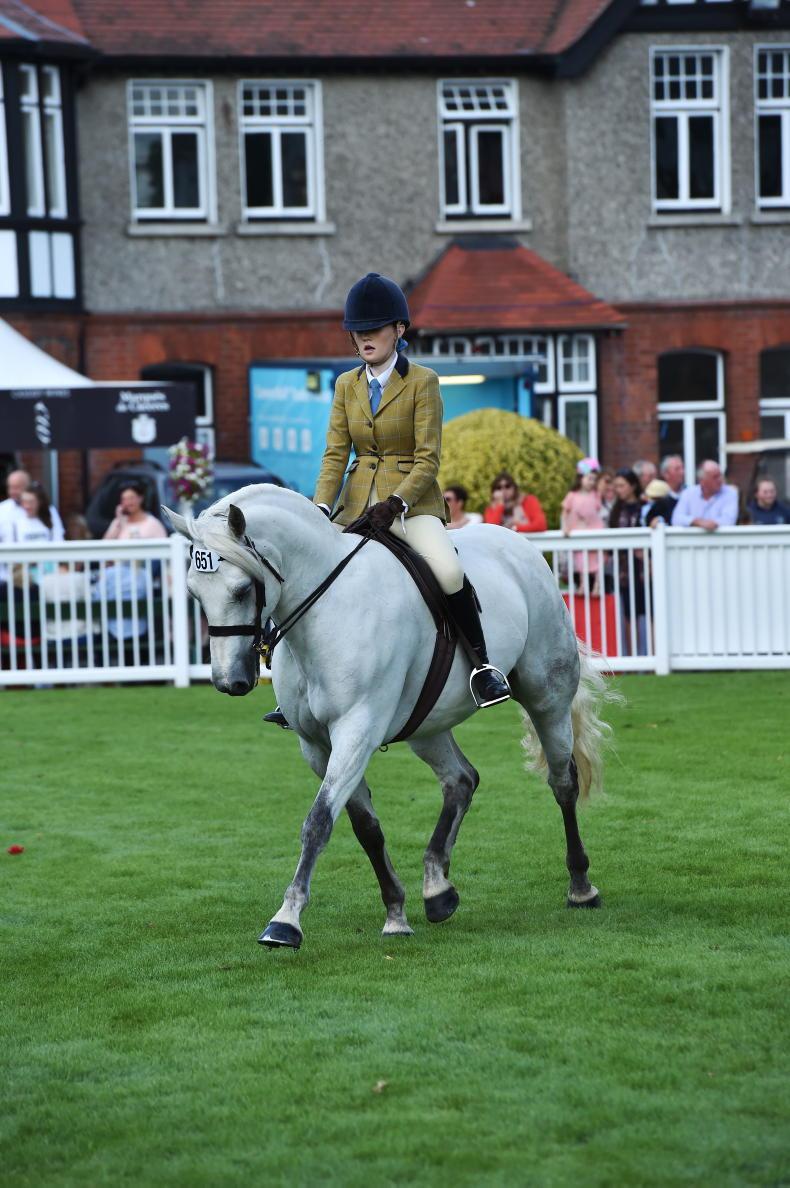
Jane Field and Cregana Dandini \ ES Photography
Jane Field
Can you talk us through your background. with horses?
Being born into a horsey family, I have been involved with horses for as long as I can remember. I made my way up through Pony Club and showing - mostly working hunter. I have been lucky to have had some great success on homebred ponies at the RDS, Balmoral and in HOYS.
I have also spent time working as a groom in an eventing yard and in a stud, both of which have given me an insight into different sectors of the industry.
Who do you look up to as a breeder?
I admire smaller breeders producing quality over quantity whilst prioritising the welfare of their horses.
Where do you see yourself in 10 years?
My plan is to continue to bred Creganna horses and ponies on a small scale. I prefer to breed as I need. My main focus is always to give each horse or pony the time they deserve. I don’t just want to breed horses. I really enjoy producing as well.
What courses have you done that have helped with your equine education and how do you feel you have benefited?
My degree is in Animal Science - Equine from UCD. The most beneficial part of it by far was the professional work experience. I gained invaluable knowledge spending a foaling season in Baroda Stud. Nothing compares to the hands-on experience under the guidance of an expert team. I definitely learned a lot there that I can put into practice with foaling at home. I have also attended many Young Breeder training days and found them very beneficial in judging conformation and performance ability.
Challenges facing breeders?
I think a huge challenge at the moment is buyers looking for young horses with more mileage than is realistic for the majority of young horses. Cost is of course a huge challenge. Some potential buyers don’t realise the cost breeders incur from covering to point of sale.
What is your approach when it comes to pairing a mare and stallion?
The mare is the most important part of the equation. Knowing what traits you would like to see in the foal and finding a stallion that complements those.
Temperament and attitude will always be very important to me especially breeding ponies because they need to have the temperament to be handled by children.
In terms of conformation, it’s important that I consider functional conformation to ensure the longevity of the horse.
‘An ounce of breeding is worth a ton of feeding’ – Agree or disagree and why?
I strongly agree that an ounce of breeding is worth a ton of feeding.
To the trained eye poor conformation cannot be disguised with condition.
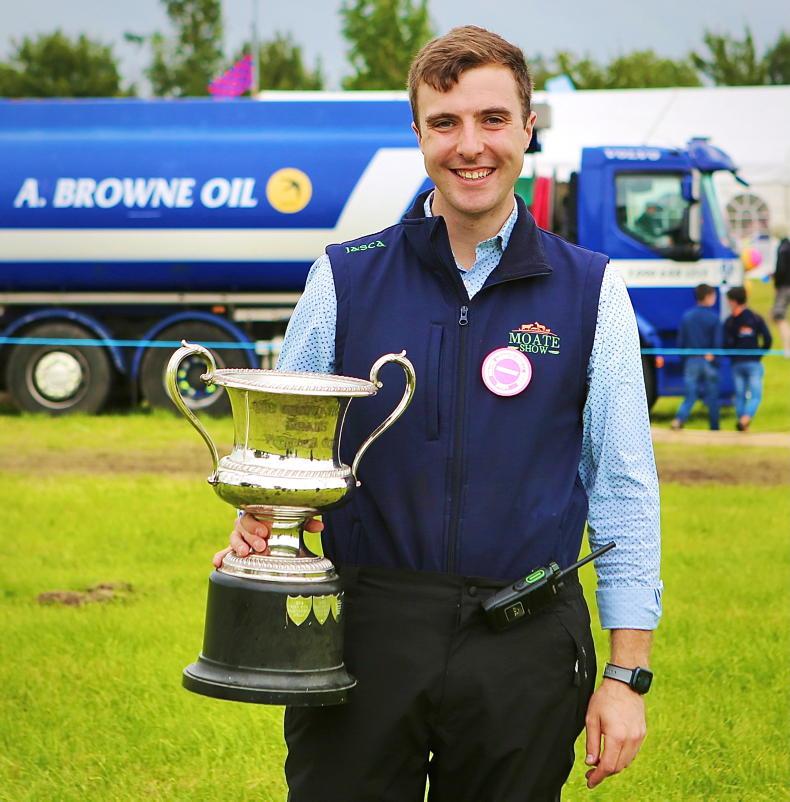
Colin Doyle was among 50 recipients of Gaisce gold awards, as the President's Award initiative celebrated its 40th anniversary in 2025\ Susan Finnerty#
Colin Doyle
Can you talk us through your background in horses?
As with many families, generational involvement sparked my interest in horses.
My mam’s family, the Keenas from Endrim, Co Offaly, kept Irish Draught mares on the farm as working animals and also bred them using the “Creggan” prefix.
Wanting their own small herd of horses and ponies, my parents later purchased their own Irish Draught mares followed by Connemaras.
Over the years they have bred a range of foals using different sires.
That interest naturally rubbed off on both my brother David and I, and today we each breed our own horses and ponies respectively.
I am also now a panel judge with the Irish Pony Society, which has given me the opportunity to attend a range of national shows.
Seeing the standard of animals being bred across the country when I am out at a show is always exciting.
Who do you look up to as a breeder and why?
There are many breeders whose work I admire, with prefixes such as Thistledown, Baltydaniel, Greenhall, Monaghanstown and Moylough coming to mind.
What stands out in these studs is the strength of their mares and the established dam lines behind the quality animals they consistently produce.
One individual breeder I particularly admire is William Micklem. His contribution to the wider equestrian industry and his approach to breeding is inspiring.
I also admire his strong advocacy for the use of the thoroughbred in breeding event horses.
What are your own aspirations as a breeder and where do you see yourself in 10 years?
Looking ahead, I hope that in 10n years’ time I am still breeding for the pure enjoyment of it.
It is a privilege to be in a position to breed horses and ponies, and you have to enjoy the process through both the ups and downs.
It would be nice to add another mare or two to the herd, perhaps introducing a half-bred or thoroughbred cross to diversify the bloodlines.
Above all, I would hope the animals we breed continue to be of good quality and suitable for a range of disciplines.
What courses have you done that have helped with your equine education and how do you feel you have benefitted?
Recently I completed the General Horsemanship course with the Open College of Equine Studies. I found it extremely valuable, as it refreshed existing knowledge while also providing a deeper understanding of areas such as nutrition.
I have also been fortunate to take part in the Young Breeders programme which is funded by DAFM and provided by HSI with Teagasc training.
Through this initiative I have engaged with experienced breeders, producers and industry professionals, gaining valuable insight into their practices and perspectives.
What are some challenges facing sport horse breeders?
One of the main challenges currently facing sport horse breeders is the rising cost of breeding. Expenses associated with veterinary care, coverings and day-to-day management continue to increase, making breeders think carefully about whether to cover mares each season.
Initiatives such as the HSI Mare Breeding Package Scheme are therefore very welcome. Any financial support that encourages breeders to continue producing quality horses is positive for the long-term sustainability of the industry.
What is your approach when it comes to pairing a mare and stallion?
When listening to an episode of breeder Michael Doherty’s ‘Big Talk for Breeders’ podcast, his guest Marily Power of Suma Stud said that you should “breed what you want, don’t go by what other people want” and this is a thought which has always stuck with me.
In terms of stallion selection, I believe best practice begins at home with being able to constructively critique your mares, considering their strengths and weaknesses, to try and ensure that your resulting progeny is better than the generation before it.
I also believe that the dam line is so important to study in matings too; I will often search the dam lines of stallions and seek other notable progeny for similar lines to see what conformational and behavioural traits are being passed on.
‘An ounce of breeding is worth a ton of feeding’ – Agree or disagree and why?
I think this is absolutely true and links to a phrase often used at home: “breed the best to the best and hope for the best”.
Continuing to progress in our collective breeding efforts in a positive manner includes careful genetic selection of breeding pairs, matching weaknesses to strengths to produce the next generation that we are excited for.
No amount of feeding can make up for poor quality.