SHANAGHAN Horses is based at Shanaghan Hill Farm, Katesbridge, Co Down. Alongside breeding and producing Irish Draughts and Irish Sport Horses, the farm runs a flock of sheep and sells lamb boxes direct to the public.
I’m an equine vet and run my own integrated equine referral practice, Shanaghan Veterinary Services. My husband, Timothy, manages SVS Equine, an equine-supplies business now exporting evidence-based products across Europe.
My mum always tells people that one of my first words was ‘horse’ - which baffled everyone, as nobody in the family was remotely horsey. She finally gave in when I was nine and let me take lessons.
From then on, horses became the centre of our lives. We’d cross half the country to compete; Mum and I learned by making every possible mistake - wrong jacket, wrong bit, sometimes even the wrong class - but we had the best of fun doing it. A turning point came on my 10th birthday when my parents, guided by family friend Tillie Devlin, bought an Irish Draught filly foal, bred by Charlotte and Nigel Moore, for me. Tully’s Dream was the last foal out of the renowned Blue Peter mare April Storm, and her influence still anchors the Shanaghan breeding programme.
I consider it a blessing to be a custodian of such prestigious lines. In sport horse breeding, people often focus on the stallions, but everything begins with a good mare - pedigree, conformation, ability and temperament. That philosophy has shaped our herd and sent home-bred horses into competition yards across the UK, Europe, Canada and America.
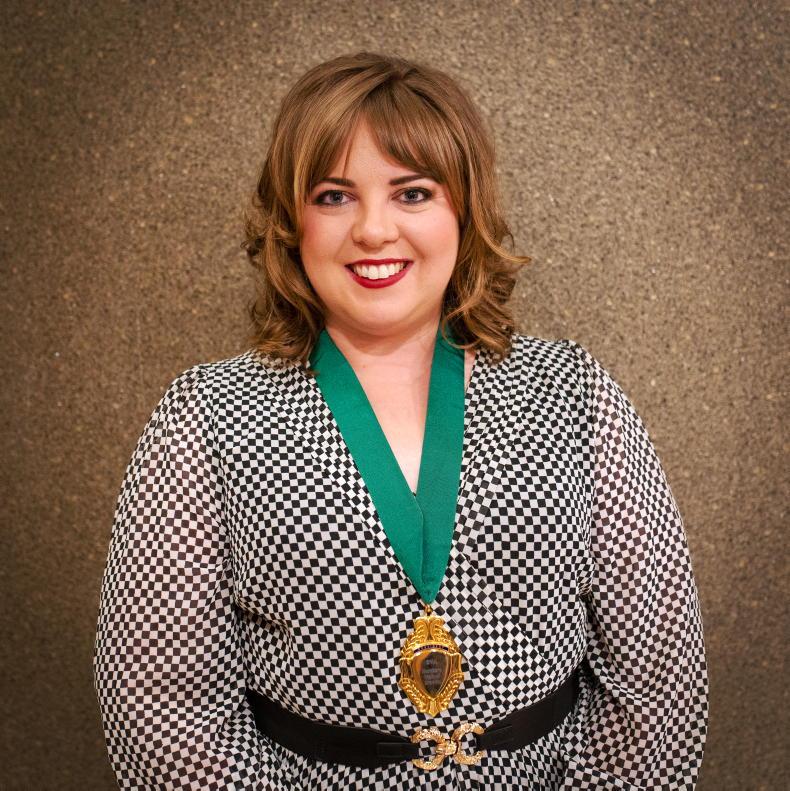
Equine vet and breeder Dr. Esther Skelly-Smith \ Courtesy of BVA NI Branch
1. Congratulations, you bred Shanaghan Velvet, the 2025 HOYS Hunter of the Year. Tell us more about him.
Shanaghan Velvet is a six-year-old Irish Sport Horse, the first foal out of Shanaghan Charlotte (Tully’s Eagles Wings × Clerkenwell), and sired by the sport horse stallion Lagans OBOS Quality.
His rider Will Morton said: “Shanaghan Velvet was a superstar, only a six-year-old in his first season having done only a handful of shows. He took it all in his stride and got better and better, he gave me an amazing ride in the championship and the supreme.”
Velvet’s sire was spotted by my dad loose jumping at the RDS as a three-year-old, he thought he was fabulous, and he was right. We’ve used Lagans OBOS Quality ever since for his scope, brain and quality.
His younger full-brother - Shanaghan Ricochet (4) - is owned by Jill Day and produced by Robert Walker. He won the young horse championship at the Great Yorkshire Show in 2024. Another brother, Shanaghan Maestro (2) by Centre Stage, is with Ann Drabble in England. We have also retained two fillies; one by Lagans OBOS Quality and one by the late Vivant Van De Heffinck.
2. How many broodmares do you have?
We have eight broodmares: two Irish Draught mares and the rest are Irish Sport horses. I don’t breed from them all every year, rotating them to give them breaks. Our mares are here for life, so their welfare always takes priority.
The welfare and health of our mares are vital if we are to produce quality, trainable and sound horses for the future. We aim to produce a conformationally correct, versatile performance horse with excellent temperament. As a result, we have produced international eventers, capable hunters and top show horses, as well as good amateur all-rounders.
3. Bloodlines that have been lucky for you?
The Tully’s Dream and Tully’s Eagles Wings lines have anchored our programme, with most of Shanaghan mares coming from these lines, sired by Crannagh Hero, Flagmount King, Clerkenwell, Centre Stage, Silvano and Oke Boy. The Centre Stage influence adds trainability and performance, while Lagans OBOS Quality gives athleticism and trainable minds.
4. “Fools breed foals for wise men to buy.” Agree or disagree?
Disagree. Wisdom is needed at every stage. Breeding today is applied genetics, not sentiment. With so much data on pedigree, conformation, performance and temperament, there’s no excuse for random pairings. It’s not enough to breed from a pretty filly; you must understand what you’re producing. My father, William, has a remarkable memory for bloodlines and movement. A good breeder must have a genuine passion and care for their mares and foals - that sustains good breeding, not luck.
5. That famous horse you’d like to have bred?
Supreme Rock (TIH). (Edmund Burke - Rineen Classic, by Bassompierre). He was the complete ISH - brave, sound, consistent and beautifully rideable. Bred by Lindy Nixon-Gray in Co Cork, he carried Pippa Funnell to back-to-back European titles and the Rolex Grand Slam. What I admire most is his temperament and longevity - he gave his best, season after season. For me, he represents everything we should be aiming to breed: athletic, correct and kind, with that quiet courage that defines the best Irish horses.
6. Prefixes – your thoughts?
Prefixes are invaluable. They give identity and accountability. Shanaghan ties each horse to our farm, family and philosophy. In a crowded market, a consistent prefix is a breeder’s signature.
7. As a vet too, what’s your advice for breeders weaning foals at this time?
There’s growing scientific evidence that later, low-stress, herd-based weaning produces healthier, calmer horses. In the wild, foals stay with their dams for nine to 11 months; abrupt weaning around six months spikes cortisol, suppresses immunity and predisposes to stereotypies like crib-biting.
At Shanaghan Hill Farm, we wean gradually, removing mares one at a time over several weeks so foals remain in a familiar group with companions. We keep them on ad-lib forage in the same field to minimise stress. From a veterinary standpoint, this supports gut integrity, bone development and immune resilience. Foals maintain steadier cortisol levels and fewer gastric issues, and they’re noticeably easier to handle later as confident, curious, well-socialised youngsters.
We worm, based on faecal egg counts and bloodwork, tailoring nutrition carefully. I always remind clients: behaviour is information, not mischief. The closer we follow nature’s rhythm, the sounder and healthier the horse we produce.
8. It takes a team – who is on yours?
My family are the backbone: mum, dad and my husband Timothy. Dad’s depth of breeding knowledge is a constant asset, and Timothy, despite not coming from a farming background, has become indispensable. I’m grateful every day for their support.
9. Breeding and owning horses - would you do it again?
Absolutely. Horses are my raison d’être. My veterinary training took me from Kentucky to Newmarket under Dr Sue Dyson, but breeding has always anchored me home to Katesbridge. Breeding has its setbacks but also unmatched joy. Not every horse is destined for HOYS or the Olympics, and that’s fine; seeing one you’ve bred give confidence to a young amateur rider is every bit as rewarding.
10. The one famous person you’d like to spend a day with?
Ada Cole, founder of what became the World Horse Welfare charity. She began the International League for the Protection of Horses in 1927 after witnessing the cruelty of workhorses exported for slaughter. She combined compassion with practical action - qualities our industry still needs in abundance.