I HAVE always had a great love for horses and ponies, having lived on studs growing up as my father was a stud manager. My mother made me do my Leaving Cert and a secretarial course, just to hopefully get me away from going down the horse road and away from being as poor as a church mouse, but it wasn’t to be.
My interest in showing started with working on the Carrickhill pony stud, first during summer months and then fulltime after school, where I learnt everything from stallion handling to broodmares, foals, ridden ponies and the hunters in winter.
Various other jobs in different types of yards, from eventers with the late Diana Gilna, international show jumpers in Switzerland and racehorses, were to follow.
After getting married to Seamus and settling in Skerries, it was time to stop living from a suitcase and get an indoor job before rearing my two daughters, Becky and Susan.
From then on it was competing ridden and in-hand ponies up to the present day, with pony numbers now being kept to a very small and manageable size on our stud.
1. Proudest moment(s) as a breeder?
In the past, it would be seeing Rendene Carmen Rose, our first mare, win the overall show pony championship and champion show pony at the RDS with two different riders.
When any pony, you’ve either bought or bred, does well in whatever path it has followed, it is always a proud moment.
2. Favourite broodmare?
Hard to have a favourite mare as we have had some lovely ones.
Rendene Carmen Rose for being a lucky buy and so successful as a ridden pony before being a lovely broodmare.
Strinesdale Serenata, bought for Becky to show when she was a very tall 12-year-old and had to move to 148cm ponies. She was queen of the yard and a lovely broodmare whose stock could jump and show.
The lovely home-bred Lambay For Fun was by Rathbawn Windward who, at the time, was a teaser in the National Stud. We spotted him on a day trip to the stud and were lucky enough to be able to send Remember Me to him. For Fun has won a lot of show championships and her stock seem to be great riding ponies who jump.
3. Tell us about Lambay Ponies.
We started by breeding show ponies and show hunter ponies, mostly with Welsh blood, either pure or part-bred. With a slow market, first for show ponies and now for show hunter ponies, the need for ponies to jump is important to have a future market.
With this in mind, two of our mares, Brookhall Emma Lilly, a Welsh Section B and the part-bred Welsh, Lambay For Fun have passed Horse Sport Ireland (HSI) mare inspections and will be bred with jumping in mind.
4. Lambay Ponies have been successful at showing, show jumping, eventing – tell us about some.
In the showing world Lambay Take A Chance has been very successful in the UK as a show hunter pony, including high placings at the Horse of the Year Show (HOYS). He was the last foal of Woodvale Honesty, who we were lucky to be given after the passing of Tom Robinson.
Lambay Off Broadway was brought to Grade A show jumping level by the McNamara family before being sold to UK. We had a marvellous day watching her win the Mini/Major class at Olympia Horse Show.
Touch Of Class was a very good novice working hunter pony and went on to compete at HOYS and Lambay All Inclusive, such a lovely pony, had much success showing in Ireland.
Tiggy Hancock is bringing on another foal purchase of ours. Shown successfully, the lovely Blennerville Rua will be one to watch.
5. You’ve also sold to the American market?
Lambay Resolutions was sold to the UK as a foal but bought back as a two-year-old from a market sale for the sum of £50. He became a massively successful pony in-hand, before being broken and sold to the USA for the hunter/jumper market, where he competed in the United States Equestrian Federation (USEF) pony finals in Kentucky.
Not bred by us, but got by way of a swop for a yearling we bred, is Wortley Delphine, a Welsh Section B filly. After a brilliant in-hand career, she went to USA and has been hugely successful in the hunter pony rings.
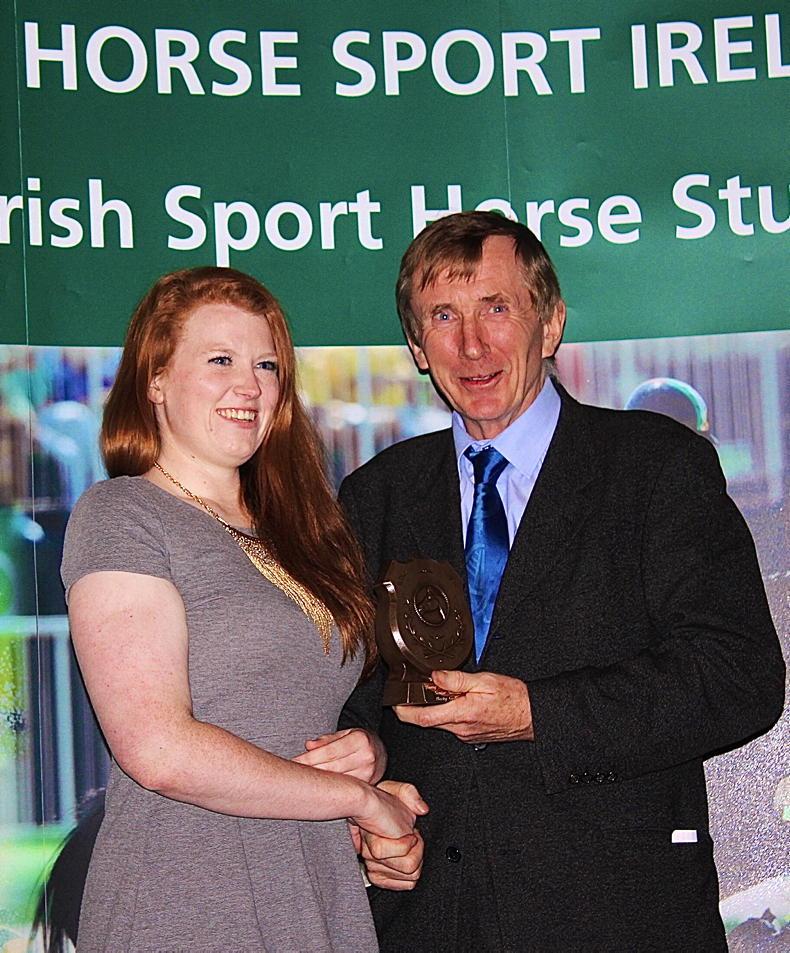
Becky Grimes receiving the HSI Young Breeders award from Prof. Pat Wall, then HSI chairman at the 2016 breeders awards in Mallow
6. Breeding for the Irish pony market – hobby, labour of love, profitable or all/some of the above?
This year we only have one mare to foal and that is Brookhall Emma Lilly, who is carrying to Wexdown Romeo. The nail test says it’s a colt foal so we will wait and see. As they say, “Start with two million to make one million” – that’s breeding ponies for you! It won’t make you rich and it’s just a matter of covering your costs if at all possible.
With the way sales have gone, regarding the Irish showing scene, the ponies we breed need to have a second career as three-year-olds. Whether they go eventing or jumping, we need to breed a good-tempered pony with sound conformation.
It’s hard to breed for both the show hunter pony and jumping because of the height differences required by both markets but if the pony has bone, looks and movement, the USA market needs to be explored as this has been a huge benefit to the sports horses.
Irish parents have a huge reluctance to take on young ponies, either due to the effort and time required to take a pony from just-backed to getting going in the ring or lack of knowledge on how to bring on young ponies. I think this leads to fewer pony riders heading on to horses, which is a pity.
In the past, working hunter ponies riders were backing their next height pony to bring on as a novice when their older pony became an open pony. These riders went on to ride at the top level in show jumping and eventing.
7. What incentives would you like to see for pony breeders?
I would like HSI to realise the importance of the 128cm and 138cm pony in the education of young riders. I have seen this in the HSI pony foal championship qualifiers where small foals don’t get a look-in, which is a terrible pity.
I feel they get no recognition as the medal-winning 148cm ponies are their only interest.
Maybe the Irish Pony Society could bring back the loose jumping class they used to run at the IPS championship show. This class was a great shop window for young ponies, either to go eventing or for working hunter.
8. Best advice you got?
“Always be aware of the good and bad points of your mare. Be very critical of her conformation and temperament. No use thinking the stallion can correct everything” – that was the advice from Tom Robinson. “Put the best to the best and hope for the best” and “Sell the best and keep the very best,” says every breeder.
9. The best part of breeding and showing ponies?
To be able to take a pony you bred out to a show, starting with planning which stallion to use, from handling as a foal to winning championships in the showring makes me very proud.
You put in a lot of effort from rugging, getting them used to the farrier, being plaited and standing patiently, which all makes for a well-educated pony that’s very easy to break in and sell on for a child to compete.
There’s also the social side of meeting up with your fellow competitors and breeders at shows. The chats about who has the best pony when you know there’s a superstar at home waiting to take out to shows.
I hope to meet some of my fellow breeders this year and hopefully we will all be out showing in 2022.
10. Proudest moment as a ‘horse parent’?
My proudest moments are watching Becky ride and show in-hand successfully, even if she robs our best youngstock from me!
Becky winning the HSI National Young Breeder Championship was a great achievement because this is a sport horse competition and quite different from show-type animals.