Q: Why are you retiring now?
MO’D: I have been thinking about it since last year. I reached 40 years of service on June 9th this year and that was my goal. Last Christmas we received our work schedule for the year and I only marked in my dates into my own diary as far as August. On the Tuesday of Punchestown I told [IHRB chief executive] Darragh O’Loughlin I had decided to retire during Galway. We had a good chat and that was it. Giving everyone three and a half months’ notice has given me a chance to thank all the local stewards, track managers and officials I work with around the country.
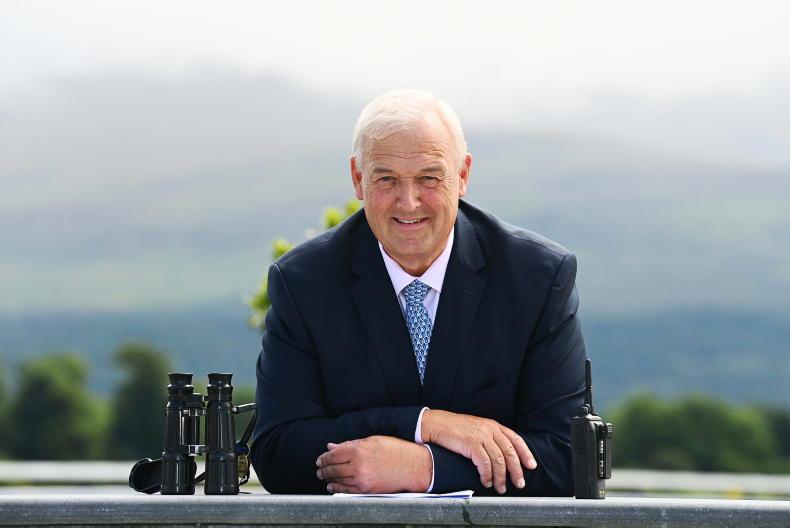
Q: You’re from Blackrock in South, Co Dublin. Tell us about your background.
MO’D: My late father Michael had a pharmacy but there are horses on my mother Gloria’s side. She is from Westmeath where her family were involved in ownership many years ago. As a kid I rode my first pony in Westmeath and my parents brought me regularly to the races in Leopardstown, Phoenix Park and Baldoyle. I got the bug very quick.
Q: What was your first job?
MO’D: I was just weeks short of 17 when I finished my Leaving Cert and I already had a job as a lounge boy in the Leopardstown Inn where plenty of racing people frequented. Seamus McGrath trained not far from Leopardstown. My mother asked Seamus if I could work there for experience and I spent a year in Glencairn. It was a great time for the yard – Weaver’s Hall won the Irish Derby, Furry Glen won the Guineas – not that I made any contribution! But I learned how to ride and how to handle horses there. There were over 100 horses in the yard at the time and the experience gave me a great foundation for my career in racing.
Q: So where did you go next?
MO’D: When it became obvious that riding horses was going to be a hobby, Seamus McGrath arranged for me to get a job as a spotter with Goffs, which was in Ballsbridge at that time. I studied for my MIAVI in the College of Commerce in Rathmines and, when Goffs moved to Kill, I worked there in the property section.
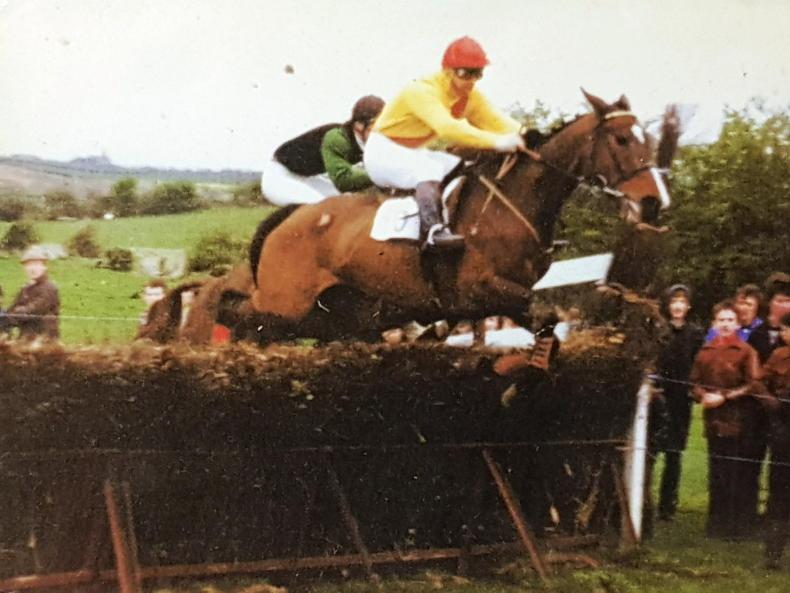
I did that for a while but my heart wasn’t in it. It was too slow for me, waiting for a property sale to come through. At this stage I was living in a cottage opposite Goffs which was owned by Ted Walsh’s father, Ruby, and I rode out first lot for them every morning. They were great times, the late 1970s. Ted was in his heyday as a rider and Brendan Sheridan was a young rider there, coming through. It was a great yard to be involved in, with some wonderful owners of very good horses. Ruby and Ted were very good to me.
Q: So how did you get drawn back into racing?
MO’D: I knew [Turf Club official] Joe Collins through Ted and, one day in 1983, Joe asked would I do him a favour and come to Clonmel Races to give him a hand as veterinary assistant. Joe was required to take on extra duties as a clerk of the course, and he needed someone to substitute for him in the veterinary unit.
So at Clonmel on June 9th 1983 I was introduced to [then senior veterinary officer] Richard Teevan and brought down to the vet’s box and shown how to take a post-race urine sample. I was given a pot on a rod, and it was all a bit of a shock to the system.
I didn’t think it was for me, but then Joe asked me to come to Naas on the Saturday, and then Mallow and then Tralee. When my first pay cheque arrived from the Turf Club I thought this isn’t a bad lifestyle after all. You’re getting paid to go racing and I was still riding out. I had the best of both worlds.
Q: When did you move into being a stipendiary steward?
MO’D: My role developed over the years. I became a racecourse judge in 1986 and I started as a point-to-point official in 1988. I was part-time with the Turf Club until 1989 when [Turf Club chief executive] Cahir O’Sullivan read out a press release to me, which said Richard Teevan was the new senior stipendiary steward and I would be joining that team, both of us commencing at Bellewstown on July 1st. I continued in that role and, surprisingly, was made a clerk of the course for Kilbeggan in 2009, where Paddy Dunican took me under his wing.
Q: How did you settle into this new role?
MO’D: Under Richard Teevan, Peter Martin, Stephen Quirke and Philipe Lafarge, I settled in very well and got a liking for the job. I completed two years’ training before I was allowed to be on the stewards’ panel. The role is not for the faint-hearted. A lot of officials tried it but left just as quick.
Q: How much discretion do stewards’ secretaries have in having a quiet word with a jockey or trainer about a potential rule breach, rather than calling a full-blown stewards’ inquiry?
MO’D: It would depend on the situation but discretion was used. You might bring in an inexperienced rider and show them a video of their riding, point out a fault they had and give advice.
Now, things have changed. Since July 3rd the IHRB have introduced new penalties for breaches of the whip and interference rules with a new structure for suspensions, increasing for repeated offences.
Q: What qualities should a good ‘stipe’ have?
MO’D: To make a stipendiary steward, you must want to do it. You need to be able to learn the personalities of all the volunteer stewards, work well with them, advise them on the rules and get consistent decisions. You need to be able to think quickly, react to any situation, be a good racereader, apply common sense, be fair and impartial, and don’t lose the cool. Treat everybody the same, no exceptions. Be a team player and have respect for your colleagues.
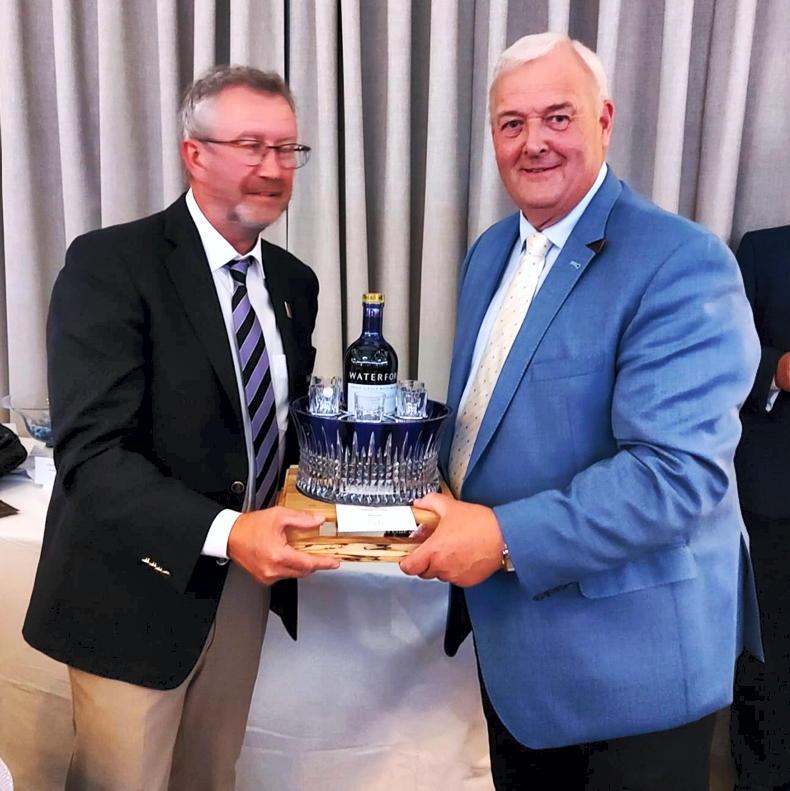
I’m a great believer that you must earn respect in this role. You can’t demand it. I had 34 years as a stipendiary steward. Not bad, I guess!
Q: What was your worst or toughest day’s racing?
MO’D: The day of the bomb scare in Down Royal. It was Christmas 2005. There was a lot of discussion with the RUC over whether we could go ahead or not and we then ended up having to evacuate the grandstand in the middle of the first race. So you had racegoers crossing the track while horses were racing. The judge was the only person left in the stand and he called the result but the riders couldn’t weigh in as the weighroom was cordoned off. Incredibly the stewards and management managed to get permission to stage the raceday 24 hours later and it went off without incident, with the support of all stakeholders.
Riders sustaining fatalities or life-changing injuries is tough for everybody. Remembering Sean Cleary, Jack Tyner, John Thomas McNamara, Jim Lombard, Kieran Kelly and many others, will make you realise how dangerous a sport racing can be.
Q: You were involved in the development of apprentice jockeys for many years. What did that involve?
MO’D: I interviewed the apprentices who were becoming indentured to trainers, some of which came through RACE. Most of them were just 15 years of age and it was my role to liaise between the trainers, parents, apprentices and the Turf Club’s Licensing Department. Some went on to be very good riders, including champions, and others went into different racing industry jobs throughout the world. Plenty of kids became too heavy and others just moved away from racing.
We had a great team of trainers and jockeys who would give them advice, both personally and through seminars, including Ted Walsh, Dessie Hughes, Dermot Hogan, Martin Molony, Aubrey Brabazon, Alan Lillingston and Richard Dunwoody. An apprenticeship in those days was three years and you were there morning and afternoon. Trainers like Kevin Prendergast, Jim Bolger and Liam Browne were top class masters who turned out some great riders. Even though they were hard schools, the riders developed into mature, mannerly and well-taught individuals. The apprenticeship structure has changed.
Q: You’ve chaired the Irish Racing Officials Association for many years. What does that involve?
A: It was set up in the 1970s by Frank Hyland and Max Fleming to assist in the negotiation of employment terms and conditions. Back then most officials were part-time but that changed during my era and employment law became a lot more complex. Eventually it was decided that we should affiliate ourselves with the trade union Mandate which upset some of the old-timers.
But, looking back, I’d say we’d never have got to where we were with pensions and terms and conditions of employment without Mandate. We’ve had our times in the Labour Court. Around 2010 we had tough times with pay cuts and it seemed to some of us that we were subsidising the industry and working as hard as ever. But we got through it, even if there were disagreements. I’d have to say, personally, the Turf Club was a great employer.
Q: You’ve seen a lot of colleagues come and go. Who stands out in your mind?
MO’D: We’ve lost many colleagues over the years, with Ted Kelly’s passing just the other day. Of the people who made the biggest impression on me, Cahir O’Sullivan was a great boss. Richard Teevan was a great leader. Cahir and Richard worked very well together. The senior stipendiary steward was a position which carried a lot of clout and respect at that time.
Percy Banahan, Joe’s father, was another great racing official - very meticulous, great timekeeper, and everything was 100% matter-of-fact. He trained me as a judge and I like to think I adopted a lot of his qualities. Seamus Gibson in the Licensing Department was another tremendous leader, with a great team behind him.
Of the current officials, I’ve known Brendan Sheridan since he was a kid. I really admire how he progressed from a jockey into a racing official and now he’s clerk of the course at both the Curragh and Punchestown. He is a true professional. Clerk of the course is not an easy role for anybody.
I should mention Chris Gordon [Head of Security]. I worked with Chris on the McNally investigation and it was fascinating to see how he works. His talents were an eye-opener for me.
Q: What are your recollections of racing yard inspections?
MO’D: I’ve done 2,739 stable inspections. I’ve been in every stable bar Bethlehem, from the guy training on the beach to Ballydoyle. I’ve met every racing family in the country and enjoyed meeting them all.
Years ago a young Gordon Elliott told me he had seven horses and needed a yard immediately. The following day I helped find him a row of boxes in Pat Beirne’s yard outside Kilcock and he grew from there. It’s nice to have been a small part of his success story and it shows you that you can start with nothing and go to the top through hard work.
Last year the IHRB inspectors were granted ‘authorised officer’ status but I declined to be a part of that. I believe the power to search a person’s premises is more suited to the Garda, Customs or Revenue. It’s not in my nature.
Myself and [veterinary officer] Nicola O’Connor did over 300 unannounced stable inspections together. Through our background and deep knowledge of the industry, our investigations unearthed some serious breaches of rules by trainers, which led to suspensions of licences with fines imposed for many other infringements. We were feared but respected.
Q: Is Irish racing in a better state now than it was 40 years ago?
MO’D: We have a lot more fixtures but the crowds are not what they were, save for 30 or 40 big days. There are a lot more events competing with racing now. The racecourse facilities have improved enormously through HRI funding, and the distribution of media rights money has been the lifeline for all tracks.
The bigger training yards have expanded over the years and introduced much investment from Irish and foreign owners. It’s very encouraging to see Cheltenham now dominated by the Irish trainers, and the flat trainers competing successfully on the world stage. The trainers have been great ambassadors for our sport and industry.
The point-to-points have completely changed and I wouldn’t be in love with how commercial it’s gone. It used to be a day out for the local community, the hunt and the small training operations, followed by a get-together for everybody in the local pub or hotel. I just hope that point-to-points can survive this tricky time for insurance and that the volunteer element of hunt members will continue.
Q: What about volunteers as acting stewards on the racecourse. Is that a good thing?
MO’D: I’ve been to 32 countries and raced in 18 different jurisdictions all over the world and I think the IHRB have very knowledgeable and talented stewards. However, the rest of the world has gone very professional with stewards and I think, eventually, the IHRB might have to go that way. It may not be a full professional panel, but maybe three or four professionals and one or two volunteers, one being the chairman.
Q: What are your plans for retirement?
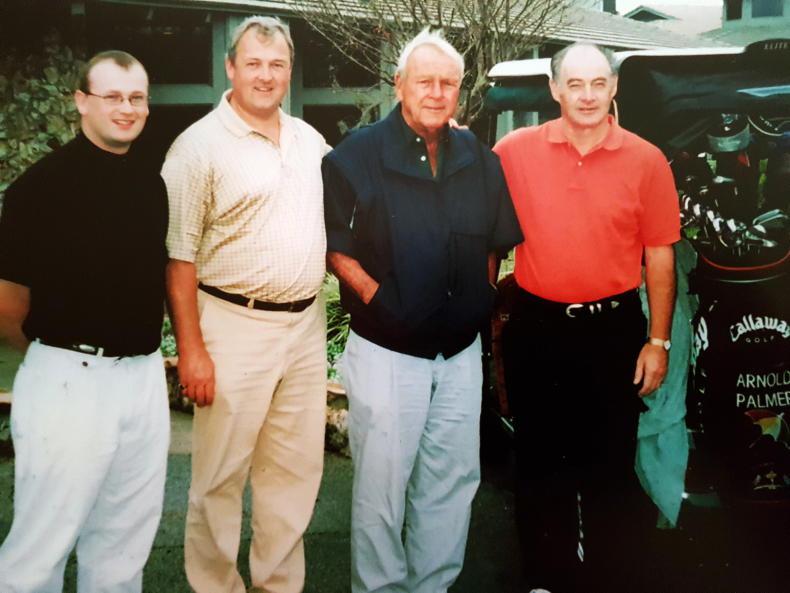
MO’D: Golf is my big sport. I’ve played some great courses all over the world. I love cruises too and I’m going to Canada in September, crossing the Rocky Mountains and joining a cruise from Vancouver to Alaska. Once I get home towards the end of September we’ll take it from there. I’ll follow the Dublin football and hurling teams and go to rugby matches. I’m going to continue working at point-to-points as a racing official.
I’ve been lucky enough to see a lot of big races around the world – Vintage Crop’s Melbourne Cup, Dawn Run winning at Auteuil, and Hewick winning at Far Hills last year – all at my own expense.
And so, that’s it. I can look back and say my 40-odd years with the Turf Club has been a great place to work, I’ve had a great life outside of it too. I’ve met many wonderful people and I have nothing but fond memories. To me it was a passion, not a job.