When Aidan O’Brien jested last autumn that John Gosden “can whinge a little bit after races, whether he wins or loses”, most of us saw it as an entertaining segment that added a welcome splash of colour to the pair’s end-of-season battles.
Time is beginning to show, however, that there is at least a kernel of truth in what the Ballydoyle maestro hinted at last year. Gosden’s comments leading up to Royal Ascot, particularly around the landscape of the Derby at Epsom, carried a definite degree of saltiness. While racing ought to have real respect for the opinion of an experienced and talented horseman like Gosden, it’s hard to say that these ones are entirely justified.
If you tuned in to the Nick Luck Daily Podcast’s preview of the Royal Meeting, you’d have picked up on a few jibes from Gosden towards the O’Brien camp. He didn’t seem to relish the thought of a Ballydoyle pacemaker in the Prince Of Wales’s Stakes line-up, noting: “They’ll go off like scalded cats, as usual… You’re never quite sure what they’re up to but we don’t want a repeat of Epsom, do we?”.
The irony wasn’t lost on anyone when John and Thady Gosden then decided to run their own 66/1 shot, Devil's Advocate, to man-mark the O’Brien pace-setter. The pair ultimately trailed the field.
Gosden also remarked on the preview: “I’m getting bored with them; too many excuses,” when asked about the Ballydoyle trio of contenders for the Commonwealth Cup.
But it was the six-time champion trainer’s remarks on the Derby in the Racing Post on the eve of Royal Ascot that really raised an eyebrow.
“A lot of us feel the way the Derby is now being run is conducive to creating National Hunt stallions, which is not good," he said. "The ground at Epsom meant this year's race was always going to suit that type of horse, but it has now become a pattern. One doesn't want to see a slog year in, year out.
“People love to see horses with a turn of foot. Watching a horse like Sir Ivor cut down Connaught gives you a tingle on the back of the neck. We've been missing that. The Derby used to be won by horses who could quicken, but the pace of the modern Derby has been fairly ruthless.”
While suggesting a possible switch to July, he insisted “the warning signs are flashing” and “the race is now under threat.”
Elaborating further, Gosden added: "With the odd exception, the Derby has been consistently won by Ballydoyle and Coolmore. Full marks to them. They are brilliant at what they do, I'm not questioning that, but I think it's a problem for the Derby that they keep winning the race. Anyone who doesn't think it's a problem is being deliberately obtuse or naive.”
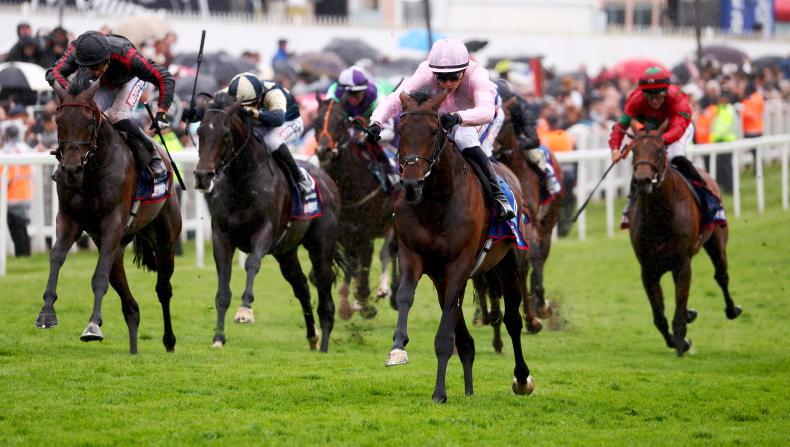
Big names absent
You could assess those remarks from any number of angles but it’s first worth considering that if we want a dynamic Derby with the potential for a star colt, we need all the sport’s biggest stables involved. Earlier this month, there was no Gosden or Godolphin representative in the £2 million event. If the Coolmore influence on the race is something we should all be worried about, why not make it an out-and-out priority to take them on?
Coolmore has never made a secret of the emphasis it places on Epsom’s crown jewel. They have bred horses specifically with this target in mind for decades, and are ably assisted by O’Brien training them to the minute for the first Saturday in June. When you put those factors together, none of us should be surprised that they end up with some of the strongest Derby candidates year in, year out. This is their Mecca.
That said, there is nothing stopping other leading owner-breeder operations - many of whom already have horses with the Gosdens - from having their own crack at the race and targeting it with similar priority.
The suggestion that the Derby is turning into a slog feels like one with a real dollop of recency bias attached. Yes, Derby day was a washout this year and the winner, Christmas Day (pictured above), was a proven heavy-ground winner from last season.
Conditions were officially described as soft, but when was the previous time that happened? You have to go back as far as 1983, when Teenoso won in the race’s slowest time in the 20th century.
Gosden harked back to old renewals of the race and stylish winners “with a turn of foot”, but there wasn’t much wrong with a number of the Derby heroes in more recent times.
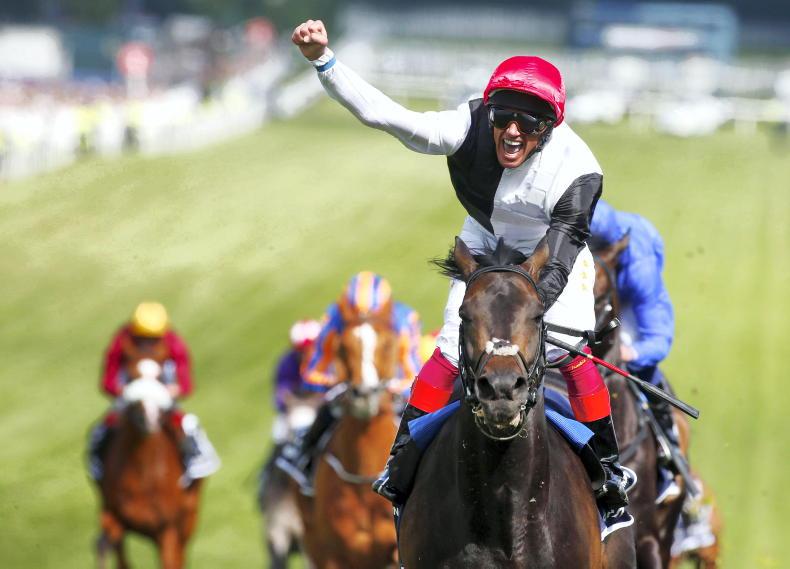
Short memory
Auguste Rodin and City Of Troy flashed proper class in only 2023 and 2024, while the ill-fated Desert Crown a year earlier was one of the most visually impressive Derby winners you’ll ever see. Camelot (2012) and Australia (2014) had shown the necessary pace to go from a mile at Newmarket in the 2000 Guineas to Derby glory, while the unforgettable Sea The Stars came only three years before Camelot in 2009. Even Gosden’s own Epsom scorer, Golden Horn (pictured above), was an elite talent in 2015.
Nobody will say that every year’s winner of the race is necessarily world class, but the same can be said for any classic. Is each year’s Kentucky Derby winner automatically one for superstar status? Absolutely not. There will always be a slight variance in the quality when we’re talking about different three-year-old crops every season.
All that being said, there is one factor that stands out in this conversation and it is how horses are being prepared for tackling the Derby. It has been a notable theme with each of the last four Derby winners that they were all blacktype winners at two. They had each run at least three or four times in their juvenile seasons.
One debuted in the June of their two-year-old campaign, another couple made their introduction in July and the other started in August. The top Derby contenders are coming to the race more hardened and streetwise than those who have had one run at the back-end of their previous season. There’s every chance that counts for plenty around the helter skelter of Epsom.
In fact, the average Derby winner from the last 20 renewals had 2.75 runs in their two-year-old season, and a total of 4.2 runs before entering the gates for the classic.
Toughened up at two
Testing these horses in high-quality amphitheatres over shorter distances at two isn’t a new positive either. In the half dozen renewals between 2007 and 2012, three of the Derby winners had won at Group 1 level as juveniles (Authorized, New Approach and Camelot). Sea The Stars, in the same window, claimed the Group 2 Beresford on his final start at two.
Is it possible that the profile of a Derby winner nowadays isn’t entirely aligning with the Gosdens’ programme?
The father-and-son duo had 12 runners in two-year-old group races in Britain last year and were out of luck with each of them. They emerged with one listed juvenile winner domestically.
A year earlier, they had only six juveniles in British listed or group races and a solitary winner in this category. In 2022 and 2023, they went 2-13 and 2-8 respectively in the same bracket of races - hardly a massive representation for a stable of such scale.
O’Brien, who will be chasing a record extending fifth Derby on the bounce next year, appears to treat two-year-old blacktype events very differently.
In Ireland last year, he had 13 group winners with his two-year-olds from 37 runners, and another two listed winners. That’s not including the nine group-race winners he had with his juveniles from 39 runners in Britain, as well as a further four Group 1 winners with two-year-olds in France.
There is certainly a large quantity of horses for O’Brien to play with, but he appears fond of getting his stock rolling earlier than some others at two - thus leading to greater firepower to attack the juvenile blacktype races. That is in turn delivering the horses who have been rising to the top at Epsom a season later.
Gosden’s concern over the Derby producing National Hunt stallions is totally reasonable considering the breeding landscape nowadays, but that is a separate issue from how the race is run and those that are winning it.
If we want to prove that our middle-distance three-year-olds aren’t necessarily one-dimensional prospects for the jumps breeding game, why not push to get them out at two to show their versatility over shorter distances? Whinging, as someone once put it, after the first soft-ground slog since 1983 feels like missing the mark.