THERE is something perverse about writing a Cheltenham Diary when spending your entire week sat at your mother-in-law’s kitchen table, talking to no-one else other than via WhatsApp, and when the television on mute most of the time, because, well it’s rude to smash your MIL’s telly with your boot.
That’s not to say that the TV coverage was poor, but you never know when a bit you’re not going to like is about to come on, and I’ve my blood pressure to think about as well.
There have been some striking moments to witness this week, and some absolutely jaw-dropping performances, but I cannot get away from the overall feeling of the week, and that was that everything was happening somewhere else – not just in my old home town while I’m banished, but a different world altogether.
Try as I might, I couldn’t really feel part of that world as I have for so long. At every Cheltenham Festival in my childhood and early adulthood, the crowd I saw on TV thronging the paddock and craning for a view from the stands has felt like a crowd I belong to, and before I ever set foot there,
I felt transported by the occasion as if I were there. I felt every thrill, every gasp, and every roar as a succession of Gold Cups came to their denouement. I would have roared a few of the roars as well, but the highlights were on late at night, and mammy would flip the trip switch on the fuse box if she thought I was up late. Beats marching in, I suppose.
There have, of course, been moments which have had me out of my seat and cheering. How could you watch Allaho’s rampant Ryanair win and be unmoved, or witness Tiger Roll come back to his glorious best and not want to shed a tear with Keith Donoghue, or a share a knowing joke with a colleague about how good it would be to see a horse like that at Aintree.
Quiet thud
But the immediacy of sharing these experiences with friends and colleagues is lost, and the expected sensation of gradually floating back to earth after each of these emotional highs is replaced with a quiet thud of unshared experience. Bugger WhatsApp.
So, Tuesday’s fake roar set the scene for the week, and that’s a crying shame, as much of historical importance has happened this week, and it deserves to be embraced with immediacy and passion, and only then dissected and analysed.
While I’m filing this before the final day’s racing, it seems sure that by the time you read it, the idea of a glass ceiling in the sport has been shattered once and for all by Rachael Blackmore, who should be crowned leading rider at the meeting.
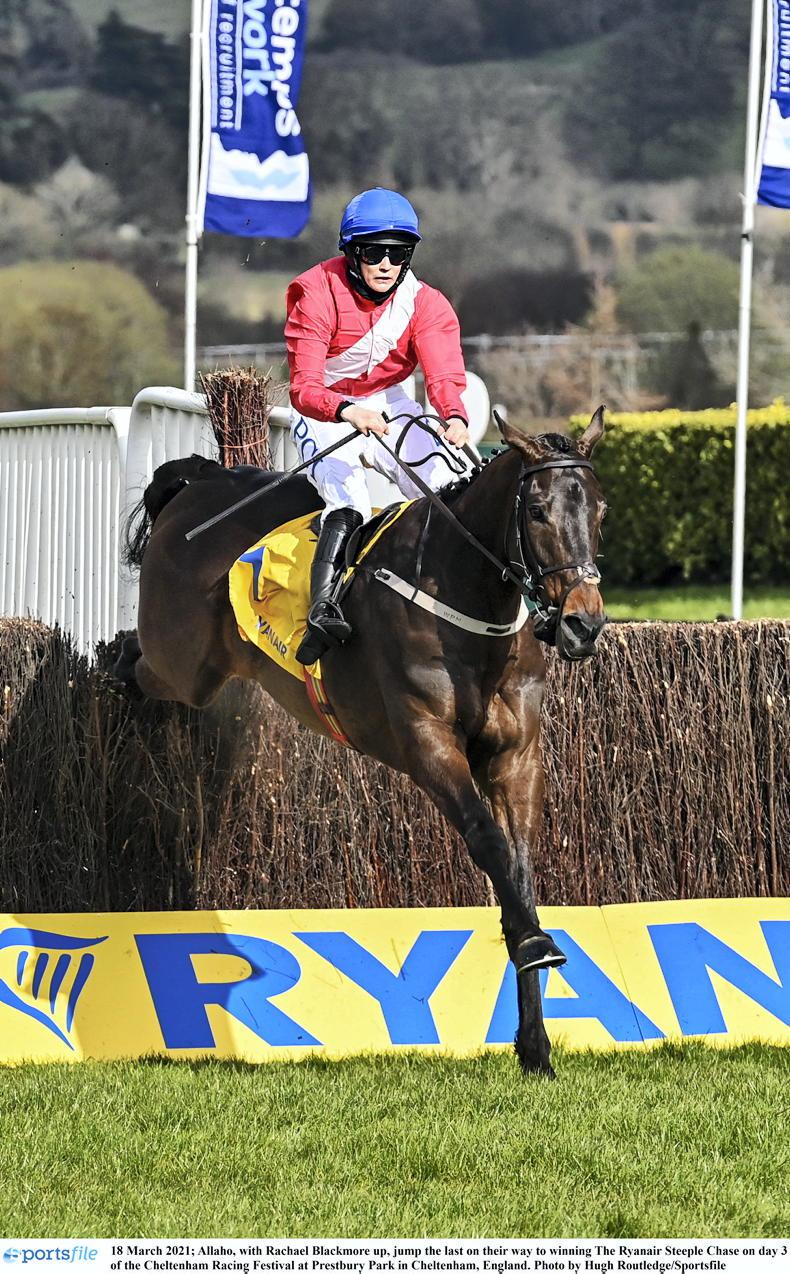
Many will point to this achievement as new ground reached in the battle for equality, but it’s more important that we recognise it as the reward of a genuine champion who cares not a jot for gender politics.
The glib headlines that she is the first female to ride the winner of the Champion Hurdle are fine in that promoting women in sport is a worthwhile cause, but accepting her moment in the spotlight just so a new generation of women might be spurred to do the same isn’t what Blackmore is about.
When asked the inevitable question about the significance of winning the race and whether that might spur girls to think that they too could compete on level terms, her answer was telling:
“It doesn’t matter what you are. We’re jockeys, we’re winning races. It’s a privilege to be here.”
That’s a wonderful reply. The fundamental problem with the question, carefully and respectfully posed as it was, is that it insinuates, ever so subtly, that a successful woman is only fit to be an inspiration for young girls, and that young girls in turn can only be inspired by a pre-endorsed female role model.
I don’t know if you’ve met many girls – perhaps you even are one – but in my admittedly limited experience, they don’t always like being defined by such handy parameters.
Talking about the opportunities to get involved in racing might encourage participation, but what makes champions is not a desire to encourage, but a desire to win. Blackmore wants to win, and it showed throughout the week. In contrast, some of her weighing-room contemporaries looked content to take part.
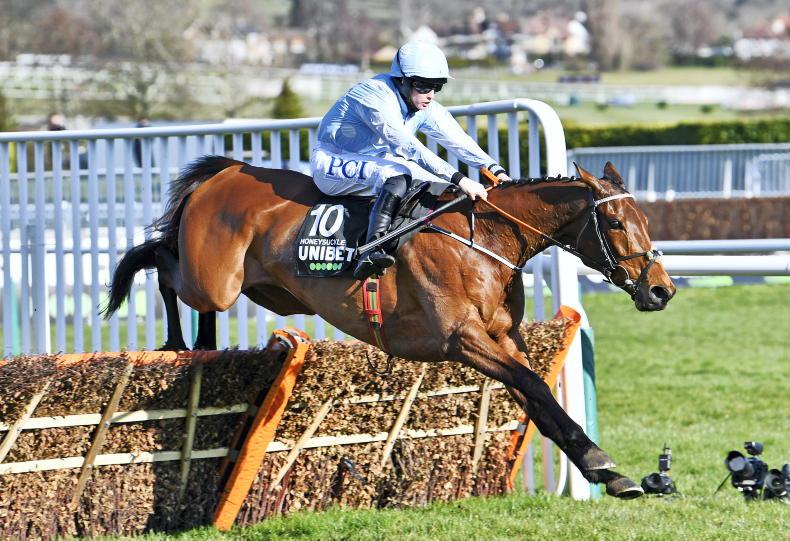
The Champion Hurdle very much went to plan for Blackmore and Honeysuckle, but not by luck. The plan was to jump off on the outside of the field, as most who had studied the race thought it would be. Her plan was to observe the early pace, and to tuck in at the right point behind that pace depending on whether the four possible pace angles were behaving as expected.
In control
She kept the option to stay handy if the pace wasn’t strong, and to drop into a tracking position if it was, but the crucial thing was that she was in control, and when Goshen blew the turn into the back straight, she was able to slip up his inside, and was then ready again to move into the slot which Not So Sleepy was gradually vacating, while ensuring that she always had room to come around the pair left in front. Every move considered beforehand; every potential angle anticipated.
Of course, you’ve got to have a willing and talented mount, as illustrated by the story of Victorian (the era, not the bit of Australia) jockey berated by the owner of a beaten mount who asked, “Why didn’t you come along earlier, as I told you?”, to which the reply was a rather forlorn “If I had sir, I’m afraid I’d have had to come along without the horse.”
There is no doubt that Blackmore has had the horse more than once this week, but those who believe the best horse usually wins the race are working with empty betting accounts more often than not.
It’s always amazed me on the occasion that jockeys or trainers are asked about their tactics, and they reply with a variation of “We’ll just pop away and see how it goes.” I used to think that these people were being clever by not giving away the tactics they had been musing over for fear of handing their rivals an advantage. The dreadful realisation that these replies are often actually honest still chills me, and yet there it is.
Lacking ambition
Too many British failures this week – in my view – have come, not just from a lack of equine talent, but from tactics which are either too ambitious, or entirely lacking in ambition.
Too many riders seem so concerned by getting cover and not conceding ground, that they are happy to view getting a prominent pitch on the rail as a tactical victory. I’m not sure how many races at Cheltenham you need to watch before you realise that by falling for the comfort of cover, jockeys risk giving up control.
You either have a plan on how to get where you want to be, or you are left hoping others will let the gaps open for you.
You don’t have to be in front to have control of your own tactics, but you can’t control anything from inside someone else’s pocket, and there is no place at the top for hope.
Winning in racing, as in all sport, is largely about becoming the best, but beyond that it’s about maintaining control and/or avoiding compromise, and it’s clear that there is a big difference between the best and the rest among current jockeys, and that has been laid bare this week.
Blackmore has been brilliant, but for Jack Kennedy to pick himself off the floor on Thursday and go on to produce the ride he did on Mount Ida in the Kim Muir was scarcely believable, and if you haven’t watched that replay a dozen times already, you’re missing out. You will never see better.
YES, it’s true. I have spent most of my week shouting, “And what are you going to do now, you numpty?!” to a wide array of jockeys, through the week, but it’s not all been brickbats here, and I was delighted to see Danny Mullins get a first Festival winner after several near misses aboard Flooring Porter, even if my own bet was sunk.
I had the pleasure of working with Danny (as well as the legendary Ken Whelan) on Setanta Sports a few years ago at a time when he was sidelined with a broken leg. There are few nicer guys around, but that easy-going façade hides a ferocious work ethic and a burning desire to win.
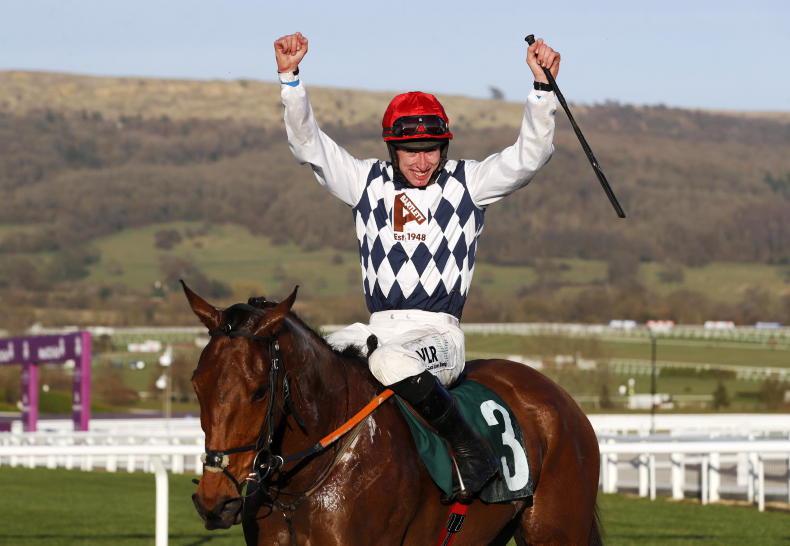
His coming by the ride on Flooring Porter was fortuitous, but he seized his opportunity with both hands, and the broad smile on his face as he realised the race was won was a delight to behold.
Danny wouldn’t have had his chance but for the sacrifice of Johnny Moore, who only decided on the morning of the race that he wouldn’t be fit to do the horse justice. That must be a heartbreaking decision to make, so to see the pair of them celebrate the win together on the pull-up was a genuinely tender moment, and wonderful to see.
Fair play to Jonathan for having the strength of character to make the correct decision, and to Danny for sharing the glory. It was an undoubted highlight, and I hope Johnny gets his reward down the line as he surely deserves.