THE first time Scandinavians landed in Normandy with horses, they were scary Danish Vikings, at the end of the eighth century… Once assimilated into the local population, some of their descendants would take part in another conquest: that of England, led by William the Conqueror in 1066, as depicted in the Bayeux Tapestry… which you can currently see in London!
But when the Sundströms travel to Ireland this September as consignors at the 2026 Orby Book 1 Sale, their intentions will obviously be far more peaceful than those of the Scandinavians of the Middle Ages!
They came to Normandy from their native Sweden in the early 2000s. This horse-loving clan begins with Jan and Maja Sundström, Anna’s parents. Anna herself is the mother of Moa and Lillie. For them, everything starts with the land and animals.
Cattle… and travelling!
Before horses and her international success with Lanwades Stud, Kirsten Rausing had started out with cattle in Sweden. Her path bears some resemblance to that of Anna Sundström: “I did a lot of dressage competitions, but we also had a very good herd of top-class Limousin cattle. At the end of the 1990s, I actually went to the United States to show cattle.”
While she was on the other side of the Atlantic, Anna Sundström received a call from her parents: “They told me: ‘We’re going to buy a thoroughbred’. I replied: ‘That’s cool, then we can breed!’ I was thinking more about sport horses, because racing isn’t prominent in Sweden.”
Indeed, in Sweden a number of show jumpers have been produced from thoroughbred mares crossed with warmblood stallions, including the champion Butterfly Flip, a five-time World Cup finalist. A horse such as Singclair, who finished in the top 10 at the most recent World Equestrian Games, also comes from a Swedish family tracing back to a thoroughbred mare.
Where is Newmarket?
But Anna Sundström’s parents had something very different in mind: “They told me: ‘No, it’s for racing. We bought one at Newmarket’. And I replied: ‘But where is Newmarket?’ (laughs). When I came back from the United States, I went racing at Jägersro. And that was when I thought: ‘Wow, this is what I want to work with’.”
Things were under way, and several members of the family soon caught the bug. Anna’s brother, Fredrik Sundström, through Stålemara Gård AB, has also bred several very good thoroughbreds in Scandinavia.
Anna Sundström of Coulonces Sales continues: “Very quickly, we bought broodmares, notably at Goffs. The first year we offered yearlings, we had the top price in Scandinavia, and that happened again for several years in a row. I used to tell my parents that breeding was easy (laughs)!
“Very quickly, we started travelling to see how people worked elsewhere, in Ireland, England, Germany… I learned an enormous amount just by watching at the sales.”
Her background with cattle and sport horses helped shape Anna Sundström’s horsemanship: “For me, looking at a horse’s conformation has always been something natural. I grew up surrounded by it. Preparing cattle for shows in Canada and the United States also taught me a great deal. After that, it’s a life devoted to observing and working. Every day is a learning experience with animals.”
Le Havre, the horse who changed everything
It was around this time that the Sundströms found Marie Rheinberg for €7,500 at BBAG. She was unraced and her sire, Surako, had just been sent to Poland to stand at stud. But she came from a good Mathet family and her brother Polar Falcon had won the Sprint Cup (Group 1) in record time.
Anna Sundström remembers: “My father said: ‘What a dream it would be if we could send her to Noverre!’ He was a champion, especially over 1,600m. And that is how Le Havre was born. He was special from birth. We sold him for €100,000 in 2007.
“That was enormous for us, as it was only our second year selling in France. We were such amateurs. When I was told Jean-Claude Rouget was buying him, I only knew his name. At the sales, the people standing next to me would help me. Someone would say: ‘Do you know you’ve just shown a yearling to Sheikh Mohammed?’ And I would reply: ‘But who is he?’ (laughs). We got through that period thanks to the horses, but also thanks to a long list of people who helped us enormously.”
Le Havre would transform the scale of the family’s breeding operation: “If we are here today, it’s thanks to Le Havre. He is the reason we were able to keep going financially. First, his victory in the French Derby brought us breeders’ premiums [the Sundströms received €229,591]. Then we sold his sister by Peintre Célèbre for €500,000.”
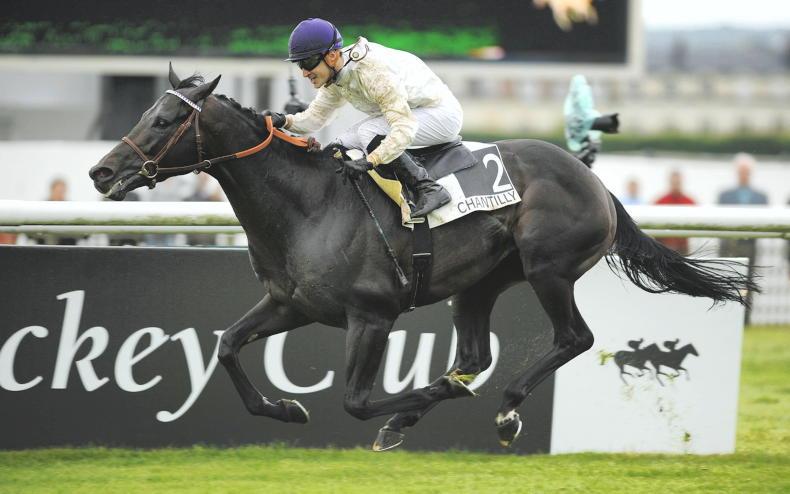
But that was not all. Le Havre also opened many doors: “Thanks to him, we became friends with the people around him: Gérard Augustin-Normand, his owner, but also Sylvain Vidal and Mathieu Alex, who worked for him. Later, Sylvain and Mathieu entrusted us with a daughter of Le Havre, whom they had bred… Her name? Wonderful Tonight!”
Wonderful Tonight won the Group 1 Prix de Royallieu and the Group 1 Qipco British Champions Fillies & Mares Stakes. Le Havre also brought his trainer, Jean-Claude Rouget, into the Sundströms’ circle: “How lucky we were to sell a horse like that to him. Year after year, he bought from us and the group winners kept coming. It really was a dream…”
The language barrier and choosing France
Why did they choose to buy a stud farm in France? Anna Sundström explains: “In Sweden, you can’t be a professional thoroughbred breeder and make a living from it. Financially, it isn’t possible. Ireland and England were too expensive. The only country where you could buy a stud farm in the heart of a breeding region was here, in Normandy.”
The challenge was considerable: “We didn’t speak a word of French. We couldn’t even buy bread in the morning! Looking back, it was a little crazy to come and buy a stud farm. My mother did all the administrative work without speaking a word of French. How did she manage? I still don’t know!”
Moa Sundström adds: “As Grandma says today: ‘There’s no problem. I can talk to the electrician, the plumber, the vet… But don’t put me in a café in France, because I wouldn’t know what to say!’”
Moa was three years old when she arrived in France. She adapted very quickly, notably because she already spoke English.
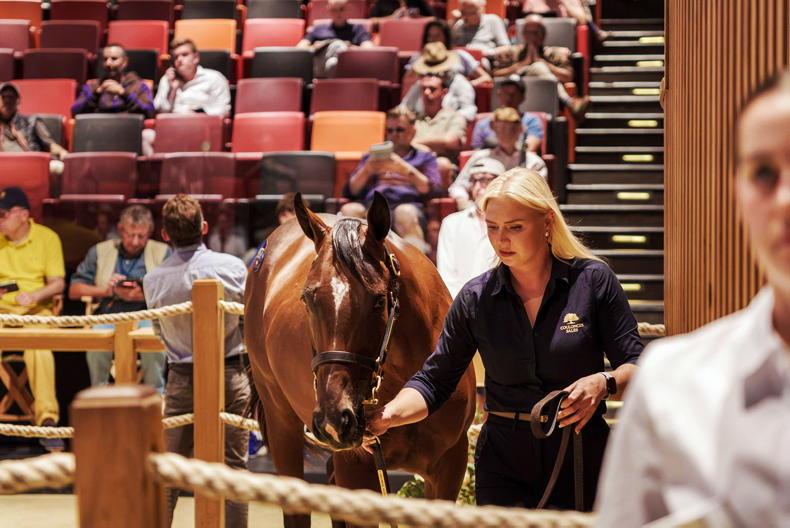
Anna Sundström continues: “When we were starting out in Normandy, my father was still working in Sweden. He travelled back and forth between the two countries. And it was also thanks to him that, financially, it was possible at the beginning. He was an anaesthetist and managed three hospitals in northern Sweden.
“My parents passed that work ethic on to us. In our family, we never stop. That’s how I was brought up. My children, Lillie and Moa, were brought up the same way…”
An unbreakable clan
The Sundströms are a particularly close-knit clan. Moa says: “Even today, every morning, Grandpa calls me. He asks if everything is all right and I ask him if everything is all right on his side. There isn’t a day when he doesn’t call me. I’m proud to have a family that never gives up. It’s an enormous strength.”
Her mother Anna adds: “Now Moa and I are partners. We are 50-50 in all the businesses. And when I’m tired, I know she is there. And the reverse is true.”
That family solidarity took on a particular significance when Anna Sundström fell ill: “Last year, I had cancer. Everyone asked me how we managed to get through all the sales. But once again, it was thanks to the family and the staff. When I became ill, everyone here told me: ‘Okay, that’s fine, you go to the hospital, we’ll carry on’. But the staff are our family too. We are together all the time.
“It took years to build the team, for the staff to understand that we aren’t French, we are Swedish. We have our own way of doing things. I’m not saying the French way is bad at all, but we do it differently.”
Two horses impossible to forget
Now a famous stallion, Havana Grey was also sold at Deauville by Coulonces.
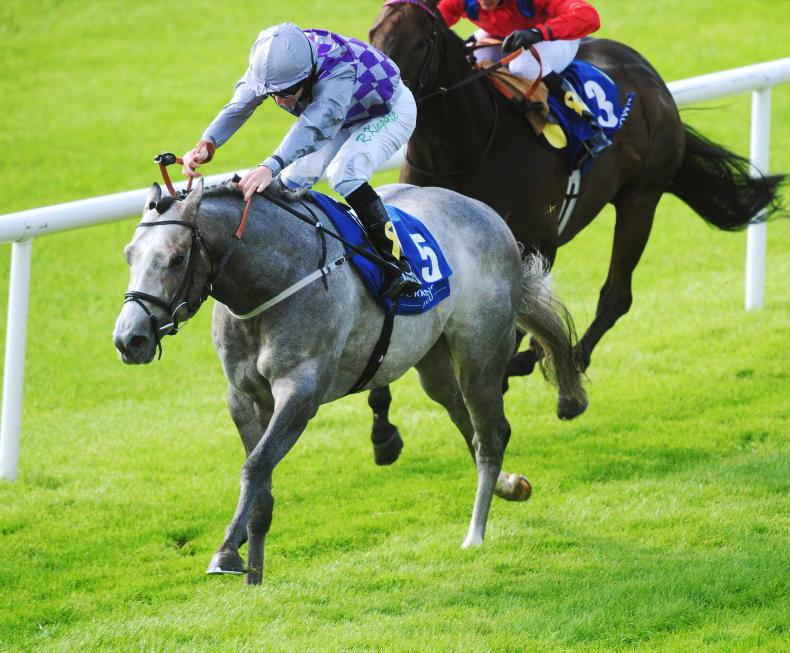
Anna and Moa remember: “I remember he wasn’t very big, but the way he walked was incredible. Some horses, you never forget them. There was something about him that stood out. He was saying: ‘I’m the king.’ (laughs) But he was kind.”
Another landmark horse in the history of Coulonces, Laurens became a champion and a remarkably tough racemare, winning six Group 1s. At 220,000gns, she was the top-priced filly at the 2016 Goffs UK Premier Yearling Sale.
Anna recalls: “I had actually gone to her breeder Mr Mathet with Robert Nataf to select yearlings. We had seen some very nice ones. Then we went for a little walk around and I said: ‘But what is that horse in that paddock over there?’”
Reputation
Siyouni was beginning to take off at the time, without yet having his current reputation outside France: “And the dam, I remember her pedigree wasn’t fancy at all, there was a lot of jumping in it! They brought her out, she walked, and I said: ‘Ah, I want her. I want her’. The breeder replied: ‘No, we’re not going to England with that one.’”
Anna Sundström insisted: “In the end, they said: ‘She has to make at least 50,000,’ and I replied: ‘I guarantee you, I promise you, she’ll make that.’”
At Doncaster, Laurens stood out physically: “Everyone said: ‘But that is not a Donny type at all’. She was anything but a little two-year-old for Royal Ascot. But Charlotte [Hutchinson, a pillar of the team] and I told all the buyers: ‘Look at the filly. Watch her walk. Don’t look at the page’. And it worked exactly as expected.
“She sold well and became a champion. Ten years later, people still talk to me about her as a yearling.”
Élisabeth Fabre, a special client
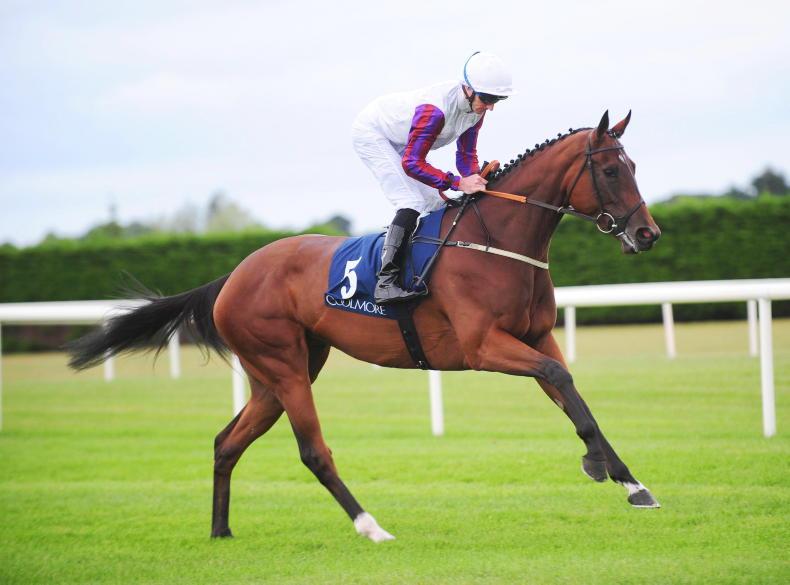
Among the Sundströms’ clients is Madame Élisabeth Fabre. In addition to training alongside her husband André Fabre in Chantilly, she owns her own stud farm in Normandy, which has produced numerous good horses under the Écurie Peregrine banner. Among the most recent examples are Group 1 winners Arapaho and Zulu Kingdom.
Anna Sundström says: “We have been consigning horses for her for five years. I never thought I would be able to work with Madame Fabre. She is the grande dame of racing in France. She is a great horsewoman. When her yearlings arrive here, you understand why the Fabres have had such careers as trainers.”
The Sundströms notably sold a daughter of Erevann to the Aga Khan Studs for €200,000 at Arqana in August.
The story of that filly had begun a few months earlier: “Madame Fabre actually wanted to sell this filly as a foal last year with Prime Progeny, Moa’s consignment. And Moa immediately said: ‘Mum, we’re buying her!’
“It’s tricky buying a lot from your own consignment. We spoke to Madame Fabre, who wanted to retain 25%. We paid €60,000 for her, with me, Moa, Lillie, Madame Fabre and Charlotte all partnering together! We had all joined forces.”
What followed gave the adventure a special flavour: “And when we saw that Princess Zahra had fallen for her, I thought: ‘This really is a women’s thing!’ I had never met the Princess before.
“When they bought her, we were so emotional. Just imagine, they so rarely buy yearlings! It’s a day we will never forget.”
Mother and daughters
For the Sundströms, passing things on is not limited to horses. Anna says: “People who see us may think we are exactly alike. But we are different in many other ways. Moa has brought a lot to the stud. My life has changed since she came to work here after finishing her studies. Social media, for example, I don’t understand any of it. She is exceptional at communication.”
Moa adds: “I have learned a lot here, at home, that’s for sure. And being from a different generation gives you a different perspective on many things.”
Anna continues: “Moa has an exceptional eye for buying foals. Much better than mine.”
The youngest, Lillie Sundström, meanwhile, is the terror of the show jumping circuit in Normandy. Her sister Moa says: “She’s a character. She’s incredible and she has her own opinions too. Sometimes she’s almost tougher on us (laughs).”
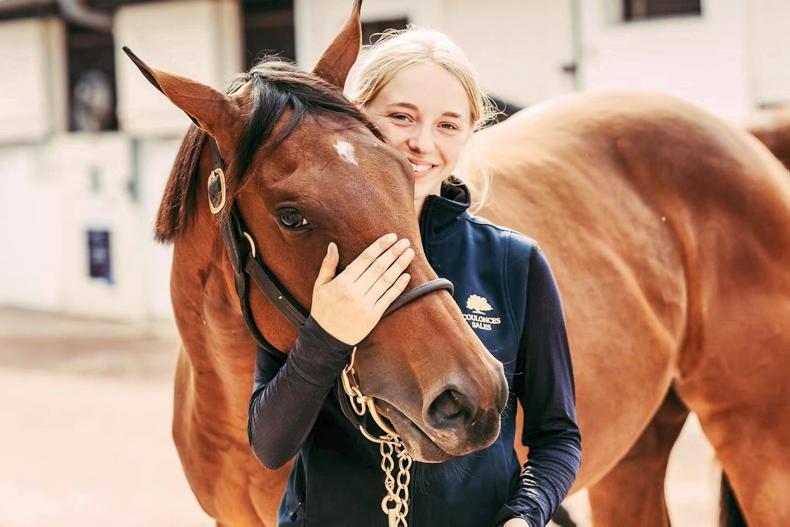
Anna smiles as she remembers one of her younger daughter’s remarks: “‘But Mum, that’s really not a very good idea to do that in the middle of the barn…’ She has character, like all of us. But she is interested in everything and knows all the pedigrees.”
Four yearlings for Goffs
Coulonces Sales will head to Goffs next week with a small draft, but Anna and Moa Sundström make no secret of their enthusiasm: “We have four individuals who are incredible.”
The draft includes a filly by New Bay: “Very, very beautiful.” There will also be a daughter of Wootton Bassett: “She is really very nice too.”
Coulonces will also offer a son of Good Guess. The yearling will have particular significance as he belongs to the young stallion’s first crop: “It’s going to be great fun because these are his first yearlings. We can’t wait.”
But it is above all the son of Camelot who stirs particular emotion in Anna Sundström: “We have a very special one. There are horses you come across that do something to you… He gives you goosebumps when you see him.”
Three of the four yearlings - the Wootton Bassett, the Good Guess and the Camelot - belong to The Nordic Partnership, which was formed almost three years ago around a group of Scandinavian investors. All three were bought as foals at Goffs with the aim of reselling them as yearlings.
Anna Sundström explains: “We’re ‘Nordic people’ (laughs). We’re a group of people who live in Scandinavia - or come from Scandinavia - and who want to do pinhooking.”
Goffs occupies a special place in Anna and Moa Sundström’s story. It was there, notably, that their family bought some of their first horses: “And today, we go back all the time. They are exceptional. Everyone at Goffs is welcoming.”
Their first steps as vendors in Ireland date back around seven years. It is an all the more symbolic milestone in their eyes, because it took place in Ireland: “Because Ireland is, after all, the country of horses. They really are the best breeders here. The Irish are so good at it. So to be able to sell here, we love it!”