AS the field lined up to the tapes for the start of the 1964 Derby, Pathe News newsreel showed a confident and smiling Scobie Breasley sitting quietly on his mount, Santa Claus, waiting for the start.
He was a justifiable 15/8 favourite, based on his performance in the National Stakes as a two-year-old and the Irish 2000 Guineas in his first race at three, both races at the Curragh.
In the National Stakes he went eight lengths clear of Mesopotamia, trained by ‘Brud’ Fetherstonhaugh and ridden by Peter Boothman, who had won the Chesham Stakes at Royal Ascot by 10 lengths.
The following spring he dismissed a quality field in the Irish 2000 Guineas and came home a comfortable three lengths clear of Young Christopher. In both races Santa Claus was ridden confidently and competently by Willie Burke.
Burke, who had only six rides in that season, always considered himself a stableman rather than a jockey. Since Burke had no experience of Epsom, the booking of a more experienced jockey became a necessity. This unique course has the capacity to unhinge the best-laid plans of many jockeys and trainers. The necessity to place your horse in the right position at all times to meet the intricate undulations of the course has always demanded an experienced rider.
Mickey Rogers, trainer, in selecting Scobie Breasley - who was at that time the only serious contender against Lester Piggott for the British jockeys’ title - was following the same path he took in 1958 when he had encouraged Charlie Smirke not to retire before his success on Hard Ridden in the 1958 Derby.
J.M. Rogers was the first Irish-based trainer to win the Blue Riband with Hard Ridden since 1907 when Orby won for owner Boss Croker and trainer Colonel Frederick McCabe.
Rogers was continuing a family tradition of training horses that stretched back to 1915. He ran a small stable of 18 horses on the Curragh and his success was staggering.
Scobie Breasley
Arthur ‘Scobie’ Breasley was an Australian-born jockey who rode over 1,000 winners in his homeland before moving to England. His major wins included five Caulfield Cups. He subsequently rode over 2,161 winners in Britain and was champion jockey there on four occasions prior to the 1964 season. He was renowned for his exquisite balance in the saddle and the sparing use of the whip, preferring to use hands and heels.
The paddock assessment of the Derby favourite before the race was not entirely favourable. It was noted that he was lean in the shoulders and lanky, and with joints that might have caused concern, especially at Epsom. However, his bold intelligent outlook impressed many.
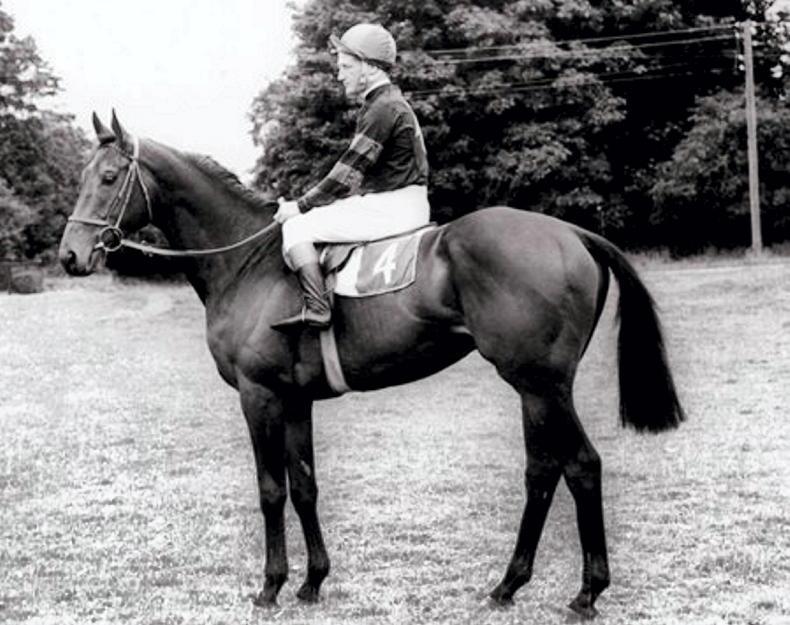
His starting price of 15/8 appeared generous in view of his racing record but there may well have been money bet against him on the basis of his physical conformation and potential lack of balance on such a tricky course.
He faced a high-class field including Oncidium and Baldric II (winner of the English 2000 Guineas).
In his autobiography, Breasley wrote that he was aware of Santa Claus’s conformation defects and the difficulties his mount was going to experience on a difficult track. He had a plan but failed to mention that it was the trainer who told him how to ride his race.
Rogers knew that, with his ungainly legs, Santa Claus could not be put into the race until he met level ground down the middle of the finishing straight.
In the early stages of the race Santa Claus was third last, at the back of the field. As the race developed and the field rolled down to Tattenham Corner, Scobie was in 10th place. ‘Santa’ had not been asked a question.
In the straight, Scobie balanced his mount and started to race up the centre of the course. In an almost nonchalant way, they sailed past the body of the field leaving Indiana (subsequent St Leger winner at Doncaster) and Jimmy Lindley in front.
From fully one and half furlongs out ‘Santa’ was always going to win the Derby. Pathe News clearly shows Indiana at full stretch while Breasley still has his mount under control and has not let him down. Within sight of the winning post, Breasley passed Indiana to win, snugly by a length.
Again Scobie had shown his trademark: just do enough to win, little or no use of the whip, and the horse handed back to the trainer, ready for his next race.
Paddy Prendergast, leading Irish trainer at the time and also champion trainer in Britain in 1963, ‘64 and ‘65, described Breasley’s ride as the best he had ever seen in the Derby. Prendergast’s horses had finished third, fourth and sixth in the race.
Shrugging off his own disappointment he exclaimed: “That was one of the finest races I have ever seen ridden at Epsom. If he (Scobie) had not nursed him like that he’d never have won.”
In my opinion, Prendergast contributed more than any other person in establishing Ireland as a major racing power, and that’s not forgetting that Vincent O’Brien also blazed a trail.
Many seasoned and informed racing men, including Sir Peter O’Sullevan, described Breasley’s ride as a masterclass. In his autobiography, Sir Peter also wrote that the events that followed evoked the most astonishing professional reaction to a Derby winner in his experience.
Elation short-lived
This should have been the happiest day of Scobie Breasley’s racing life. At 50 years of age he had won his first Derby. His elation was short-lived.
The formidable Captain Darby Rogers, accompanied by Tim Rogers, strode towards the winner’s enclosure and they certainly did not look happy. Both were convinced that Breasley had nearly lost them the race. The connections of Santa Claus expected to win by a good margin and were annoyed that their horse only got home by a length.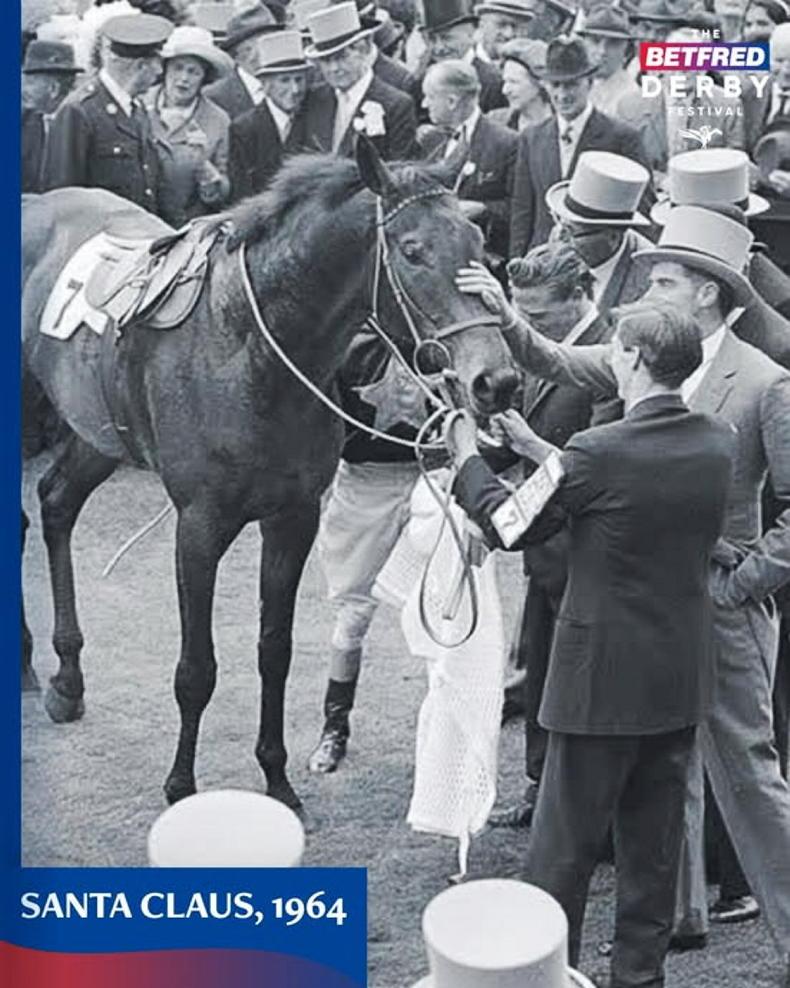
It has to be appreciated that there were no video replays available in those days and first impressions can be misleading.
Tim Rogers was on his way to establishing a quality stud farm at Airlie in Lucan, Co Dublin. He expected that Santa Claus would stand there as an impressive Derby winner when his three-year-old career was finished.
It is also possible that he felt that the narrow winning margin of one length diminished his previous performance in the National Stakes and the Irish 2000 Guineas, but he had other concerns too.
What may have clouded the issue for the Rogers family and caused pre-race stress was that Santa Claus had arrived at Epsom under heavy security, as there were genuine fears of a plot to dope the favourite by unscrupulous bookmakers who were heavily exposed to the Derby favourite.
Doping and race-fixing was a continuing scandal hanging over British racing for decades after World War II. It was allegedly organised by criminals with the aid of stable staff who were poorly paid, pharmacy staff who provided the drugs, and finally a major bookmaker who had taken ante-post bets in the knowledge that the horses would never start.
The main perpetrator was well-known but never publicly named. There were a number who fled to Spain, another who committed suicide before a public trial and only the bottom of the ladder faced justice.
The most notorious case was that of Pinturicchio, trained by Noel Murless who was winter favourite for the 1961 Epsom Derby.
Not only was he ‘got at’ on the first occasion, but the dopers came back to effectively finish him as a racehorse when he reappeared on the gallops after the first attempt failed to achieve its purposes.
What happened next shocked Breasley and affected him for a long time. Even though he believed he had ridden to the trainer’s instructions he was never to ride the Derby winner again.
It might be incorrect to suggest that Breasley was jocked off Santa Claus for the Irish Derby. Although Willie Burke was reinstated for the Curragh race, the loyalty shown to him by the horse’s connections up to Epsom was an indication that he would have regained the ride in any case.
However, Breasley did not receive the customary present usually awarded by the winning owner in addition to his winning percentage. He was bitter the way his Derby win had been devalued by connections and when he was again overlooked for the ride in the King George and Queen Elizabeth Stakes at Ascot, it was to have unintended consequences for the legacy of Santa Claus.
Derby double
Willie Burke was reunited with Santa Claus for the Irish Derby. He had ridden the horse to win the National Stakes and the Irish 2000 Guineas. He knew the Curragh well. Roared on by a rapturous crowd, which was estimated at 35,000, Burke rode a faultless race and won effortlessly from a field of 17, winning by three lengths.
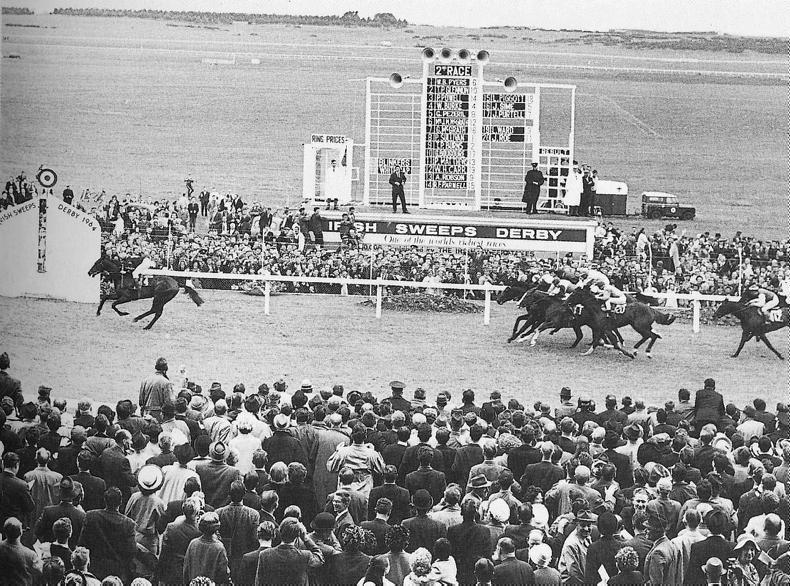
Now the first dual Derby winner since Orby in 1907, Santa Claus was declared a runner for the King George & Queen Elizabeth Stakes at Ascot. The owner and trainer decided to retain Burke as the jockey.
This was arguably a questionable decision even if the form book suggested that the long odds-on favourite Santa Claus just had to turn up. In a field of four there were two world-class jockeys in Bill Pyers (Nasram II) and Lester Piggott (Royal Avenue), joined by Marcel Depalmas (Prima Donna II).
Santa Claus did not look comfortable travelling down to the start on the firm going and possibly the jockey was not either. Let Scobie Breasley take up the story: “As a matter of fact I helped to get Santa Claus beaten at Ascot. My old mate Bill Pyers rang to say Ernie Fellows was thinking of bringing a four-year-old Nasram II over from Chantilly for the race and, as I had ridden Santa Claus, he wanted to know if they had a chance.
“Well, on the face of it, they didn’t have a prayer but I told Bill that Santa Claus could be turned over if the going was firm and you stretched him by setting a real gallop. It proved good advice.
“The Ascot ground was on the fast side and Bill set off in front to make sure Santa Claus was in a race.
“I guess he was feeling those legs of his and that Burke was uncertain whether to go after Nasram or wait and hope the leader would come back to him. In the end, he didn’t really do either and Pyers was able to keep a bit up his sleeve in the final furlong and hold on by a couple of lengths.
“Santa Claus started at 13/2 on and the shortest-priced favourite I can recall in a big race. His getting beaten was a real shock to most people but not me. I would have won on him but Willie Burke was inexperienced and never knew about the great Australian plot.”
Willie Burke was blameless. He knew going down to the start the horse was not happy and maybe did not want to damage him with future races in mind. However, for a jockey who had only six rides that season, he was probably the wrong choice for Ascot.
Unlucky in Arc
The horse was rested after Ascot and entered for the St Leger at Doncaster but was withdrawn because of the firm going - an acceptance of the fact that he would not act on that type of going.
Santa Claus subsequently ran in the Prix de l’Arc de Triomphe and finished second to Prince Royal. He started at an unbelievable 23/1 with Jimmy Lindley taking the ride. Beaten by three quarters of a length, he encountered no luck in running when impeded by the race favourite, La Fabuleux.
Breasley maintains that if he had retained the ride Santa Claus would have remained unbeaten: “It may sound like sour grapes to say so, but if I kept the mount I firmly believe Santa Claus would have gone through the remainder of his career undefeated. You needed to kid him a little. Not that he was ungenerous or at all kinky, but I am convinced he used to feel those dodgy legs every now and then and went best when given a quiet and kind ride.”
Those words were echoed, in some measure, by Vincent O’Brien. He had great respect for the Australian jockeys who rode in Ireland in his time, such as Ron Hutchinson, Bill Williamson, Jack Purtell and Garnet Bougoure.
O’Brien viewed them as great jockeys who sat quietly on the horse, were kind, did just enough to win, looking to the next race for their mount and giving the trainer 7lbs to play with.
It was Breasley who rode the O’Brien-trained Ballymoss to win the Coronation Cup, Eclipse, King George and finally the Prix de l’Arc de Triomphe in 1958.
It is a great pity that Santa Claus’s legacy was not as complete.
TIM Rogers is regarded as one of the key figures in establishing Ireland as one of the world’s leading centres for thoroughbred stallions.
Son of Darby Rogers and brother to Mickey, Tim enlisted in the British army after leaving school. During World War II he was assigned to accompany and drive Sir Winston Churchill during the Prime Minister’s visit to the battlefront in North Africa.
The Prime Minister was so impressed with the young officer, who was not yet 21, that on a future visit to the headquarters of the Allies’ Italian campaign Rogers was retained to do the same duty.
The friendship continued after the war and had positive results for the future career of the officer. Given the rank of honorary captain, Rogers was demobbed in 1947 and he returned to Ireland. He managed his father’s stud farm in Lucan and enjoyed the post-war social circuit and parties.
Meanwhile his brother Mickey was beginning to make a name for himself as a trainer. He had a career breakthrough when Hard Ridden won the Derby in 1958, owned by Sir Victor Sassoon.
It was at that time that Tim, looking at his brother’s success, decided he had to leave the good life behind. With the help of a family friend, William Barnett, he bought Airlie and took ownership of the stud. He subsequently bought out Barnett’s investment.
The standing stallions were of no consequence. Greek Star (stud fee £48) and Heron Bridge (£36). It was typical of the general situation in Ireland.
Winston Churchill subsequently sold Tim Rogers two foundation stallions in High Hat and Vienna. The latter proved a disappointment and was subsequently sold the stallion to France, though he was to become the sire of the champion Vaguely Noble.
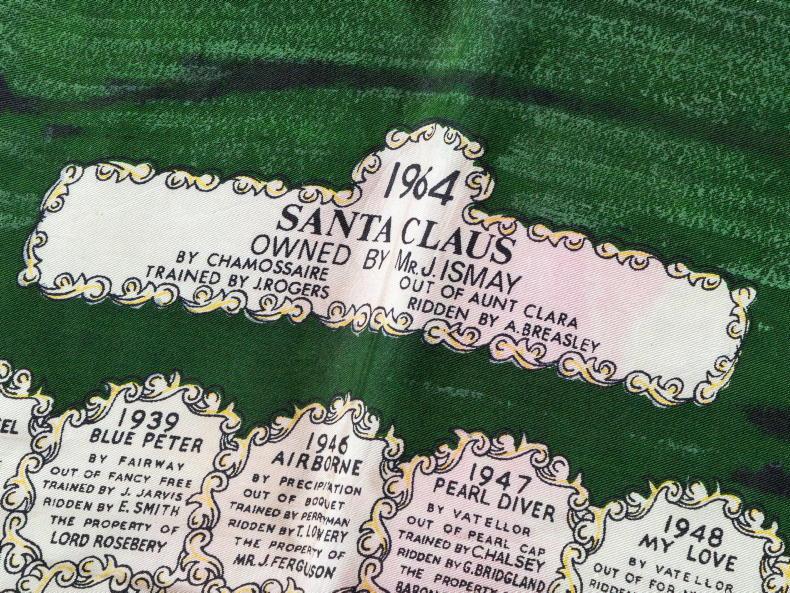
Airlie Stud grew to encompass Simmonstown and Grangewilliam, all within the Lucan-Maynooth area. He was also the first outsider allowed to purchase a stud farm in New Zealand.
Rogers devised a system of syndication that, for the first time, stationed quality stallions in Ireland. Major acquisitions included Habitat and Petingo, both excellent Group 1 performers. Habitat, in particular, became a European champion sire.
In 1981 Airlie, running side-by-side with Coolmore, helped achieve a sensational thoroughbred landmark. Of the 49 Group 1 races run that year in France, Britain and Ireland, 22 were Irish-bred, 11 were American and the remaining 16 were either British or French.
To emphasise Tim Rogers’ contribution to the internationalisation of the Irish-bred thoroughbred, Peter Willet included the Captain (1922-1984) in his compilation of ‘Makers of the Modern Thoroughbred’. He was included in the company of Marcel Boussac (1889-1980), The Aga Khan (1877-1957) and Bull Hancock (1910-1972). No greater accolade could be paid to the master of Airlie Stud.
We must not forget the contribution made by his wife, Sonia (née Pilkington). In an interview with Irish Life and Lore, Sonia Rogers spoke about the early years at Airlie Stud and how she and Tim worked from dawn to dusk seven days a week for many years without a holiday in order to achieve the level of quality that made the Airlie farms world famous.