THE 2025 British flat season got off to a bumpy start. Before we’d even seen the Craven Stakes, Aidan O’Brien confirmed that both The Lion In Winter and Lake Victoria were huge doubts for the opening classics of the season.
As they were prominent in the ante-post markets, this was a blow to the classics, but when one major powerhouse falters, another thrives.
Ruling Court and Desert Flower, sporting the famous blue silks of Godolphin, won the 2000 and 1000 Guineas respectively, both of whom setting up potentially big seasons.
At the time, Charlie Appleby openly admitted that the 2000 Guineas was almost like a ‘prep’ for Ruling Court’s main aim, the Epsom Derby, while Desert Flower was described as a special filly.
Both found themselves on a straight road to Epsom from there, which was a refreshing sight.
Two Guineas winners stepping up in trip to compete in the second stage of the Triple Crown? Surely not.
Well, Appleby gave them both the green light to do so, and then that light turned into a strong shade of red for Ruling Court when he was declared a non-runner due to the excess rain on Epsom Derby weekend.
This left the O’Brien-trained Delacroix to go off favourite, but it was instead his stablemate, Lambourn, who took a page out of Serpentine’s book and made virtually all to win the Derby, also emulating his sire Australia in winning the famous race.
Head-scratcher
This came as a minor shock and, with the 50/1-shot Lazy Griff and 28/1-shot Tennessee Stud filing out the places, the colts’ classic did appear to be a bit of a head-scratcher in the immediate aftermath.
As for the fillies, the Oaks was a lot easier to understand.
Following her easy Cheshire Oaks success, Minnie Hauk dug deep to find see off her valiant stablemate Whirl by a neck.
Desert Flower, on what turned out to be her final start of the year, could only manage third.
It’s fair to say that the Oaks turned into a decent piece of form this year, even with the likes of Wemightakedlongway and Qilin Queen further back.
WHAT about the older horses? What did they get up to before Royal Ascot?
In the first Group 1 of the UK turf season, the Lockinge Stakes, Lead Artist just found enough to beat Dancing Gemini, while Notable Speech and Rosallion finished third and fourth respectively on what were their first starts of the season.
While the front two didn’t go onto too much subsequently, Notable Speech and Rosallion finished in the top two of Group 1 races a combined six times after. Unfortunately for Rosallion, Notable Speech did the heavy lifting in the winning Group 1s department.
Back at Epsom, Ryan Moore delivered a fantastic ride onboard Jan Brueghel to win the Coronation Cup on Oaks Day, with Calangdan a valiant second.
The best horse may have lost this day, but there’s not much more Calandagan could have done against a classic picture-perfect ride from Moore. It was the dictionary definition of sublime.
While the National Hunt season has Cheltenham as almost an end-of-year championships, Royal Ascot is the first time where lines in the sand are drawn and pieces of form start to develop stability.
Ascot form
The five-day meeting also reminds us of how vital course form is at Ascot, and the first race of the meeting echoed this, thanks to Docklands.
Second in the Queen Anne Stakes 12 months prior, Harry Eustace’s five-year-old pulled clear of the field alongside Rosallion, but when the line came, he just nosed himself in front to give his trainer a first Group 1 victory.
This was feel-good way to kick off the meeting, and to win your first-ever Group 1 is special, let alone at Royal Ascot.
It would be easy to forgive Eustace if this event was all a bit of a blur in his memories and, if it was so, it’s a good job he went and landed his second Group 1 in the Commonwealth Cup with Time For Sandals later in the week.
What’s the phrase about waiting for one bus and two arriving simultaneously?
Later in the day, Gstaad announced himself as a useful prospect in the juvenile scene with a three-length win in the Coventry Stakes and then American Affair, in his first Group 1 and second-ever start in group company, landed the King Charles III Stakes.
For a horse who started 2024 on a rating of 70, it’s fair to say he has been a big improver.
Battle of the Guineas winners
The feature race on day one was clearly the St James’s Palace Stakes, a race that always seems to get a great field.
This year, the British Guineas winner took on the French Guineas winner and the Irish Guineas victor, and these three filled the places.
It wasn’t a close race, however, as Field Of Gold sprinted clear of Henri Matisse and a disappointing Ruling Court.
The striking Juddmonte-owned grey emulated his sire, Kingman, by winning the Craven Stakes, Irish 2000 Guineas, and St James’s Palace Stakes, but missing out in the British Guineas.
This performance prompted debate online about his how his ability would stack up against Kingman and, after his start to the year, it was a fair debate to have.
His next assignment further copied his sire’s season with a run in the Sussex Stakes at Goodwood, but we all know how that went, don’t we, Qirat, who are ya?
O’Brien’s successes in the two-year-old scene continued on day two of the royal meeting with True Love in the Queen Mary, and both her and Gstaad look like typical well-fancied classic candidates for 2026.
Carmers put in a gallant effort to win the Queen’s Vase for Paddy Twomey and Billy Lee one race later, and both Crimson Advocate and Cinderella’s Dream capitalised on a strong early pace to finish first and second respectively in the Duke Of Cambridge Stakes.
It seems almost wrong to see Ombudsman’s name in a British Group 1 with such a big starting price but. in the highlight event on day two, the Prince Of Wales’s Stakes, he made his 7/1 SP look a little bit silly.
The four-year-old, who up until then had tasted just Group 3 success, announced himself to the flat racing world as a player in the middle-distance division. In beating Anmaat, See The Fire, Map Of Stars and Los Angeles, it was some of the best form you could hope for.
His turn of foot in that style of racing was devastating, which could only lead to better things.
It was pretty dejecting news in late-May to see that Coolmore had retired the legendary stayer Kyprios due to an aggravation of a previous ringbone lesion.
What would the Gold Cup division look like?
Who will Ballydoyle mould into a stayer? Will the staying scene have any excitement left?
It turns out these questions weren’t needed and. from a punting perspective, the Gold Cup on day three of Royal Ascot was as simple as looking at who finished second to Kyprios in 2024 and picking him.
From the shadows
This was, of course, Trawlerman. Having waited in the shadows for plenty of time, Godolphin’s staying stalwart had his moment to shine in the Gold Cup, and he didn’t disappoint.
He soared to success by seven lengths, a victory that pole-vaulted his year towards a Lonsdale Cup win and a British Champions Long Distance Cup first-place trophy.
The best part about all of this? He should be back again next year to do it all over again.
Away from the Gold Cup, there were numerous impressive performances on day three of the meeting.
Charles Darwin, the Irish banker, took home the Norfolk Stakes, Merchant began a potential St Leger campaign with victory in the King George V Stakes, and Never So Brave won the Buckingham Palace Stakes off a mark of 105.
A win in the Summer Mile and City Of York Stakes subsequently saw him go off a short 6/1 for the Queen Elizabeth II Stakes on British Champions Day, which is some climb up the mountain.
Diamond appears
Days four and five finished Royal Ascot off with a nice international flavour. On the Friday, Ethical Diamond won the Duke Of Edinburgh Stakes, and if you’d have asked everyone in Berkshire that day if Ethical Diamond would run at the Breeders’ Cup, let alone win the Turf, you would have probably had a few puzzling looks.
Who knew the Duke Of Edinburgh Stakes was a rich producer of Breeders’ Cup talent?
It was also a day of days for Joseph Murphy and Gary Carroll when Cercene outbattled Zarigana to give them the Group 1 Coronation Stakes success.
We also had Godolphin’s old hero Rebel’s Romance defeating Al Riffa in the Hardwicke Stakes, and Lazzat successfully raided our shores to win the Group 1 Queen Elizabeth II Jubilee Stakes, seeing out the Japanese contender Santono Reve by half a length.
AS if Royal Ascot wasn’t enough for us flat racing fans, July saw the Eclipse Stakes take centre stage. The field? Stacked. The competitiveness? Fierce. The prize money? £1,000,000.
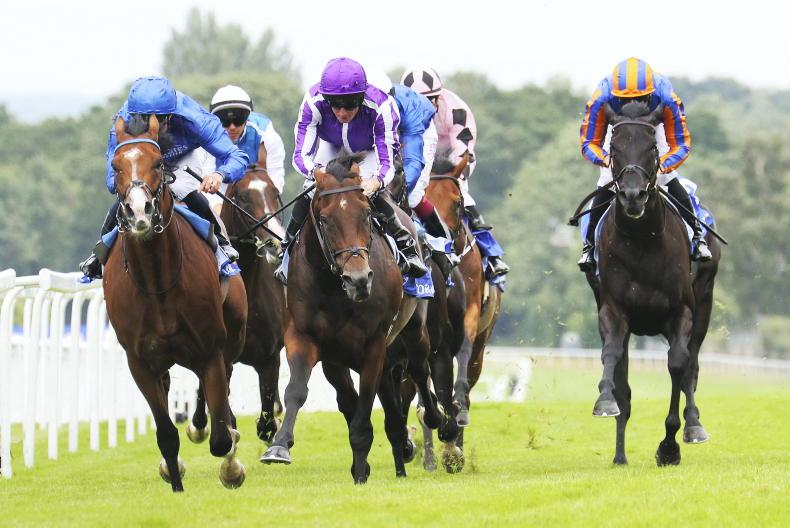
Delacroix, fresh from his down-the-field finish in the Derby, swallowed Ombudsman up late in the piece to hand O’Brien a ninth victory in the race. The Eclipse really was everything good about quality Group 1 racing, and more. Six decent horses, all holding a chance with three furlongs to go, and just when you think the form horse has it, one flies late to capture all the glory.
Not only did this race appease racing fans, but it forced John Gosden’s hand ahead of the Juddmonte International to get Godolphin to declare a pacemaker for Ombudsman. Pacemakers in a Group 1? How hipster of you. Mr Gosden.
The addition of Andre Fabre’s Birr Castle did indeed work, as Ombudsman was able to reverse the form with Delacroix on the Knavesmire.
That being said, for 10 of the Juddmonte International’s 12 and a half furlongs, it looked as if Rab Havlin had stolen it from the front on the 150/1-shot. Never in doubt, right?
With Delacroix winning the Eclipse and Ombudsman doing the same in the Juddmonte International, the middle-distance scene started to shape-up really well in late summer, and Calandagan’s success one month prior in the King George VI and Queen Elizabeth Stakes at Ascot further added intrigue.
Spoiler alert, all three would meet on British Champions Day.
The Ebor saw another Irish-trained winner - that man Willie Mullins was beginning to make an impression the flat - Ethical Diamond impressed but he was still just a handicapper - right?
Goodwood
In-between the Juddmonte International and the King George, there was, of course, Glorious Goodwood. Many a line could be spent dissecting the fantastic week, but we’ll stick to the most notable performances.
Of the Group 1s, Scandinavia took on his elders in the Goodwood Cup and won with authority, Whirl battled through torrential conditions to land the Nassau Stakes, and the juvenile Zavateri built on his July Stakes win by defying a penalty in the Vintage Stakes. This, plus his Group 1 win in Ireland, are the reasons why I believe he is a force to be reckoned with in the Guineas next year.
From the flat season proper to the end of July, Aidan O’Brien accumulated six Group 1s in the UK, and between the start of August and October 31st, he added four more to his season tally.
This began with Minnie Hauk in the Yorkshire Oaks before Scandinavia capped off a fine season in the St Leger. True Love bagged her first Group 1 in the Cheveley Park Stakes and Precise hacked up in the Fillies’ Mile.
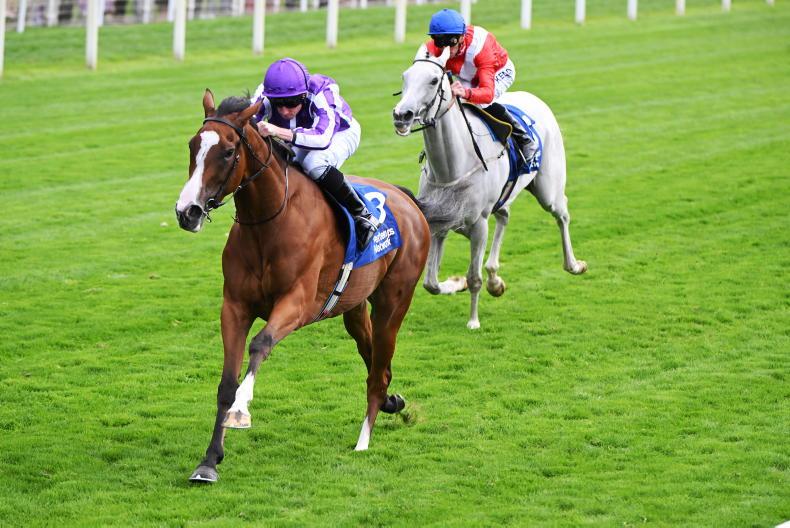
All four performances were extremely notable for their own individual reasons, though the post-race fallout surrounding Scandinavia and Precise ahead of 2026 was a bit more intriguing.
The former is now a Leger and a Goodwood Cup winner, which would surely put him on the path to becoming a top-class stayer. He needs to prove he can stay marathon trips like the Gold Cup, but he is surely now Ballydoyle’s number one ahead of all the major Cup races.
As for Precise, O’Brien alluded to the idea that Precise was better than Minding, his eight-time Group 1-winning filly by Galileo.
For a horse who’s had just five runs, one of which being that three-and-a-quarter lengths Fillies’ Mile success, that’s a rather bullish comparison.
But hey, the master could well be bang on the money. Newmarket in May will give us a good indication, no doubt.
Asfoora
Elsewhere at York, one of the best pieces of individual training came from Henry Dwyer. For months, he told us all that Asfoora, his sprinting star, was a bit behind where they wanted her to be, and if there was to be one race for her this season, the Nunthorpe was it.
Before then, she ran creditably at Royal Ascot and Glorious Goodwood, and when her chance came on the Knavesmire, she took it and won like the superstar she is.
Brilliant training, brilliant horse and, to those her kept the faith, her 11/1 SP would have been a welcome surprise as well!
AFTER Wise Approach won the Middle Park Stakes, Fallen Angel won the Sun Chariot, and Gewan caused a minor upset in the Dewhurst, the British flat season came to a close with British Champions Day.
We’ve had shocks aplenty in 2025 on the UK turf, but one of the biggest had to be the official going description of ‘Good’ for Ascot in October. No mention of soft ground for Champions Day? Is everything okay?
Speaking of shocks, Powerful Glory winning the British Champions Sprint Stakes at 200/1 and Cicero’s Gift landing the Queen Elizabeth II Stakes at 100/1 certainly wasn’t one for the bingo cards, but it further reinforced the idea that British Champions Day throws up some wild results.
In a more settled series of events, the ever-consistent Trawlerman capped off a wonderful year with the Long Distance Cup, Kalpana put her Prix de l’Arc de Triomphe woes behind her in the Fillies’ and Mares, and Calandagan reigned supreme in the Champion Stakes.
As demonstrated with Powerful Glory and Cicero’s Gift, the 2025 British flat season was one full of surprises alongside some very memorable performances.
In this year’s Champion Stakes, the best horse won and, in a field that was so competitive, that is the best compliment that can be paid to Calandagan.
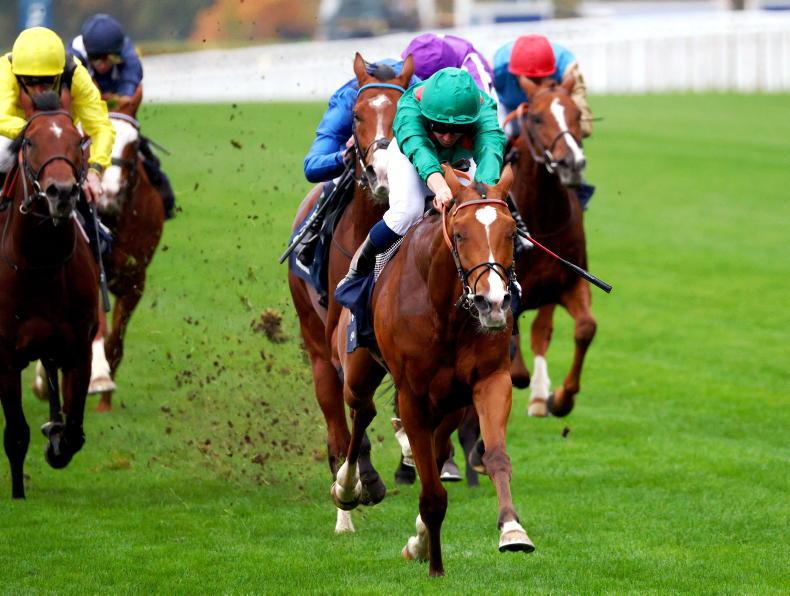
He has moulded himself into one of the best horses in training, and to have the future Japan Cup winner come over to Ascot for our prestigious Champion Stakes was, honestly, a privilege.
Same again next year?