What was your earliest racing memory and was being a jockey something you always wanted to do?
Punchestown point-to-point is my earliest racing memory. But the moment I first wanted to be a jockey was after watching the 1985 Derby when Slip Anchor won, ridden by Steve Cauthen. I was nine years old. That was the era of Lester Piggott and Pat Eddery, they were at the top of their game on the flat.
Born near Kilcullen in Co Kildare you moved to England aged 15 to ride for Reg Hollinshead. What was that like and what did you learn riding there?
Reg was famous for his apprentice academy. They were all at different levels and they were riding very regularly. You were learning off these apprentices everyday. Reg was an old school, tough taskmaster. You worked hard and it was important to have a good work ethic for Reg or you would get found out quickly.
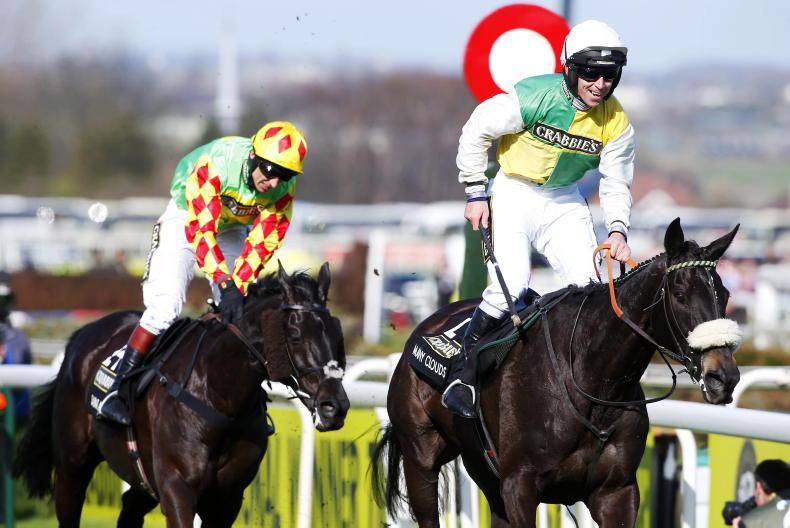
You had a long association with Oliver Sherwood in Lambourn, riding horses such as Many Clouds and Eric’s Charm. What was it like to ride there?
Oliver was a great man to ride for and there was never any pressure. There were a lot of horses to be schooled and he was very good at getting horses ready for the big races. It was a pleasure to ride Eric’s Charm and Many Clouds as well, who were two very good horses.
Which trainers or fellow jockeys have influenced you along the way?
In the 1980s it was Richard Dunwoody but that started to change around the 1990s when A.P. McCoy came on the scene. The style of riding changed to horses being more ridden from the front. Ruby Walsh then followed and he was more like Dunwoody in the sense that he was stylish and strong in the saddle. A.P. was a very good jockey at getting six or seven pounds extra out of a horse.
What advice would you give to a young Irish jockey today thinking about making a move to England?
It is a good move for a young Irish jockey because there is more racing and trainers in England. The trainers over there are open to giving people opportunities. The advice also would be to keep the eyes and ears open, and your mouth shut. You learn more by listening than talking.
Winning the Grand National is a special achievement for horse and rider alike and you managed to do it twice with Pineau De Re (2014) and Many Clouds (2015). What was that like and how much of a challenge is the Grand National?
The Grand National is a brilliant test for horse and rider. It is not as difficult as it used to be but it is still four and a quarter miles. Riders have to be patient and be aware of how fast they are going. The biggest test as a rider is knowing how fast you are going and the energy that you are expending on a horse. It is like driving a car and getting from point A to point B in the most efficient way possible.
There were a lot of fallers in the 2014 Grand National (won by Pineau De Re) and you can still get knocked back in position by loose horses. The luck element is still there in the race. Finally with regards positioning in the Grand National you have to ride the race to suit your horse not the horse to suit the race.
When you watch the Grand National now as a spectator rather than a participant what goes through your mind?
The National still puts the hairs up the back of my neck as it did when I watched it as a child. I feel lucky to have experienced it as a rider. The whole atmosphere and build-up to the race, as well the meeting, would make you miss being a jockey.
What was Many Clouds like as a horse and how special was he to ride?
He was a jockey’s dream to ride and I rode him in every single race that he ran in. There was always progression in his ability of performance but, as he got older, Oliver Sherwood trained him harder. He was a big frame of a horse and once he was fit we tried to maintain that and keep that edge on him. Many Clouds became a better horse when he got older due to this type of training.
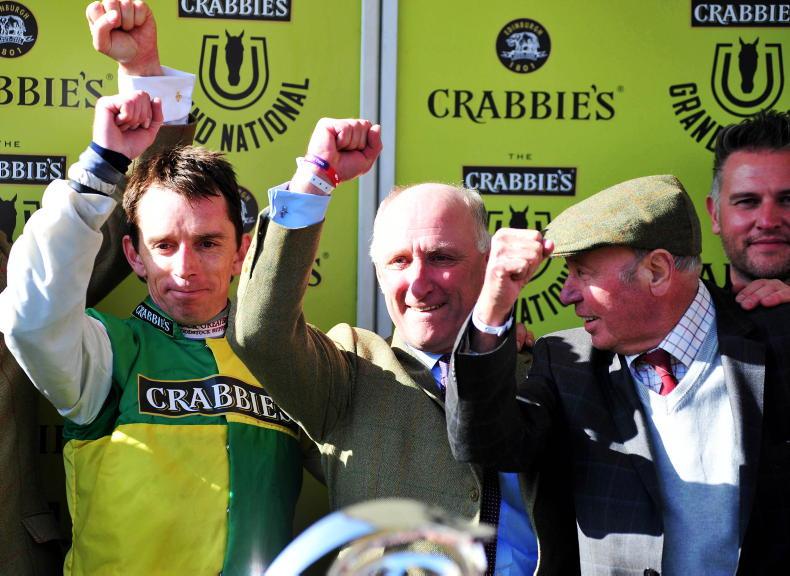
Many Clouds’ death at Cheltenham in January 2017 was deeply emotional for everyone involved. How did you process losing a horse like that?
It was really tough. That was one of his best performances the day he died (he collapsed after winning the Cotswod Chase) and it was a great finish. He deserved to be remembered as one of the top chasers. It was a heartbreaking way for him to leave.
Do you miss the buzz of race day and the weighing room atmosphere?
You do miss the banter and fun with your fellow riders. Although the race-riding was serious you still had good chats when you were in there together.
You work as a stipendiary steward for the IHRB. What is that like and what does the role involve?
I am getting paid to watch racing! All races, flat and jumps, are run under the same rules and regulations. We have to apply them and we watch each race start to finish and we break it down to check if the race was run fairly, was the correct result called, and were there any rule breaches. We try to apply as much common sense as we can.
With regards to knowing whether jockeys have broken the whip rules, we have access to multiple camera angles. We can slow down and speed up the footage, and we take our time as a group of stewards to look at it.
Who do you think is the best jump jockey riding today and why?
In Ireland it is Paul Townend. He knows exactly where the winning post is and he takes every challenge.
I was impressed by the waiting race he rode on I Am Maximus to win the Grand National this year.