DURING the first 100 years of modern racing history in France, from the 1830s to the 1930s, the overwhelming majority of trainers, jockeys and stable staff came from England. But gradually, English influence on French racing declined… to the point of almost disappearing altogether. In Chantilly, the sole remaining English flat trainer is Amy Murphy.
Today, the growing influence of the Irish on the French racing industry is becoming increasingly apparent. In 2025, Brian Acheson secured a significant share in leading French commercial stud Écurie des Monceaux. But this “Irishfication” is particularly visible in the training ranks.
Historically, the first famous Irishman in French racing was the legendary Charley Mills, who was considered a genius in his lifetime. He was the man who revolutionised trotting racing in Europe during the 1950s.
In flat and jump racing, Irish influence is more recent but growing year after year. Tim Donworth, from Limerick, is based in Chantilly and has trained several stakes winners in his first few years with a licence.
We went to meet three Irish figures — Lisa-Jane Graffard, Gavin Hernon and Philip Carberry — who have built careers in French racing and started families in the country. They explained why, in their opinion, the Irish are so successful in France, but also spoke about the challenges and successes they encountered in a country so different from their native Ireland…
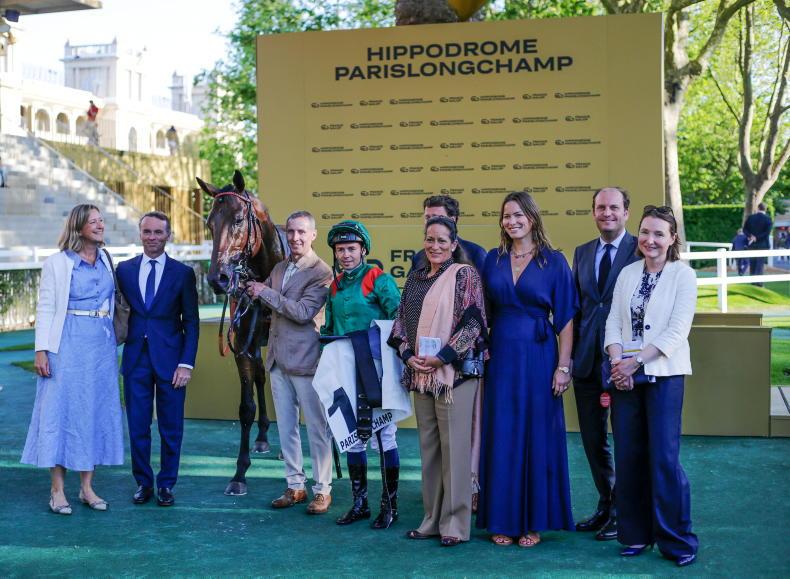
‘France offers an exceptional quality of life’
A HIGHLY respected figure within the French racing industry, Lisa-Jane Graffard was born in Ireland but has spent a large part of her professional career in France, where her daughters were born. On a daily basis, she works alongside her husband, trainer Francis-Henri Graffard, and together they have enjoyed remarkable success. They are based in Chantilly.
“Often, when you arrive in a new country, you are young, full of stars in your eyes, and it feels like a great adventure. That’s very much the spirit in which I came here.
“I had two reasons for coming. The first was love; the second was professional opportunity. So it was an extremely positive change.
“I immediately worked very hard — weekends, evenings, without forgetting the professional travel. I also had children straight away, and a husband who had just set himself up as a trainer. So it was a period full of challenges. But France offers an exceptional quality of life.
“The food is good, the country is beautiful. Compared to other places, we have access to incredible public services..”
Integration
Culturally speaking, French people do not give their friendship quickly. But once the bond is created, it lasts for life. Lisa-Jane explains: “In a town like Chantilly, with such an international community, it is easier to integrate. There is a school one day a week in English for children and a real cultural network for English-speaking expatriates. It is truly a fantastic place for foreigners to settle. And Paris and the airports are very close by.
“Now, since Brexit, there are far fewer English people. So that international community has reduced a little outside racing.”
Professionally, within the racing world, France can offer opportunities.
“I came over as a representative for Godolphin. It was a huge opportunity. And I don’t think I would ever have had the same type of position in Ireland or England, certainly not at the age of 28.
“With Francis, we have always been quite opportunistic in our respective careers. From a woman’s perspective, I don’t think it is easier to work in France, England or Ireland. Racing is still a very male-dominated industry.”
The operation run by Francis-Henri and Lisa-Jane has become one of the leading training establishments in Europe:
“What can I say? Yes, it is quite incredible. We have worked very hard over the last 15 years. We made many sacrifices. At least it wasn’t for nothing! I think we complement each other well in terms of ideas and strategies. That helped us.”
Irish advantage
Being Irish is a real advantage in France, where Irish nationality benefits from extremely positive perceptions among the French population:
“I think Irish people know that very well. They play that card! It has always been very important to me that my daughters have Irish passports and feel their Irish identity. I am very proud of Ireland, my country, which I think is exceptional given its small size.
“Irish people have a long history of emigration. We are a country where there are more people with Irish passports outside Ireland than inside it. Yes, it is part of our culture.I saw my two older brothers in the 1980s being forced to leave Ireland to find work abroad.”
French industry
After decades during which PMU betting revenues heavily financed French racing and prize-money, betting turnover declined in 2025 and 2026. This led to reduced prize-money levels, although they remain the highest in Europe.
“No, I do not have a negative view of the future at all. It is impossible to get up and go to work if you have a negative outlook. You have to stay positive and look at where things can be improved.
“I have been lucky enough to be involved in many initiatives which I think will have positive long-term effects in France, such as Au-delà des pistes (charity dedicated to the retraining and rehoming of racehorses) and the Trophées du personnel (French racing industry awards). Whether in France, England, Ireland or the United States, we all face issues. The public is becoming increasingly ambivalent towards racing.
“Each country has different ways and different resources to deal with its problems. Even Japan and Australia are asking themselves the same questions. I remain very positive because France still has many strengths.
“We have magnificent racecourses close to major cities. We have a training centre at Chantilly which is truly a jewel in the crown and is recognised worldwide.
“There are many young people in French racing with enormous talent, great motivation and a very international outlook. They are excellent ambassadors. Many French people have worked abroad and returned with good ideas. Those links need to be strengthened because it is important for exchanges to work both ways.”
‘All Chantilly yards are full’
IT has now been almost 10 years since Gavin Hernon set up in Chantilly. Now a family man, he occupies the former yard of Alain Royer Dupré, who has since become one of his clients. Coming from a well-known Irish racing family, he had the idea of settling in France from a very young age.
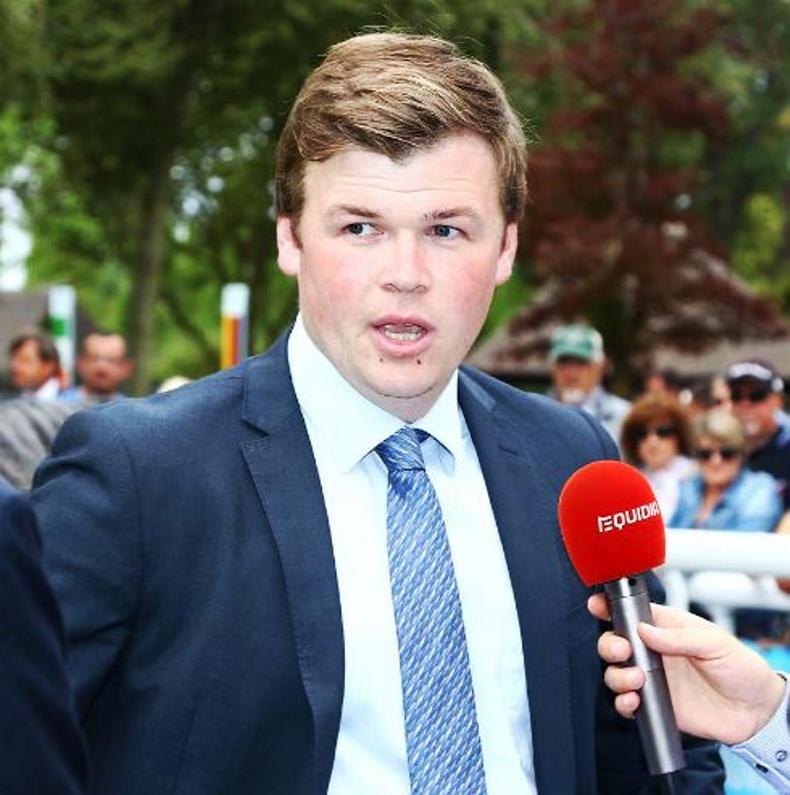
“From the age of 15 or 16, I wanted to become a trainer. I could already see that in Ireland it was quite complicated because of the limited number of races and the level of competition. England did not interest me because of the prize-money. Then I looked at France.
“At the time, the average age of the top 10 trainers in France was around 60. I told myself that at some point there would be opportunities for younger people. That’s where the idea of becoming a trainer in France came from, very early on in my life. Everything started there. So I decided to continue learning French as part of my university studies. After spending time with André Fabre, I went to the United States for a while. But I returned to France in 2018 to set up here.”
At present, the Paris region is experiencing a genuine revival, with many young trainers emerging in both jump and flat racing.
“Whereas this was not the case before, there is now a shortage of boxes in Chantilly. Everything is full. Of course, there are difficulties within our ecosystem, but there are still people willing to send horses into training in Paris, even though it costs more than in the provinces.”
Gavin’s strike rate in Ireland is excellent. With only three runners, he was able to rely on Spirit d’Or, winner of the Tattersalls Ireland Super Auction Sales Stakes at the Curragh, as well as Dare To Dream, third in the Group 3 Staffordstown Stud Stakes.
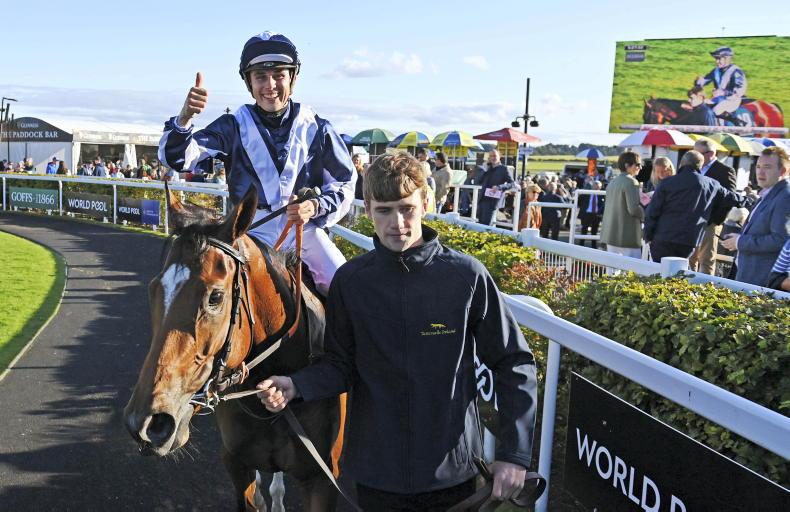
Gavin Hernon sent over Spirit D'Or to win the Tattersalls Ireland Super Auction Sales Stakes at the Curragh in 2024 \ Healy Racing
“Growing up, I didn’t dream of winning the Prix du Jockey Club or the Prix de Diane, but rather the big Irish races! I know the programme there well and I’m not opposed to running horses there when the conditions suit.”
Cultural differences
In France, as elsewhere, the Irish enjoy a strong reputation. And that is an advantage when pursuing a project within the racing industry. Gavin explains: “The Irish are warm, sociable people and there is a real culture of helping one another. Culturally, France is different in that respect. Young Irish people are moving abroad more and more. Today, when you look at small towns in Ireland, many young people have left. Some are in Australia, others in the United States… or elsewhere.
“The departure of young people is a loss for Ireland, but their dynamism also contributes to the country’s good international image. In France, even if Chantilly is perhaps not the best example in that regard, property and land remain affordable across much of the country. You can still buy a farm in France, whereas that is becoming very difficult in Ireland. It’s simply a question of supply and demand.
“I know there are Irish people beginning to think about setting up in France, just as I did at the time. And I would not be surprised at all to see more and more of them entering the French racing industry. The condition, of course, is that the economic health of French racing does not deteriorate.
“French jump racing offers remarkable opportunities, with very strong prize-money, comparatively speaking, and probably less competition. You can start from scratch and become a leading jumps trainer in France within a few years, without even being French, as Noel George and Amanda Zetterholm have done. They are currently second in the trainers’ rankings.
“There was recently a seven-race jumps meeting at Compiègne worth more than €400,000 in prize-money. For an average weekday flat card, it is around €380,000 or €390,000 for eight or nine races. And of course, the export market for French three- and four-year-old jump horses is extraordinary.
“I sold a listed-winning flat horse, with a good vetting, for €320,000. That is half the offers you get for a good three-year-old who wins on debut over hurdles at Auteuil. It’s crazy.”
Adapting to the programme
“You have to adapt to the racing programme available to you. Obviously, in Ireland and England, precocious two-year-olds keep the sport alive, whereas here we do not really have an exceptional programme for them.
“Personally, I look for two-year-olds capable of debuting over 1,400m or 1,600m and then improving over 2,000m at three. Those are the types of horses we look for at the sales, and they are the ones with the greatest number of opportunities in France. That said, this year I think I may have a few sharper horses than usual.”
But by settling in France, he chose a country where it is easier to succeed starting from nothing.
“I still think that is true. But it has become more complicated because the programme has changed a great deal. Before, it was easy to find small races to win with a horse. Today, that is no longer the case.
“The other issue is that France gives too much prize-money to modest horses, which have many opportunities in order to fill the races for betting. Horses of intermediate quality, on the other hand, we are forced to sell. Their handicap rating rises quickly and they become trapped in the programme. I am even considering running some novices in England in order to find solutions for certain types of horses.”
Compared to young French trainers, Gavin has perhaps distinguished himself through his knowledge of the sales ring and yearling purchasing. Agualeto, bought for €5,000, won a listed race before being resold for €320,000 at Arqana. Dare To Dream, purchased for €67,000, won at group race level before joining Wathnan Racing.
“If a client has a good budget, rather than buying one very expensive horse, we prefer to select two or three in which the client remains the majority owner. I syndicate the other half of each horse.
“The main client remains the principal owner: they name the horse and it runs in their colours. But it also gives them the opportunity to have three bullets to try and find a really good horse.
“This year, several clients have really embraced that approach and I think it will pay off on the racecourse. When I first set up, I had very few French clients. In fact, the first was Guillaume de Saint-Seine, who has since become president of France Galop. I had bought a filly he had bred. He kept a share in her and everything started from there.
“The late Tony Clout, former president of the trainers’ association, then introduced me to a few clients. Today, between 30% and 40% of my owners are French, and that proportion continues to rise. All of this is possible because I am in France. Had I stayed in Ireland, I would have half the number of horses in training, in an ultra-competitive environment.
French premiums
“French breeding is less focused on precocity, just like the racing programme itself. I remember that when I arrived here, there was a real issue regarding stallions. That has improved a great deal since then.
“French breeding remains oriented towards classic-type horses, but it has gained in quality. Previously, it was difficult to find truly good horses among those eligible for French premiums. Today, it is much easier. And that is important because those premiums really make the difference.
“Vimal Khosla, who supports us enormously, entrusted us with a daughter of Mehmas. She won a maiden and then a handicap, which amounted to €83,000 in earnings, to which you can add her resale value in England. For a filly bought for €45,000 at the sales, that remains very coherent economically.
“It allows owners to stay involved and hope to find the right horse. But even with an average horse, thanks to the prize-money, you do not lose your entire initial investment.”
The cultural difference between France and Ireland is truly considerable, at every level. Labour law in particular functions very differently. More generally, the customs and ways of working are significantly different.
“Social charges are extremely high, especially compared to Ireland. In return, the French system also has many positive aspects. I am thinking particularly of healthcare coverage.
“When you are a trainer here, you have to take a genuinely commercial approach and know how to sell. Because the percentage of prize-money we receive mainly covers expenses, unless you happen to have a few group racehorses in the yard.
“So the trainer makes his margin by selling horses in which he has retained a share. And that remains possible because the prize-money is high enough to allow you to be patient, especially with middle-distance horses.”
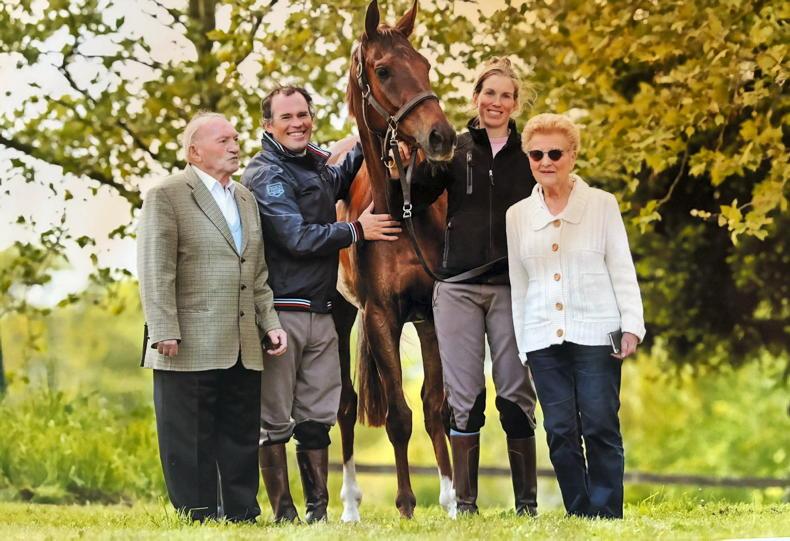
‘It’s a great place to work and live’
PHILIP Carberry came to France as a jumps jockey and won the country’s greatest race twice, the Grand Steeple-Chase de Paris. Since 2017, he has been based deep in the French countryside, more than 350 kilometres from Paris, alongside his wife Louisa Carberry.
Together, they have established themselves among the jumps trainers in France, winning three editions of the French Gold Cup, the Grand Steeple-Chase de Paris, with Docteur De Ballon (2020 and 2021) and Gran Diose (2024).
Is France a country which is hard to melt into?
“I had a lot of help from the trainer François-Marie Cottin and, luckily enough, he had an Irish wife, Irene. So when I came over, I was very well looked after. Then obviously I met Louisa and we did our own thing.
“For me personally, it was a very good experience. I’m bad at languages, so it took a little longer than normal to pick up French. I’m still getting a little better, I still need to improve, but that’s just a personal thing.
“Personally, I think France is a place with lots of good opportunities. It’s one of the best countries in the world, with a huge equine community, probably one of the biggest. You have jumps racing, trotting, show jumping, eventing and everything else. It’s a massive place for horses.
“It’s different to Ireland, so you have to learn a little bit about the culture and the rules. But overall, I always felt it was a very good place to live and work. Obviously there are positive and negative things about living in France. Setting up a business here is not always easy.
“But everywhere there is yin and yang, good points and bad points. It’s a learning experience. You learn the culture and the rules, and it’s best to learn them quickly. Overall, I think it’s a great place to work and live. You just need to be very prepared, very correct in the way you do things, and then it works well.”
’Best place to train’
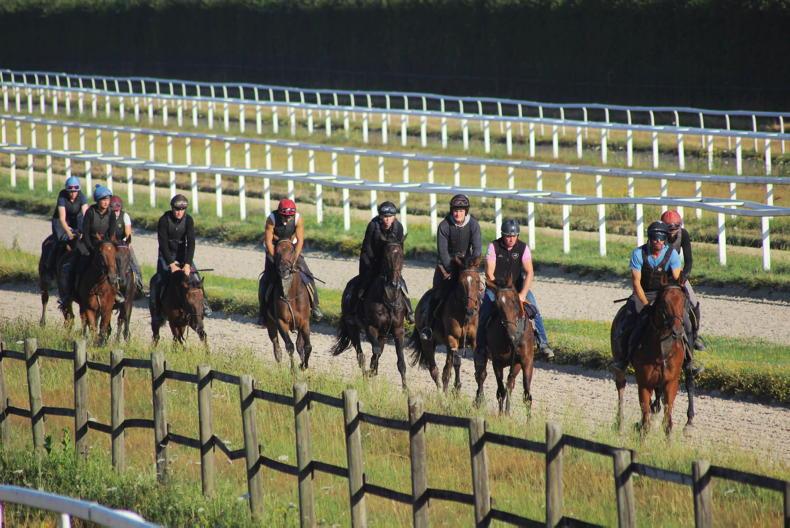
After the great jockey career, Philip and Louisa could have chosen Ireland or England to establish with their daughter, Sophie : “We came to see Senonnes at the time, and my cousin J.D. Moore was here as well. We were really impressed by the training facilities. Very quickly and easily, we were able to rent and share a barn with J.D. for a little while.
“Then he left, so we rented the whole barn and a house beside it. Maybe a year or two later, we were able to buy a farm beside the gallops with stables and a house.
“If we wanted to become trainers — which we did — we thought France was the best place to train. I think the land prices are very fair in the countryside. I certainly wouldn’t complain. We were very happy when we were able to buy our farm. In Ireland, buying land is really a wealthy man’s game.
“Irish people are very successful and land ownership is deeply rooted in the culture. There’s a saying in Ireland: you can build a house, but you can’t build an acre of land. So for people there, land is considered a wise investment.”
The work ethic of staff in France is also a bit different from Ireland. As a business owner, Carberry did have to adapt.
“I’ve been away from Ireland for quite a long time now, but from what I hear, employers there now face very similar situations to what people experience in France. I wouldn’t necessarily call them problems, just different situations.
“The French government probably looks after employees more through social welfare, healthcare and pensions. In Ireland, employees might get more money directly in their hands, but then they need to organise their own pension and healthcare. In France, the government takes care of much more of that. So maybe Irish people are a little more independent in that sense. But what is right or wrong really depends on the individual.”
Local kindness
Senonnes is quite deep in the countryside. And it’s possible to feel a bit isolated.
“Not too many Irish people around, for sure. But I feel very comfortable living in the countryside. We grew up in rural Ireland, so it feels very similar here. There are some English people around, but above all, when we arrived in Senonnes, the local French people were incredibly kind and welcoming to us. We are very grateful for that.”
For all the equine communities in the west of France, the exploits of Docteur De Ballon and Gran Diose have been a big deal… and the pride of the region where the Carberry’s are based: “In the Anjou area, people felt very connected to Docteur De Ballon. Everybody should be proud of ‘Doctor’ because he inspired a lot of people. He was an amazing horse.”
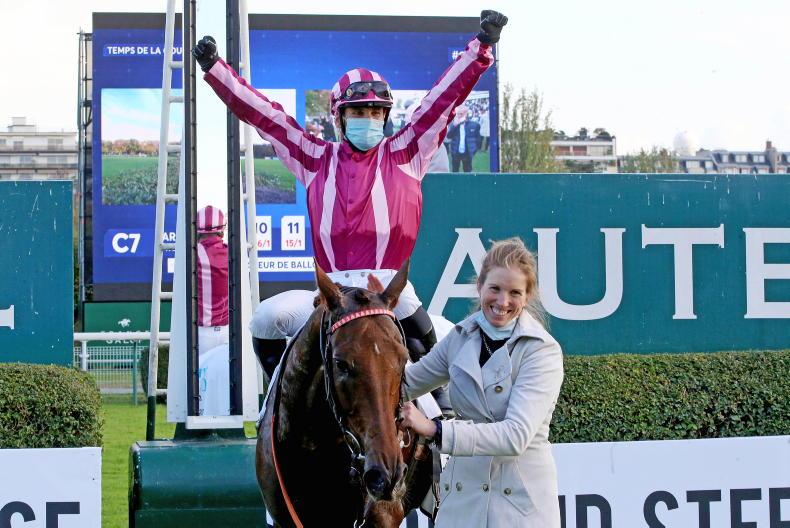
As a jockey Philip won the Grand Steeple-Chase de Paris twice. As a support to his wife Louisa, three more times. This is quite unique in the history of French racing.
“It’s a race I always admired growing up. Reading about Mandarin and Fred Winter winning without a bridle fascinated me. Honestly, I never thought I would ever have anything to do with the race myself. It felt like one of those mythical races you could only dream about.
“When François-Marie Cottin and Jean-Paul Sénéchal gave me the opportunity to ride Princesse d’Anjou, it was a huge dream come true. In sporting terms, it’s such a spectacular race. So thrilling, so intense. It’s an incredible contest.
“It takes a horse with huge dynamics, intelligence and ability. It tests absolutely everything in a horse. I think it’s a wonderful race.”
Sadly, Carberry doesn’t go back to Ireland very often.
“We have a lot of horses on the farm and in training, so it’s a big responsibility. The main thing is making sure all the horses are safe and well. So I don’t get many opportunities to go back to Ireland, but hopefully in the near future we’ll be able to visit the sales a bit more and maybe go racing a little more too. And who knows, maybe one day we’ll even have a winner there. That would be great.
“I think there’s some sort of cultural connection between the Irish and the French, especially with Brittany and the Celtic links. Most French people we meet always want to visit Ireland one day. I think the connection between the two countries should keep growing. We shouldn’t let language keep us apart. Brexit probably strengthened the link even more between Ireland and France.”
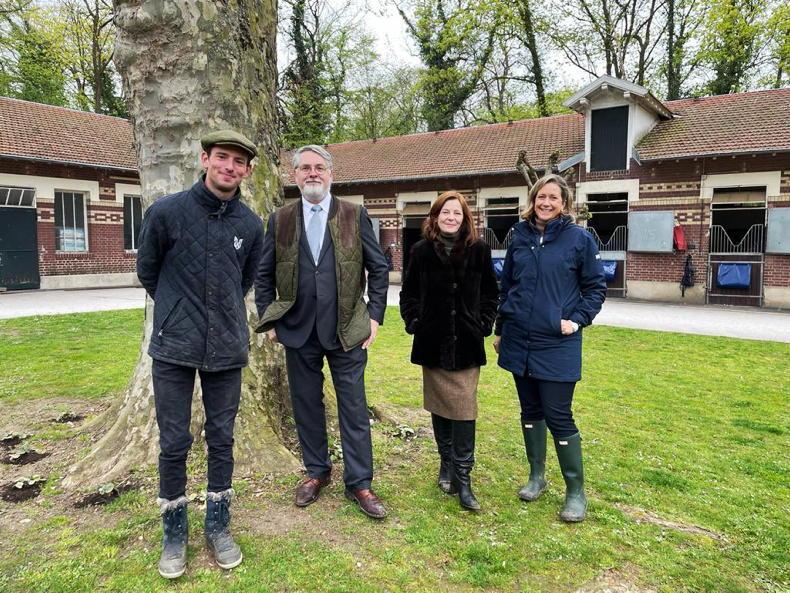
Tim Donworth (left) and Lisa-Jane Graffard (right) during a 2023 visit from the then Irish ambassador to France, Niall Burgess and his wife, Marie