THE recent news of Thurles Racecourse’s closure highlighted the cost and necessity of watering systems, a challenge increased by dry weather this year. While the majority of the country may be celebrating a fine forecast, it’s a different story for racecourses, as they continue to battle rising costs across all areas.
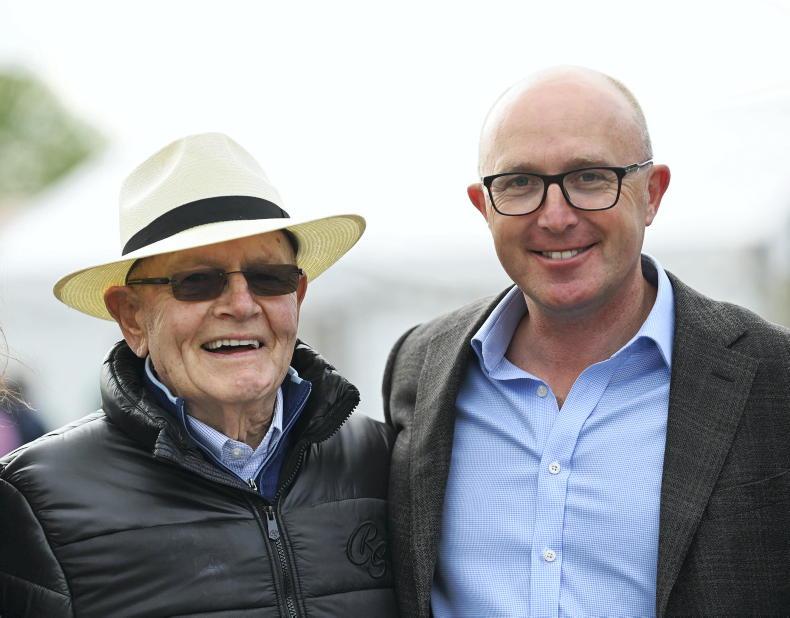 “We’ve two large reservoirs, and one of the primary objectives of our current track expansion programme is to safeguard access to and storage of water, over in the medium term or in the long term. I would guess it’s the biggest risk facing us as a racecourse, having that access and security of water, given the demands and requirement to irrigate to the level that we’re now doing.
“The storage facility in the reservoir adjacent to the finishing straight is primarily fed by harvested rainwater from all of the roof space we have, a system we’ve had in place for the last 20 years.
“We used Jim Ryan extensively and used his knowledge and experience, and we still use a similar system to what we started with.
“We invested in a ring main in our most recent track development plan and, as I said, we’ve expanded our water storage capacity drastically. That was a substantial investment; €3 million. We’re a National Hunt track; the expectation is there. We’re committed to it, but I understand that this has become a restricting factor for us and for many other courses.
“There is no doubt, and quite rightly, the requirement for watered ground through climate change and through industry expectations, has increased dramatically. I think we provide slower ground at the festival now than we would have done 20 years ago. That’s not a complaint; that’s a necessity.
“I suppose it’s fair to say that, from a welfare perspective, suitably watered ground is probably the biggest, most important factor in limiting risk of injury to particularly National Hunt horses.
“We would make an allocation in our budget of approximately €80,000 a year to water for the Festival alone. Sometimes we would go beyond it and I suppose the point is at the Festival, given its importance and how well supported it is, it is viable to irrigate to that level.
“I can see the difficulty for some tracks, for other meetings, when the income doesn’t always necessarily support the cost of water.”
 “We have two wells that supply our lagoon and we have an eight-inch ring main going right around the track. We have a high-volume pump, and it pumps the water around the track. We have hydrants every 180 metres, and the guys use like an umbilical cord system with a splash plate behind the tractor.
“Sean Ryan waters our track, he comes in here and uses all our system. He and his father Jim are experts at their job; they only water where they need to. We rely on them very heavily for their experience and expertise.
“This is our third year with this system. We’re very independent, and we can water the track when we wish. We can bring our track to any condition we wish to have it.
“I can’t give a definite figure (on costs), because it fluctuates, but we budget about €25,000 per year. To be fair, we were paying upwards of €80,000 a year for tankers. So, it’s a big saving for us. It’s a no brainer, to be honest.
“It cost us over €600,000 to get the lagoon and all the watering system into place; it’s a lot of money for a small racecourse. I’m not making a big song and dance about it by any manner of means. It needed to be done, and we’re glad we’ve done it now, but it’s a big investment at the start. I’d say to do the same thing now would cost you a million euro. I’m only guessing, but for the tracks that don’t have it, it is a big expense.
“We’re very lucky in the sense that nobody makes money out of this track, every penny goes back into it. I’m not sure how many privately-owned tracks there are, but to try and make money out of them is not happening at all. It’s the costs and the expense of everything. Nowadays, the bills never stop coming in and, for small tracks that race 10 times a year, it’s a lot of money.”
 “In the spring of 2019, we identified we were very short of water in relation to doing a proper job on the track and went about getting a grant from HRI to put in a lagoon.
“I now have two lagoons that total two million litres of water. I had one well servicing that and, about three years ago, given the change in climate and the dryer spell, I dropped a second well. One is about 50 large tankers worth of water to use it, and the rest of it works through our watering system; a ring main system.
“We have a recoil watering system there and, because our chase track is close to our ambulance roadway, we can top up with a tanker from the road. I don’t like to tanker and drive heavy tankers on the track, because it’s counterproductive; it actually compresses it and is actually making the surface worse, in my view.
“I tanker my chase track as needed and especially [in] weather [as] it is at the moment now, I’d be tanking away during the evening and have done for the last week to make sure we’re the slower side of good for jumpers.
“We water a little and often. We would start preparing our ground from as early as March, and that’s to promote grass growth. We overseed after every race meeting, which allows a cushion, it allows you to retain moisture, and you have a lovely, lush sward of grass on the track.
“Without jinxing myself on it, I think I’ve had 1,700 horses here in the last year and a half. And I think I’ve had one fatality, and I knew he was coming back from injury. So, [the watering system] has really improved our ground, and the facilities have allowed my lads to do their job much better.
“We’re completely self-sufficient, so we don’t bring any external people in to water. We do it ourselves. The cost is zero. I think the lagoon back then, cost €40,000 to €45,000, with a 40% grant aided by HRI. I bought a second water machine and each of those machines cost about €30,000 in 2019.
“If you break it down, the lagoon in today’s money, even if it doubled, would cost €70,000. and €40,000 for the machine. That’s €110,000 and a ring main, the auxiliary works, might cost €10,000. A pump will cost you €5,000 and a well will cost you up to maybe €8,000 to €10,000. So, you’re at €150,000, and then if you’re grant aided by HRI, that’s €90,000.”
 “We don’t have a lagoon so we’re using tankers. Unfortunately, we’re stuck with this for the moment, but we got planning permission for a lagoon last year, but unfortunately, under the present circumstances, we’re paying back over a million and a quarter that we took out six years ago for the new jockeys’ room, new stables, etc. We’re not fully finished paying that back, so we couldn’t afford it [the lagoon], but we have planning permission.
“We have our own well here and we have a tank that holds 20,000 gallons. Over the last number of years, it’s unbelievable the amount of water we use. Whether it’s climate change or whatever, the ground is actually soaking up water.
“The reason we had an all-chase card, and it only happened once, was I couldn’t guarantee that I would have both the hurdle and chase course fit for racing. I was battling everything here - the sun, the drying, with one tractor and tanker. So, we agreed to swap races with Clonmel and they took the hurdle races. In my opinion, it’s the best thing we ever done, because it lets everything as it wants to be. There weren’t any sleepless nights, put it that way.
“Last year, we spent €9,300 on watering but the reality is, it’s going up because there’s more watering going on, there’s more fine weather, the ground is soaking up water unbelievably. I know this year will be a bad one, because at times, I was up on three times more water than I ever had to do before.
“It’s a hidden cost, and then the cost of everything else has gone up as well. It’s getting more difficult, it really is. We’ll survive it but it’s getting tougher. It’s not getting, it has got really tough.”