THEY say it’s often darkest before the dawn, and wouldn’t it be the most welcome burst of sunlight if fortune shines kindly on Stephen Thorne next week at Royal Ascot.
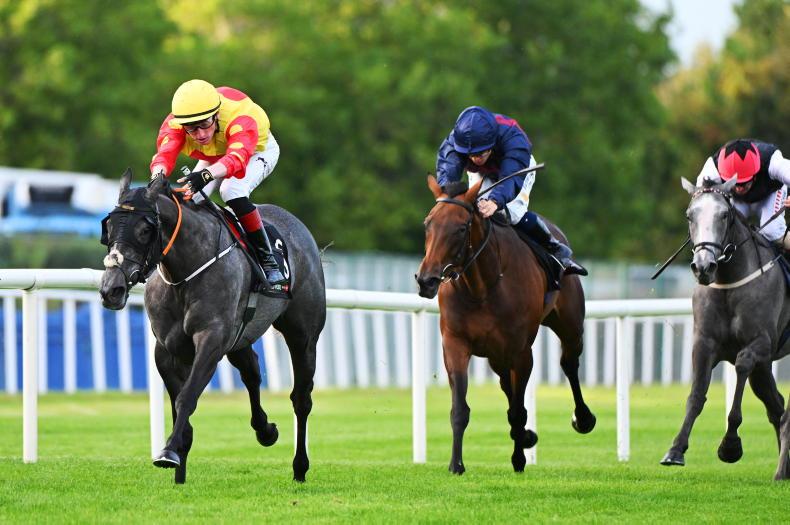
It’s only 18 months since the upwardly-mobile young trainer saddled his first winners at Dundalk - the start of a statement, breakout spell that saw him crowned the track’s leading Winter Series trainer for 2024/’25.
A notable first Irish Champions Festival success with Pink Oxalis followed last September, as well as no fewer than six individual Irish maiden winners in the space of seven months. The Co Dublin native has been demonstrating a real knack for finding the winner’s enclosure, and, in very little time, Irish racing has certainly been put on notice about his training talents.
But while results on the track in this fledgling period of his career have delivered no shortage of positives, it wouldn’t be a fair portrayal of the journey Thorne has been on lately to suggest that times have been easy.
Understandably, this remains a most sensitive and emotional period for the entire Thorne family after the tragic passing of Stephen’s brother, Adrian, on February 10th this year. At the age of only 32, his loss remains deeply felt each day by everyone close to him.
For Adrian’s older brother, aged 36, there has been little chance to pause and draw breath in a non-stop racing world. He has been doing his best to balance the challenge of leading a new business into one of the most competitive equine landscapes imaginable, while equally trying to come to terms with the devastating personal blow of losing a sibling.
In horses - his life’s calling - he hopes he can find healing.
“It’s amazing how on different days it hits you. It’s been very tough for us all,” says Thorne.
“At times your energy levels are sapped by all this grief, and there are moments when we’ve been trying to just go from day to day. There’s obviously been a focus on the business development in the last three months, going off to the sales and so on; it was important for the yard, but that was very hard. You’re pushing yourself to get the next batch of horses in - it never stops - but it’s a big, big loss for us all. Adrian worked on the farm all his life with Dad. We would have had conversations plenty about the horses, we’d chat about them on a weekly basis and he’d have come to Dundalk a couple of times. We had him there for a nice winner with us before.
“It’s just shocking. For all of us, it hasn’t been the easiest few months, but hopefully the horses can pick us back up again. They’re a great healer and it’s great to be with them all the time.
“Take Heart won the day after his passing and it was only a week later that Sir Les Patterson won for us at Dundalk too. It’s amazing how these horses can help us to heal, but we know it’ll be a long time that we’ll be healing from the loss of Adrian.
“Obviously we’ll never forget Adrian. We’ll be thinking of him every day.”
Sport has been described as one of life’s great distractions, and few stages have the potential to transport us to another place like Royal Ascot.
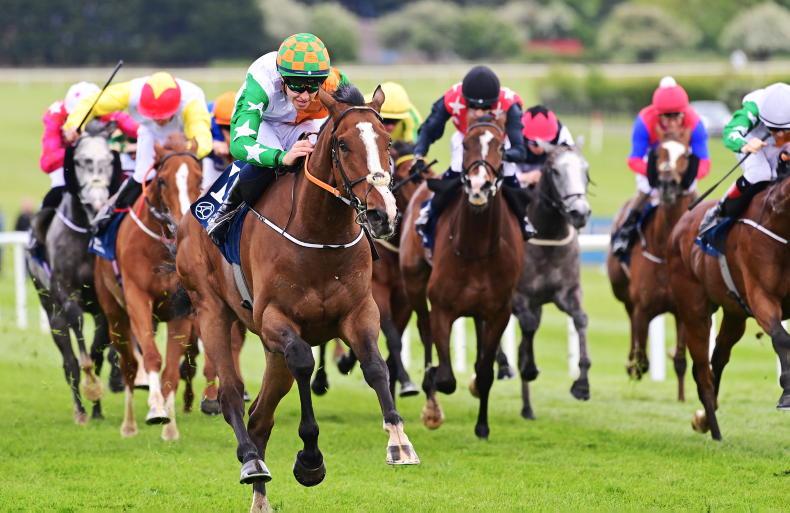
After running out one of the most impressive winners of Royal Ascot Trials Day at Naas last month, Jagged Edge heads to Wednesday’s Royal Hunt Cup (5.00pm) as the shortest-priced runner, nestled in the top five of the betting for the ultra-competitive mile handicap.
Exciting Edge
Thorne has a handle on what’s required to compete in contests like this. He was beaten a nose and a short head only last year at the same venue with Gleneagle Bay in the Victoria Cup. It was actually Jagged Edge’s debut for the yard when readily dispatching a well-regarded stablemate at Naas last time, and hopes are high that there should be a decent chunk of improvement to come from the lightly-raced four-year-old.
“We were just shocked how well the horse won at Naas, because we thought he would badly need the run,” Thorne explains.
“We had been training him for the Irish Lincoln, but he didn’t get to run and needed a course of antibiotics for practically the month of April. We only had two bits into him before Naas, so were adamant he’d need the run, and we had Far From Dandy in the same race. He finished second and is a good, solid yardstick because he had been second in the Spring Mile at Doncaster previously and I think he can win a premier handicap. I would have questioned the form of the race, only I train the second!
“The handicapper has had his say with Jagged Edge [raised 9lb to a mark of 102 after Naas] and now it’s a case of whether the horse can take a jump forward again. He worked well on Wednesday this week.
“I thought he travelled through the Naas race strongly, especially through the first couple of furlongs, and I think that’s what you’ll need to be able to do over there. At the moment, Billy Lee has been touted for the ride and has a very good record in Ascot handicaps. He won the race on Settle For Bay [in 2018] too.”
Before departing his assistant trainer role with cousin Ado McGuinness to train in his own name, Thorne had already developed a good name for sourcing quality horses second-hand at the horse-in-training sales. Jagged Edge is another example of that.
A winner of the Irish Cambridgeshire last season for Dermot Weld and Newtown Anner Stud, he changed hands for 125,000gns at the Tattersalls Autumn Horses-In-Training Sale to race in the colours of Shamrock Thoroughbreds, a venture started by the trainer.
“I like to buy a horse with plenty of size, but he’s probably one of the biggest horses I’ve ever bought - he’s around 17 hands,” says Thorne.
“Looking at him at the sale, you’d have felt he was a horse with a right chance of improving from three to four, if he filled out a little more. Not many horses win a Cambridgeshire on their fourth career start like he did as a three-year-old. He had a very appealing profile.
“Now, he had a bad run before the Cambridgeshire and another bad run after it. That’s probably why we were able to get our hands on him. Otherwise, he’d have likely been sold overseas for a whole lot more money.”
Sales approach
What attributes does Thorne prioritise when trying to identify suitable candidates for his owners?
“The whole landscape has changed in the horse-in-training market; even compared to my time with Ado. It’s become much more difficult with the foreign markets there. There’s a big demand for the type of horse we’re after, and plenty end up selling privately. What’s left at the end of the season that we have half a chance of getting our hands on, those from overseas tend to come in and wipe out the majority of the 90+ rated horses.
“The horses we look for an angle with are ones who might have a run or two that need forgiving, something recent in their profile that doesn’t suit everyone. I won’t forgive a lack of soundness, though. I need to buy a sound horse. I have bought the odd scratchy mover and tried to get their action right. It can work at times, but you’re trying to buy the horse who will kick on and progress into premier handicap or stakes level form. To do that, I think they have to be sound.
“To me, the mind is such an important part of any horse. If they are feeling any pain or pinch at all, I think you don’t get the real longevity out of them.”
Sourcing from the breeze-up sales has also been high on Thorne’s list. It was where he picked up first-time-out Leopardstown maiden winner Mayflower for 50,000gns last year. River Of Life, a two-year-old debut winner at Dundalk last autumn, was also picked up for €50,000 at the breeze-ups.
“The breezers have been a lovely way of complementing our approach to the horses in training. It balances the two sides out,” says Thorne.
“We could try buying 20 yearlings at around 30 or 40 grand each, but we’re still a relatively small outfit at the moment. If I’m going to buy a handful of two-year-olds, I’d rather see them gallop in front of me, assess soundness, their wind and so on.
“Yes, you will pay a bit more for those horses, but I think you increase your prospects of winning a maiden when going with the breezer who ticks a lot of boxes versus the yearling, who can probably only be judged by walk and pedigree. It’s any man’s guess what’s under the bonnet. We want to grow, but that’s how we’ve approached it for now. We’ve bought four breeze-up horses this year, three for Shamrock Thoroughbreds and another for a client. I’m happy with how we’ve done with getting those.”
All-weather advertisement
Dundalk has been a key part of Thorne’s rapid rise in the training ranks, the scene of 30 of his 41 winners so far and, when dealing with a relatively small pool of horses, it’s probably unreasonable to expect continued fireworks from the same runners into the early turf window. Restocking is important, says Thorne, though a wet winter hasn’t been ideal either.
“The angle to getting started was to make use of the all-weather programme over the winter, because it’s a little less competitive and gives a trainer like me a chance to stand out and build my own profile.
“We did exactly that last year, winning the all-weather trainers’ championship. At the end of that season last year going into the turf, we had to replace all those older horses - we had a hell of a lot of shopping to do. We got our hands on some fresh breezers, had a couple of nice maiden winners first time out on the turf, in tandem with several other older horses.
“I think we had an 18% strike rate in our first full season, and only 10 flat trainers had more winners for the calendar year. It was a great start, but we had a lot more replacing to do to gather up fresh stock for last winter’s campaign, and we had some nice winners again in that window. I’m trying to stick to quality over quantity. I want to produce them first or second time out as young horses, if they are good enough, and do our best to focus on those 80, 90 or 100-rated handicappers and horses who can take the lads to some good days.
“In terms of the horses this year, we kicked in five winners from mid-January up to March, but I found the winter was challenging for the horses on the whole with the rainfall we had, the temperatures; it has to impact the horses. Hopefully we can continue to build through the coming months.”
On his current training arrangement, he adds: “We have 20 in full training, and a few in pre-training with Tom Whelan, who has been great to bring our young stock along, as well as horses on a freshen up. It works lovely. We’re still in Jack Davison’s place at the moment. The shared yard scenario has served us very well and Jack’s a very good contemporary. We’re both Godolphin Flying Start graduates and are similar minded.
“Both camps are continuing to aspire to grow and are complementing each other. We both learn plenty from each other, and it’s been very good to help me get started. We’re just awaiting our final grant for permission, where we’ll have our new base in Man O War, Co Dublin. That’s where we’ll be situated, hopefully within the next 12 months.”
What has been the biggest learning from this opening chapter as a trainer?
“You’re doing it for yourself now, but it’s all about a team. I’ve learned that from my days with Ado, and my previous assistant trainer roles with Ralph Beckett and Mike de Kock. You can’t do it all on your own. Even with a string of 10 horses to begin with, I knew I needed a right-hand man and Stephen Mooney, my assistant, is someone I identified.
“He was in the UK, spent three years assisting James Ferguson, and he and his partner wanted to move home after having a baby. It was the right place and right time for us. He’s been a massive asset in helping me with various elements of the game, such as race planning and riding work. He’s a good judge and a brilliant horseman. He’ll help me at the sales too and is an all-rounder with international experience. If you’re starting up on your own, you need someone by your side.
“Jack Kearney, who has ridden the majority of my winners since I started my training career, is a great team player. He’s with me twice a week and rides all the fast work with Stephen.”
Growing operation
Syndication through his Shamrock Thoroughbreds remains a priority for Thorne. After all, those are the colours that will be carried by Jagged Edge into the Royal Meeting next week. However, broadening the pool of owners, and ownership models, appears to be part of the next step in the young team’s progression.
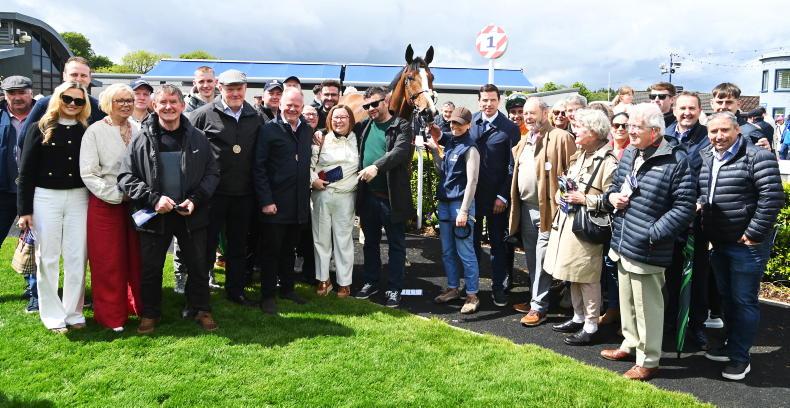
“I only began syndicating horses with Ado to try [to] get a better quality of horse in the door, but I love that process and bringing a team of like-minded people together. I love it when a day comes off like Naas last month, and the lads are getting ready for Royal Ascot now,” he says.
“The training and preparation of the horses is something I’m very passionate about. Seeing the young horses develop and grow is another aspect I love being a part of. It’s a real kick to see them progressing to win.
“There’s a changing landscape at the sales and we’re always tweaking things, trying to evolve. Shamrock Thoroughbreds has been fantastic, but we also want to improve the sole ownership base within the stable.
“Having the likes of John Kirkland, Amo Racing and some very loyal Saudi owners like Essam Saiel, plenty of great people like that, they are so important to us. We’re always eager to develop relationships with more clients and to do a good job for them. Eight of the 10 syndicate members who were with me in my first Shamrock Thoroughbreds horse are still with me today, so I’d like to think we’re doing some sort of decent job that they’re with us this long.
“I’m very keen that we keep the quality end high as opposed to going overboard with quantity. We have to think a little outside the box and there are a lot of top trainers in this country; we’re in a very competitive environment. We’ve got our name out there and we want to enjoy the ride.”
The next stop on that ride is London on Wednesday afternoon for the Royal Hunt Cup. It certainly won’t be the only time Stephen Thorne has a runner at the Berkshire bonanza, but there could hardly be a more poignant time for him to advertise his talents on the main stage.
The beginning of brighter days ahead.
NEXT year will mark a decade since Thorne started Shamrock Thoroughbreds, and, from his experience of bringing fresh faces into the game during that period, he believes there is clear room to improve owner offerings at the races.
“I’d like to see more owners accommodated on raceday, in particular syndicate shareholders,” he says. “In the case of groups like Shamrock Thoroughbreds and others, these people pour money into the game and it’s more than just a club feel; we buy a high-end product to run on big racedays. These horses are costing more and more, both in terms of buying and getting to the races.
“We could have up to 40 members in each of those horses making a real contribution to the sport. For one horse to be receiving four meal vouchers [at some Irish tracks], when, in comparison, we went to Guineas weekend at Newmarket recently with a Shamrock horse and received 20 owners-and-trainers badges and 20 meal vouchers, I think the latter is an outstanding offering.
“I think we’ve got a lot of work to do in Ireland to get the model right to make sure these people are well looked after.”
Thorne says he has sought improvements from the authorities on this point.
“It’s something I’m passionate about and have spoken to the HRI ownership department on. We need to speed up the process of getting a little help on this, whether the money comes from HRI or a racecourse, or both.We should be giving these people a meal on the day. On Lincoln day at Doncaster, I gather there were 700 owners’ meals served. That’s an idea of how we need to improve.”