Punchestown Racecourse was a beehive of activity when The Irish Field visited on Wednesday morning. The site was swarming with workmen assembling facilities and preparing the enclosures for this week’s five-day National Hunt Festival.
Indoors, the racecourse office team were busy too but all smiles, secure in the knowledge that the bulk of the hard work has been done, ticket sales were ahead of schedule, and the weather forecast was favourable.
Chief executive Conor O’Neill is heading into his seventh Festival in charge, though he has been closely associated with Punchestown since he left college. He worked with Justin Carthy’s Chronicle Bookmakers and Ladbrokes for a spell and also served three years in charge of Limerick Racecourse before rejoining the Punchestown management team in 2018. After that year’s Festival, he took over from the legendary Dick O’Sullivan as CEO.
At around the same time, Conor was elected chairman of the Association of Irish Racecourses, a role he is due to relinquish later this year after serving two four-year terms. In that time, he has helped steer Irish racecourses through Covid and a tricky media rights deal, which threatened to split the Association.
The 2025 Punchestown Festival was particularly successful. Total attendance of 136,651 was up over 15% on the previous year, thanks in large part to five sunny days. And there were 66 British-trained runners, yielding eight winners.
Buoyed by that success, and a HRI Racecourse of the Year Award, Punchestown have added new facilities this year and kept ticket prices at last year’s levels.
The world may be on the edge of a recession but, right now, everything looks to falling right for Punchestown.
In this interview, Conor O’Neill talks about the ups and downs of managing one of Ireland’s biggest racecourses and he gives an update on Punchestown’s ambitious track extension programme. Wearing his AIR chairman hat, he also gives his views on the challenges facing all Irish racecourses.
How have preparations gone for this year’s Festival?
Last year’s exceptional results gave us a fabulous foundation to build on. It really motivated the team here to drive on and we’re in a great place at this stage. The sun is shining too, which puts people in the mood in terms of ticket sales and we hope to benefit from that.
Looking back at the 2025 Festival, what stands out for you about it?
We never expect to get five days of unbroken sunshine, so that was phenomenal. I remember the previous year, the Champion Hurdle was run in lashing rain and you could see people streaming out the gates as soon as it was over. Contrast that with last year, when there was still a queue for ice creams an hour after the last race. It was just a fabulous week, all the stars aligned and the hard work put in by the team here paid off. I was delighted for them more than anything. The good weather did present a lot of challenges from a track perspective, but I didn’t hear a single complaint about the ground. The track team did an exceptional job. At one point, they were putting in 20 or 22-hour days in order to keep the ground right.
British involvement at the Festival, both in terms of racegoers and participants, is very important. What are you doing to drive that and what are the signs like this year?
UK involvement is obviously an integral element of the Festival. There’s a long tradition of it and we have been putting a strong focus on revitalising it since Covid.
Over 20% of our attendees throughout the week are UK-based. And so having British runners is a massive benefit to that. And also from a media rights perspective, having UK runners is a huge boost to betting turnover in the British market, which is so important to Irish racecourses.
Last year we introduced the Albert Bartlett Triple Crown series, which is 12 qualifying races staged across Ireland and England, with the €100,000 final taking place on the first day of the Festival.
We’ve always had a great partnership with Jockey Club Racecourses in Britain - for as many years as I can remember, we’ve always had a marketing presence at the Cheltenham Festival and at their November meeting - and we have recently entered into a new partnership with the Arena Racecourse Company, to promote Punchestown through their portfolio of tracks as well.
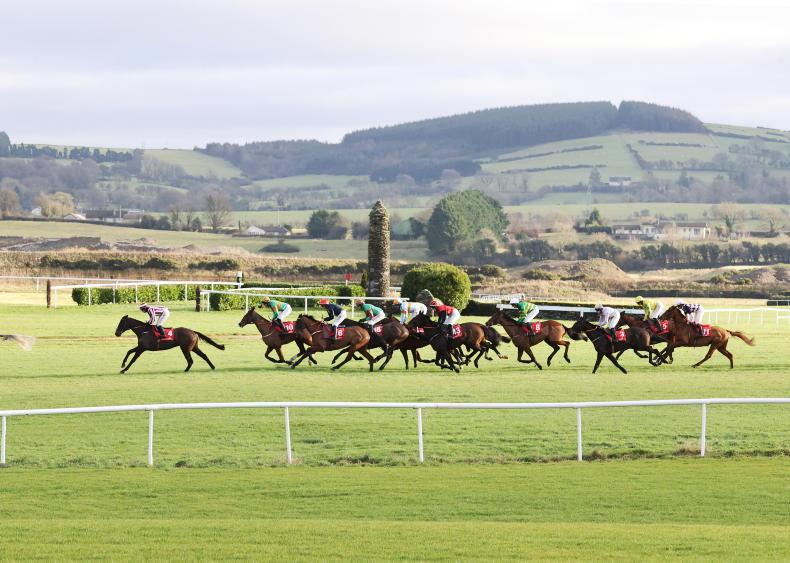
British racegoers probably find it good value here, with admission costing just €35 per day if bought online in advance. When setting the ticket price, how do you balance making it affordable while also trying to cover your costs?
It’s very difficult, particularly with the price of everything just going through the roof at the moment. Insurance, electricity and temporary facilities are among our biggest outgoings.
But we are trying to offer value, because we are very conscious of the cost of living crisis. We’ve maintained our prices at last year’s levels. Gone are the days when people would go racing on all five days. They are picking and choosing that bit more.
So we are trying to build our business by growing volume and make our margins on that. Last year, we brought our start times back to 2.30pm on the first three days and that makes it easier for British visitors to make day trips or just stay one night and go racing on two days. We’ve seen a lot of positive feedback in that regard.
Punchestown has been described as Ireland’s biggest sporting hospitality event. What kind of numbers are you feeding next week?
We’ll feed over 22,000 corporate clients alone, and that’s obviously a massive part of our business. The logistics and the operational aspect that goes into that is phenomenal. This year we have introduced a new Horsewalk Pavilion, which essentially added 2,500 seats to our capacity. And I’m delighted to say that it’s sold out right throughout the week.
What sort of businesses are buying tables?
The majority would be the major blue chip companies entertaining clients - corporate Ireland if you like. But there is also a mix of private clients and a lot of sporting clubs running fundraisers too. Na Fianna, Kilmacud Crokes, Laois, Cavan, Limerick and Longford GAA are all here. We use a number of different catering companies to service the entire site, like Lily & Wild and Aramark.
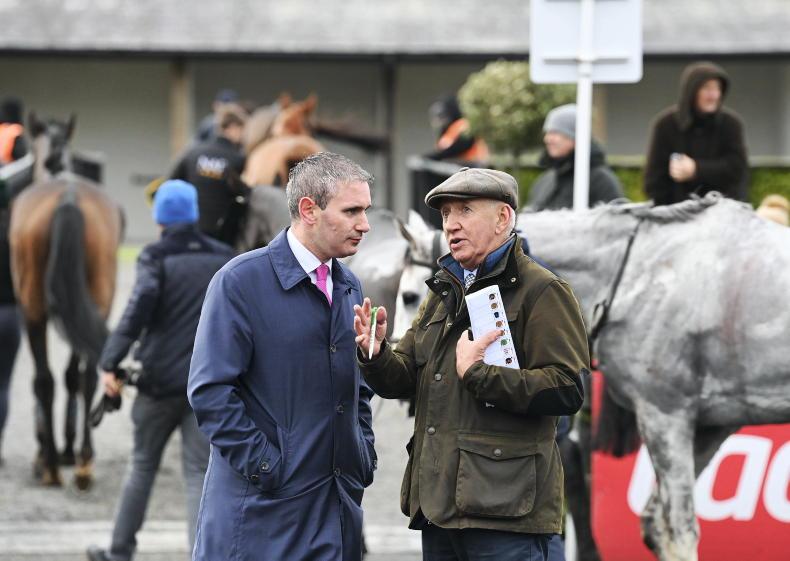
Let’s talk more about the racing surface. How many resources are going into preparing the tracks?
We want to attract the best calibre of horse we can and, to do that, you have to provide perfectly safe jumping ground. We have a fantastic team here, headed by Brendan Sheridan [clerk of the course], Richie Galway [racing manager] and Sean Ryan [track foreman]. The ground that they produce year after year is an absolute credit to them. They take so much pride in it, and the passion that they have for it is phenomenal. It’s like a carpet out there. I couldn’t be happier with it. If the track isn’t right, we don’t have the horses and then we’ve nothing.
How hard is it to water the whole place?
We’ve started watering already and you’re actually watering 11 tracks, because there are fresh hurdles and chase tracks every day, plus the cross-country track. It’s a massive expanse of land and the man hours and the irrigation that it requires is phenomenal. We have our own lined reservoir, which is filled with 11 million gallons of rainwater and that’s what we’re using.
In 2021, Punchestown revealed plans to widen the home straight and build a new flat track. How is that progressing?
The first phase involved widening the straight by 35 metres and that is done. We introduced that new ground gradually during the winter and it helped us to protect the Festival ground for longer.
The second phase required a build-up of millions of tonnes of material to complete the flat track and that is on course to be finished by the end of this year. Then it’s just a matter of giving it time to let it settle.
Moving that earth created a huge hole in the ground which is now a rainwater reservoir that we are emptying this week to water the tracks.
The new track starts directly across from the grandstand and links up with the existing track close to the fourth last fence, with a dog-leg turn into the home straight. We’re currently building a tunnel to allow the ambulance and support vehicles to move from the new track to the existing racecourse. We’ve kept quiet about the work we’re doing and a lot of people probably don’t realise what a big project it has been.
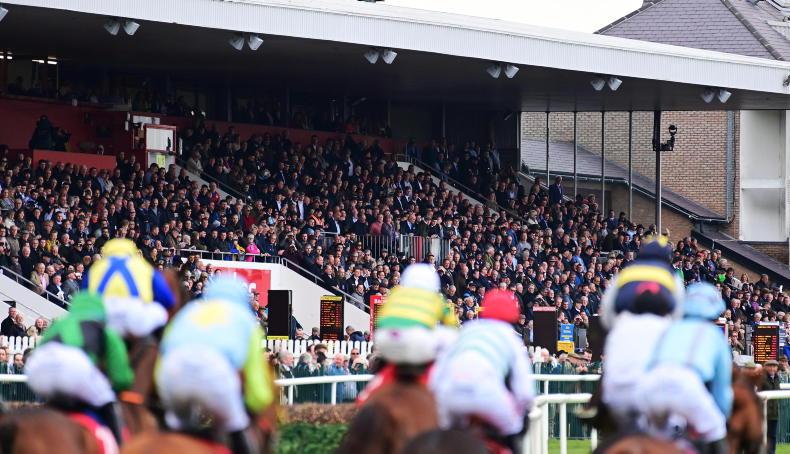
A few years ago, Punchestown moved the Morgiana Hurdle and Durkan Chase to a new slot in the autumn calendar to create a Premiere Weekend. The Durkan Chase on the Sunday has proven to be a big winner, but perhaps the Morgiana on the Saturday is a bit lost in the schedule. Are you happy with how it’s working?
The Premiere Weekend is something I had sought for many years and it has been a phenomenal success. I think it was very important to bring the John Durkan, in particular, further away from Christmas to give those horses an opportunity to run again. The Morgiana is now a week later than it used to be and it no longer clashes with the Cheltenham November meeting.
It’s a healthy debate to have and, from a racing purist’s point of view, I can see why you’d like the two Grade 1s on the same day. But on the other hand, if you’re trying to elevate the entire weekend you need to look at both days. It’s something we would always consider, but I suppose we’re just trying to guess the best outcome right across the entire business.
Let’s talk about your time as chairman of AIR. Which issues have taken most of your attention?
I totally enjoyed my role as chairman over the past eight years, and I was delighted to have been given the opportunity. It came with plenty of challenges. The media rights negotiations and agreements were certainly a massive part of that.
When Covid hit, we lost the 2020 Punchestown Festival and the next year it was run behind closed doors. I remember watching the Punchestown Gold Cup that year in the stands - Clan Des Obeaux won it - and it was like watching a schooling race, it was eerie. But the entire racing industry dealt with Covid extremely well.
Ireland still has 26 tracks. Would you be concerned about the financial sustainability of smaller racecourses?
Absolutely, that goes right across the board. All businesses are faced with rising costs and revenue streams are not rising to match it, so their sustainability has to be a concern.
There’s been a lot of talk recently about tipsters using the racecourse betting rings to film themselves collecting on big bets, making videos to encourage their social media followers to subscribe to their services. Losing bets are not broadcast, so the videos are deceptive. Can racecourses or the gambling regulator do something about that?
I wouldn’t be a fan of that, to be honest. It’s irresponsible and I think it’s an area that racecourses and the industry should be careful about, the promotion of gambling. The AIR has engaged with the new gambling regulator and we’re working with them to achieve their objectives of promoting safe and responsible gambling, while taking into consideration the nuances from a racecourse perspective, which differs from the High Street.
On the subject of gambling regulation, have you any insight into how the racing channels will manage to comply with the impending ban on gambling advertising during daylight hours?
I am fairly confident that they will find a way to continue showing live racing. It could be the provision of a separate feed for Ireland, I don’t know. HRI and the racecourses need the promotion of racing on TV, so I think it’s paramount that’s remains and I would be confident that this can be achieved.
Finally, what will a successful Punchestown Festival look like to you?
First and foremost, that all our horses and riders, come back safe. And that everyone who comes through the gates has a very enjoyable experience. From a commercial point of view, you’d love to see an increase right across the board, be that in attendance, your bars, restaurants, and that we get another five days of sunshine. The weather makes all the difference. Good weather puts people in a lot better form and that makes the atmosphere more enjoyable for everyone.