LITTLE did Kathryn Foley envisage when she was attending Sligo Races as a child, with her late father Peter, that one day she would return as general manager. As she now prepares to step down at the end of this year, after almost 12 years at the helm, she can reflect on a job well done to promote and protect a sport she loves, in her native county, that has always been close to her heart.
“When I took over in 2015, it had all come full circle,” she commented. “From going there with my father as a child to going back as general manager. It really was lovely.”
A native of Ballymote, Foley came to racing late in life, but when she took up the challenge in February of that year, she came with a such a comprehensive CV that included a degree in economics, psychology and Italian from UCD - in addition to a global portfolio - there was no doubt she was the woman for the job. “Even though my background wasn’t in racing, I had the bug as I had one horse in training at the time.
“I had worked in several industries in different countries for many years and was ready for a new challenge. It was something completely different. I had done project management, administration and working with people, which I felt would transfer quite well into the role.
“There was something very appealing about becoming involved in something that was such a familiar part of the county. There was also the personal connection - I was coming back to Sligo Races.”
Business background
After years working in IT and banking in such places as Boston, Washington DC, Saudi Arabia and Kuwait, she was ready to return to her roots. She was also ready to take Sligo Racecourse to the next level, and she did that with great pride.
“When I started, I knew I was going to give it a good run. I am sure every racecourse manager probably feels the same - until you are working behind the scenes, you don’t fully appreciate how much goes into a race day. There are so many different people and moving parts. Suddenly, you are responsible for making sure everything comes together on the day.
“In those first few months ahead of the first meeting, I was bringing in sponsorship, dealing with corporate clients and race supporters. I think there was a mixture of excitement and nerves, but there was also great satisfaction once I got the first race day over.” To this day, sponsorship continues to be an important part of her job. Without them [sponsors], there would be no racing, and Foley has worked incredibly hard to get this right. “I have to say, this year I think I have had every race sponsored bar three or four out of nine race meetings. We have a very loyal sponsorship base, who mainly comprise of local businesses, some in hospitality, accounting and nursing homes. We also have one or two big sponsors.
“One of my biggest regrets is that we don’t have enough corporate rooms. If I had twice or three times what I have, I would fill them. Sponsors are a very important part of the racecourse and I hope that, when I leave, they will continue to support Sligo Races.”
Royal visit
In Kathryn Foley’s first few months in office, one of her first major responsibilities came totally out of the blue. She recalls that day clearly.
“I was only in the job a short time, when I received a surprise phone call from the British Embassy. They told me they were bringing someone to the races, but initially they wouldn’t even tell me who it was. A few weeks prior, they brought people to look at the facilities. There was a huge amount of preparation.
“On May 30th that year, we had a Royal visit from the Duke and Duchess of Cornwall. That was a great day - we were absolutely thrilled to have them, and it was a very special occasion for the racecourse. It was an evening meeting, and we named a race in their honour called ‘The Duke and Duchess of Cornwall Mares’ Maiden Hurdle’. The winning horse, Mollyanna, was bought by the Duchess afterwards and went to the UK to be trained by Jamie Snowden.”
Weather problems
That first year also brought some weather-related challenges and Foley reflects on a difficult time at the track. “We lost a fixture in 2015 and again in 2016. At the time, the racecourse was in bad need of drainage.
“The board was determined to do everything possible to avoid a repeat of that, so we embarked on significant drainage work on the track at a cost of €300,000. Unfortunately, the work took longer than expected and we had a lot of setbacks along the way. It had a serious impact on the beginning of the racing season in 2017 and we lost three fixtures. It was a difficult period, but the work was essential. Thankfully, the investment paid off.”
A decade on and now the situation has almost reversed. “In recent years, rather than having too much water, we are now dealing with prolonged dry spells and we are trying to maintain suitable ground for racing.
“We don’t have a permanent irrigation system. Currently, we are watering the track using a local lake and drawing it with tractors and tankers. In prolonged dry spells it can mean a huge amount of work and long hours. You are constantly watching the weather forecast and trying to judge how much water is needed, if any.”
Improvements
The weather may be out of Foley’s control, but over the years she has overseen some other significant improvements to Sligo Racecourse that have been most satisfying.
“When I came here in 2015, we had just finished a big development putting in a new grandstand, bar, offices etc. That was a big investment. On the physical side, we have continually worked to improve the facilities and the overall experience for the racegoer.
“Commercially, the business has evolved also. Racing is competing now with so many other forms of entertainment, so we must think more about the overall day out, hospitality, sponsorship, attracting groups and families and giving people a reason to attend Sligo Races.
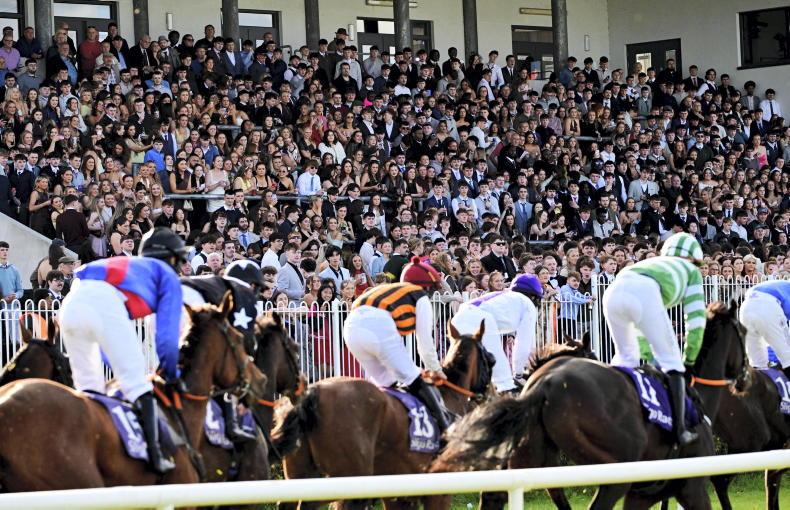
“We are a summer racetrack, so we are also competing with the sea. If it’s a day meeting and the weather is good, people will be more inclined to spend the day at the beach. It is one of the reasons we have evening meetings. They come racing afterwards.
“Of the nine flat and National Hunt meetings per year, five of those are evening meetings and these have worked quite well in terms of attendances.
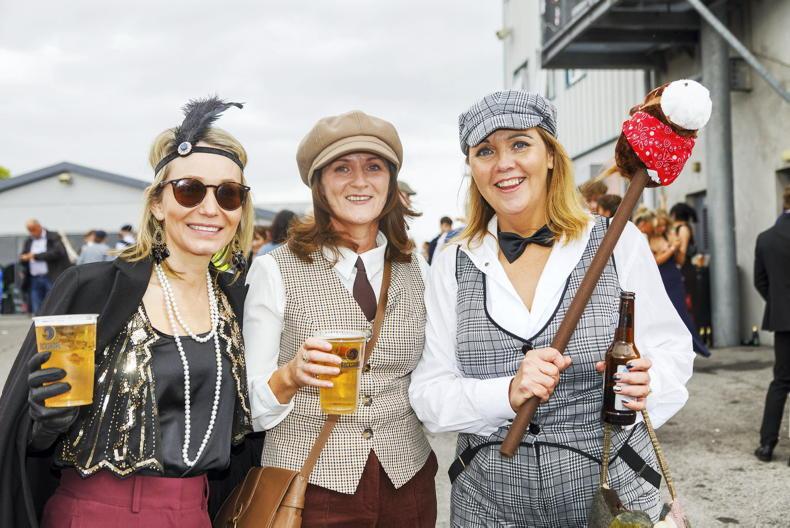
“We theme most of our meetings and our opening flat meeting is based on ‘Peaky Blinders’. That captures the imagination of a lot of people. It is an initiative I am very proud of, and we have often brought in well over 4,500 through the turnstiles.
“We also have a family day in July, which coincides with the 12th of July and we have a huge Northern contingent, who come down to Sligo for the week and come racing. The two-day meeting in August always draws a great attendance. The second day is Ladies’ Day, which used to be our biggest day, but that has changed. Our biggest meeting of the year is now our Students’ Day in late September. We had close on 6,000 through the gates this year.
“We run it during Freshers’ Week, when the students are just back and their first big day out is the races. They enjoy the day so much. I would love to get another day for them, perhaps a two-day steeplechase meeting during Freshers’ Week. After all, they are the future of racing.”
Foley knows that racegoers are a crucial cog in the wheel, and she also knows what’s important to them. “They want value for money. They want good food, good facilities, drink and atmosphere that makes the day feel like a good occasion. Some people go racing just for the horses - others want a bit of entertainment, so we try to give them that. We have live music in the bar after racing for about two hours.”
Voluntary directors
Keeping the show on the road on a race day takes a team effort and Foley is quick to praise everyone in front and back of house. “Sligo Racecourse is a limited company by guarantee and run by a voluntary board of directors. The racecourse sits on 57 acres and is leased from Sligo County Council on a 30-year sporting lease. The custodians are the board of directors, and they do a lot of work on a race day presenting prizes, meeting people in the parade ring and doing best turned-out.
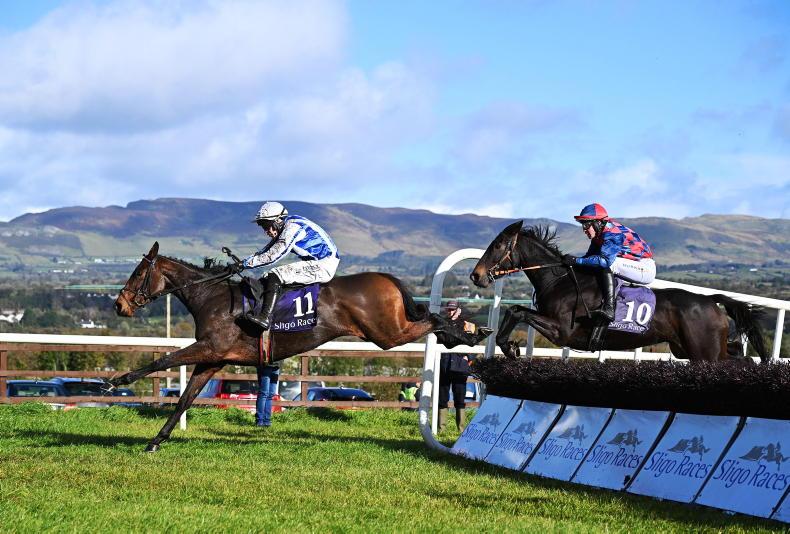
“We also have part-time ground staff and, fortunately, we have very loyal and reliable track staff, who are available to come in when we need them. On a race day we’d have probably about 30 employees, not including those working in the bar and restaurant, which are contracted out.”
As well as observing shifts in the types of racegoers, over the years Foley has seen significant changes within the industry itself. “The biggest change I have seen is how much more professional and commercially aware racing has become. Racecourses must think far beyond the racing itself. There is much more emphasis on marketing, social media and sponsorship.
“There is also much more focus on standards, safety and horse welfare, which are very important. There is a lot more scrutiny and racecourses must be very conscious of how the sport is presented to the public.”
Media plays an important role in how the sport is portrayed, but it also provides valuable revenue to Sligo Racecourse. “Media rights are a major part of our overall revenue base. Some 60% would come from them. Then we have sponsors, admissions, catering, on-course betting. That makes up the other 40%. HRI supports racecourses through industry funding and capital development schemes, and we can apply for that when needed.”
When asked if she has any concerns that some of Ireland’s smaller tracks may be at risk of closure into the future, Foley dismisses any doubts about the one under her charge. “Sligo is a very viable racecourse, and we will still be around in 10 years’ time. We just need the right attitude and the right management.”
”Robust discussions”
Good relations with HRI and the IHRB are key to the success of any racecourse, although sometimes there can be a difference of opinion. “We don’t always see everything from the same perspective. As racecourse manager, my job is to represent the interest of Sligo Races, but the officials have their own responsibilities particularly around regulations and safety. There can be robust discussions from time to time, but I always found you could pick up the phone and discuss any issues. When the chips are down, you really need their support.
“Every day you have certain challenges to face. Everybody that’s involved in the industry is taking a certain amount of risk. You are talking about jockeys, owners, trainers - they have all put huge investment and time into the industry, and you want to make the experience the best possible.”
Being one of only a handful of female racecourse managers in a male-dominated world has been truly rewarding for Kathryn Foley, but she is now ready to hand over the mantle.
Her successor has been named as Sean Gaffney. “We are very lucky that we have found a great new general manager in Sean and I am sure he will have a very rewarding career here. He is originally from Co Leitrim and comes from the commercial end of the pharmaceutical industry.
“He has a lot of management experience, and I think he will bring a lot of new things to Sligo Races. He will get to know the people, while protecting the traditions of racing, but at the same time look at new ideas and do things in a better way. I fully expect that he will, and I wish him well.”
Foley said she hopes the friendly nature of the track will be left untouched. “We are such a small racecourse, and I wouldn’t change the charm of it. People who come here know each other, there is a strong local connection and a friendliness about the place. I would certainly like to keep that. Things will evolve, but I would not like to change the sense of welcome that we have.”
In the coming months and years, Foley is now looking forward to enjoying racing from the other side of the fence. “I want to travel around Ireland and visit a lot of other racecourses that I haven’t been to before, so they know now to expect me!
“I am never going to lose interest in racing and especially Sligo Races. It’s hard to walk away from it. However, I am looking forward to my retirement. I have worked all my life. My mother Margaret lived to be close to 100, so I like to think I am going in that direction. If that is the case, I still have about a third of my life to go,” she concluded.