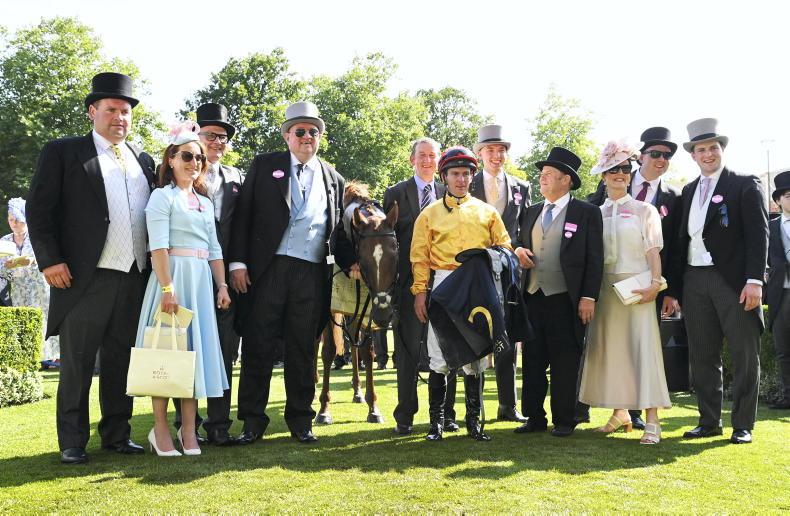
ONE of the feel-good results of Royal Ascot, especially for the Irish, was Joe Murphy and Gary Carroll gaining their first Group 1 win with the ultra-game Cercene in the Coronation Stakes. The €50,000 filly provided further proof that it’s still possible for ‘the small man’ to beat the big boys on the greatest stage, once they have the right ammunition.
Both Carroll and Murphy are popular figures in Irish racing, and congratulations will be received for a long time from now. On Wednesday, Murphy was back with his old colleagues in the National Hunt division, browsing wares at Tattersalls Ireland, where it took him 40 minutes to make it through one barn, given the number of well-wishers.
The jumps is where Murphy began his training career 50 years ago, and the journey he’s been on since then made Cercene’s success all the sweeter, he explained.
Are you still on a high from Ascot?
I’m only feeling it now, but one is always afraid of the backlash. I remember a man telling me one time: ‘A clap in the back is only six inches from a kick in the arse.’ And, as you know, from being a trainer’s daughter, that’s around the corner, somewhere.
It hasn’t come yet, because you had another nice winner the very next day when Vorfreude won the Ulster Derby.
You know what? It’s sad because I was robbed of the Ulster Derby 15 years ago, with a good horse called Northgate.
The first thing Pat Smullen said to me when I went into the weighroom; ‘I didn’t lose that Joe’. That means he did [laughs]. We just got beat a nose by Chris Hayes and Kevin Prendergast, with a horse called Celtic Dane.
I bought Northgate for five grand; there was no bid from in the ring in Doncaster and Michael Donohoe bought him for five grand after. And I think I gave him five grand profit for what he gave.
What a place to win your first Group 1, Royal Ascot.
You’d take a Group 1 in Belmullet, if you could get it. It’s unbelievable, really. We lose ourselves a bit in it. But you know, the horse does 99% of it and we’re only caretakers, but you have to be a good caretaker.
[Daughter-in-law] Olive rides her work, [son] Joseph supervises everything, and I supervise him. When we were up the gallops and we saw her last bit [of exercise], the three of us looked at each other, and we said nothing, and all we done was [nods]. That was it; no words, no conversation.
It’s like going into a gallery and you look at an artist that you love, like a Lowry, or an Atkinson Grimshaw, and you look and you’re overawed, and there’s no word spoken.
What’s next for Cercene?
More than likely, the Nassau Stakes, the Matron Stakes and then the Breeders’ Cup. She’s come out of the race unbelievably well. I can’t wait to get home and see her.
You mentioned Joseph and Olive earlier. I imagine it being a family operation made Cercene’s big win all the more special?
Definitely. My wife, Carmel, is a big player too. She runs the office, and she keeps me calm, and she keeps Joseph level as well. Because you see, you come in, you have a bad day and you show your emotions, you know? And I’d be giving out about Joseph, and Joseph will be giving out about me.
Horses bring you on a rollercoaster and I’m sure, in the 50 years you’ve been training, you’ve been through it all.
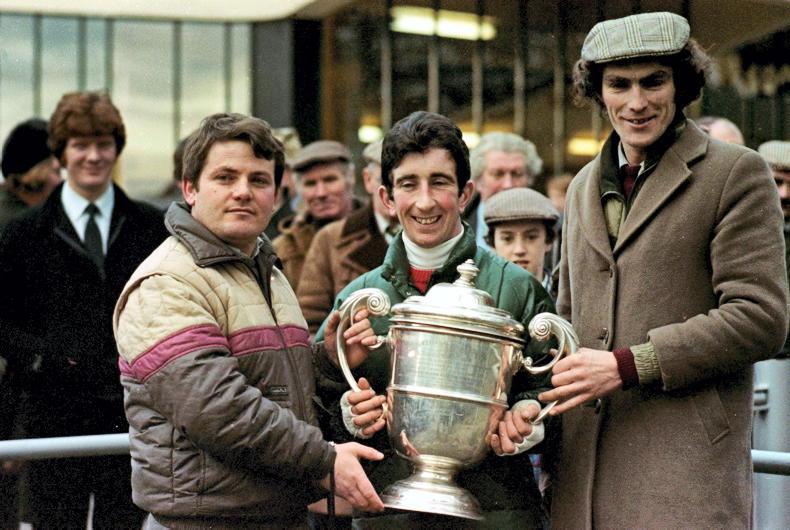
The first two horses I trained, the first one was broken down, the other one was retiring, and I won with them, and it gave me the confidence to go on again.
I won a bet and my father guaranteed me the farm, then I gave him the money. Then I went and won some point-to-points first time out and I said, ‘I don’t know what lads are talking about, this is easy’.
Then I went and bought a few broodmares and we went broke again! Then we come back with another winner. At that time, we were drinking heavy and training horses and thinking ‘This is the life’. Then it went downhill again, I gave up the drink and we started off again.
What made you switch from the jumps to the flat?
I thought it was easier. Why? Because you have a quicker cheque or a quicker death.
But then you have to go up the big yards on the flat, too.
Listen, the way it has gone, they have so many that they can’t do what I do; individualism.
I’ve always said to all my owners; when you buy a horse, you must believe you’re going to get a Group 1 winner. You must believe, and if you don’t, you can go off and buy yourself a set of golf clubs.
We’re speaking at the Derby Sale. Do you miss the jumps?
I do. I used to always buy a National Hunt foal with Kieran Lennon; that’s how I bought Swamp Fox. We bought his half-brother too for €20,000 and came back and sold him for €155,000 as a three-year-old [named Knappers Hill, he went on to win four Grade 2s].
There’s nothing like a beautiful jumping horse. But the pain of it. Waiting. In all honesty, we never did a tendon with a flat horse. We might get sesamoids or sore shins, alright.
Looking back, what was the best horse you trained before Cercene?
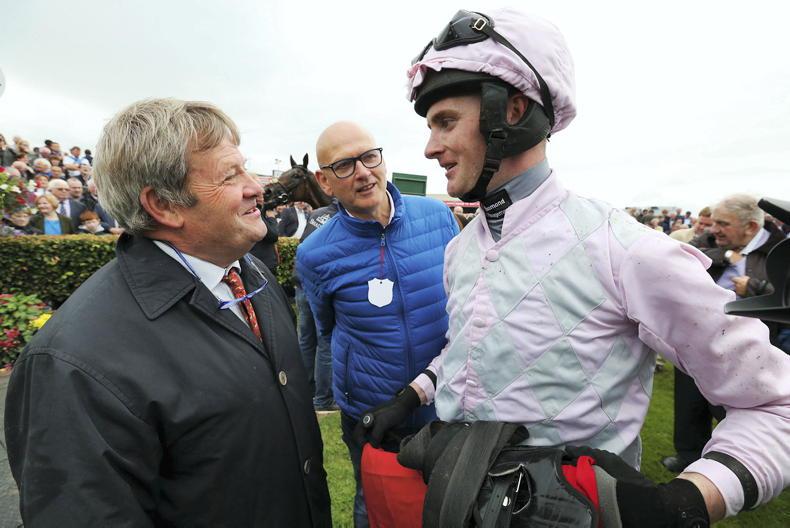
Vert De Grece [since renamed The Monarch] was second to Gleneagles in the Futurity Stakes and then we sold him, and 13 days later, he won a Group 1 in France, the Criterium International.
One of the best horses I’ve ever seen was a horse called Insignia Of Rank, but unfortunately, he had a bad reaction to an anaesthetic during an operation, he nearly died.
Before he went for the operation, he really flicked the toe, and after the operation, he came back with a round action. He still won a listed race afterwards, but only Joseph and I know how good he was.
There was another horse called Silverkode who fractured his pelvis, and would have been another star as well.
But then you can’t forget Alpheratz, she was second in the Park Express. You can’t forget Ardbrae Lady. You can’t forget Only Mine. Gustavus Weston.
I mean, when I look back on it, and it’s only in the here and now, when I add it up, we were very lucky to come across those horses; they were all group horses. We never bought any more than eight or 10 a year.
You mentioned your father before. Did you grow up in racing?
My father was a businessman. He dabbled in different things, but his main business was agricultural machinery. He imported machinery from Holland, including the haybob, which he named himself.
They were calling the machine the Strela and he said, ‘We’ll never sell that name in Ireland. You’d want to call it a haybob; that would sell better’, so they adapted the name.
I learned more off my father than anyone else. He was an amazing man. Jaysus, he bought some good horses. He was a Director at the Irish National Stud and I remember being with him when they inspected Ahonoora. He told Michael Osborne, ‘If you don’t like him, I’ll buy him myself’.
He was great friends with Willie O’Grady. Willie sold him a horse and he named it after himself – Smooth Dealer – and he won the race he wanted to win, the Thyestes Chase.
For my father to win the Thyestes Chase was like us winning the Coronation Stakes, because he was from Graiguenamanagh, which is the next parish to Gowran, and you know yourself; the history of a man, where he’s born and winning his race. And that gave him the hunger for more!
You say you learned things from him. Is there one thing that stands out to you now?
He was dealing with people all his life, and he always said a man with a small eye couldn’t be good, and a horse with a small eye couldn’t be good.
There are certain things that I would be strict on buying a horse and now, with age, you learn to forgive things.
I remember, I saw this filly over in Newmarket, and I was going to America on the Saturday, so I got Michael Donohoe to buy her. Everybody was knocking her because she was by Overbury. I went down to the barn to see her, and she was slightly offset. She walked as if she wasn’t and I said, ‘Well, if she walks as if she’s not offset, that means she’ll gallop as if she’s not offset’.
The owner cancelled the deal after I’d gotten on the plane, and what else could I say to him but, ‘No problem, I’ll keep her myself’. Then I had to go home and tell Carmel, but I didn’t, I kept my mouth shut.
Then I rang another owner, and he wouldn’t take her. Then your man rang me back in December and he said, ‘The markets have gone good, I’ll take that filly’. And that was Ardbrae Lady [winner of the Park Express Stakes, second in the Irish 1000 Guineas and third in the Moyglare Stud Stakes].
They always say, “Behind every good man is a good woman.” But behind every good horse, there’s a story. That’s what this game is about, at the end of the day; it’s people and stories.
You seem to enjoy the sales aspect of it, the buying of the horses.
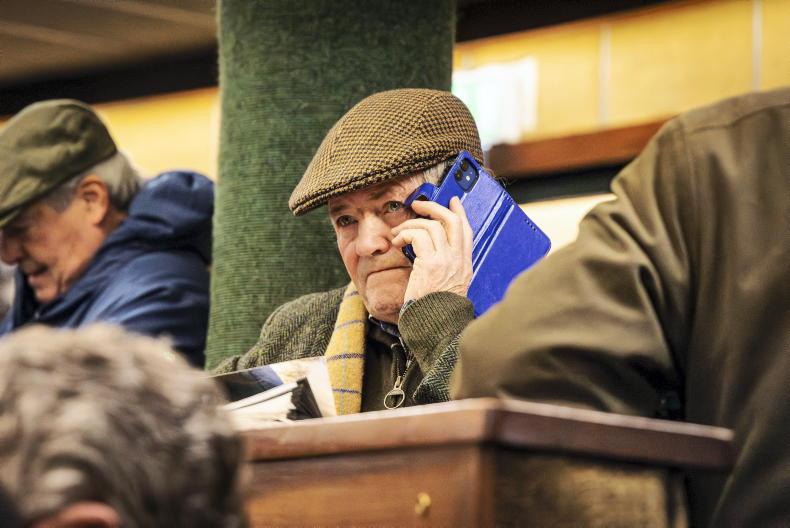
I love it. If there’s a heaven above, I hope there’s a Goffs or Tattersalls up there.
My favourite part of the game is when the day is over and I’m off walking the dogs. They come out the gallops in Joseph’s jeep too.
What kind of gallops do you have?
We have a mile and one furlong in sand and fibre, and we have a sand gallops for warming up, and then we have our own grass gallop, which is seven furlongs.
It’s a brilliant setup, just about a mile from Fethard town. I bought the farm from Larry Keating. Larry was a trainer, an old-fashioned trainer, and a great trainer. About four Grand National horses and about three Gold Cup winners went around that gallops before I ever bought it.
How many would you have in training?
We reduced it to 30. We had 50 or 55, but we just couldn’t get the staff. So, what we did was we increased our wages with the good staff, and cut down the numbers so that we could play the piano ourselves.
Would you say staffing is the biggest challenge for trainers?
It’s becoming a problem, very much so. With the rules and regulations, you can’t train people any more. They have to have this, they have to have that, they have to have so many hours. There are no hours calculated in a horse’s life, and therefore they don’t mix.
We’ve spoken about the ups and downs. Was there ever a time you thought this isn’t for you any more?
I did get disillusioned for a time. I might have considered it for a day when something drastic happened, but then I realised that I know nothing else.
I always believe that the things go bad, all you need is a bed and two meals a day, and you can start again.
My last question is; you’ve won your Group 1, so what’s your next goal, your next dream?
It’s like this, winning a Group 1 is like a Tipperary man winning an All-Ireland medal. You have it, and if you get another one, it’s a bonus.
You look for more, but you’re more than likely not going to get it. But you keep trying, you keep trying.