THERE’s a funny clip from a past edition of the Tommy Tiernan Show with Tommy and Ted and Katie Walsh, Tommy asking his guests about their past work lives. Tommy’s youth was quite different to Ted’s!
“The greatest thing my father ever did for me was saying – get out of the house. I spent six years on the dole in Galway. It was the making of me, I had freedom to decide what I wanted to do.” Ted wasn’t too enamoured by someone who “headed out to become employed by the dole.” “But look where I ended up”, says Tommy!
That was the 80s for you, leaving school offered little excitement or opportunity, there were few jobs and damn all to do.
The few swotty ones went to college, the few brave ones to London to live in squats and find whatever work they could.
I too was that dole soldier. But you could watch any sport on the TV, unhindered by work timetables or the need for video recorders! And we were 17% of the population, the history books tells us. The summer of ’86, Christy Moore even headlined a big Self Aid concert to help us out.
We were two years away from Joxer going to Stuttgart, and four off Italia ’90 when as someone recalled “we began to get notions about ourselves.”
There was one thing I wanted more than anything for the spring of ‘86, and it sure as hell wasn’t to get a job!
And if George Hamilton later coined the phrase, “a nation holds its breath”, at 3.30pm on Thursday, March 13th, 1986, I was part of a racing nation that held its breath.
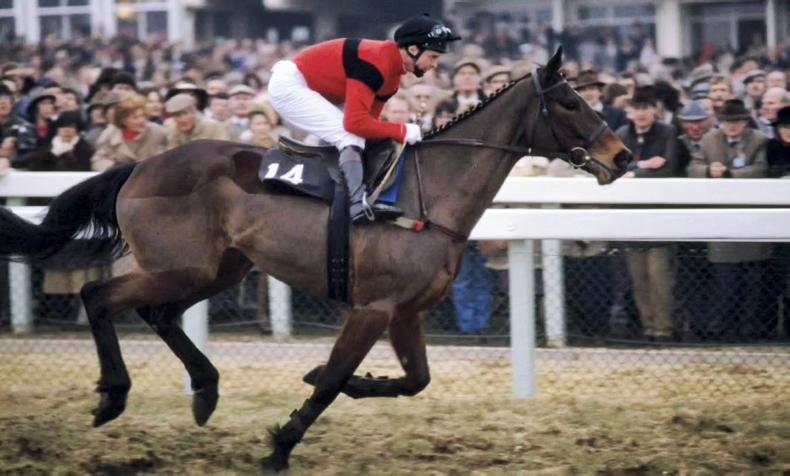
On a grey day in Cheltenham, the Irish mare Dawn Run was attempting to make racing history, add a Gold Cup to her Champion Hurdle win of two years previous. Win the two championship races at Cheltenham, a feat that had never been achieved. Lanzarote had been killed attempting it, great champion hurdlers Bula and Night Nurse had fallen short.
Dawn Run’s path from her brilliant Champion Hurdle winning year to that historic date had not been smooth.
Mrs Charmian Hill had paid £5,800 for the well-bred mare as a three-year-old for herself and her son Oliver. In training with Paddy Mullins, Mrs Hill rode Dawn Run in her first three bumpers, winning at Tralee in June 1982 before the Turf Club took away her licence as she approached 63 years of age.
Tom Mullins won on the mare at Galway and Tralee before brother Tony took over to win her maiden hurdle and at Leopardstown at Christmas in 1982. It was Ron Barry who rode her into second in the 1983 Sun Alliance Hurdle at Cheltenham before Tony was back in the saddle for Aintree where she won on the Friday and came back the following day to give the Champion Hurdle winner Gaye Brief a fright in the Grade 1 Templegate Hurdle.
The following season, in top hurdle company, it was Jonjo O’Neill called upon and she beat Gaye Brief in the Christmas Hurdle at Kempton and was on her way to a memorable season where she won the Irish and Cheltenham Champion Hurdles under O’Neill before Tony Mullins reunited to win the now Grade 1 Aintree Hurdle before a memorable trip to France brought home the Grande Course des Haies, the Champion Hurdles of three countries going back to Kilkenny.
Huge following
The mare was the dominant National Hunt horse with a huge popular following, her forthright owner and with her front running style and will to win. “There was just no pull up with Dawn Run. You could go as hard as you like. There’s no such thing as judgement. You just went as hard as she could go, and she’d stay going,” Tony Mullins recalled in TG4’s Laochra Na Rásaíochta Dawn Run documentary broadcast in 2021.
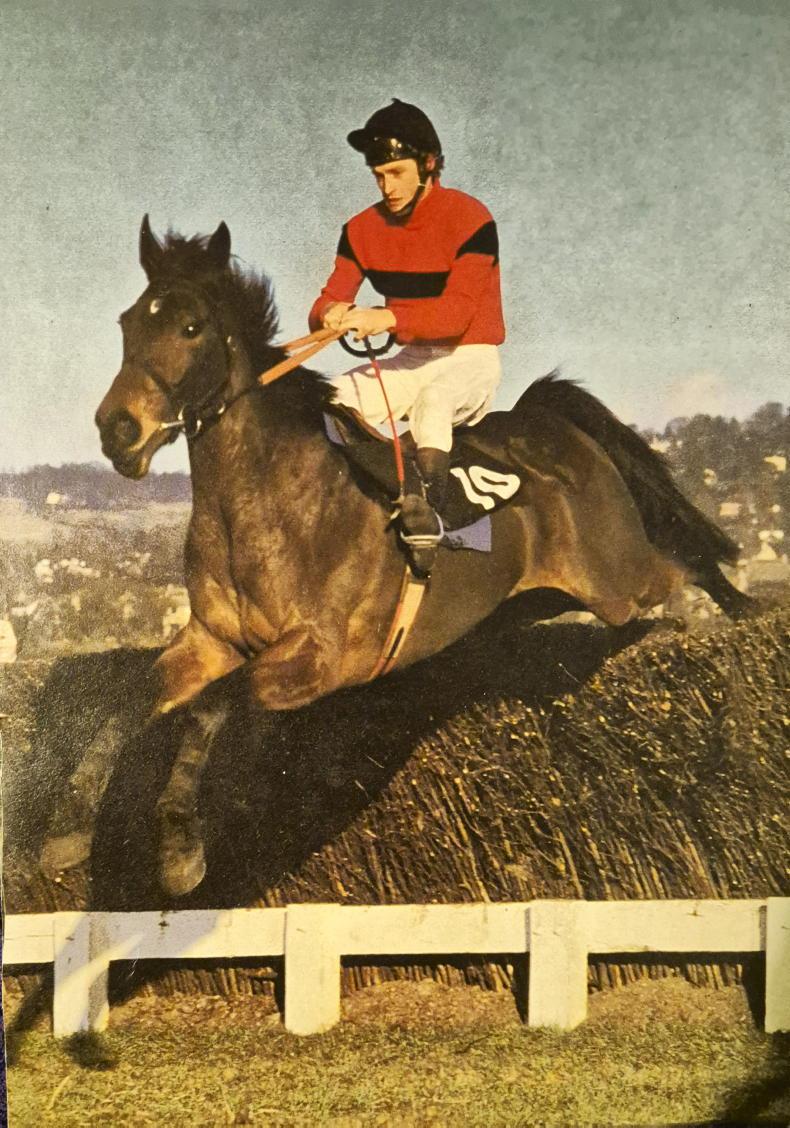
Plans for the historic Gold Cup bid were halted after winning her chasing debut and she missed the rest of the 1984-85 season, returning in December 1985 to win the Durkan Bros Chase and Sean Graham Chase at Leopardstown at Christmas, both with Tony Mullins in the saddle. Then another hiccup as she unseated Mullins at her Cheltenham trial meeting in January. Mrs Hill went back to O’Neill, a Punchestown schooling session putting them on course, but the whole riding situation caused much debate over the winter months leading to the Festival.
Come March, all was set. Dawn Run was adjudged the best turned out horse and went off 15/8 favourite, in her fifth chase and with a jockey who had never ridden her over fences in public.
In Raymond Smith’s review of the Festival in the Irish Racing Annual at the end of 1986 he wrote: “You could sense the intense feeling and compressed emotion building up from the moment the horses came out from the parade ring onto the track. The mood dwarfed anything I had experienced before.”
The Gold Cup was no easy ride - she let Run N Skip lead her over the first two but when he hit the third, the first down the back, she took it up, jumping boldly. As the race developed she hit a few fences, particularly the fifth last which saw Run N Skip lead her down the hill. But bravery was her strong point and she stayed in contention despite the errors.
Became the tiger
Coming to the second last – Brough Scott later described it best. “All four horses had been in a line, Dawn Run was getting the worst of it. O’Neill would have to dig deep. In the last three strides, he became the tiger. With body and boots he drove her in and demanded a long, long jump. He got it.”
“Even more than the incredible crescendo of the finish, that was the moment. The most vital, most brilliant jump of Jonjo’s life. It was the very heart of sport.”
Sir Peter O’Sullevan’s commentary, “the mare’s beginning to get up” received praise as one of the most iconic from any race, but Dessie Scahill was its equal on RTE radio, having sound only, but portraying the rising excitement from the last.
“Over the last, it’s Wayward Lad from Forgive N Forget, Wayward Lad from Forgive N Forget. Dawn Run is battling back into it. But it’s Wayward Lad holding Dawn Run and Forgive N Forget. They’re racing up towards the finish. DAWN RUN IS COMING WITH EVERY STRIDE! DAWN RUN IS GOING TO WIN THE GOLD CUP! Dawn Run has won it in the last stride.”
Raymond Smith wrote: “Personally, I will never forget how Jonjo rallied Dawn Run up the hill and that triumphant gesture, his clenched fist raised to the heavens as he passed the winning post. An Irish roar went up that I may never see equalled, no matter how many more times I go to Cheltenham.”
Tony Mullins himself recalled in the TV4 documentary: “As I watched the race that day with two journalists behind me, and she looked beaten at the last and I was a little disappointed, and then when she got back up, I was elated, you know, that she had won the Gold Cup.
“One of the journalists turned to me and asked ‘Are you not disappointed you’ve missed the Gold Cup?’ I said to him ‘Do you realise my family has just won the Gold Cup?’ That outweighed my disappointment.”
Lord Oaksey, one of the top racing writers of the time is quoted in the Irish Racing Annual that he would not wish to open in any way the controversary that had flowed from whether the ride should have gone to Mullins or O’Neill but: “All I will say is this – I do not think anybody else could have won on her only Jonjo in that tremendous battle from the last fence.”
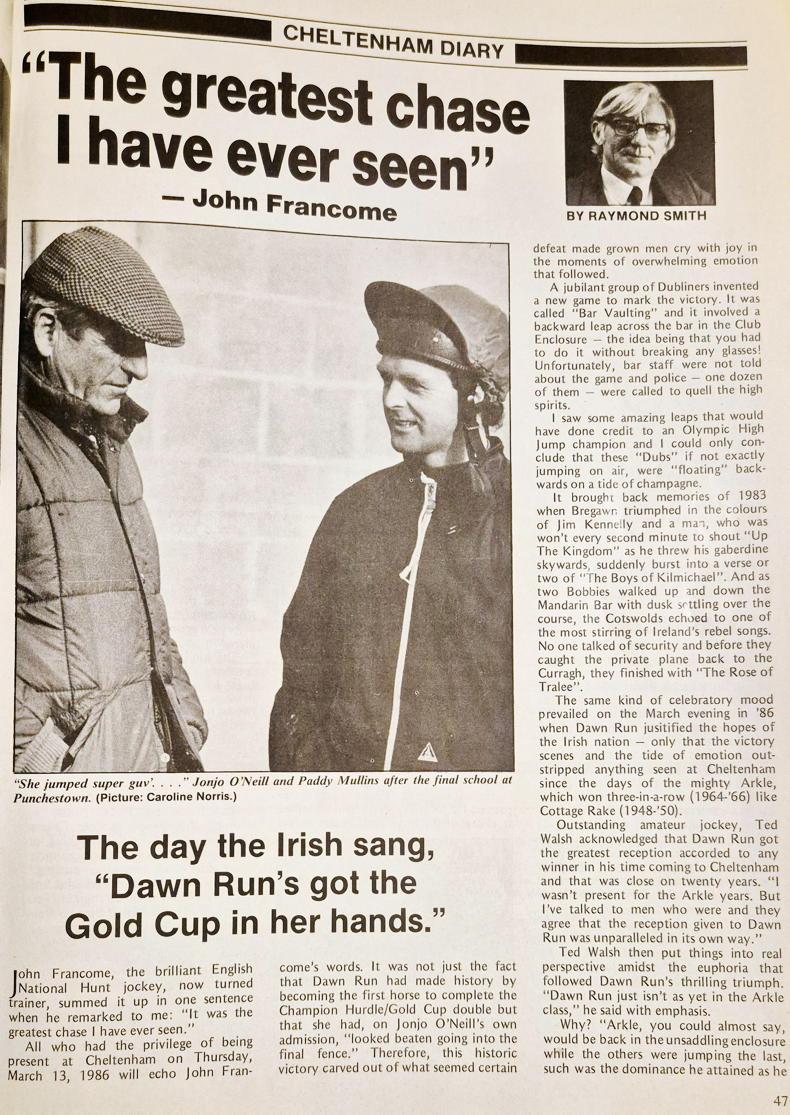
As the celebrations continued O’Neill carried Tony Mullins to the presentation podium and said in an interview with Jonathan Powell on BBCTV. “It speaks for itself, the best moment I’ve had in my racing life. She’s as game as a pebble. Brad came past us coming to the last and I thought we were beaten but you are never beat on her.
“I would like to add Tony got a lot of criticism, but he was the first man to congratulate me. When I went to school the mare at Punchestown, Tony rode work with me and told me all he could tell me about the mare and I would like to give a lot of, if not all the credit to Tony Mullins, and the family, for telling me what to do.”
The wild Irish celebrations didn’t hang so well with the mare’s trainer – the quiet man Paddy Mullins who was absent from the mayhem.
“I remember my father getting very annoyed and he left the parade ring,” Tony recalled. “I think he mightn’t have been there for the presentation, because he went out with the mare. He was so annoyed with the carry on, it was just the boisterous, natural reaction of the Irish crowd.”
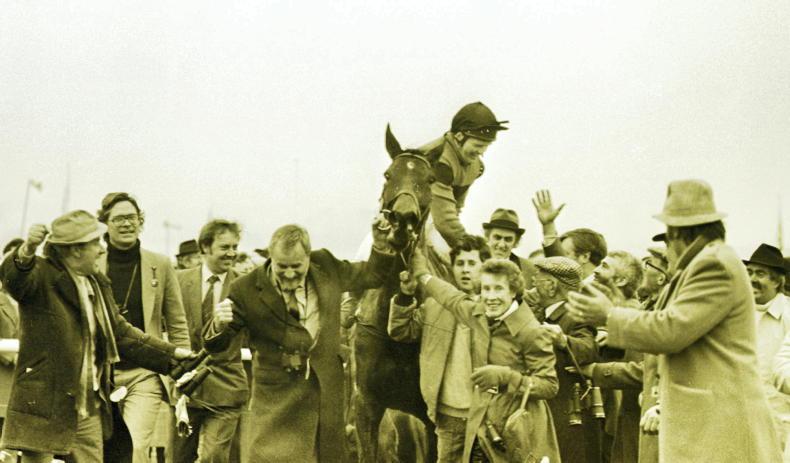
Unprecedented scenes
But as the celebrations among the faithful fans continued Raymond Smith in his review described events at the track: “The unprecedented scenes, reminiscent of the Arkle era, that greeted Dawn Run’s triumph, especially the way the mare was almost swamped in the enclosure, were caught to an extent on the TV screens. But the cameras missed much of the spontaneity, the singing and dancing and joyous ‘craic’ in the Mandarin and Arkle Bar. As the dusk descended over Cheltenham, they had drunk out both bars.” Foster and Allen wrote a song, the Ballad of Dawn Run in her honour
But Dawn Run wasn’t allowed rest on her laurels. A first fence fall at Aintree preceded the famous match race at Punchestown where she and Tony Mullins beat the champion chaser Buck House.
Still she was asked further by her owner, back to France for the Grand Course again. It remains one of the saddest and perhaps unnecessary final chapters to a great horse, on Friday, June 27th, Dawn Run, the pride of Ireland took a fatal fall.
The bonus about being a sports fan is that it’s an unwritten diary of where you were, and what you were doing in life.
By that June I had found a job, strolling down Anne St in Dundalk, to get ready for a night out when I caught the 6 o’clock news wafting out from a shop radio. Dawn Run had been killed in France. I didn’t go out that weekend.
But the Gold Cup win remains a ‘do you remember where’ occasion for Irish racing fans.
In a post under the replays of the Gold Cup on YouTube @Nijinsky26 wrote:
They used to say that people remembered where they where when J.F Kennedy got shot. Well, I will always remember where I was when Dawn Run won the Gold Cup. I was standing in a pub in Cashel. Standing room only. Packed like sardines in front of the telly. Tensions and nerves where high throughout the race.
When she was headed, there was a sad, disappointed mood and then, when she started to fight back, there was screaming and shouting that became a continuous roar and I still have the impression that the whole building shook. One of my 10 most emotional moments in racing. Everytime I see the race, I’m back in that pub.
Quotes taken, with permission from the producers, from TG4’s Laochra Na Rásaíochta Dawn Run documentary first broadcast in 2021.