IT’S an often-used racing remark that top National Hunt performers returning to action may not be as good as they were the season before, if they had a hard race or two - it being commonly stated: “Ah the Gold Cup leaves a mark. They are never the same again.”
Yes, three and a quarter miles takes a supreme effort, but it’s usually ignored, and worth noting especially this week, that so many of the best flat horses, asked considerably less strenuous questions, don’t see out their planned season to the full.
With Bow Echo the latest to take a premature train outta town, what about the 2000 Guineas as an example? The least you would expect is your winner, galloping down a nice green mile of racetrack, to still be in action come the autumn.
And the best flat performers rarely run more than six or seven times a season from May to October.
But with Bow Echo bowing out of racing with an injury this week - nothing too severe, but apparently it would see him not available or too risky to run in the Breeders’ Cup at the end of October - he makes it five of the last nine 2000 Guineas winners to not see out their three-year-old season.
Sadly, two good Guineas winners of recent years, Coroebus and Ruling Court, met their end before the season was complete. Coroebus fatally injured in the Prix du Moulin in October and the Eclipse in July was the last time we saw Ruling Court in action.
Missed outings
Over the last 10 years, the 2015 winner Gleneagles did go from the Newmarket Guineas to the Curragh and Royal Ascot, but missed two August outings due to the ground, before running at Ascot and the Breeders’ Cup.
Churchill in 2017 didn’t win again after following up Newmarket with a Curragh win, but gets kudos by going to Royal Ascot, York, Leopardstown, British Champions at Ascot and on to the Breeders’ Cup. Saxon Warrior in 2018 had a busy mid-summer, stepping up in distance, going from Newmarket to the Derbys at Epsom and the Curragh, on to the Eclipse, York and Irish Champions Stakes at Leopardstown, after which injury ended his career.
Magna Grecia won the 2019 Guineas and ran back at the Curragh, but was only fifth to Phoenix Of Spain and never appeared until one more run in October’s QEII where he was 14th of 16 to King Of Change. Just three three-year-old runs.
Kameko was one who did make it from 2000 Guineas through the season to the Breeders’ Cup in 2020. But the second placed in his Guineas, Wichita, lost his life training in Australia that autumn.
Poetic Flare (2021), predictably from his stable, had a busy time, running eight times at three and in the three Guineas early in the season, as well as Ascot, Goodwood and Deauville, before his season ended in September after Irish Champions Stakes.
Chaldean in 2023 had three runs after the 2000 Guineas win, Ascot, Deauville in July for the Prix Jean Prat and British Champions Day in October.
Stands out
And, of those beaten in the Guineas, Kingman stands out. Second to Night Of Thunder, he established himself a tip-top miler with wins in the Irish 2000 Guineas, St James’s Palace at Royal Ascot, Sussex Stakes and Prix Jacques Le Marois. But again, his season ended mid-August.
And last year, Field Of Gold was probably the best horse in the Guineas, after wins at the Curragh and Royal Ascot, he flopped at Goodwood in July and that was the beginning of the end for him.
So five of the last nine 2000 Guineas winners did not see out their three-year-old season to its end, two more placed horses just got to August and Magna Grecia also had a curtailed season.
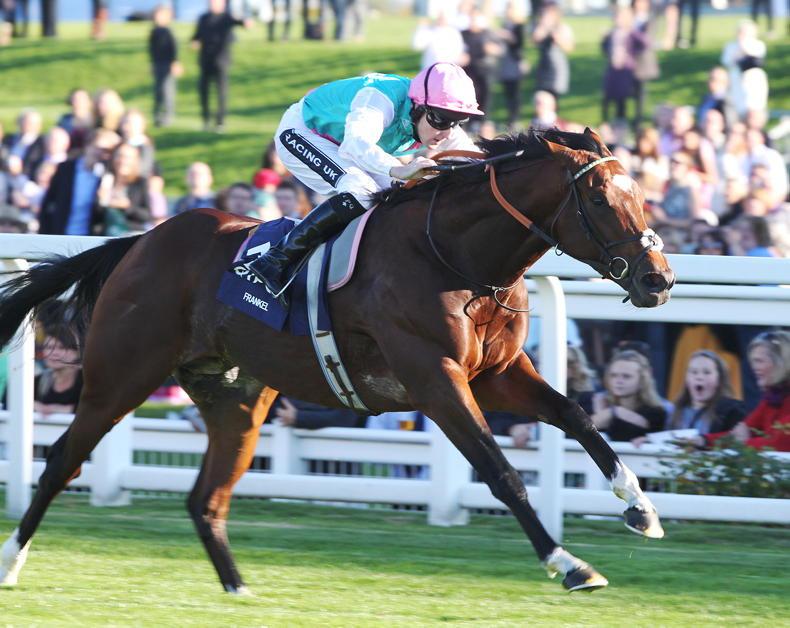
Frankel is the standout winner in 2011. He ran just three more times: Royal Ascot, Goodwood and back at Ascot for the British Champions meeting in the QEII. Sea The Stars (2009) went through to the Arc in October with six Group 1s.
But for toughness, durability and holding his form all the way from April to the Breeders’ Cup in November, it’s pretty certain we’ll never now see the likes of a Giant’s Causeway, second in the 2000 Guineas (to King’s Best who ran just once more) and who competed in Group 1s from the Curragh to Royal Ascot, Sandown, Goodwood, York, Leopardstown, Ascot again and then the Breeders’ Cup. The current crops may not present the greatest examples of the durability of the modern flat racer, even one who only runs around a mile.