BEST story of the last week was undoubtedly Richard Hughes training No Half Measures to win the July Cup at 66/1 and, despite the price, she wasn’t impossible to happen upon for punters, having only had a few pounds to find on her best form, and an excellent record at the six-furlong trip.
I didn’t find her, of course, which is galling in retrospect, but others made a good case for her going well and hats off to them.
Hats off, also, to Richard Hughes for gaining his first Group 1 winner as a trainer, having done the hard yards and gradually improved the quality of his string.
Hughes sometimes came across as blasé when racking up several jockeys’ titles and admitted after No Half Measures won that he took success for granted in his riding career and didn’t always appreciate the big moments in the saddle.
He seems a much more mature character as a trainer, probably because success did not come easily for him, making the big days seem more precious. Top jockeys rarely make successful trainers, and one swallow doesn’t make a summer, but there are strong signs that Hughes is establishing himself as a trainer to be reckoned with, especially with sprinters.
As well as No Half Measures, Hughes also tasted group success in the six-furlong Summer Stakes at York with Sayidah Dariyan, and that filly is a shorter price to win the Sprint Cup at Haydock with sponsors Betfair than her illustrious stablemate.
Elite band of trainers
He has a promising juvenile in the same ownership, Sayidah Hard Spun, who won a nursery at Ascot recently and, if the Master of Weathercock House is going to break into the elite band of trainers in the UK, it will surely be the sprinters that give him the best chance of achieving that aim.
Hughes lacks the backing of really big owners with the exception of Jaber Abdullah, but success at the highest level is the best opportunity of consolidation in that regard, while it’s often sprinters, who are harder for breeders to produce than classic horses, that give talented trainers the opportunity to demonstrate their skills.
Breed the best to the best and hope for the best remains just about the best approach to producing champions. But it’s far from an exact science and, while it’s fairly easy to gain precocity by breeding speed to speed, it has rarely been a recipe for producing lasting champions in the sprint division, and many of the best ever at five and six furlongs have been freaks who have pedigrees that scream stamina but attitudes that say “try and stop me”.
Most champions are bred with the 2000 Guineas or Derby in mind before showing that they are best when their natural speed is best not reined in.
It’s also the division where careful nurturing of talent can see those considered as handicappers make the leap to become champions and the belief that anyone can breed/own/train a champion is integral to the appeal of racing for all it is increasingly dominated by mega-rich owners.
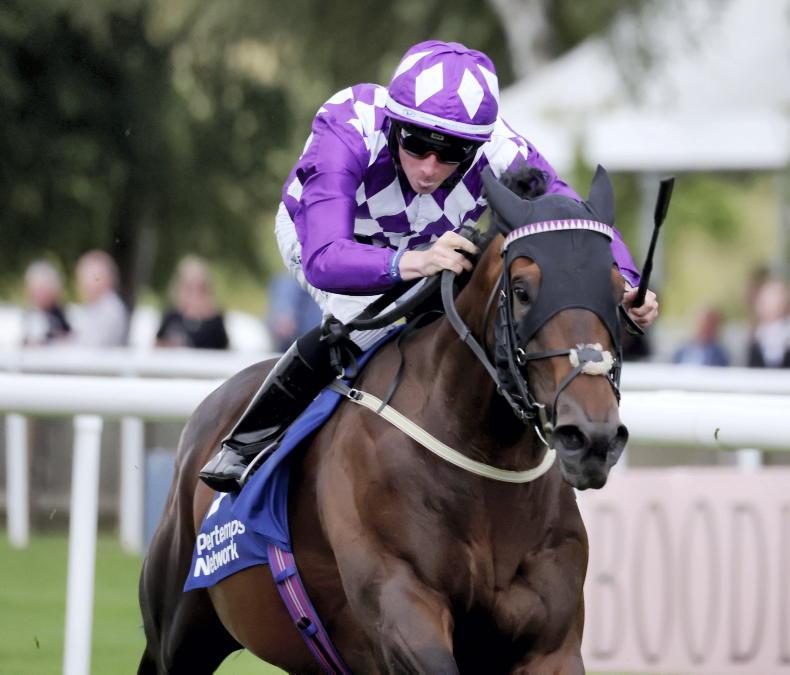
The 2023 Pertemps Network July Cup winner Shaquille and Rossa Ryan for trainer Julie Camacho was another 'unlikely' winner \ Healy Racing
July roll of honour
The recent roll of honour of the July Cup is a good example of that belief, with No Half Measures joining Mill Stream, Shaquille and Oxted as unlikely types to reach the top of the sprinting tree based on pedigree and/or early racecourse efforts.
The truth is that, while there really aren’t that many surprises when it comes to the classics these days, the Group 1 sprints tend to showcase racing’s variety and diversity, both human and equine.
You can collate ratings until you’re blue in the face to show that the best of the sprinters tend to lag behind the top milers (betting without Battaash here, of course), but in terms of entertainment and variety, they serve their purpose wonderfully well, proving that racing is not so uniform as it sometimes appears.
Proper fairytale
Dig further back and the sprint division throws up some proper fairytales, with horses like Les Arcs and My Best Valentine providing small trainers with great moments; that pair had been tried with limited success over hurdles before blooming as sprinters. Chief Singer had big wins at a mile as well as his sprint successes, but was a proper ugly duckling who made Jeff Smith a household name and put Smith’s trainer, former jockey Ron Sheather, on top of the world for a while.
Smith, one of racing’s nice guys (not enough of those) then waited almost four decades before Alcohol Free repeated Chief Singer’s heroics by winning both the July Cup and the Sussex Stakes. Those are the racing results that live longest in the memory, often after the glitz and glamour of Epsom and Ascot have faded from the mind.
Tribute
Of the recent July Cup winners mentioned above, all have proven that their successes could not be described as flukes, and that is a tribute to the capability of those who trained them, reminding those watching that Richard Hughes, Jane Chapple-Hyam, Julie Camacho and Roger Teal can train a champion given the right ammunition.
That should also remind us that there are a lot of trainers who may lack the backing to consistently produce classic contenders, but that they are no less capable because they haven’t a billionaire or three to maintain a conveyor belt of talent.
Some complain when an outsider wins a Group 1 contest but for racing to really flourish in the eyes of the public, there must be fairytales that come true and horses who come from left field to confound expectations.
It’s no great surprise that in flat racing it’s the unpredictable sprint division that throws up the unlikely heroes and heroines and I, for one, wouldn’t have it any other way.