SOMEBODY paid 400 grand for a store horse last week. Best of luck to them.
My first thought was ‘You could buy a brilliant point-to-point winner for that money’ but I’m not knocking any of the buyers who invested over €45 million in store horses across the four ‘premium’ days at Goffs and Tattersalls Ireland in recent weeks.
I’d like to say we’re lucky this kind of money is coming into the Irish industry but you’d have to also acknowledge that an awful lot of that cash is almost certainly going back to France this summer.
Eight of the top 10 lots at the Arkle Sale were French-bred or by French stallions. It was nine out of 10 at the Derby Sale.
Someone should make a documentary, following the likes of the Bleahens, Costellos and Walter Connors around France this summer. You could call it ‘Who’s taking the horse from France’.
One vendor, who failed to sell his homebred at a recent store sale because the sire has fallen out of fashion here, was tearing his hair out as he watched a leading point-to-point handler give over €80,000 for a gelding by a French stallion who has sired only one graded winner from four crops of racing age, and whose dam and grandam have not yet bred a winner of any kind.
It’s a funny old market. When I asked a leading consignor to try and explain the popularity of the French-breds, he remarked that “some of the Irish stallions are a bit overdone” which I took to mean that the market was saturated with their progeny, whereas the horse by the lesser-known French sire had a kind of rarity value.
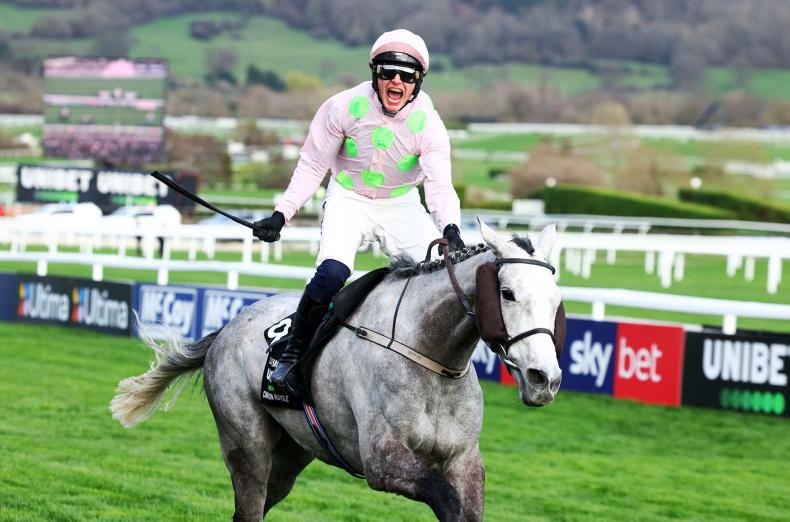
Lossiemouth was one of the 11 French-bred winners at Cheltenham this year
Of course there is no denying that French-breds are getting it done on the track too. There were 11 French-bred winners at this year’s Cheltenham Festival and seven of them were in Grade 1 races. Seven of Willie Mullins’ 2026 Cheltenham winners were French-bred. The other one was German!
How hard it must be for trainers and owners to compete against the likes of Willie Mullins, J.P. McManus, Robcour, Gordon Elliott, Dan Skelton and the other top outfits in the jumps game. I think it’s easier on the flat, even though you can bump into a future Derby winner in a Killarney maiden or a champion two-year-old at Bellewstown.
I am convinced that flat racing is where the opportunities lie for owners, trainers and breeders. In 2025 there were 176 flat meetings in Ireland, compared to 204 over jumps. That balance is going to change in the coming years as Horse Racing Ireland [HRI] has committed to opening a new all-weather track at Tipperary, probably by November 2027.
As HRI has received government clearance to borrow up to €37 million for this project, you’d imagine the new track is going to be kept busy. Tipperary manager Andrew Hogan said last week that the track will have 31 meetings in 2028 – it used to only have 11. They’re also relaying the turf track which will have no undulations or ridges and will be much better-draining than the old one.
It’s hard to see Dundalk Stadium losing any of its all-weather fixtures. In theory HRI can do what it likes with the fixture list but it would surely be unthinkable for the semi-state body to use its powers to favour its own racecourse and disadvantage an independently-owned track which has proved to be such a success since it opened its gates in 2007.
There’s also a new flat turf track close to completion at Punchestown. They’re a well-connected bunch in Punchestown and – even if it is the home of jump racing - there is no way they have spent millions on that project without being pretty certain they are going to get more flat fixtures.
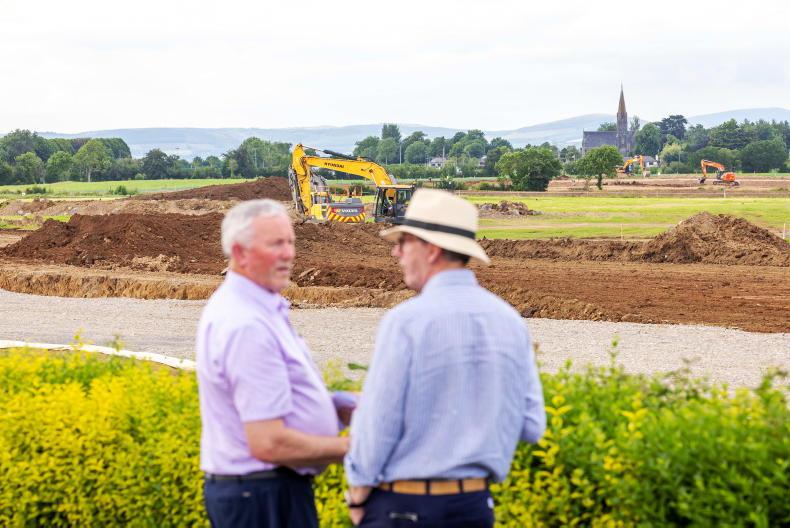
The new all-weather track at Tipperary is due to open in November 2027
So if I was a trainer or an owner who was frustrated at being kept out of the winner’s enclosure by the big guns, I’d be keeping a close eye on developments at Tipperary and Punchestown. Irish racing is going to need a bigger horse population – the number of flat runners here actually decreased in 2025. And you don’t see balloting at Dundalk the way you used to either.
Rather than try to compete in the store horse market, I think it might be a good move to get a dozen flat handicappers or maybe 10 yearlings. Unlike the jumps, the flat is a global game and there could be a decent business model in racing two-year-olds on the all-weather and getting them sold. It could work well as a back-up plan for the breeze-up consignors.
One of the country’s top point-to-point handlers, Donnchadh Doyle, has already diversified into the flat game with notable success. As well as training approximately 60 point-to-pointers, Donnchadh has around 20 flat horses he bought as foals and yearlings. He has installed former jump jockey Jack Foley as his flat trainer and the yard has enjoyed plenty of winners. Midnight Dusk (39,000gns yearling) won at the Curragh for them last Saturday and will be offered for sale at Newmarket next Wednesday.
It's a strategy that makes sense on paper and definitely sounds more attractive than competing with multi-millionaires for French-bred store horses. It will be interesting to see if more owners and trainers divert resources and attention from jump racing into the flat game in the near future.