IT’S Galway Plate day. Or Sussex Stakes day, if you prefer.
For most of the 1990s and early 2000s I reported on each day of the Galway Festival for The Irish Field – the seventh day was added in 1999. I was new to the profession and absolutely thrilled to be getting paid to go to the races.
My main recollection from those Festivals is that almost every single day there were Dermot Weld winners. It was just a question of how many.
In those days the Field reporter always collected a VHS video cassette of the day's racing from O’Doherty’s Sound & Vision van after the last. You took this back to your lodgings and compiled the comments in running into the early hours. Play, pause, rewind, repeat. Then in the morning you dashed back to the racecourse office and asked if you could send each page to the Field office – by fax. (Stay with me, kids.)
I’m struggling to remember exactly how the race report was filed. There wasn’t email, as such, but I think we had some sort of primitive laptop (Tandy?) that allowed you to connect to the office on a dodgy dial-up connection. The industry norm was to put MMMM at the bottom of the report as confirmation that this was the end of the transmission. Why you couldn’t just type ‘THE END’, I don’t know. I didn’t question it.
Anyway, it was just great to be a part of the travelling circus and the wonderful world of Irish racing. And it still is.
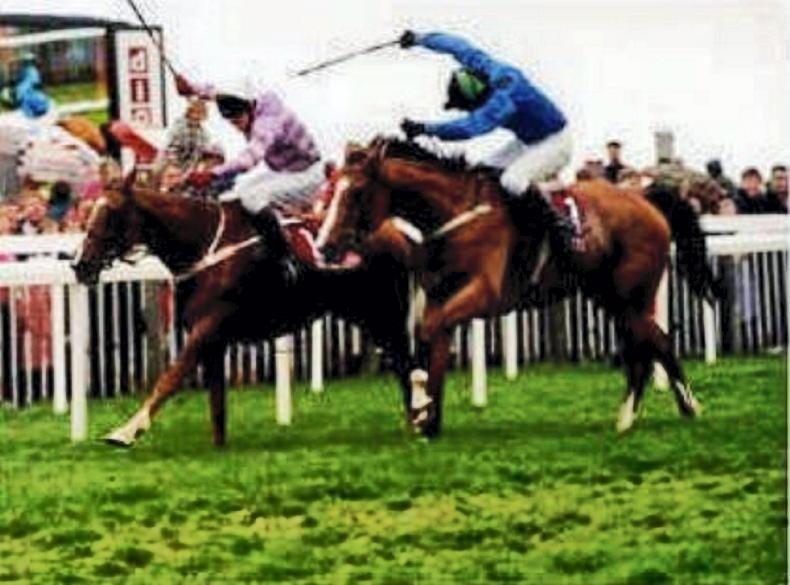
Stroll Home (left) won the 1997 Galway Plate from Idiots Venture
I’m by no means a winning punter but you always remember the big wins and I recall getting the Tote Trio on the 1997 Plate. I had the 11/2 winner Stroll Home as my banker and probably put in seven or eight others with him and luckily they included runner-up Idiots Venture (14/1) and good old Derrymoyle (20/1).
In 1998 I asked to take Galway week off work so I could fulfil a long-held desire to experience Glorious Goodwood. Faraway hills, and all that. I saw Double Trigger win his third Goodwood Cup that year. The crowd responded with what I considered to be no more than a polite ripple of applause. When I saw the reception described as ‘wild scenes never before witnessed on the Downs’, that's when I realised that I should have stayed in Galway. Worse still, there was absolutely nowhere in Goodwood showing the Plate or Hurdle (which were afternoon cards), and I missed a classic Weld handicap winner I’d been watching all year.
Almost 30 years on, broadcast technology and communications have certainly improved. But there is a strong temptation to say that Irish racing was in a better place in those days. Crowds were bigger, betting turnover was legendary, and there was more variety in terms of winning connections. Or at least that’s what I remember.
In fact on the day that Amlah won the 1998 Galway Plate for trainer Philip Hobbs (a first UK winner of the race), Dermot Weld had three winners and Aidan O’Brien had two. The crowd of 16,000 is not much different from what is expected today.
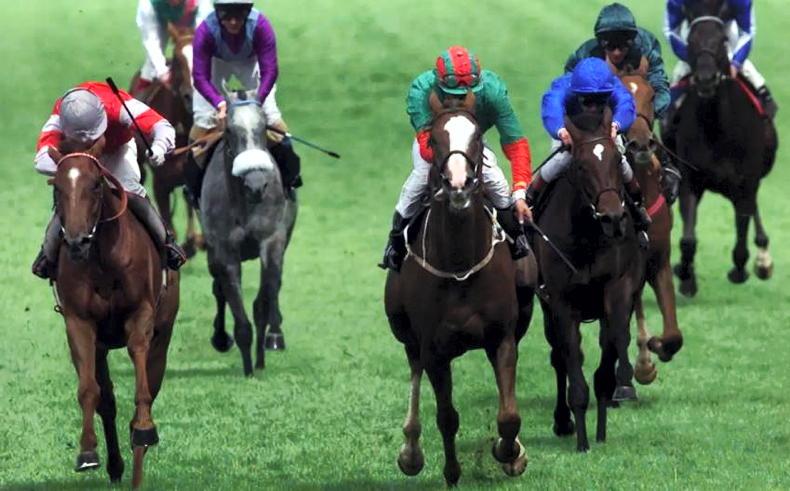
Double Trigger won the Goodwood Cup for a third time in 1998
But a more general comparison of Irish racing statistics from 1998 with those from 2025 show some remarkable differences.
The fixture list has grown by over 50% (from 256 to 390 meetings) and both the number of races and runners have increased accordingly. Prize money has nearly quadrupled (€20m to €70 million) which, when adjusted for inflation, translates as something like a 100% increase.
But despite all those extra meetings total attendances have only risen by 13% and on-course betting has been butchered as punters moved online, a trend which accelerated once betting exchanges came on the scene around 2000.
Last week Horse Racing Ireland issued industry statistics for the first six months of 2026. Most metrics registered slight increases, nothing to write home about.
The number of races was up marginally (1,288 versus 1,271), total runners nudged forward, and prize money rose 5.4% to €33.2 million for the half-year, which was notable.
Attendances crept up too, but by less than 1%.
The betting ring, meanwhile, keeps telling the same story it’s told for over 25 years. On-course turnover fell again, down almost 5%, with away-track bookmaker turnover down 20%.
As an enthusiastic Placepotter, I was pleased to see an 8.8% jump in Tote betting, and that’s excluding World Pool meetings.
But the one genuinely startling number in the HRI-compiled stats was in bloodstock: sales at public auction were up almost 21% to €82.7 million. We haven’t had that many sales yet this year, so that rise is chiefly due to the two breeze-up sales (up €1m or 7%) and the two big store horse sales (up €7 million or 30%).
Perhaps of all the changes in racing over the past 25 years, the biggest has been the prices of the horses themselves.
In 2002 the average price of a horse sold at Tattersalls Ireland (across all sales) was €11,798. Adjust that for inflation and in 2025 it would equate to €18,000 but in fact the 2025 average price was €30,813.
At Newmarket Sales in 2002, the average price paid was 35,000gns. That’s the equivalent of 64,000gns in today’s terms but actually the 2025 average price at Tatts was 80,000gns.
We will soon find out what the appetite is for flat-bred yearlings. Most people expect a certain degree of market cooling at the sales this autumn. Meanwhile the jumps market appears to be booming. Maybe it’s because there are smaller crops of National Hunt horses being produced, or maybe more people want a Galway winner than one in Goodwood.
Today I’ll be trying to follow both of these special meetings and just appreciate that both of them appear to be as strong as ever. Enjoy.
MMMM