MICHAEL O’Leary once famously remarked: “People say the customer is always right, but you know what? They’re not. Sometimes, they are wrong and need to be told so.”
As racing purists, we are often resistant to change - especially when it comes to parts of the sport that we cherish the most. The Cheltenham Festival certainly falls into that bracket, and the case for protecting its sanctity almost always comes from a place of love for the meeting.
It was actually in an edition of The Big Interview with O’Leary in these pages back in November that the structure of Cheltenham’s current four-day format was challenged strongly by the Gigginstown House Stud owner and Ryanair boss. His comments were not universally popular.
“If you increase the meeting to five days, you increase the corporate and ticketing revenues by 25%,” O’Leary made the case.
“Would most people stay for the whole five days? No they wouldn’t, but - like Royal Ascot - many more people would do two or three days. You also increase local day trippers. I think it’s commercial incompetence that Cheltenham doesn’t wise up and move to five days.”
He added: “I’m in the minority of people who strongly believe the Cheltenham Festival should go to five days. That fifth day should be on the Saturday, a bit like Punchestown has done - that’s effectively Punchestown’s biggest day now. Move something like the Stayers’ Hurdle to the Saturday, put on a few more races... You give it five to 10 years to build into a big day in its own right.”
The idea of stretching Cheltenham out to five days has already been explored in recent years by The Jockey Club, and ultimately decided against (much to the relief of many, including this column!). However, could a bumper crowd at the track’s New Year’s Day fixture accelerate thoughts around a rethink of the existing Festival format?
Festival comparison
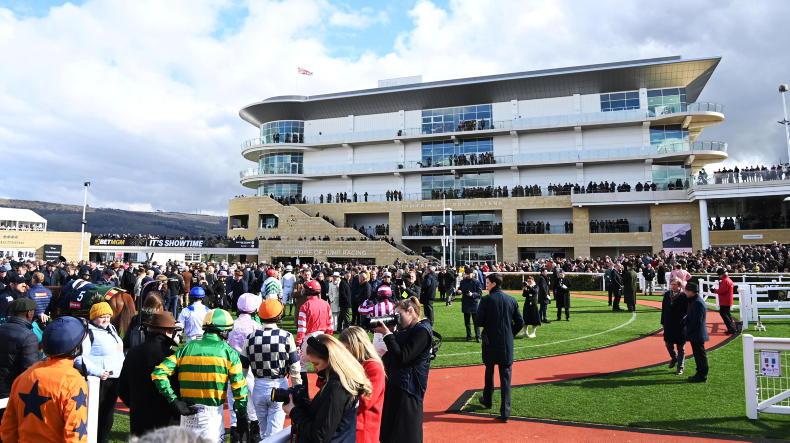
It was an exceptional result from Cheltenham to attract a crowd of 44,151 to its January 1st meeting - a sell-out for the first time and an increase of roughly 6,000 on its previous best.
The standout comparison is that more people attended a January fixture with just one graded race than was the case for day two of last year’s Cheltenham Festival - a cracking Wednesday card featuring the Queen Mother Champion Chase, Turners Novices’ Hurdle, Brown Advisory Novices’ Chase and Champion Bumper. Just 41,949 passed through the gates then.
To put that in context, back in 2022, the Wednesday attendance figure was a much more substantial 64,431.
Cheltenham’s New Year’s Day boost also came on the back of a highly successful period for Christmas crowds, both in Britain and Ireland.
There are obvious knock-on impacts of considering a Saturday.
Kempton’s 26th and 27th attendances climbed 24% and 22% respectively, Aintree’s Boxing Day meeting reportedly saw a 35.5% increase, Chepstow had its biggest Welsh National crowd in nearly a decade, and Newbury’s Challow Hurdle day experienced its second-highest attendance for the card in 35 years.
Closer to home, Leopardstown’s four-day figures rose by 7% from last year to 67,202, Down Royal CEO Emma Meehan told The Irish Field last week that an attendance of 6,914 on December 26th was “one of the biggest crowds we have had in my seven years here”, while Tramore saw a bumper attendance of 7,500 on New Year’s Day. There were also positive crowd reports from Punchestown and Limerick over the Christmas/New Year window.
What is the common theme with all those strong turnouts? They have all fallen at a period where the majority of “customers” are likely not working and have time off. It shows that there is very much a demand from the public to attend major National Hunt fixtures, but perhaps attracting social racegoers to these meetings is a fair deal more straightforward on weekends and over holiday periods.
Future potential
While many might object to Cheltenham becoming a five-day fixture, could the bumper New Year’s Day crowd at Cheltenham tempt The Jockey Club to tweak current four-day layout, to have the final day of the meeting on a Saturday instead, when those social racegoers are more likely to be off work?
Might a Wednesday-Thursday-Friday-Saturday Cheltenham Festival be a halfway house between attracting the weekend crowd that O’Leary mentioned could be commercially valuable to the track, while still maintaining its four-day structure and not diluting quality any more than has been done already? There were reports of such a proposal being considered in the Racing Post back in October, and the New Year’s Day turnout surely wouldn’t have done anything to put those in power off.
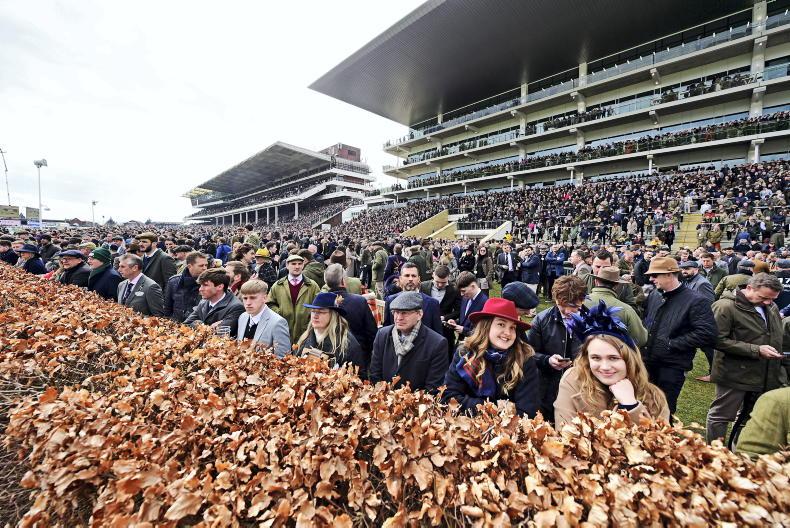
The background here is that Festival crowds have clearly been slipping in recent years. In 2022, post-Covid, a whopping 280,627 descended on Prestbury Park, though that fell to 240,603 a year later, 229,999 in 2024 and 218,839 in 2025. When these four days are such a key part of The Jockey Club’s finances every year, a drop of 22% from 2022 to 2025 has to be viewed as alarming.
There are obvious knock-on impacts of considering a Saturday. For example, with ITV broadcasting Six Nations rugby on the same weekend, it’s possible that a Cheltenham card then could be pushed onto ITV4 as opposed to ITV1. That would clearly be an uncomfortable situation for the Cheltenham Gold Cup, if it were still held on the final day.
Social angle
If organisers lean that direction, perhaps keeping the Gold Cup on Friday, but moving much of the Thursday card - or a mix of weaker races to the Saturday - would serve a purpose. It might even give the Cheltenham purists a concentration of the best races mid-week, and open the door for social racegoers to attend the Saturday.
It must be said, having the Gold Cup as the meeting’s crescendo is appealing. However, if it wasn’t on the final day of the Festival, there is precedent in this regard when looking at matters in Australia. When it comes to the Melbourne Cup Carnival at Flemington, Victoria Derby Day (86,353 in attendance last year) kicks off proceedings on October 31st, the Melbourne Cup (84,373) then takes centre stage on November 3rd, and there are still two more major meetings to come on November 5th (51,239) and 7th (65,012). Two of those four cards fall on Saturdays.
The Cup doesn’t lose any prestige by not being the finale to a massive four days, which drew a total of 286,746 racegoers - 53% of general admission ticket buyers being under the age of 35.
Sticking with tradition might be our default, but it’s an understandable position for The Jockey Club to weigh up options for the Cheltenham Festival when the public are voting with their feet. Time will tell if the customer is right.