MORE often than not in the National Hunt season just gone, Dan Skelton got the big calls extremely right.
Not everyone might be enamoured by the trainer’s high-profile handicap plots, but, if the system allows for campaigning such as Skelton’s, his British competitors would be mad not to operate along those same boundaries of the game. The rewards for executing those plans are massive, and he is showing time and time again that it can be done.
And whatever about establishing a favourable mark for a horse, there is no getting away from the fact that there is immense skill, horsemanship and recruitment required in order to deliver the type of results Skelton has routinely been managing over the last number of years - and in Grade 1 company. Breaking £5 million in British prize money is nothing short of sensational, and the entire team deserve real credit for that.
Skelton’s horses are capable of doing the talking for him, but he is also one of the most competent speakers in the training ranks. He is not afraid to speak his mind on a host of industry matters, and it was no different when he sat down with us for an edition of The Big Interview in The Irish Field last year.
One of the most interesting points he raised in that conversation was a proposed change to the end of the season in Britain, and perhaps the events of last weekend at Sandown’s finale meeting demand another discussion around what Skelton raised.
“I think one of the biggest negatives to British National Hunt racing is the proximity of Aintree to Cheltenham,” the 41-year-old told The Irish Field.
“I’m going to be bringing this up during the spring. It’s always close, but there are only 19 days in between this year [2025]. It’s ridiculous that we’ve almost got to choose between our two biggest meetings. I think Aintree should be moved to the end of the season.
Watering track
“I’ve spoken to a lot of the players in the industry and there’s a lot of support for it. There shouldn’t be a problem with watering for the Grand National course, that’s not a concern. Nothing else is on that weekend from a sporting perspective that Aintree would clash with in that new spot too. Yes, it would be the week before Punchestown, but very few horses take in all three of Cheltenham, Aintree and Punchestown nowadays.”
The conversation gained further traction when Skelton spoke about the issue again on an episode of Racing TV’s Luck On Sunday, and The Jockey Club, owners of Cheltenham, Aintree and Sandown, were promoted to issue a statement on the matter to the Racing Post. They said that the group “reviews our race programme on a regular and ongoing basis but there are no plans to move the Randox Grand National Festival at Aintree or the bet365 Jump Finale at Sandown.”
Surely there are grounds for at least a rethink on that after the recent controversy surrounding ground conditions, several high-profile non-runners (among 20 total withdrawals) and small fields for Sandown’s fixture last Saturday. There were just 63 runners across eight races and a disappointing turnout of only 11 in the Bet365 Gold Cup (compared with 20 two years ago).
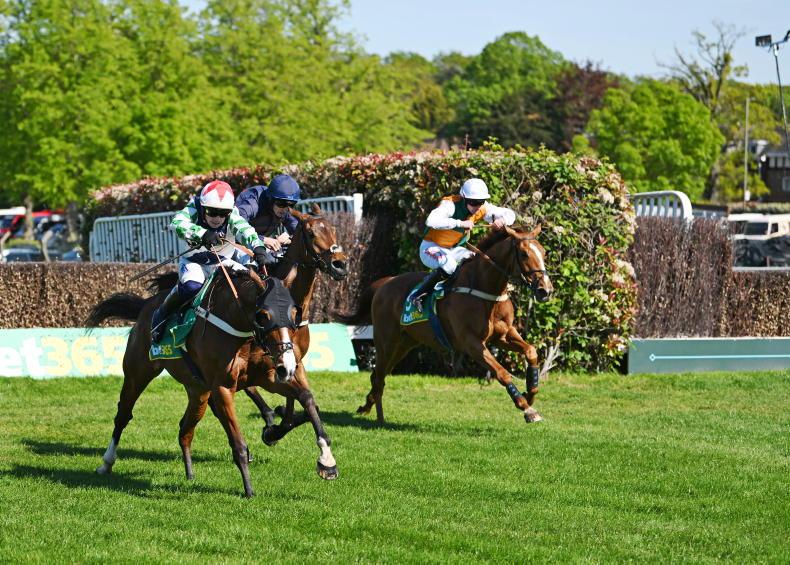
Sir A.P. McCoy was vocal in his criticism of having the word “firm” in the going description, and that ground situation is by no means satisfactory when you want to attract the premier National Hunt horses in training to town. The action felt substandard for the stature of the meeting this year.
Yes, drying weather – and having a flat fixture at the same venue the day before – mightn’t have helped with managing moisture levels underfoot, but the times suggest (as per Timeform) that we were dealing with good to firm ground on both the hurdle and chase tracks.
This isn’t the first time we’ve had similar conditions. In fact, only last year Timeform called the ground good to firm for this fixture too. There was no card in 2020 due to Covid, but every other year from 2019 to 2024 delivered good ground on both the hurdle and chase courses, according to Timeform.
BHA directive
As touched on in this column last month, the official BHA instruction (as of last year, at least) is that British National Hunt tracks “should aim to provide good ground, and no firmer than good to firm”. That directive feels out of touch with what most National Hunt connections want. Before any flag was raised at Punchestown this week, over 100mm of watering was applied on over 100 acres in the previous 12 days – and we still only officially began on yielding, good to yielding in places on Tuesday. That feels more like what is needed in order to see the best jumpers nowadays.
If The Jockey Club are intent on Sandown being the final destination for the season, they surely can’t expect elite quality and numerically-packed fields, should we end up in the same circumstances next year in terms of the going.
When Aintree were able to ensure the word ‘soft’ was included in Timeform’s ‘good to soft’ time-based going for each of its three days this year, perhaps Skelton is onto something again with his proposal to switch the season’s end.
Irish racing followers might fear more crossover if Aintree comes closer to Punchestown, but it wasn’t exactly like this week was full of Liverpool runners. It was a select few who did the two.
Even so, if a British trainers’ championship was on the line, imagine having the entire season decided with the Grand National as the penultimate race of the season? It could be pulsating.
At the very least, Skelton’s suggestion is a conversation worth having.
CONDITIONS were much more testing than usual for Coral Scottish Grand National weekend a fortnight ago at Ayr, so you might have expected the hardened, older stayers to be best suited for a dogged test over four miles in the feature. The reality was quite the opposite.
From just six horses who managed to complete, the winner and third were aged only six. For good measure, a seven-year-old finished fifth.
Try this on for size, however; the first and third home would have been ineligible to line up in the Randox Grand National a week earlier due to a restriction requiring horses to be seven or older to run in the Aintree feature. The winner, Kap Vert, would have been deemed too inexperienced anyway as he only had four chase runs before striking at Ayr. The bare minimum needed to line up at Aintree is six chasing starts.
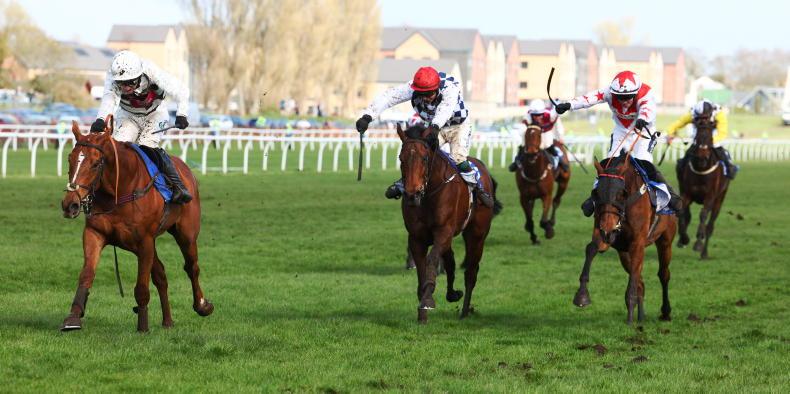
On that theme of required runs, none of the first four home in the BoyleSports Irish Grand National would have been eligible for Aintree as they hadn’t met the quota of previous chase starts (Soldier In Milan and Argento Boy had four each before Fairyhouse/Showurappreciation and The Enabler had five apiece). Solider In Milan hadn’t even run under rules 12 months before his 16-length Easter annihilation.
Yes, Aintree is a different challenge to other Nationals, but recent results keep telling us that the era of Aintree specialists isn’t what it used to be. Class is now the biggest factor needed – and age is no barrier to class.
A revision to allow six-year-olds into Liverpool’s greatest prize would open the race to more connections, and perhaps the requirement for six chasing starts is worth some reevaluation too. If you’re good enough, you’re old enough.