IT was commented on by many at Fairyhouse over the weekend that the third last fence was proving problematic for some runners. However, that theme was completely at odds with how the season had generally gone at the home of the Irish National. It had been a winter with a considerably reduced proportion of fallers than the weekend just gone.
From the opening day of Fairyhouse’s Winter Festival to Bobbyjo Chase Day (this track’s final fixture with chases before Easter), there were a total of 15 races over fences with 142 runners. Only six of those fell or unseated (4% of all runners).
In contrast, across the eight chases run at the track over Easter, 12 of the 110 runners fell or unseated (10.9%), with 39 others pulled up. That brought the completion rate to 54% (versus a much higher 83% for the rest of the track’s National Hunt programme).
There is an additional third fence in the home straight for Fairyhouse’s Easter chases, but what was last weekend’s third last is the obstacle responsible for five of the nine fallers at the Festival. That fence is said to be in the very same position as it has been all season.
If it was the extra fence later in the home straight where issues were arising, that would be a point to give further inspection to. However, for all that three out comes on a slight downhill, it’s hard to pinpoint an obvious reason in terms of course layout why that first obstacle in the straight should be yielding these results at Easter time, relative to the rest of the season.
No doubt, the team at Fairyhouse are more eager than anyone to work out if there is any other factor at play - and they have actively been looking into the incompletions since Sunday, consulting a number of experienced figures in the process. However, when broken down one-by-one, perhaps the incidents were more circumstantial than anything else.
Anotherway and Saint Sam, who sadly suffered fatal injuries in their falls at the third last, had both been free-going front-runners on ground that was probably quite holding - and in a race coming late in the season. The contest was coming to the boil in both instances too, albeit in different ways.
Saint Sam had approached the third last at 31.91mph, according to RaceiQ, and that was considerably quicker than any other approach to a jump he had in the race. At the previous 13 fences, his average entry speed was 28.61mph.
Speed statistics
On the other hand, Anotherway was probably beginning to tire. He approached the third last at 28.8mph - 0.43mph below his average entry speed throughout the race and much slower than the 30mph+ approaches he’d had in four earlier fences, and another two at 29mph+.
A dramatic end to the Race Displays Joseph O’Reilly Hunters Chase on Sunday was slightly bizarre to watch, but - for all that it’s impossible to know - an increased tempo as main rivals Hunters Yarn and Wrappedupinmay approached the third last might have played some sort of role in the independent falls.
Wrappedupinmay had approached the previous eight fences at an average speed of 26.79mph (never faster than 27.81mph). His entry speed at the fence where he came down, racing off the home turn, was 30mph.
Similarly, Hunters Yarn had met those same eight previous obstacles at an average of 26.57mph - and none quicker than 27.27mph. He met the third last at a quicker 29.8mph.
An increase in tempo at this stage of a race is nothing unusual, so there is no reason to apportion blame to any of the riders, but perhaps the margin for error was lesser here than at other parts of the track, especially for horses accustomed to running on deeper ground all winter (or in point-to-points). It simply felt like a bit of a freak, unfortunate incident to have them crash out side by side, independent of one another.
In the BoyleSports Irish Grand National, Kiss Will - entering the complete unknown in terms of stamina - couldn’t get away with putting in an extra stride at three out, while Western Walk, who came down behind him, appeared to idle on his approach to the fence and came down at the third last (possibly having his eye caught by the riderless horse getting up and Better Days Ahead swerving his way to avoid him). He was going a very slow 23.66mph on his entry.
On the face of it, five falls at the same fence in a weekend, compared to six fallers/unseats across the entire course since November, is a standout statistic that warrants some digging. And the authorities have rightly been doing that.
That said, it feels like each of those Easter incidents could be explainable in their own way. Though it can be unwise to dismiss multiple incidents, it might well have been a confluence of circumstances in a small sample size relative to the track’s season as a whole.
Several senior riders and officials who were spoken to for the background of this piece could shed no light on an obvious cause either.
WE have seen Horse Racing Ireland cut down on graded races in recent seasons - particularly around the Grade 1 novice chase programme at Christmas - and it feels like there is at least one blacktype race too many in the Easter schedule at Cork.
The Mallow track and its proper racing crowd deserve quality action for the popularity of the meeting in question, but the Grade 3 Bar 1 Betting Chase (registered as the Imperial Call) is now regularly presenting itself as a pretty dull, small-field affair in its current format. Questions must be raised over whether it’s deserving of present status.
First things first, top marks must go to trainer Ray Hackett for how he produced Nowwhatdoyouthink to win last Sunday’s renewal. His seven-year-old is clearly a progressive chaser.
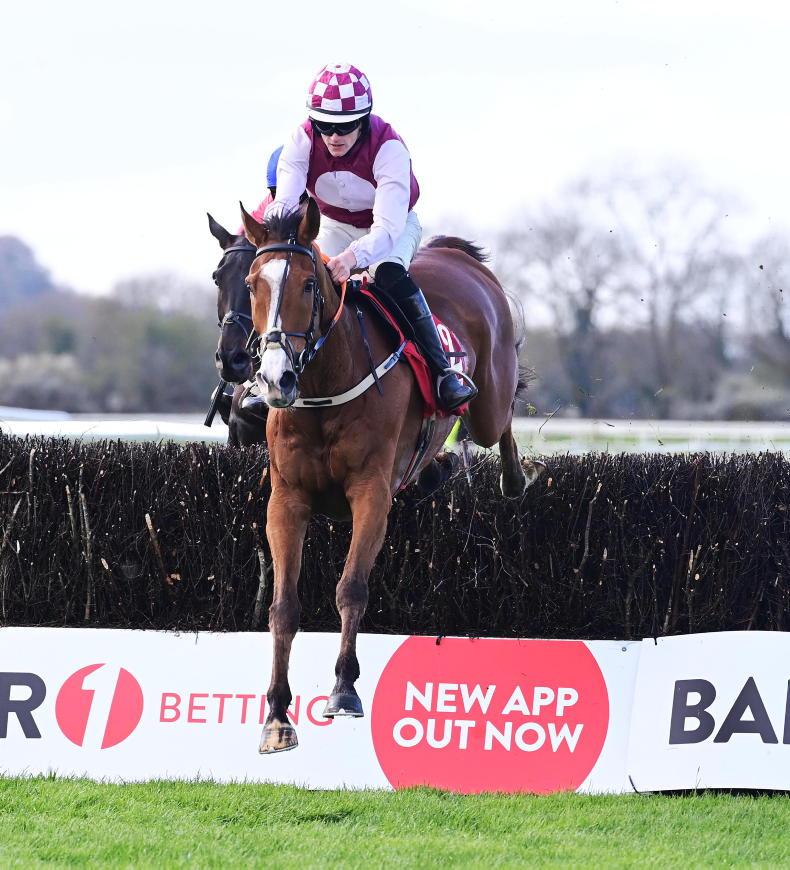
That said, he entered the Easter Sunday event with a rating of 136 and beat the 125-rated Broomfield Bijou in a three-runner affair.
You could argue that Classic Getaway brought a mark of 151 to the party, but the 10-year-old clearly didn’t run to near that level. His market weakness (SP 13/8 from 4/7) proved spot on as he trailed the field.
A year earlier, only five went to post for the same race and it saw a 121-rated handicapper, Hascoeur Clermont, earn Grade 3 blacktype in third. The year before that, it was a fairly depressing match race, as Asterion Forlonge outclassed Lucid Dreams.
The previous two renewals only attracted five runners apiece and they were won by 10-year-old and 12-year-old veterans - though, credit where it’s due, they did yield quality winners.
However, you only have to look back to the previous renewal before that when the 125-rated Waitnsee beat handicappers Spyglass Hill and Go Another One. Another 128-rated mare, Timeforwest, landed the honours in the running a year earlier. They shouldn’t typically be good enough to win senior chasing Grade 3s.
With a glut of graded options and major handicap chases around this window for the same horses, a rethink would be welcome on the race’s struture to make it more engaging - especially when it is being shown on RTÉ’s Easter coverage.
DESPITE being 1lb higher than when runner-up in the race a year ago, I Am Maximus (8/1) could have the class to overcome top-weight and win his second Randox Grand National in three years. His Savills Chase second earlier this season proved he still retains a high degree of ability and his proven form around here - combined with representing the most successful big-race team in the business of Paul Townend, Willie Mullins and J.P. McManus - means he’s hard to ignore.
Of those at bigger prices, don’t be surprised if the Gigginstown pair of Quai De Bourbon (25/1) and Stellar Story (28/1) outrun their odds in a big way.
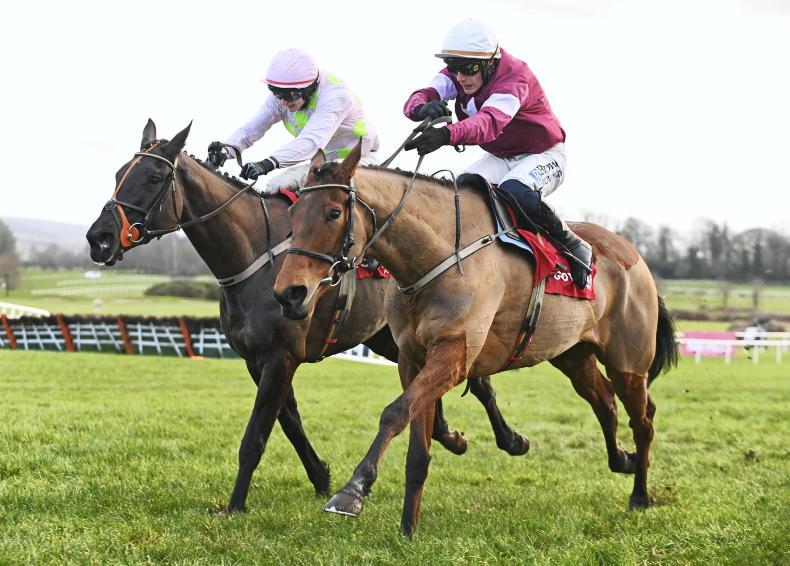
Irish National hero Donagh Meyler is a positive booking for the former, who has likely been trained for this race all year and is the right age for this assignment as a seven-year-old, while Stellar Story meets Grangeclare West and Gerri Colombe on really attractive terms compared to their meeting in the Bobbyjo Chase.
Perceval Legallois, fancied to run a big race when falling at the ninth last year, has flown under the radar at 33/1. He could be worth an each-way play under Harry Cobden.