QUESTIONS have been asked in recent years as to whether it is really the best use of prize money resources to have €600,000 invested in a prize pot for the Friends Of The Curragh Irish Cesarewitch, and the same faces continuing to take centre stage in the race probably won’t do any favours for quietening those concerned voices.
The 2021 renewal was run for €80,000 (worth €100,000 pre-Covid) and since the uplift in funding, following investment of supporters of the Curragh, each of the four renewals have been won by either Joseph or Aidan O’Brien.
In fact, nearly €1.93 million out of the €2.4 million of prize money on offer across those years has been solely plundered by horses trained by the O’Briens or Willie Mullins. That equates to more than 80% of total prize funds for what is now Europe’s richest handicap.
Of course, those who have invested in boosting this race are entitled to support races however they see fit, and cribbing those who deliver much-needed finance to the sport can be a slippery slope to embark upon.
Still, when looking at the wider programme - and Horse Racing Ireland receiving no extra government funding in this week’s budget - it’s not hard to imagine that this money could be distributed a little evenly, and to greater effect, across the game. Plenty of other areas could do with strengthening.
There was another element of the Irish Cesarewitch that got me thinking about some of the rules that exist in Britain when it comes to the Cheltenham Festival.
Back in 2019, it was announced that connections would not now be able to declare a horse to run in any race at the Festival if the same horse has already been declared for another race or has already competed in another race over the four days. The move, according to the BHA, was thought to be appropriate given its commitment to the highest standards of equine welfare, while also bringing greater clarity on running plans for punters and media.
The Irish Cesarewitch would have had a very different result if similar criteria were applied on these shores in terms of runner restrictions.
Timing’s everything
For one, 2025 winner Puturhandstogether only got in as second reserve on the morning of the race, whereas the participation of reserves tends to be decided by 1pm the day before racing in Britain.
More telling, though, is that both the winner and the fourth were both having their second runs of the week, having been set stiff tasks in the days previous.
Puturhandstogether was in action at completely the opposite side of the country when runner-up in the ultra-competitive Lartigue Handicap Hurdle at Listowel on Thursday, before making a winning quick reappearance in one of the toughest flat handicaps in the calendar.
The evergreen Lord Erskine was defying an even shorter layoff when running a cracker to finish fourth in the Curragh’s valuable feature.
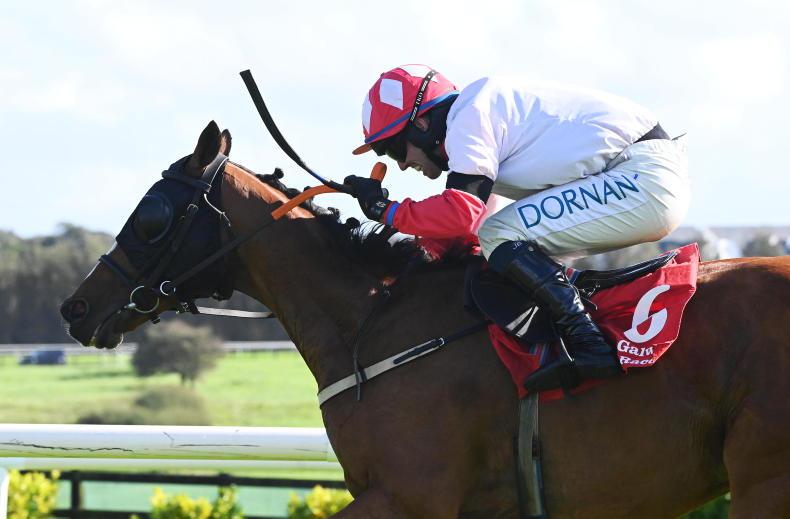
Harry Rogers’ stalwart was a gallant second in a €100,000 handicap hurdle at the Listowel Harvest Festival on only the Friday of the same week.
These are two horses who could hardly have more different profiles - Puturhandstogether a progressive four-year-old and Lord Erskine a vastly-experienced 12-year-old - but they were both well able to reproduce their best off a short gap between runs. Their trainers know them best, and surely wouldn’t have run if feeling there was a likelihood they wouldn’t handle their big-field Curragh assignment.
Actually, the definite market support behind the winner suggested there was a strong degree of confidence in his claims.
Trainer trust
When trainers are trusted with making an infinite number of decisions in managing their horses’ careers every single day, surely we should have the confidence in them to make the right call on whether or not their runners can handle a short turnaround. Of course, this is a hypothetical scenario, but imagine the opportunity missed out on for all connections if Puturhandstogether and Lord Erskine hadn’t been permitted to run by the authorities on account of their Listowel appearances. It would have added up to €360,000 in missed earnings alone.
There have been so many popular stories down the years of horses turning out two and three times in the same week at the Galway Festival, and at a much higher level, Melbourne Cup contenders regularly race multiple times in the short window leading up to the Flemington highlight.
There are certainly examples of busier horses, but Via Sistina was a fair advertisement for rolling the dice and racing from down under last year. She rattled off a Group 1 hat-trick in just 35 days, including a breathtaking display in the Cox Plate. That victory - the middle-leg of the three - came on the back of a far-from-ideal preparation too. She memorably unshipped jockey James McDonald in a public workout earlier in the week when a piece of bandage came loose from her leg, causing her to stumble when standing on the loose strapping.
Each horse is to be treated on their own merits in terms of their suitability for a quick reappearance, but seeing our best horses more often would only be a positive for selling the sport. Especially as we prepare for a National Hunt season that will have its share of shadow-boxing before the major spring festivals.
A HOST of metrics can point to the Goffs Orby Sale being classified as a success last week, especially with the median for Book 1 rising to €95,000 (from €80,000 a year earlier).
From 31 fewer horses being offered than 12 months ago, the overall turnover was also up €1.41 million and a 90.3% clearance rate represented a tidy step in the right direction (from 85.6%).
Having been on the ground over the course of the week, an interesting point was brought up to me by a couple of consignors in relation to the €50,000 Goffs Bonus on offer to buyers.
While a juicy top-up on the prize money earned for winning a qualifying race is to absolutely be applauded, some consignors asked whether the initiative could be even more effective for all parties. It was suggested that instead of a €50,000 cheque being presented to bonus winners, would it strengthen sales ring activity if the bonus was instead delivered as a €50,000 sales voucher to be spent at Goffs?
The case presented was that it would ensure the funds are reinvested in Irish bloodstock, potentially encourage greater spending at Goffs - a win-win for the sales company and vendors - and continue drawing winning connections back to Kildare Paddocks in the first place. Food for thought.