ROYAL Ascot this year raised several talking points, from team tactics, a weighing in controversy and a draw bias on the straight course to name but a few.
Of those, the most contentious is the perceived draw bias favouring those drawn high on the straight course. A common explanation as to why horses who raced on the stands’ side from a high draw were favoured is that they got to race on faster ground. This was refuted by the Ascot executive, who were confident that they had created an even playing surface.
Nonetheless, the evidence is irrefutable, particularly in races where races split into two groups, that for whatever reason, high draws were best. In the sprints, the bias was less obvious, with horses tending to race in one group down the middle. All the winning draws on the straight course races are detailed below.
Queen Anne 1m: Ten Bob Tony (8)
Coventry Stakes 6f: Great Barrier Reef (3)
King Charles III 5f: Mission Central (24)
Queen Mary 5f:- Victorius (5)
Royal Hunt Cup 1m: Rogue Diplomat (30)
Kensington Palace 1m: Alobayyah (16)
Windsor Castle 6f: King Of Cloughan (22)
Chesham Stakes 6f: Nola Soul (13)
Britannia Stakes 1m: Moonfall (28)
Buckingham Place Stakes 7f: Mezcala (30)
Albany Stakes 6f: Libertango (3)
Commonwealth Cup 6f: Venetian Sun (13)
Sandringham Stakes 1m: Green Carrera (30)
Palace of Hollyroodhouse 5f: Bacio (31)
Norfolk Stakes 5f: Orthodox (16)
Queen Elizabeth II 6f: Almeraq (11)
Jersey Stakes 7f: Thesecretadversary (2)
Wokingham Stakes 6f: Double Rush (24)
There was clearly an advantage to being drawn high, particularly over a mile, where those from high draws have time to get to the stands’ rail and spend more time than in other races on the stands’ side ground.
Of the five races run over the straight mile, the average number of runners was 24.6 and the average winning stall was 22.4.
Only five horses won from single figure draws on the straight course and, in one of those, Ten Bob Tony came from stall 8 of 9. Three of the others were two-year-old races, where the races unfolded up the middle of the track.
There was an outlier in the shape of Thesecretadversary, who came from stall 2 in the Jersey Stakes, where those at the front of the market disappointed.
Track management
Racecourses tend to treat the word ‘bias’ as being a dirty word, as it has undertones of poor track management. There is no suggestion of that last week at Ascot and, after all, the going-stick readings were indicative of the stands’ side being slightly quicker than the far side all week. NB: The higher the reading, the faster the ground.
Day 1: Stands Side 8.6 Far Side 8.3
Day 2: Stands Side 8.9 Far Side 8.5
Day 3: Stands Side 8.8 Far Side 8.7
Day 4: Stands Side 8.9 Far Side 8.3
Day 5: Stands Side 9.0 Far Side 8.9
This did lead to a draw advantage, but that became exaggerated by the fact that high-drawn winners all week were ridden patiently, which is the real bias at a track that uniquely suits such a run style.
More quantifiable and relevant from a data perspective is the fact that the straight course strongly favours hold up horses and, if they happen to race on the stands’ side, their chance is enhanced.
Of the 18 races this year, 14 winners can be described as ‘held up in rear’, three raced prominently and only Bacio made all the running, and he was a complete blot on the handicap and raced up the favoured stands’ side rail.
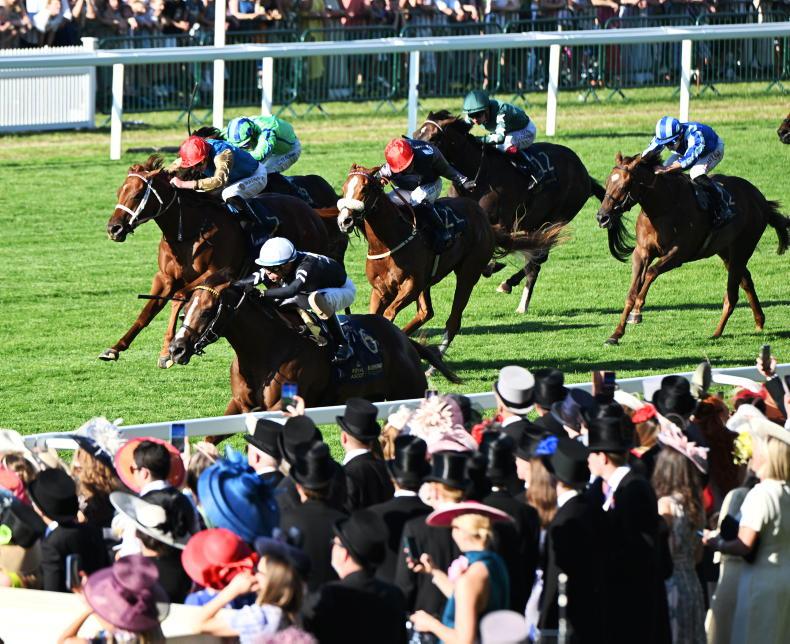
Plenty of runners, strong tempos and a stiff track all play their role in this track being one that hold-up performers excel at, and this is nothing new.
If we compare how hold up horses perform at Ascot compared to other tracks, we can decipher that Ascot is the home of hold-up horses, particularly over seven furlongs and a mile.
Second highest percentage
By analysing the percentage of runners beaten at all tracks in the UK, the Race IQ database tells us that, at seven furlongs, those held up at Ascot have recorded the second-highest percentage of runners beaten and, over a mile, hold-up horses have the highest percentage of runners beaten of all the UK tracks.
Both are rare cases, where the ‘actual wins’ compared to the ‘expected wins’, based on starting price, is a positive one for horses that race in rear. Horses whose running styles are disadvantaged at other tracks have a distinct advantage when racing at Ascot.
The ground may have been a bit faster on the stands’ side last week, but that wasn’t the main reason for those high-drawn winners, the ultimate bias lies in the winner’s run style, which saw most of them held up at a track which uniquely favours that style.
Prince of Wales’s Stakes (Group 1)
THE one standout performance on the straight course in terms of data came from Bacio, who bucked the trend and made all the running to make him the best five-furlong horse we have seen this season and the likely winner of the Nunthorpe at York, should he go there, but there were better performances than that on the round course where Ombudsman must be crowned as putting up the best performance of the meeting.
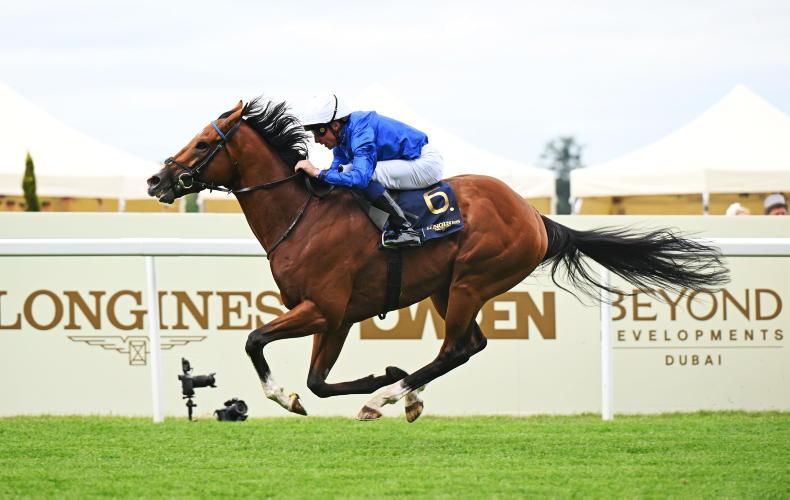
The ground all week was on the quick side, with no discernible discrepancy between the straight and round courses. It was described on all days as being Good to Firm and this is backed up by the meeting average Race IQ Time Index data.
Race IQ Time Index averages
Day 1: 6.5
Day 2: 5.8
Day 3: 6.1
Day 4: 6.5
Day 5: 6.3
A strong field was completely dominated by a world-class performance from Ombudsman. His final time over the 10-furlong trip was 2m 3.24s, which gave him a time index of 6.0 out of 10.
His sharp turn of foot in the final three furlongs settled the race quickly, with none of his rivals able to match the speed that he showed.
Ombudsman was quite slowly into stride, being the sixth fastest in the eight-runner field to reach 20mph, taking 2.67s. This was no bad thing given that the pace was strong, and he was able to save his energy for later in the race.
He was still in seventh place with three furlongs to run, but at this point he quickened and was the only horse in the race able to run fast furlongs as against the Race IQ Par throughout the final half mile.
His eighth furlong of 11.67sec (Fast) saw him surge to the front and he followed that up with an even faster 11.41sec (Fast), which shot him clear of his rivals.
Whilst he slowed down in the final furlong, recording a Par sectional of 12.02sec, this was still much faster than his three closest pursuers, all of whom are previous Group 1 winners and could only run slower than par final furlongs.
Match his speed
It is hard not to think that Minnie Hauk and Daryz underperformed, given that they were both able to quicken when Ombudsman did, but neither could match his speed. They both recorded a final three furlongs that was 1.30s slower than him and they should be rated as having given their running - albeit both will be suited by a return to 12 furlongs.
Courtesy of this turn of foot, Ombudsman produced a Finishing Speed Percentage (FSP) of 105.73%, which compares to the Par of 103.47%. That he could finish so quickly off a strong gallop at this stiff track, outlines this as being the equal of his performance in defeat behind Calandagan on Qipco British Champions Day last year. A clash between the two of them will be one to savour for later in the year.
Coronation Stakes (Group 1)
THERE is no doubt who is the best three-year-old filly at a mile after her performance in the Coronation Stakes last week, although this may be the last time we see her at this trip, her pedigree and style of racing crying out for another two furlongs at least.
Precise was a decisive winner from the slightly unlucky Touleen, winning in a time of 1m 39.38s (+0.06s above Race IQ Par) giving her a time index of 5.5.
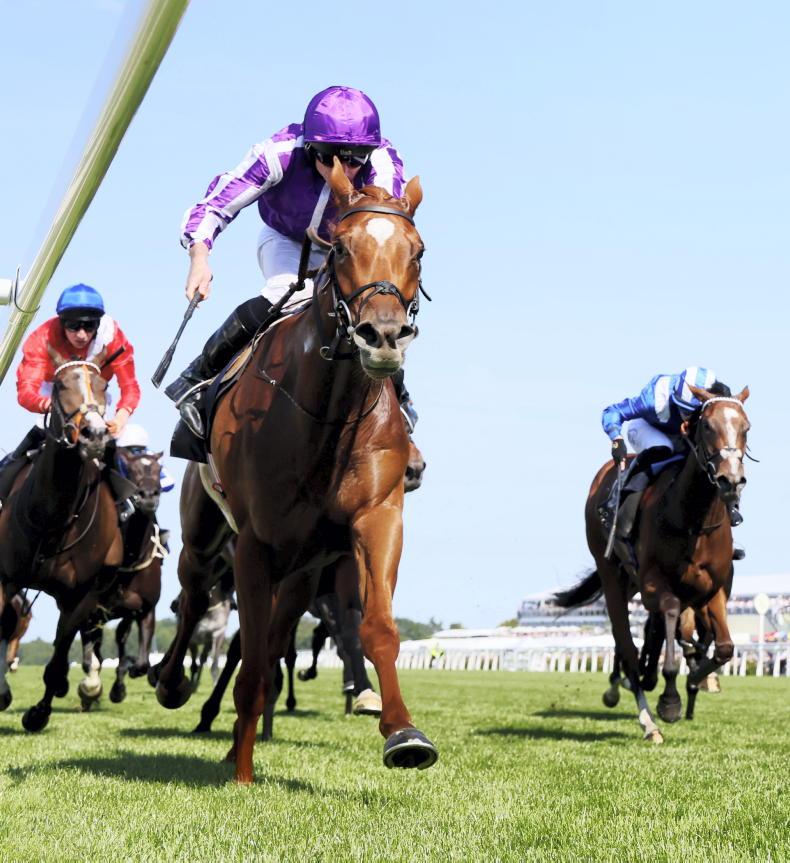 This compares to Bow Echo in the St James’s Palace Stakes, who won in a time that was 0.90s faster with a higher index of 6.9.
This slightly disappointing overall time was caused by the pace of the race being overly strong, leading to a relatively slow finish with the winner posting an under par FSP of 99.69% (Par: 106.38%).
Fastest furlong
The fast early pace is neatly illustrated by the fact that every horse in the race recorded their fastest furlong through the second furlong. Precise was slower into stride than Ryan Moore might have wished, taking 2.71s (6th) to reach 20mph. This meant he had to race in the rear in eighth place, even so, courtesy of the very strong pace, Precise still had to run fast with four of her first five furlongs being faster than the Race IQ Par.
This early gallop meant that the race became a very strong test of stamina at the trip and, even though Precise could not break 12.00s through any of the final three furlongs, she was able to see the race out stronger than her rivals, a performance that screamed a need for a step up in trip.
Unlucky
Touleen was baulked in the home straight and was briefly short of room, which meant she was unlucky not to finish closer to the winner, it’s a bit of a stretch to say that but for the trouble in running she got, she would have won.
The data highlights that she finished the race stronger than Precise with a final furlong of 12.57s (Very Slow against Par) compared to 12.80s (Very slow against Par), but by this stage, Precise had done her running to go clear and Touleen’s finishing effort may have been aided by the trouble she met allowing her to preserve some energy.
The Nassau Stakes looks like the obvious target for Precise, who looks sure to relish a step up in trip. It is not fanciful to believe she could become a live contender for the Arc at Longchamp.
Hardwicke Stakes (Group 2)
WHILST all of the focus on Christophe Soumillon last week centred around the St James’s Palace Stakes team tactics, for which he received a ban which is under appeal, I would like to highlight the one that got away for Christophe Soumillon in the shape of Goliath in the Hardwicke Stakes, where a lost iron in the final furlong cost him a winning chance.
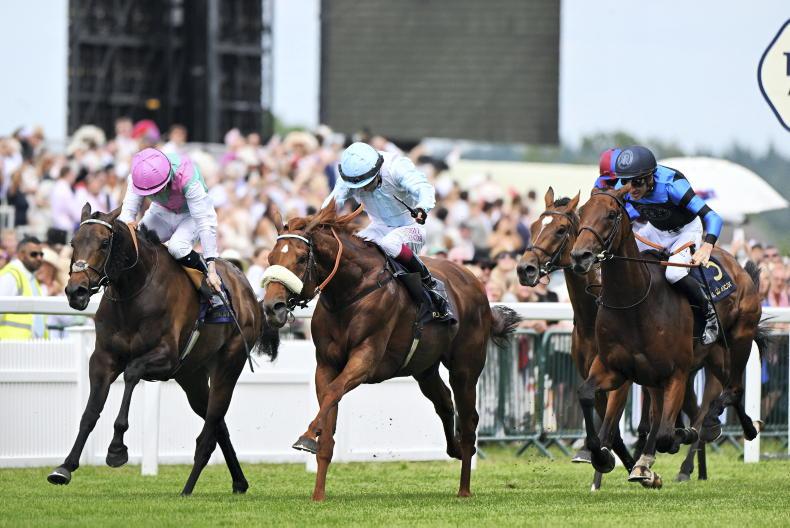
Giavellotto won the Hardwicke Stakes in a good time of 2m 27.91s (-1.65s vs Par) creating a Race IQ Time Index of 7.9, which was one of the best Index scores over the five-day meeting.
The gallop was strong, courtesy of Lambourn, who made the running through sectionals rated as Par, with Kalpana racing in second and Giavelloto in seventh. Giavellotto, who is at his best on fast ground, quickened through the 10th furlong, posting an 11.86s (Par) split and got to the front with a penultimate furlong of 12.02s (Par).
Finishing his race off with an FSP of 101.47% just under the par of 102.86%. He saw the trip out well and the turn of foot he showed three out has been a feature of the better performances in his career, but it is debateable whether he would have won if things had been smoother for Goliath.
Goliath made eye-catching headway in the home straight having conserved energy in rear and, in so doing and despite the loss of both irons, was the fastest horse in the race through the final three furlongs, giving him an FSP of 102.01%.
Giavellotto: 36.56
Kalpana: 36.77s
Goliath: 36.45s
He was the fastest of the first four home through three of the last four furlongs, only slower in the final furlong when the irons had gone.
He was the only horse in the race able to run under 12.00s through the penultimate furlong, with Soumillon yet to have gone for everything before disaster struck.
It could be argued that he had done his running to get into contention and would have flattened out in the final furlong whatever had happened, but the momentum he had gathered would almost certainly have propelled him to a cosy success, after all, given the strong pace, he had arguably been ridden to best effect.
I rate him as a very unlucky loser and would be interested in him should he return for the King George VI and Queen Elizabeth Stakes, a race that he won in 2024.