IT is perfectly normal at this time of year to become bamboozled by the plethora of data that is available. Top-class flat action collides with the jumps season finale at Sandown and the Punchestown Festival, and an adequate filtration process is required to highlight what is most pertinent.
This process is helped by the fact that data can contextualise performances and make some much more interesting than others. Sandown is the place to start last week, where Opera Ballo and Saddadd produced taking visual performances which can be understood by the key data that they produced.
A change of tactics on Opera Ballo from William Buick, who made all the running under a well-judged ride, and we must consider this horse to be a legitimate Group 1 performer now.
The ground at Sandown last Friday was officially described as good. The average Race iQ Time Index on the day was 7.1 out of 10, which suggests that it was slightly quicker than good, and a data description would be that it was good to firm.
Opera Ballo produced a fast final time of 1m 42.26s which was -1.58s under the Race iQ Par, giving him the best Time Index of the day of 8.4. This fast time was achieved by William Buick being able to rate Opera Ballo evenly, despite his keen-going nature and thereby saving energy for a fast finish.
This is reflected in a Finishing Speed Percentage of 104.45% (Par: 101.07%), which is made up of a final three furlongs that were all faster than the Par number (11.48s/11.69s/ 12.45s). Quickening from the front, having had an easy time in front, made him impossible to catch and he was strong at the line producing the fastest final furlong in the race.
Opera Ballo is a very talented racehorse, whose Achilles Heel has always been his ability to settle, but given that he relaxed in front here after jumping from the stalls with real zest (fastest to reach 20mph: 2.20s) augurs well for a tilt at the Prix d’Ispahan and possibly a step up to 10 furlongs, but speed is his main asset and it should not be forgotten that he has proved in the past that he can run a sub-11.00s furlong.
THERE is a distinct possibility we are talking about another Group 1 horse here. Saddadd produced impressive data whilst being completely unsuited to how the race was run given his position in it.
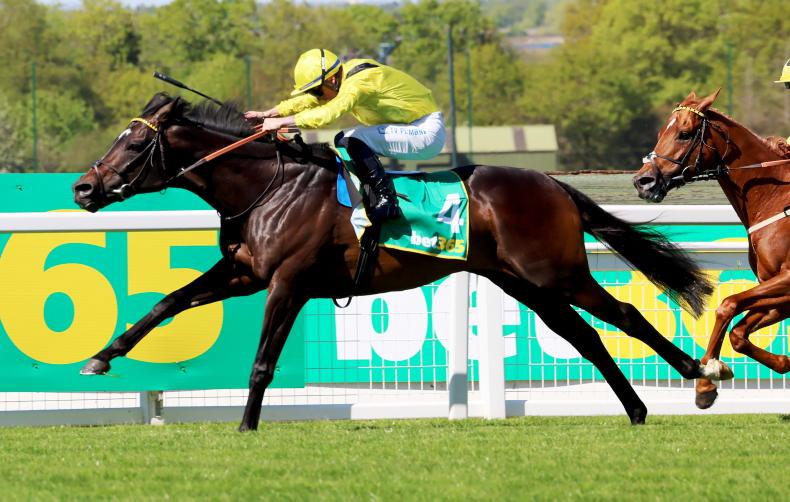
His final time of 2m 8.46s gave him a Race iQ Time Index of 6.5 out of 10, which can only be rated as a Par time for the distance of 10 furlongs at Sandown. Even so, the way he achieved this time is the key marker to his innate ability. This was a slowly-run race, courtesy of Devil’s Advocate who led the field through five of the first seven furlongs slower than the Race iQ Par. The pace was particularly pedestrian through the fifth and sixth furlongs, where the leader slowed to furlongs of 13.33s (slow) and 13.89s (slow). The consequence of this steady gallop was that the race turned into a sprint through the final three furlongs and, when that sprint began, Saddadd was poorly placed in fourth 0.56 seconds (three lengths) off the speed.
In overcoming his poor position, Saddadd quickened smartly to pass horses who were quickening in front of him. He was the fastest horse through each of the final three furlongs (11.60s, 11.60s, 12.36s) and this gave him an FSP of 107.72%, where a Par finish at this trip at Sandown is 101.29% and this was the fastest finish of the day.
It can be argued that the race fell apart a bit with the favourite Almeric finding the ground too fast, but this was a very smart effort from Saddadd, who is entered in the Tattersalls Gold Cup and will not look out of place if allowed to take his chance given that he should be given a considerable sectional upgrade for this effort.
THERE was an excellent card at Naas last Monday and it was the two-year-old Force Noir, who produced the most interesting data profile. Force Noir had been supported as if defeat was out of the question on his debut at the Curragh, where he was narrowly beaten on heavy ground. On a much sounder surface at Naas, he produced the type of performance that was expected at the Curragh.
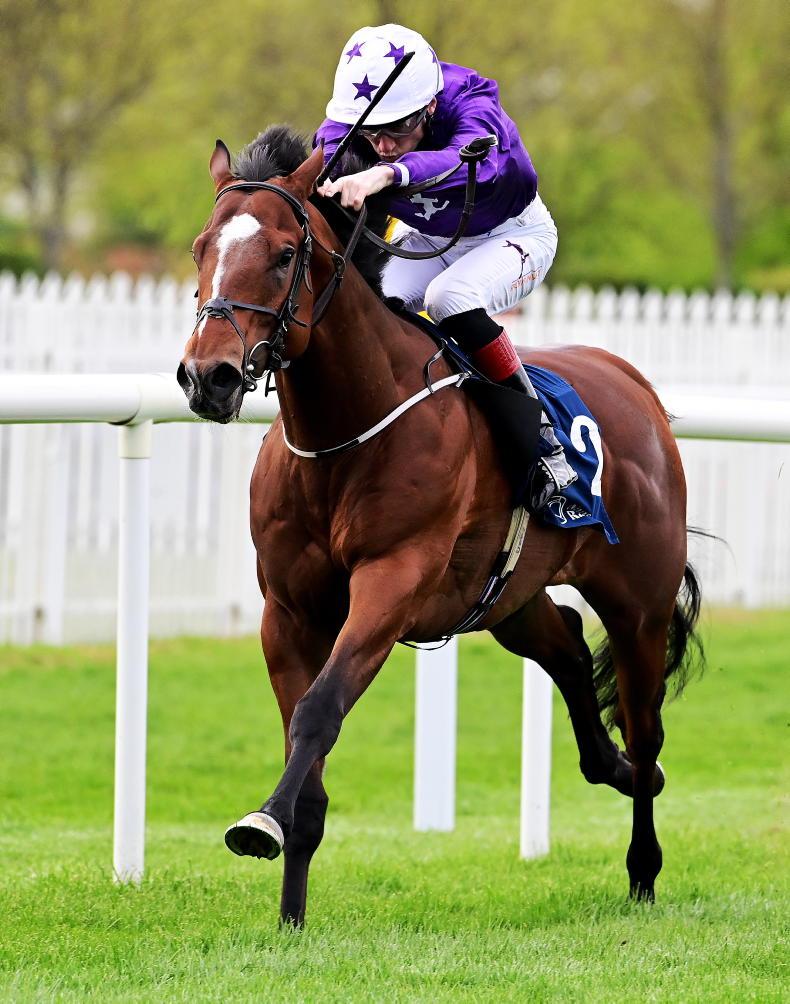
The ground was good, but with an average Time Index at the meeting of 8.0 out of 10, it would be better described as good to firm. Force Noir was slowly into stride (only one horse slower than him to reach 20mph), but thereafter he showed impressive speed to make all the running.
Impressive sectionals
Having produced a 14.15s opening furlong, he then produced three sub-11.00s furlongs (the only horse in the race to do so) on the bounce to pull four and a half lengths clear of his nearest rival.
His impressive sectionals are below and should be seen in the context of Bit Of A Buzz in third place, who tried to go with Force Noir and kept pace with him for three furlongs but could not sustain his pace as well.
Force Noir Sectionals:
F1: 14.15s
F2: 10.69s
F3: 10.44s
F4: 10.85s
F5: 12.22s
He has brazen speed and, despite tiring through the final furlong, he still recorded an FSP (101.18%) that was higher than the par expectation (100.79%).
This was the performance of a very fast two-year-old, who promises to stay six furlongs given the stiff nature of the straight course at Naas, but the data is clear that there is no need to step up in trip given how fast he is.
The Norfolk Stakes at Royal Ascot looks ready made for him.
THE 2000 Guineas today has an open look to it and it could pay to take a chance with Avicenna, who was last seen finishing second to Oxagon in a slowly-run Craven Stakes that did not suit him. He fits the criteria of a horse that is required to win at a mile on the Rowley Mile, because he can finish his races strongly.
That may not seem as particularly remarkable, but not all races are won by the horse with the highest FSP in the race.
The Race iQ database identifies that 54% of horses on the Rowley Mile that finished with the fastest FSP in the race won their races and this is considerably higher than any other premier racetrack.
With that in mind, it is worth noting that Avicenna has the highest career FSP in the race of 111.94%, which he achieved on debut at Doncaster. His average FSP in three starts is 104.79%, which is higher than the average FSP of 101% which is required to win on the Rowley Mile.
There has to be some concern that he did not handle the track well on his seasonal return at Newmarket, but he is much better than the bare result of that slowly-run contest and, with that experience behind him and some positive data to enhance his case, an each-way play at 16/1 is a fair wager.