Q: What percentage of your time at the moment is taken up by Horse Racing Ireland and what other businesses are you involved in?
NH: I’m chairman of Musgraves, which obviously takes up a big part of my day, being the number one food retailer in Ireland.
I retired after 15 years with Cement Roadstone (CRH). I’ve since taken up a role, in the second half of 2020, as chair of Tymon PLC, which would be in the building material sector. And I am also on the board of Finning, which is the largest Caterpillar dealer [construction equipment and machinery] globally.
So they are the corporate roles that I play, independent of Horse Racing Ireland. I never put it down to the quantity of time, I put it down to the quality of time. What I would say is that, in fairness to HRI, there’s a very strong management team. I think what was important for them was to get the Strategic Plan under way. When I joined I said, “Okay, what’s ahead of us? What do we need to do? What planning do we need to do, et cetera?”
As chairman, yes, you get involved in the day-to-day when necessary, but if you have a good CEO they should be executing that. A chairman’s role is to make sure that there is a good team there and to make sure that the governance is appropriately managed.
Q: How frequently are board meetings held and are they being held remotely at the moment?
NH: There are roughly eight meetings per year and others if necessary, particularly if there’s a hot topic. We generally take anywhere around from 10am to 4pm.
The first half of the meeting is all about strategy – what are the things in the next six months, year, two years, that we need to be doing as a company? And the operational side, which is really for management, we review that in the second half of the meeting.
Q: On top of that would Brian give you other briefings each week?
NH: Oh absolutely, yes, as necessary. If there’s a problem, if something is coming down the tube, as we say, something one needs to be aware of, or give an opinion on.
Q: Brian Kavanagh’s term as CEO ends in September. What are his strengths and how does he compare to other CEOs that you’ve worked with?
NH: The first thing I would say about Brian is he’s done an excellent job for HRI, from what I can see. I’ve worked with him now close on three years and he’s a very good implementer of things and getting things done. He knows the industry exceptionally well. He’s 31 years or so in the industry. I think he’s done an excellent job but it’s time to move on.
I said to him, ‘Look, what’s important is, when you move on, that the next person hopefully can take it and leave it in better shape’. If everyone who joins as CEO or chairman of HRI can leave it better for the next person then, I said, you’ll always have a good business, a good industry, after we’ve gone.
So Brian is a good person, very dedicated and enjoys the industry. One of the key things is he’s well got with a lot of his peers on the international front, so he has a lot of good contacts. We need to absolutely make sure that we enhance those competencies going forward because I think they are important to us.
Q: Are you pleased to see that Brian Kavanagh is staying in Irish racing?
NH: I am, indeed. The Curragh is a good challenge for him. When I joined the Curragh was a lively topic on the agenda and it has been well and truly put to bed now. It’s on a sound footing now, a solid future. I think he can deliver a lot more for it.
Q: When will the new CEO of Horse Racing Ireland be named?
NH: We are working through a process on that. Brian leaves at the end of September so you would hope that we would be able to do a proper transition.
Q: When does your term as chairman end and are you interested in doing a second term?
NH: First of all, you have to be invited to do a second term, so I’d make no predictions on any of those things. I’ve just under two years to go.
I had owned racehorses in America, when I lived there, and in France, Britain and Ireland. I was asked to consider the HRI post a couple of years back and so I said I’d do a term. My initial thoughts starting was that I would do five years and leave it in a better place. It’s been an interesting few years, with lots going on.
Apart from the Curragh, which we have mentioned, we had an issue with Dundalk for a while there. The Tote was another item we were dealing with, and then where was the Strategic Plan – it was really important that we laid down some direction of travel for HRI to help the industry to move forward. Then we had Brexit and the pandemic, so that’s been quite an interesting three years.
Q: On the subject of the pandemic, how would you describe HRI’s response to Covid? Do you think the organisation did a good job?
NH: Yes. When Covid struck initially, nobody really knew the complications of it. Even our medical people were learning on the fly. So everything came to a screeching halt.
Between HRI and the IHRB, there’s a whole pack of people behind the scenes who did a lot of really good work in getting the protocols drawn up and working. It was always a work in progress, it was always ‘How can we make it better? What should we do differently now? How can we be safer about what we do?’
So the answer to your question really is in the credibility between HRI and the IHRB, and our colleagues in the Departments of Health and Agriculture. The trust they placed in racing allowed us to continue behind closed doors. I think that’s been amazing.
There’s been many times during the last year where more groups wanted to get back racing or wanted to do different things. All the time we said, ‘Look, we’ve got to stay safe because we have so much going for us. We’ve got to be absolutely sure that every step we take is forward’. Look at all the different industries that got black eyes through all these processes. The team has done an outstanding job, is what I’d say to you.
Q: Some would say racing should have restarted sooner or that the protocols are too conservative. Could more have been done or could things have been done differently?
NH: I spoke with the team and I asked, ‘Could we be back one or two weeks earlier?’ When you look at the time lapse of 15 months now, is that a major thing in the grand scheme of things? My answer to that is no, it’s not. Being first out of the blocks and opening up wasn’t the most important thing. Being right about taking every step was what’s important, and we never want to take a step back. That’s the single mantra we have today: every step we take, we do it well and then we move on to the next step. No step back. I would say, yes, we erred on the side of caution but we were under a microscope because we became the envy of others.
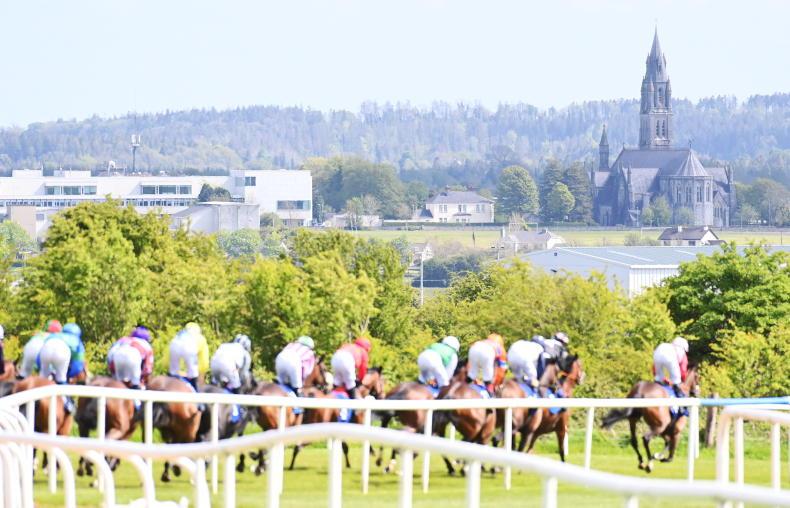
Q: Two months into the pandemic, HRI announced significant prize money cuts, most of which were reversed for 2021. Were those difficult decisions?
NH: At that time we decided we were going to do the right thing for the industry, we were going to do it quickly and we were going to do it once. I’ve always felt we must try to give as much certainty to the industry as possible, because the times were challenging.
So we said ‘Let’s cut the prize money but lets keep it as competitive as we possibly can for the rest of Europe’, which is what we have done. Obviously we want to bring our prize money back to where it was and, hopefully over the next couple of years, to improve it.
Q: You launched HRI’s five year Strategic Plan just before the pandemic hit. What progress has been made or has everything been put back by two years?
NH: The whole intent [of the plan] was to grow the industry from 29,000 employees to 35,000, direct and indirect, and I think all of that is achievable.
The major capital projects are the establishment of the Equine Health & Welfare Campus and the second all-weather track at Tipperary. Yes, both those projects are probably 12 to 24 months behind schedule, but we are continuing to fund both of them. You would expect both of them to kick off in 2022.
Q: Getting a sustainable funding model for racing was perhaps your number one priority. Betting duty is now 2% and the Government annual grant has risen from €67 million to €76 million in one year. Do you consider this sustainable?
NH: Our Strategic Plan budgets for that figure to increase to around €98 million in the next couple of years.
I still believe the 2% rate is low and that there should be a greater take from the bookmakers. I am not talking about the on-course bookies, who have had a horrible couple of years. It’s the big betting companies who are effectively funding it.
Here’s an interesting thing. One of the things, from a funding point of view, that people tend to focus on is the number of people at the races. When I joined HRI I remember asking Brian why are people so fixated on this number? I have horses in training but rarely get to the races, so I watch them online.
So we conducted some risk analysis around what would racing’s finances look like if we didn’t have any racegoers. Little did any of us know that this was about to happen.
With betting shops closed due to Covid, we had to focus on streaming to protect our media rights income and we have learned a lot.
We have been able to maximise streaming continuously over the last year and a half which is really helping us, including with prize money. Our media rights come up for renewal in about a year and half, or two years, and so that should hopefully be another game changer.
Streaming revenues will improve, particularly as our flat racing reaches beyond Ireland and Britain. We need to look at the industry and ask how can we progress, not just in Ireland but abroad as well.
Travel the world and you will find Irish people everywhere in the horse industry. Our horses need to find new markets too. We are very focused on Britain for selling horses, but we are looking more to North America recently and now our contacts in China tell us that racing will open up there soon.
Q: In terms of prize money, have owners a fair chance of winning back a reasonable percentage of their running costs in Ireland?
NH: Yes, they have. The industry is in robust shape. The number of horses in training has risen this year and so has the number of races. For the first five months in 2019 there were 967 races and the corresponding number for this year is 1,106. The average number of runners per race has gone up from 11.5 roughly to 12.5.
Why is that? On the National Hunt side, the disruption to the point-to-point season definitely had an effect.
But also there has been a lot more terrestrial television coverage and the Irish economy has fared very well through the pandemic, compared to other countries.
Q: Owners and trainers whose horses have been balloted out of races repeatedly would not agree with all of that.
NH: If you were to describe the racing product we have in Ireland in one word, you would say ‘quality’.
The fact that 10% of our races are blacktype is very, very important. Yes, there will always be a place for low-grade racing but I would hate that to be the bread and butter of the industry. I wouldn’t be for that at all.
Britain has a lot of bad racing. We need to maintain the high quality of our business. We have world-class trainers and jockeys, and we need to maintain the same standards in our horses.
So, we will put on some extra low-grade opportunities from time-to-time but it has to be matched with the higher quality races as well.
Q: Let’s move on to welfare and integrity, which are high priorities in the Strategic Plan. There have been some initiatives taken to improve standards but also some high-profile setbacks in those areas. Are you concerned?
NH: We’ll always be concerned. Some recent events have shown how delicate racing’s reputation is, so it’s important to pay attention to it.
I would say nobody in the industry can be complacent about it whatsoever.
We are confident that our standards are high. The IHRB has 11 authorised officers who have the ability to enter any premises where thoroughbreds are kept. That’s new and really important. I know that the Department [of Agriculture] will support with their vets, if necessary, whatever work needs to be done.
But we have told the IHRB – because we effectively fund them – that we will provide whatever funding is needed to make sure the proper job is done.
Globally these things are done best in Hong Kong and in the state of Victoria in Australia, so we need to audit ourselves and get others to audit us, to make sure that we are best in class in what we do.
I always watch the Kentucky Derby – I went there every year when I lived in the US – and to see a Kentucky Derby winner disqualified for doping is not a good thing. It’s an iconic race in the States and it is not good for racing whatsoever.
If something like that happened here it would do serious reputational damage to the industry. At all costs we need to avoid that.
My feeling on issues like welfare and doping is that we keep improving the standard, we keep tightening the standards. We unearth whatever is there, if there’s anything there.
It’s also a question of educating the people in the industry on what we are doing, why we are doing it. It’s important that people can’t just turn around and say to you ‘I didn’t know’.
Q: So overall, would you say Irish racing is in good shape at the moment?
NH: Yes, it is. We have a plan to make it better. We are reviewing and updating the Strategic Plan. That should be done in the next two or three months.
We’ve completed a big project at Leopardstown.
The Curragh is very much there now. And what’s interesting is that all the HRI tracks are now profitable, so their financial health is in good stead ahead of the return of racegoers.
The Curragh on Derby day will kick it off for us. It’s a small number (1,000 racegoers) but it’s a start. Let’s take small steps and do it right.
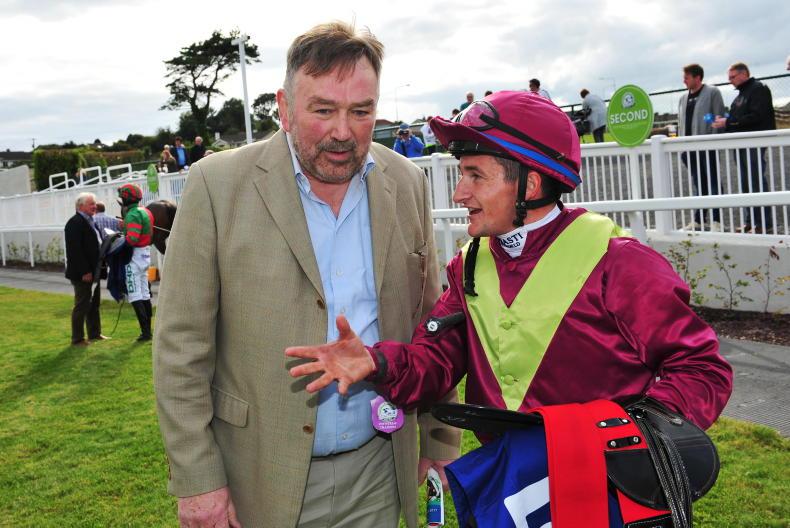
Q: Have you been racing at all since Covid and will you go to the Curragh?
NH: I haven’t gone, no. There are protocols there and I said I’m going to be an exemplar of them as we work our way through it.
But I hope to have a runner on Derby weekend so I am looking forward to attending as an owner.
Q: How many broodmares have you?
NH: About 15. I kind of stumbled into it by chance. I ended up buying a farm at one stage but I was away for about 15 years between Europe and North America. I quite enjoy the breeding.
We bred Margot Did, who was a Group 1 winner, and we bred Going Global who has won three Grade 3 races in America this year.
I still have her dam and she is back in foal to Mehmas, so I am looking forward to that. It’s a fantastic industry.
Hartery on …
Blended working
“I have a place in both Croom (Caherass Stud) and Dublin, but Croom is where I call base. I have an office set up here and everything is being done through [Microsoft] Teams or the equivalent for the last 15 months. It has its pluses and minuses.
“I feel that the pandemic will probably make us do things better, more efficiently and cost effectively as we go forward in all businesses. And I would hope we don’t return to the old ways, that we would have a new and improved way of doing things.”
Retirement
“I recently turned 70 but I feel a lot younger than that. I’ve no intention of winding down in anything at this particular juncture, no. I’ve plenty of energy and long may I keep it.”
Brexit
“Through all of this massive change the Department of Agriculture has been really supportive of what we have tried to do to make the changes [for those moving horses between Ireland, Britain and Europe] as seamless as possible. It’s never going to be as easy as it was prior to Brexit.
There’s paperwork involved but the work that has gone on in that particular space, I think, is quite good and we’ve made it work. HRI has a team of people, including Brian, who are working through it, working with Government to continuously simplify it. It’s like a continuous improvement process and I would hope there will be more progress.”