EQUINE International Shipping (EIS) has flown some of Ireland’s most valuable sales and competition horses around the globe since 2005. I wanted to find out exactly what it takes to ship this precious cargo halfway around the world. EIS company owner, Andrea O’Brien, gives us a rare peek behind the scenes, as I trace every step of the journey from Dublin Port to LAX Airport.
Once a horse owner confirms a booking and before any horse leaves its yard, EIS completes regulation blood testing for Piroplasmosis, Dourine, Glanders and Coggins. Following negative blood results, horses travel to the EIS layover stable in Co Meath, where they are inspected by the Department of Agriculture and certified for travel to the United States of America via the European Union. EIS then complete the extensive documentation required for export of the animals.
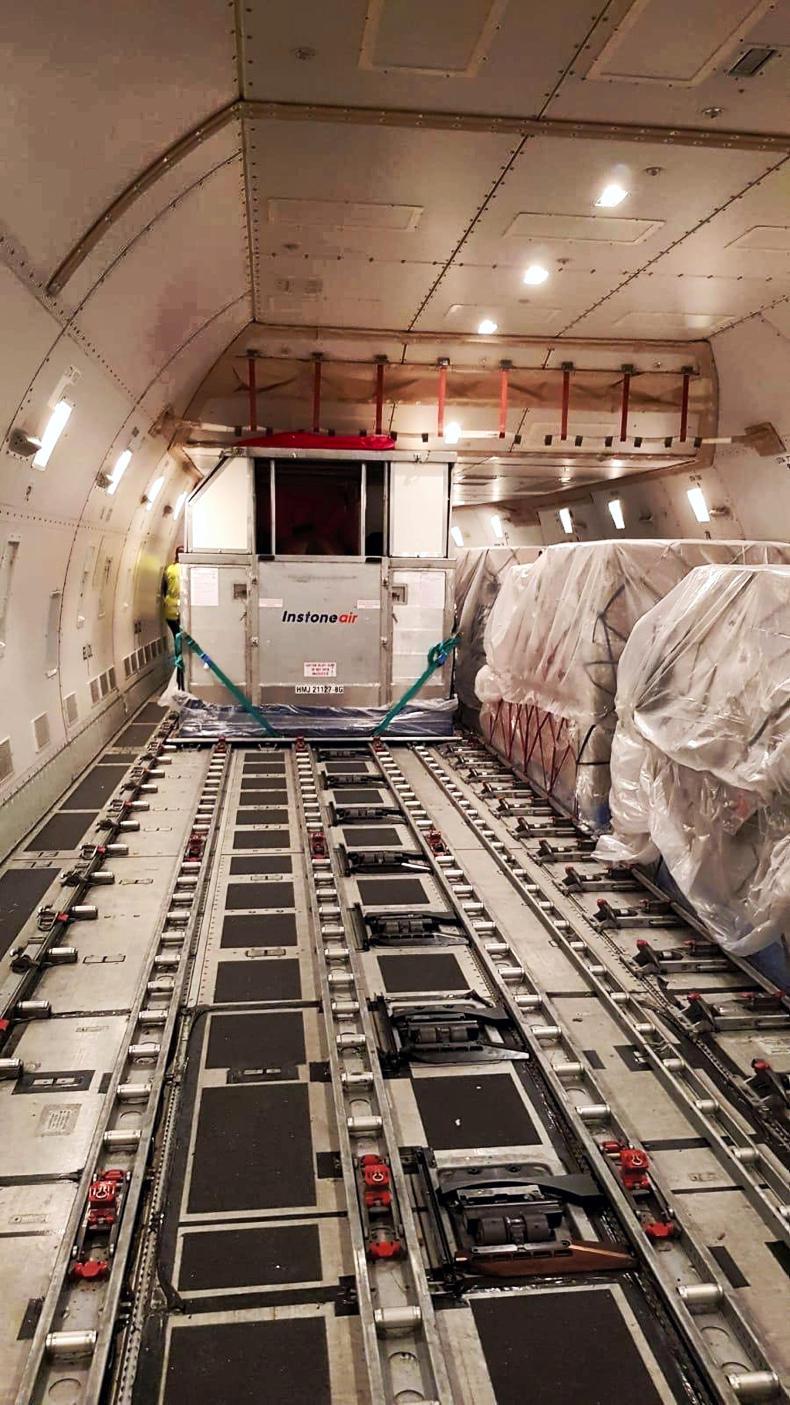
Inside the aeroplane with roller-ball floor
Epic journey
The epic journey begins on a Saturday, as the lorry heads to Dublin for the night sailing to Holyhead (sailing time of 3hrs and 15 minutes). Horses must be in good health before they travel and Andrea explains that EIS maintain that wellbeing during the many days of travel:
“We don’t cross-tie horses on the journey to the continent, we allow the horses to lower their heads freely – this helps lung health. The horses are fed hay (from the floor) just before the ship sails, to ensure they are settled and have something in their bellies. Offering water in transit is really important - sometimes horses won’t drink much on a vehicle, but it’s still important to offer it regularly. Electrolytes a couple of days before travel can support a horse, and owners often request tummy protection, and it can help prevent stomach ulcers.”
Arriving in Holyhead in the early hours of Sunday morning, the horses are driven directly to Dover where they stable at Parker’s layover for a minimum nine-hour rest. The horses then sail to Calais (1hr and 45 min sailing) and on to Horse Hotel Holland in Amsterdam, where they relax for 48 hours. At Horse Hotel Holland, each animal receives a hand-walk after arrival to stretch them out and they are left to rest for the day. Andrea explains: “In the afternoon, they can either go on the walker or be lightly lunged in an indoor lunging ring – whichever the owner prefers - it’s such fabulous facility and makes a world of difference for the horses.”
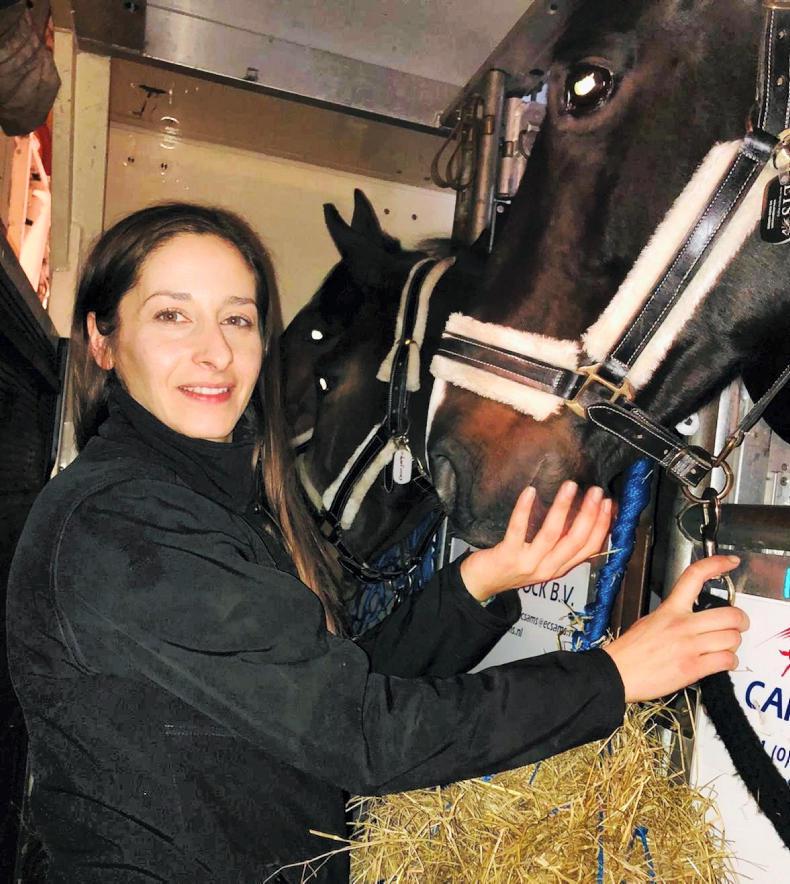
Flying Groom in-training Eduarda Carneiro came to work for EIS after working for Shockmohle, Leopoldo van Asten and Philippe Le Jeune
Incredible animals
On Wednesday morning, the horses go on the airport lorry shuttle service and load via a purpose-built ramp onto the bespoke horse container. The container is weighed and then towed up to the aircraft and pushed onto a high-loader and lifted to the loading door of the plane. The crate sits on a roller-ball floor within the temperature-controlled aircraft so that the horse crates can be moved into position and locked securely for the flight. It is evident in speaking with Andrea how much she knows and cares about every animal on every journey:
“They are incredible animals! On take-off, they lean forward, and sometimes walk on the spot a little and usually whinny to each other. The forward motion is pretty strong - they go down the runway at about 180mph! On landing the horses tend to lean back and really do a clever job of balancing. Pilots always try to make the landing as smooth as possible when there are horses on board. You can’t really tell them; ‘Okay hold on it’s going to be a really fast take-off’! But they figure it out and balance so amazingly well.”
An Air Transport Association (ATA) registered equine attendant travels onboard every flight and takes care of loading the horses, travelling up to the aircraft and flying with them. The attendants are there to ensure the utmost safety and wellbeing of the horses. Although flights do not generally have a veterinary surgeon on board, the flying grooms have a medical kit and are qualified to administer sedation if necessary.
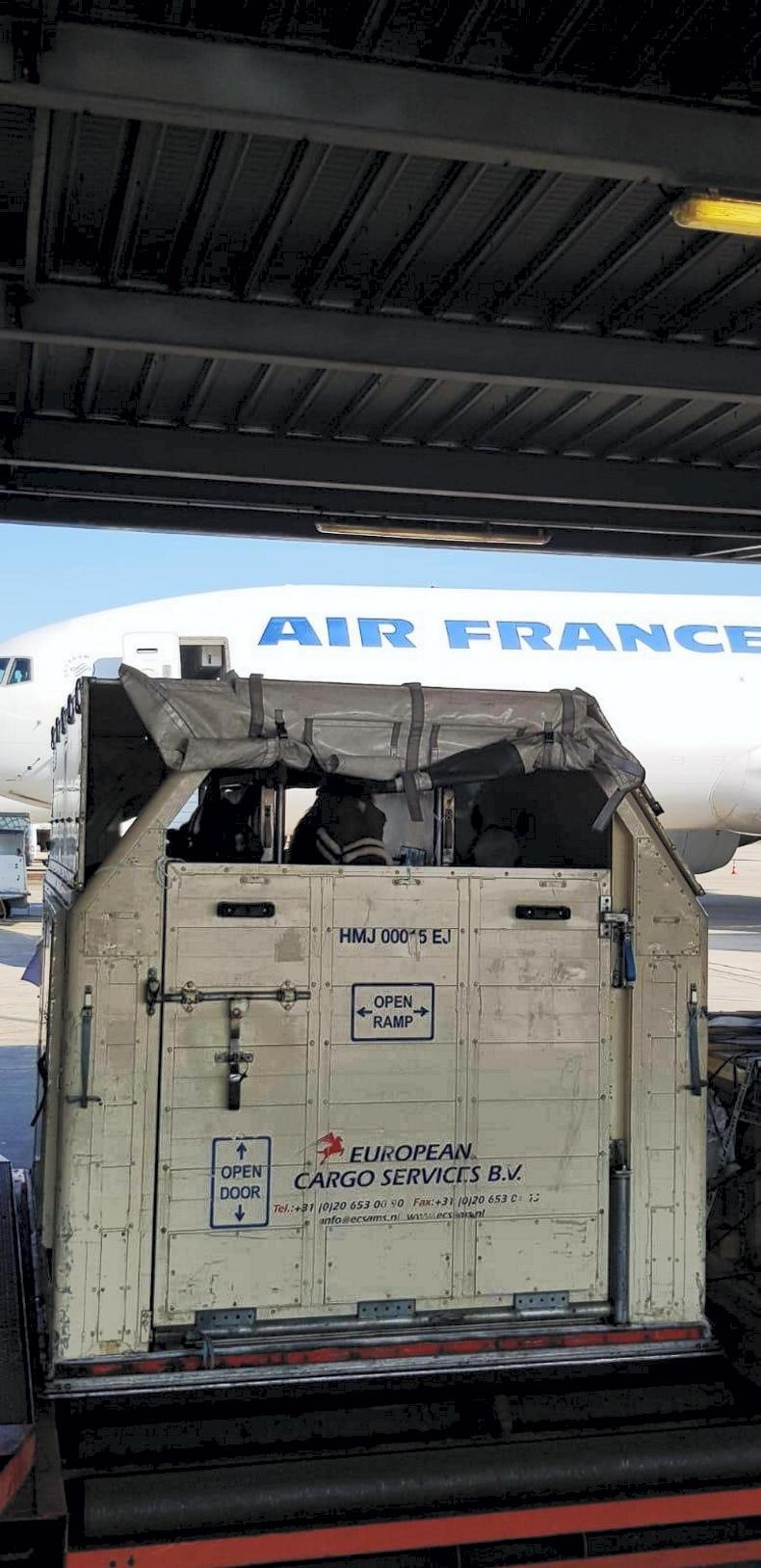
Transport Feature 2020 Equine International Shipping Horses safely in crates and ready for loading on board.
Supplies
Horses aren’t always alone on the flight and can travel with anything from boxes of flowers, medical supplies or even a spare aircraft engine.
“On the last LAX flight, there were 25 police dog puppies on the same flight!” laughs Andrea as she goes on to explain that despite all of the things the horses experience while in transit, horses very rarely panic on a flight:“It is quite rare for this to happen – it is more likely to happen on the flight stall before loading on the aircraft. The partitions are solid to the floor and can feel claustrophobic for the horses because they can’t spread their feet enough for balance. In some cases, light sedation can settle a horse enough to be able to continue, but normally the only solution is to allow the horse more room.
“Often they only need an extra six or eight inches of space to allow their feet better balance. Stall half-width is the absolute safest way to fly, but of course, this is a business class ticket and costs a considerable amount more than the one third position. The vast majority of horses fly in one third stall position and are absolutely fine.”
Quarantine
On safe landing in Los Angeles, the horses are off-loaded at the quarantine facility, which is right beside LAX airport, and they enter a three-day quarantine under United States Department of Agriculture supervision. The horses are blood tested for Piroplasmosis, Dourine, Glanders and Equine Infectious Anaemia. Once negative results return from the lab, geldings are released for their onward journey: mares or stallions continue to a separate Contagious Equine Metritis quarantine facility. Here mares must do a further 16 days and stallions a further 32 days in quarantine.
When the horses are finally released, they are loaded onto lorries by their various onward travel companies and head to their final destinations safe and sound, if a little weary.
EIS is equipped to cover every eventuality for horses travelling globally, and following long journeys such as these, the owners have their part to play too, Andrea advises: “The best recovery from travel is to have turnout on grass as much as possible; you can’t beat Dr Green! Some horses bounce off the plane and sail through quarantine, and some need a little more time to adjust.”
However far our great Irish horses travel, it’s good to be assured they are cared for every mile of the journey by experts such as Andrea O’Brien and her team at EIS.