DEVELOPMENTAL orthopedic disease remains one of the top concerns for breeders worldwide. The term developmental orthopaedic disease (DOD) encompasses all orthopaedic problems seen in the growing foal. Common DODs include:
Researchers have identified several predisposing factors for DODs, including nutritional excesses or imbalances, rapid growth, genetic predisposition, and trauma to the cartilage.
It is important for horse owners to be able to recognise signs that may indicate your foal has a developmental issue. If you notice any of the following you should consult your veterinarian as soon as possible.
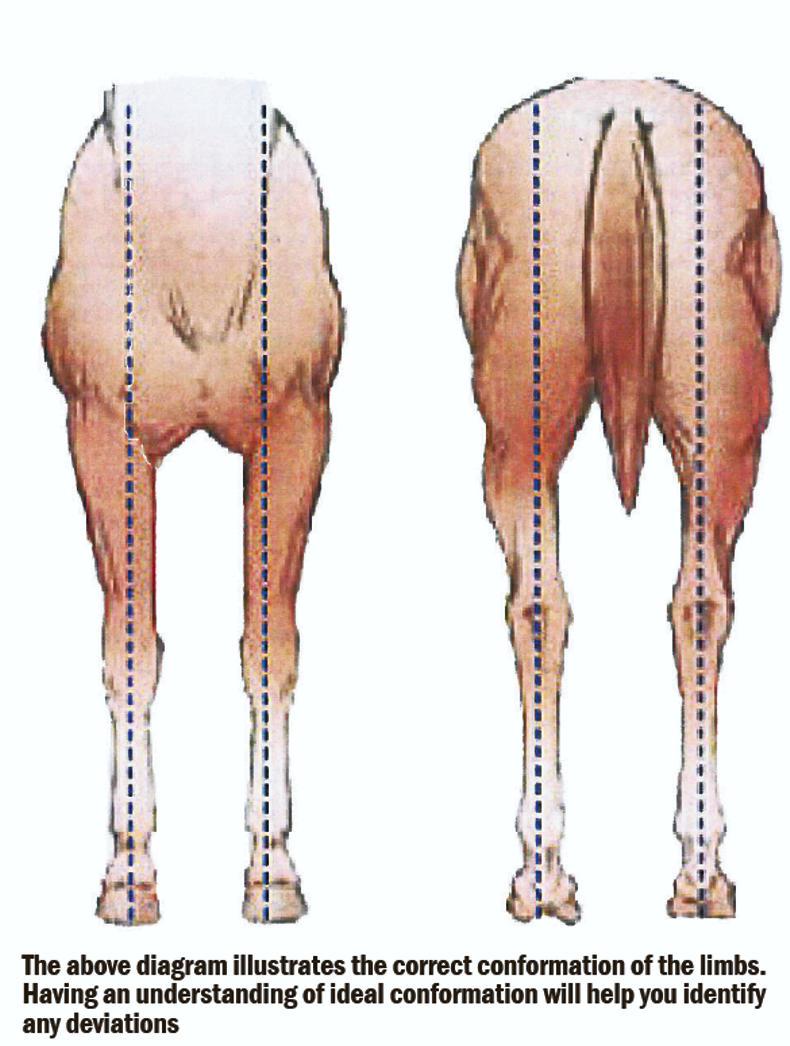
Angular limb deformities involve deviations as looked at from the front or back, such that the deviation is excessive from side to side.
The accompanying diagram illustrates the correct conformation of the limbs. Having an understanding of ideal conformation will help you identify any deviations.
Physitis is an inflammation of the growth plates in long bones of a growing foal. Physitis was formerly known as epiphysitis. Foals with physitis may present with unusually “knobby” joints (particularly the knees and/or fetlocks) and fetlocks might acquire an hourglass shape.
Different sites can be affected at different ages. Growth plate abnormalities in the cannon bone usually surface between four and nine months of age, while abnormalities in the radius and tibia are more likely to appear between one and two years of age.
There may or may not be lameness, depending on the severity of the condition. Heat is often detectable in the area, with the foal resisting palpation. Sometimes, though, the only detectable sign is that the foal does not play actively with the herd.
Owners really do have to be vigilant. As Matt Gilsenan recommended in his article last week: “You have to keep a very tight eye on all foals daily and do a walk through and stand them up.”
Foals with flexural deformities may have a more upright or clubbed foot appearance. In less severely affected foals, a dished appearance to the hoof wall will appear over time. In more severely affected foals, the heel will not contact the ground. Foals may also have an upright conformation to the front legs. Some animals may also have a catch in their gait. Affected horses are usually in the 10 - 18 month old age group.
Osteochondrosis affects the joint cartilage and also involves the subchondral bone just beneath the cartilage surface. Osteochondrosis commonly affects the stifle, hock, fetlock and shoulder joint causing swollen joints. It presents more in yearlings but can have its origin in foals. So it is important for owners to look out for any awelling in the foal’s joints.
Other signs of concern in the developing foal:
Don’t panic if you do notice any of the signs listed above. The main thing is to consult your vet as soon as possible.