TRIBUTES poured in for Via Sistina after Chris Waller announced the 12-time Group 1 winner’s retirement from training, but who better to pay tribute than the man who knew her before she hit the big time, Stephen Hillen.
“It’s unbelievable what she’s done,” the Derry-born, Hungerford-based bloodstock agent reflects. “The first Cox Plate was sensational, really, it was probably a bit like the day when she first came to prominence at Newmarket in the Dahlia Stakes.
“It was great to see her keep going. She showed real battling qualities the last day in the Cox Plate, where she just didn’t want to get beat, so it was a huge thrill. She shows her brilliance and then shows her guts equally.”
 Hillen unearthed the future champion for just 5,000gns as a yearling and sent her to Joe Tuite and then on to George Boughey following Tuite’s retirement from training. The daughter of Fastnet Rock carried the colours of Hillen’s wife Becky - a key part of the business - to Group 1 glory in the Pretty Polly Stakes, her third consecutive win at group level that season.
Placed in another three Group 1s, she returned to Tattersalls and sold for 2,700,000gns to Yulong Investments. Back then, I wonder what Hillen thought she was capable of? “She was highly progressive,” he comments.
“The breeding will tell you that Fastnet [Rock] and Galileo, they get better as they get older. And we minded her all the way; she only had 13 runs for us, and they were always well spaced out.
“It was up to the next man at that stage. I turned down a lot of money for her after she won at Goodwood, beating a sister of Frankel, and we turned down a lot of money on four or five different occasions, including in the July of that year, before she ran in Deauville.
“We’re traders, we need to sell to survive, to keep going. We’ve got other horses and we’ve got other bills to pay. It was always the plan to sell her when she was five.”
One man’s treasure
While potential improvement was a major part of Via Sistina’s appeal as an older mare, horses that take time often prove less popular at the yearling sales, though it wasn’t the only reason for her low price, Hillen explains.
“She rotated her hocks,” he says. “It’s something the purists don’t like to see. If you’re buying a yearling or a foal for resale, or a yearling to go breezing, you’d probably knock it on that. But as a racehorse, I wouldn’t knock it to be honest.”
 Hillen’s theories are based on experience, he adds: “When you go to a winner’s enclosure, you rarely see a perfect horse. I was lucky to work for close to 15 years for two top trainers in Barry Hills and Paul Cole; they both had a lot of horses and a lot of them would have been homebreds in those days.
“You see all shapes and sizes. So, I’ve seen some horses that had poor hocks, not good hocks, angular hocks, all sorts of hocks, and to be honest, it didn’t really make much difference whether they could run or not.”
When buying for himself,Hillen can take risks on conformation, but buying for others requires agents to tick more of the proverbial boxes, he admits. “Though it’s different if you work with the trainer and they understand the thought behind it, and if they’ve had horses with a similar defect before.
“But if you’re buying for a new trainer or a big trainer, you wouldn’t buy a horse like that, to be honest, because you don’t want to get thrown under the bus.”
First pick
Via Sistina was far from the first top-class horse bought by Hillen – Benbaun put him on the map as an agent and was later followed by the likes of Almandin, Astaire, Brando, Librisa Breeze, Penhill and The Grey Gatsby.
But after Via Sistina’s earned herself a place in racing history, I expected to see Hillen become busier at the sales, but it doesn’t seem to have been the case, as far as I can tell.
On the subject, the agent says: “To be fair, I buy nearly all of Kevin Ryan’s horses. We’ve been working together for over 20 years, and it’s been great, we understand each other.
“Trainers sometimes don’t want you having too many trainers to buy for, because they can get a bit funny about who’s got the first pick. Simply because I’ve been working with Kevin for such a long time, he’s always had first pick and I don’t buy for any other trainers at present.
“We race some horses on our own and to be fair, most agents do not. So, I can see from my point of view, why people would be a bit circumspect. I have no problem with that.”
While Hillen understands why he hasn’t attracted more business, he welcomes orders, he says. “Listen, I’m hungry and I’m open to buying more horses. I’m not a closed shop, especially form horses and stuff like that.
“We’ve been lucky in that department in the past, we’ve bought Melbourne Cup winners, Cheltenham winners. We’ve had plenty of success worldwide. So, I’d be hungry to keep buying for more people, and certainly in the private market, because then there’s no conflict.”
Hillen has built an impressive reputation for buying horses in training, including those who have raced on in Becky’s silks and later resold for staggering sums.
He and Dean Reeves gave 67,000gns for La Dragontea as an 84-rated three-year-old, sent her to Christophe Clement and won a Grade 2 before being beaten a neck in the EP Taylor Stakes. The daughter of Lope De Vega subsequently sold for $1,375,000.
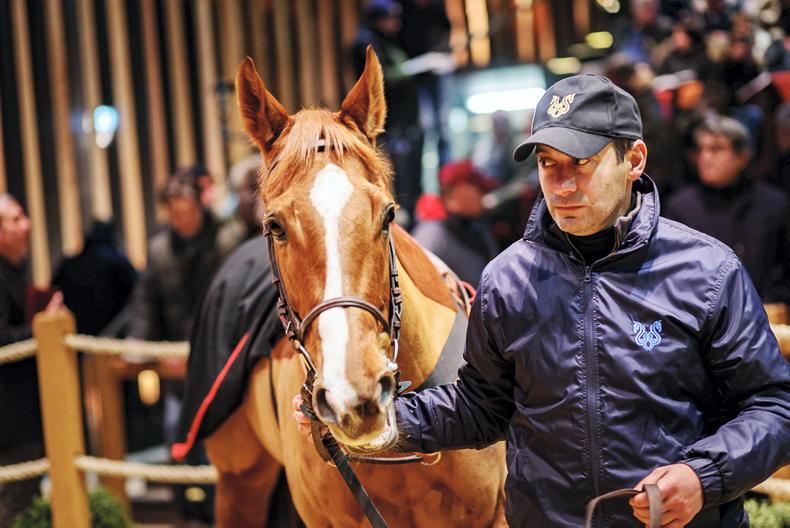 Haggle cost twice as much, but more than justified the outlay with listed and Group 3 wins for Henri Devin, which saw her value rise to € 1.3million in the space of 12 months.
Banzari was another example – bought for 24,000gns, she won a listed race and Group 3 in France before fetching €400,000.
“We were very lucky buying those types that, at that time, I felt were under appreciated by the market and now they’re over appreciated,” the agent reflects.
“I was buying those fillies from 2010 onwards and it got to about three years ago, when really anything that could put one leg in front of the other was making a lot more than they were worth, considering the risk/reward.”
Looking ahead
The valuable prize money on offer internationally is one factor driving up prices, something that Hillen had in mind when giving 2,100,000gns on behalf of M.V. Magnier and Michael Tabor for dual stakes winner Saqqara Sands in December.
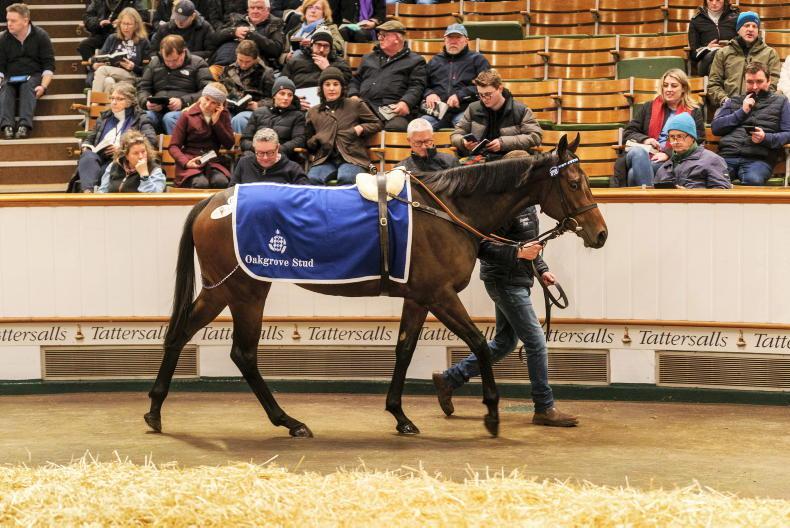 “It was a huge price for her but, you know, these international horses can win a lot of money if you happen to win two or three Grade 1s. It could end up being a smart move,” Hillen comments.
“She looks like she’s tailor-made for American racing. She seems better around a bend, tracks well, is medium-sized. Quite a lot of those American tracks are quite tight – they’re not as galloping as our tracks. I think those medium-sized horses are much better suited to racing in America.”
On horses suited to Australia, the purchaser of Melbourne Cup winner Almandin comments: “You need to have a turn of foot, it can’t be too dour. Those stayers that are off the bridle four [furlongs] out and keep going to win – it just won’t happen for them.
“They need tactical speed. Most jurisdictions abroad that you buy horses for, you need tactical speed, because they don’t go as quick as what they do in England.”
Hillen’s two other buys at the most recent December Sale – Sharpen and Quebella - were both bought to stay in England. “I liked her because I thought she travels well,” he says of Sharpen.
Listed-placed at three for Donnacha O’Brien, the 360,000gns recruit will now be trained by George Boughey, Hillen adds: “We’ve been lucky with George before, with Fastnet Rock. I’m quite excited about her.”
The race programme is another major consideration in Hillen’s selection process, with 70,000gns buy Quebella a relevant example. “She’s rated in the mid-80s,” Hillen says of the Study Of Man filly.
“She’s GBB (Great British Bonus-registered) and there are handicaps in England for those staying fillies, so she could run in those and hopefully recoup her purchase price. Then if she can go on after that, there’s a great programme for those staying older fillies in England.”
Foundations
As the son of a bookmaker, Hillen’s interest in form was forged at an early age. Thankfully for him, the betting world was quite different when he was growing up. “I was betting from a very young age, I’d probably been going to the betting shop since I was about seven,” he says.
“I remember there was a lady on our street, and I used to put her bets on for her, but then I’d put on my own as well. So, I followed it form wise for a long time when I was at school.
“I learned to ride when I was quite young, probably about 12, and I went down to Donie Hassett every summer on my school holidays. I did economics at A-level and was probably supposed to go to university, but I went to Barry Hills instead.”
Pupil assistant to Barry Hills would have been a dream job to many, so someone relatively inexperienced like Hillen, seems an unorthodox choice, but Hills didn’t get to where he did by thinking inside the box.
“He was a great man,” Hills’ former protégé relays. “He actually encouraged you to take an interest and bet. In those days, any lad worth his salt would have had a couple of punters that basically put money on for you.
“He actually encouraged stuff like that, because if you’re taking that kind of an interest, you’re going to be on the ball and look after everything as best you can.”
Unsurprisingly, Hillen had dreams of being a trainer, which were briefly realised when taking up a role as a private trainer at the age of 22. “At one stage I was the youngest trainer to train a winner,” he says. “Dr Lecter won a maiden at Catterick and another horse was second that day too, so we almost had a double.”
Special horse
 After six months, Hillen moved on to assist Paul Cole for 10 years, his role including compiling short lists at the sales. Meanwhile, Hillen’s good friend Mark Wallace worked nearby as assistant to Mick Channon, and when Wallace went out on his own, he asked his friend to buy for him.
It didn’t take long for the pair to strike gold together when progressive sprinter Benbaun captured the Prix de l’Abbaye. Despite Via Sistina’s heroics, he remains Hillen’s favourite horse, though I was more surprised that the agent had a favourite, his poker face at the sales suggesting he might be above such things.
“Oh no, I’m sentimental,” he says with a laugh. “Benbaun won six group races at the Curragh and he won the Prix de l’Abbaye.
“There have been two horses placed in the Hong Kong Sprint trained in Europe and he was certainly the first. Benbaun was a tremendous horse for us, trained by both Mark Wallace and Kevin Ryan. He was a really special horse, you know.”
Via Sistina isn’t a total shoe-in for the best horse Hillen has bought either, with the agent also nominating dual Group 1 winner The Grey Gatsby.
 The top-class grey was bought by Hillen as a yearling for €24,000 and resold by his good friend Brendan Holland of Grove Stud at Arqana, where Hillen bought him again, this time on behalf of owner Frank Gillespie, for €120,000.
That same year, Hillen and Kevin Ryan bought another horse from Grove Stud’s breeze-up draft. Named Astaire, he went on to win the Middle Park Stakes, but it’s The Grey Gatsby that rates highest for Hillen.
“It was a huge thrill when he won the Irish Champion Stakes,” he says, recalling the grey’s memorable duel with Australia.
“He only cost 24 grand as a yearling. It shows you that the horses are there – there are probably more good horses bought for under 50 grand than there are horses bought for a million or more, a lot more of them.”