MOST years, you could judge how pinhookers fared just by reading the overall vibe and feedback at the yearling sales, but there have been mixed messages over the last few months.
Even when a yearling sale’s statistics have been positive, many consignors – both breeders and pinhookers - have described trade as tough, and while that may seem like a contradiction in a way, it’s worth remembering how the foal prices have grown over the last few years.
In 2024, the average price paid at the Goffs November Foal Sale grew by a whopping 34% and the 2025 average was almost on par. Tattersalls experienced even greater growth in 2024, the average soaring by 52% to 67,658gns, while the 2025 average was 31% higher than 2023.
Higher foal prices increase the challenge for pinhookers, which has been exacerbated by rising costs of production, from fuel to veterinary costs, and everything in between. With all that considered, it’s quite amazing that 45% of pinhooks managed to turn a profit at the main yearling sales in Europe this year.
Costs vary for different operations, and from horse to horse, particularly if travelling to/from the UK or France. For this exercise, I have assumed that pinhooks need to resell for at least €10,000 over their foal price to be considered profitable.
The fact that all horses cost the same to keep means that cheaper pinhooks and lower-profile yearling sales are generally more challenging for pinhookers, which is reflected in the findings.
Easier at the top
The four yearling sales that proved the most profitable for pinhookers were those with the highest average price overall – over half of the pinhooks offered at the Arqana August Sale, Tattersalls Book 1, Book 2 and Goffs Orby 1 turned a profit. The order in which I listed those sales is important, too – that is how they ranked by overall average price, the percentage of profitable pinhooks and their returns on investment.
Of course, where the horses were sourced originally is as informative as where they were resold. Pinhookers did best shopping at the Arqana December Sale, with 56% of foals sourced there reselling for a profit and providing a 36% return on their investment.
It could be argued that the French foals had more of a rarity value, numbering 59 pinhooks, compared to 507 from the Goffs November Foal Sale and 441 from the Tattersalls December Foal Sale. Of the two main foal sales, Goffs came out on top, with 46% of pinhooks in profit, with a 31% return on their investment, compared to 42% of Tattersalls pinhooks producing a return of 22%. While we have treated costs for all equally, foals bought at Tattersalls generally incur higher costs being shipped back to Ireland.
Another way of analysing the most successful pinhooking approach is to look at how colts and fillies fared, but there were few surprises. From 701 colts, 45% achieved a profit, with a return of 29%. Of the 423 fillies, 44% put pinhookers in the green, with a return of 23%.
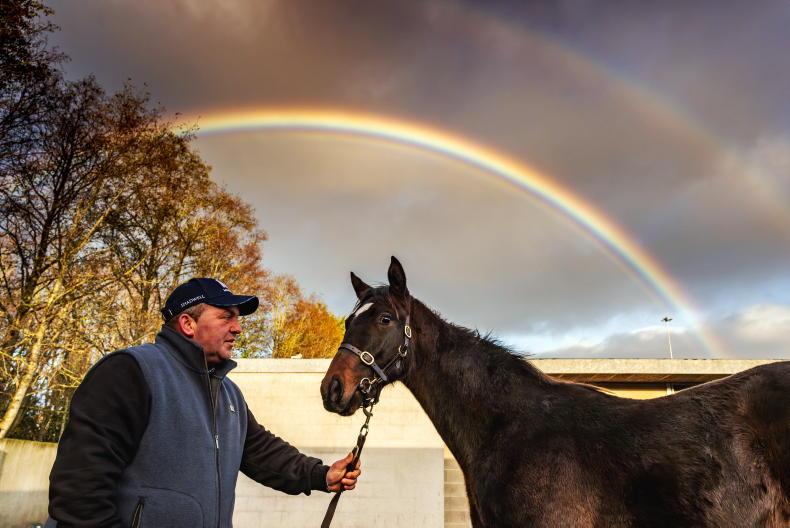 The price point at which pinhookers operated at the foal sales proved informative, with foals bought for between €51,000 and €100,000 proving most reliable. This bracket enjoyed the highest strike rate of profitable sales at 55% and while the foals costing over €100,000 produced a marginally higher return (36% compared to 34%), the €51,000 to €100,000 foals returned the highest median profit at €11,700, compared to €9,840.
Many pinhookers have certain foal consignors they like to buy from, often because they’ve previously enjoyed luck with them, and there were three consignors who sold eight or more foals that stood out in terms of pinhookers’ strike rate at the yearling sales. Three-quarters of the foals bought from Church View Stables, Moyglare Stud Farm and Pipe View Stud made a profit for pinhookers – as important for the foal sellers as the buyers, guaranteeing return customers.
Foals bought from Jamie Railton provided the highest return on investment at 114.7%, but that figure should be treated with caution as only three of eight foals turned a profit. There was a better balance in the statistics of Ballylinch Stud (112.4% ROI & 69.2% strike rate), Baroda Stud (93.8% ROI & 62.5% strike rate) and Galbertstown Stables (66.3% ROI and 57.1% strike rate)
Not so simple
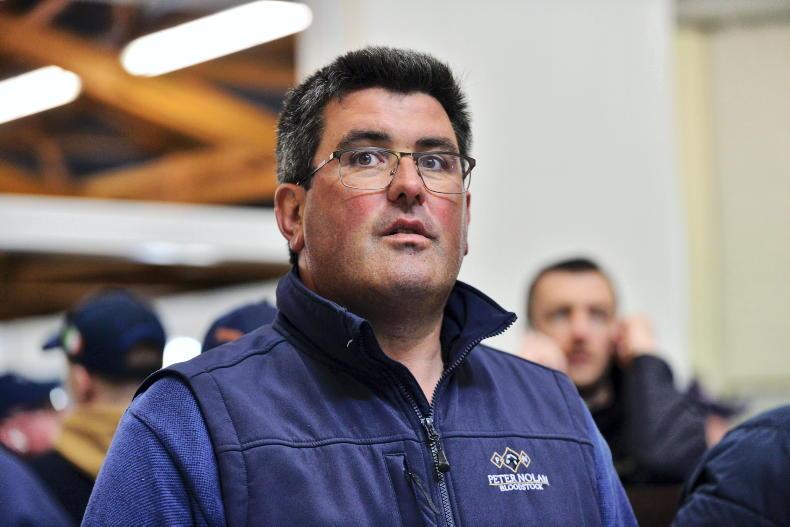 Of course, for all these statistics and analysis, there are always exceptions and plenty that cannot be gleaned from figures. Take the foal buyer who achieved the highest returns on their investments at 93%. Peter Nolan was one of the pinhookers who struck the jackpot with Little Big Bear and Ace Impact, but his greatest profit (€122,000) came from a colt by exported stallion Sergei Prokofiev.
There was no blacktype update to the page, nor was there to the Lucky Vega filly bought for €27,000 and resold for €105,000, so Nolan’s record is testament to the fact that there are no hard and fast rules to this, and perhaps that the physical often outweighs pedigree.
Of the top 10 foal buyers in terms of their return on investment, two of the smaller operations deserve a mention. The Gleeson brothers’ Aughamore Stud invested the lowest amount of the 10, yet succeeded with all bar one, generating an 89.6% return on their original outlay.
Denis Linehan increased his pinhooking activity in 2025 and together with his brother Eddie, Lackendarra Stables produced a 45.8% return on his investment.
HOW a stallion fares in the months between pinhooking a foal and reselling as a yearling is one of the main influences on a horse’s profitability and is the main reason why pinhookers are always especially keen on first-crop sires, without the risk of suffering a quiet year.
However, it’s interesting to note that of the stallions with eight or more relevant sales, only two first-crop sires returned a higher rate of investment than the average of 26.6% and three were in the red.
The clear leader in this division was Coolmore Stud’s Little Big Bear, with 85.7% of his pinhooks providing a return of 131%, less than 1% under the overall leader, Ghaiyyath at 131.7% - and he had a lower strike rate at 78.9%.
Ace Impact also impressed with pinhookers enjoying a 103.3% return on their investment, though his strike rate of 58.3% didn’t measure up to Little Big Bear’s.
At a much lower level, Culworth Grounds Farm’s recruit El Caballo punched above his weight with a return of 33.2%, though only 42.9% of his pinhooks were profitable. This illustrates how one statistics should not be judged by itself alone, and it’s also evident in Modern Games’ results.
Just six pinhooked foals by the Dalham Hall Stud resident were reoffered at stud and four sold for a loss, but his return-on-investment averages at a whopping 98% due to two incredible results, with one producing a profit of €515,000 and another at €213,200.
Atta Boy
Bayside Boy surprised everyone with how early and strongly his first juveniles made an impact on the track, and those who took a chance on his second crop of foals were reaped the rewards. Twelve of his 16 pinhooks (75%) produced returns of 80.5% on their investment.
Starman was an obvious choice at last year’s foal sales, given how he dominated the freshman standings that year, so it’s somewhat surprising that pinhookers still managed to enjoy a decent profit, averaging €39,137.
His Tally-Ho Stud-mate Kodiac might be turning 26 on January 1st, but he’s not done yet – not on the track nor in the ring. He’s had just 33 juveniles run this season, but he has still managed to match Mehmas’ strike-rate, with the pair sharing seventh position.
His success is at risk of being overlooked due to the market’s often ageist attitude to sires, yet 76.9% of his pinhooks commanded an average profit of €21,510, providing a 43.4% return on their investment. What’s more, the largest loss any of his supporters suffered was the lowest of all sires with eight or more pinhooks reoffered.
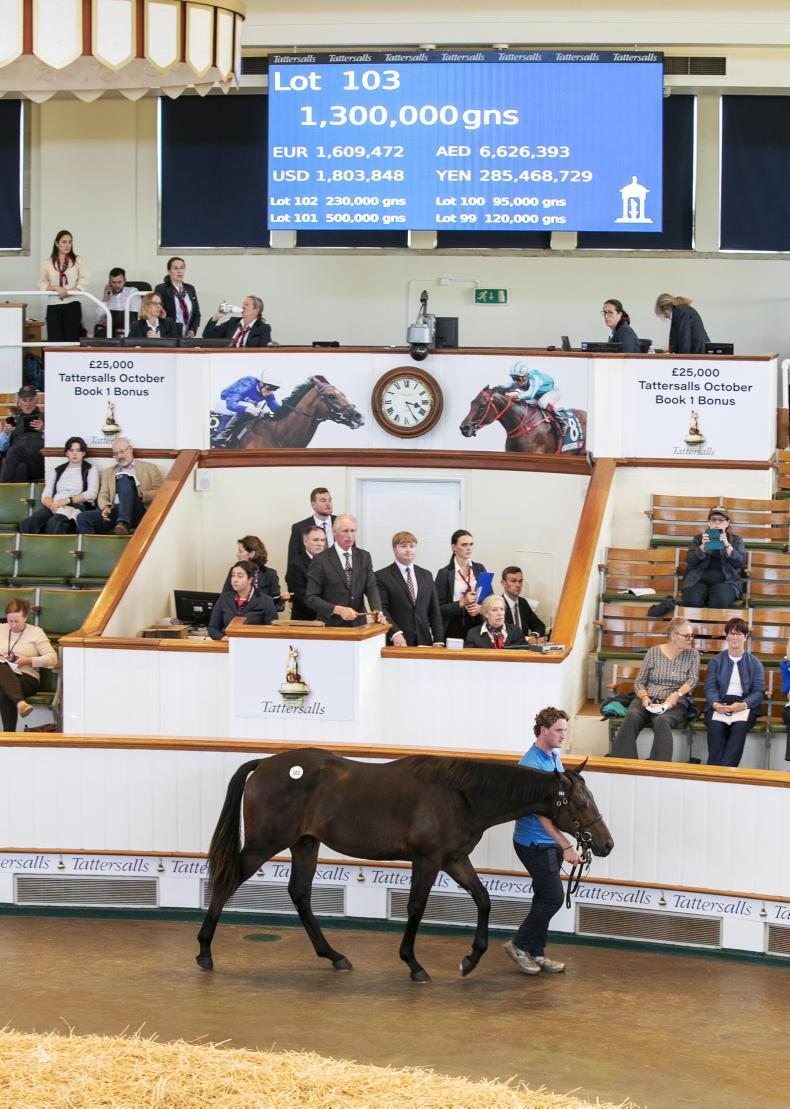 Ghaiyyath was another who ended up being a largely ‘safe bet’ for pinhookers, with 78.9% of his stock commanding a profit. His impressive average profit of €118,584 is somewhat distorted by Yeomanstown Stud’s incredible result, but it’s worth noting that another six of his pinhooks achieved profits exceeding €50,000.
Pinatubo, who is at the same stage of his stallion career as Ghaiyyath, has strong statistics which honestly reflect his sales.
His impressive average profit of €51,276 was helped by low foal prices – only one of the 10 cost over €50,000 as a foal.