THE Connolly family’s Burgage Stud has a history of producing and standing successful stallions at their stud farm outside Leighlinbridge in Co Carlow. Jukebox Jury, who was crowned leading sire at the 2026 Cheltenham Festival, sadly passed away last year, but the future remains bright at Burgage Stud, thanks to three promising sires, as Victor Connolly tells Amy Lynam.
There appears to be similarities between your new recruit, Silverwave, and the late Jukebox Jury, in that both enjoyed long and successful racing careers.
That is true. Silverwave raced for five seasons, he won 10 races, he won at Group 1 level, and he won all types of ground. So, like Jukebox Jury, he must have been sound of his wind and limb, but importantly, he must have been sound of his mind, because you imagine that trainers must like to see a horse that wants to keep racing and keep giving their best. Longevity of any racehorse is important.
Silverwave is a good-looking stallion, a big, strong horse and people like him. He’s an outcross and I think it’s well accepted that, whether it is flat or National Hunt breeding, we need an outcross. Any successful stallion that is an outcross brings a new energy and new vitality into our DNA pool.
Was being an outcross what appealed to you in terms of Silverwave’s breeding, as he doesn’t have the most obvious pedigree or sire (Verglas) for a National Hunt stallion?
Well, the question is, what makes a National Hunt sire succeed? If you go back the years to great sires like Deep Run – he was a champion two-year-old. Then if you look at Roselier, and Over The River - (sire of two Gold Cup winners) - they were both stayers. So, there’s two ends to the spectrum.
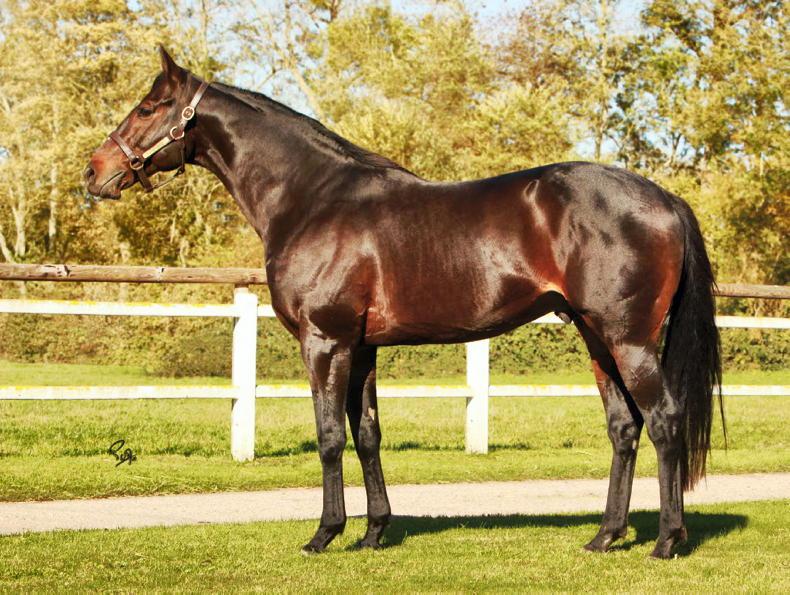
With Silverwave, there is an element of speed in his pedigree, but he did win over a mile and half a furlong as a two-year-old. Later, he regularly ran over a mile and a half, so his racing profile was very similar to Jukebox Jury, Shantou and Bob Back. They had speed and acceleration; they were similar in that regard.
Silverwave is all French and his breeding may not be that familiar to Irish breeders. But he does share the same immediate sire line as No Risk At All – they both have Highest Honor as their great grandsire. So, it’s not as if this line hasn’t been successful.
In France, there’s this great diversity of sire lines, which I think adds to their success; they give every horse, every sire line, a chance. No Risk At All started off at a low fee. He wasn’t the best racehorse - a Group 3 horse - but he’s become a very important sire.
The main thing about Silverwave is that he has the ability to sire a good filly [Louisa Banbou], who wins at Grade 1 level and five graded races in total. She has run at three, four, and now she’s winning as a five-year-old Her enjoyment for racing hasn’t diminished, and that’s important, particularly for a filly.
Do you think Silverwave benefitted from beginning his stallion career in France?
They have a very good race programme in France, and they encourage their fillies to run and prove their ability. We’re getting there too as we now have a good mares’ race programme; that’s a huge turnaround from where it used to be.
I think they also have a different type of horse in France; they’re more physically precocious. The race programme is geared towards racing them at three and breaking them as yearlings; they’re treated like flat horses.
Maybe we should not always be concerned with trying to compete, because we have a different type of breed. Jukebox Jury had three winners at Cheltenham, but two of them were Irish-bred so we must be doing it right. I think we have a lack of good stallions compared to the French. In the past, when we had a number of good stallions who were active at the same time, our record of breeding good horses was better. This can happen again.
With Irish National Hunt breeding, it currently seems heavily weighted towards the sales ring, and that’s a little regrettable. But one thing about fashion is that fashion will change – history tells you that. If you take Cheltenham as an index, in one recent year, 27 different sires had the winners of 28 races. That tells you why favouring fashion doesn’t extend to the racetrack.
The successful breeders always said this is a long game played slowly. It’s preferable not to get caught up in fashion. The good stallions we have stood became commercial because of the track results of their progeny.
Back to Burgage’s current roster. It appears that the best may be yet to come from Sea Moon, as his latest crop of three-year-olds is his biggest yet.
I do think he’s an under-rated sire. The point-to-point sector seems to be happy with Sea Moon in that they buy them. They have done well with his progeny when they sold them on.
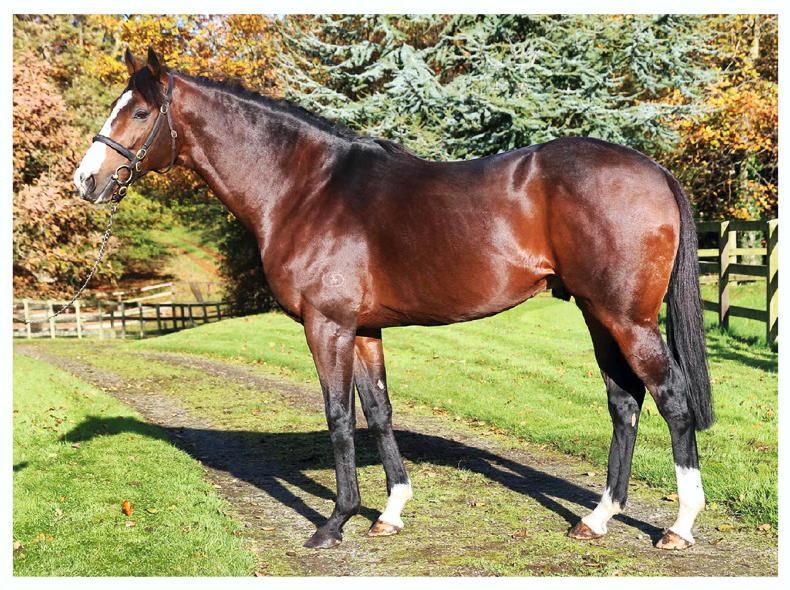
His problem was that he didn’t get great support in his early years, so he’s not had that many runners, and yet, he sired four horses that are rated 133 plus on official ratings. Hopefully he will break into the next level soon enough - he’s threatened to do it, and hopefully one of those horses will progress.
Different people have their own views on judging stallions, but surely the ability to sire a number of good horses with an above-average official rating, relative to number of foals produced, is a good yardstick.
Many people focus on the big races, but there’s so much more to it than that.
We’ve all seen stallions with freak runners. Beef Or Salmon was a great racehorse, and he was by a stallion that many people can’t remember the name of. Florida Pearl was by Florida Son, who really didn’t get anything else like him.
A good stallion needs consistency; the ability to sire a number of higher-rated horses, and not just one star. If he hasn’t covered many mares, and he’s got a number of good horses, I think that tells you something, as opposed to a stallion who has covered an awful lot of mares, and yes, he’s had some good horses, but maybe not enough of them. Everyone has a different way of looking at it.
We’re hoping that next year Sea Moon will have more runners and more opportunities to show his ability. He’s one of these dark horses. I know there are some breeders and agents who feel the same way, and they’re just waiting for him to break into that next level, into the 150s.
Convergent flew the flag for Fascinating Rock in 2025, and he’s also had some smart horses between the flags. It’s good timing for his first crop conceived at Burgage Stud, who have turned three.
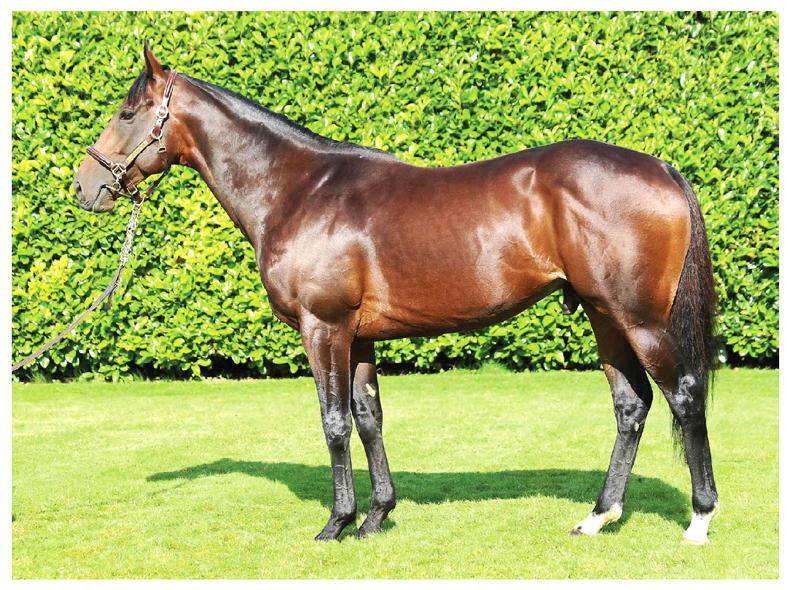
He’s a big, strong, good-looking horse and is good value. Karl Burke speaks very well of Convergent, and rates him highly. He was just beaten in the German Derby last year and he progressed really well after that.
Fascinating Rock was a later maturing racehorse and his stock seem to be the same. He has had a few well-touted four-year-old point-to-point horses from his initial National Hunt coverings. There is a definitely a quiet word about Fascinating Rock from breeders this season.
There has been plenty of talk about the increasingly selective jumps market, with NH foal numbers falling. What is your view of the NH bloodstock industry as a whole?
I think that the National Hunt product is in good health when you consider the crowds and the great racing that we had at the marquee events like Leopardstown at Christmas, the Dublin Racing Festival and the Cheltenham Festival.
So, the sport is good, people like it, they go racing, great horses take each other on, and you get fairytale results sometimes as well.
We also know that the top trainers - Willie Mullins, Gordon Elliott, Nicky Henderson etc- they all need breeders to produce the raw material; they need a supply of young horses coming through.
It is true that foal numbers are falling. But this did happen before with the Celtic Tiger crash, when the combined foal numbers dropped from around 12,500 to about 7,500 in a few years. It was a big drop, and what it probably meant was that a lot of the lesser mares were culled from the system. This was probably not a bad thing, because our racing in those ‘Tiger’ years didn’t improve due to all those foals. I don’t think Ireland bred any more great horses from those huge foal numbers.
This is arguably the right time to stay breeding, because as the foal numbers drop, the demand, however selective, is still strong. There’s a large number of very wealthy owners looking for the next star, and every breeder is one step away from breeding that good horse.
As breeders, we possibly need to be more selective with the mares we’re breeding from, while being mindful of costs. Just try to stay at it, maybe not with the same number of mares. Breeders mustn’t be afraid to follow their own judgment and their instincts.
While racing itself appears to be in good health, you’ve expressed concerns that it is gaining less and less traction in the mainstream media – what do you think could be done to improve the situation?
I think it is a concern that mainstream media appears to give less coverage and less attention to racing these days. For instance, the RTE coverage of Cheltenham is not what it used to be. They may have their reasons but Cheltenham is the huge event in National Hunt racing - and you just don’t see the same general media interest.
Aidan O’Brien and Willie Mullins are masters of their craft. Their worldwide success should be a source of national pride for everyone, and sadly, it just doesn’t seem to get the media coverage that it deserves.
Ireland is a world leader regarding the great racehorses we breed and train. Racing is a big contributor to the Irish economy, and it socially important. So we must all work together to try to keep racing relevant, and to keep it in a positive limelight.
We should be proud of what we have achieved, rather than questioning what other people think of us. Without appearing arrogant, we’ve got to state, ‘this is what we do, we have a tradition, we have a long legacy of producing these good horses. We are very mindful of welfare and we’re doing our best to limit any bad practice or bad actors.’
You are involved in the integrity of the sport as a raceday steward. I often wonder if all stewards should be paid for their roles. What would be your views on that?
I think the Irish system of mixing professional stewards and unpaid stewards is balanced, and I think in the main, it works well. Every regulatory body in every country, in every sport, will have made poor decisions at some point.
No one can get it right all the time.Some of these decisions are made under time pressure and maybe do not have all the information that subsequently becomes available. I believe that the ethos of the IHRB is sound and honourable. Stewards strive to be impartial, fair and consistent.
These stewards are made up of a very wide variety of people, who all have the common aim to give back something to the sport that they enjoy, and also to help protect its future, just as their predecessors have done for decades. People are usually in this for the right reasons.
I suppose stewards will always come under scrutiny because it’s easy for the armchair critics to point the finger.
When there’s an incident, stewards sometimes arrive at the decision because of information that perhaps was not available to the public.
It always important not make a rash decision, don’t have a knee jerk reaction. When the Irish were so dominant at Cheltenham, you had people saying that English racing was finished, that their trainers can’t compete, and their day is done.
You couldn’t say that this year - there’s been a resurgence; there’s a lot of younger English trainers now who’ve come along with wealthy owners, and they’re making their impact.
So, this immediate reaction can be a bit short-sighted. I think you’ve got to take a long view and take a considered look at the whole, because history will tell you things don’t always work out the way we think they will.
A bit like breeding, then?
Breeding is a lottery and it’s great, because everybody has their chance. The full-brother to the great horse may not be anything near as good - that’s part of the whole intrigue. Be it a very well-bred horse, or be it a lowly-bred horse, just give them the opportunity, and they might surprise you.