FORM is temporary, class is permanent.’ This saying rings true for sports of all kinds, whether referring to individuals involved or entire teams. It’s particularly true for horse racing, because as well as trainers, jockeys and owners experiencing peaks and troughs in form, so too does the breeding side.
Fashionable stallions come and go, but the truly great stand the test of time. Then there’s the broodmares - talent can skip generations, but certain bloodlines hold such class that champions will emerge time and time again, just at varying regularity.
The Aga Khan bloodlines are a perfect example of this, as illustrated by the operation’s motto of ‘success breeds success.’ It’s why their fillies and mares have always been such valuable commodities when offered for sale, even if the first or second dams are lighter in blacktype, because the pendulum will always swing back around.
The Aga Khan’s famed green and red silks have been carried to big-race success regularly throughout the decades, but the operation is enjoying something of a renaissance at the moment, collecting eight Group 1 prizes in 2025 and kicking off 2026 with four Group 1 wins.
The timing of this purple patch is poignant, too, coming so soon after His Highness the Aga Khan IV passed away in February of last year. His daughter, Princess Zahra Aga Khan, took over the helm of the Aga Khan Studs following his passing and I was lucky enough to enjoy an in-depth conversation with her on the eve of Daryz’s Prix Aga Khan IV (Prix d’Ispahan) triumph.
“Last year was mind-blowing,” Princess Zahra said, reflecting on 2025. “It was the best year that we’ve had since the year my grandfather died; in 1959, he was killed in a car crash.
“So, it was a really meaningful year. It was a very hard year, also, because, of course, everything felt emotionally connected to my dad.
“But I’m the fourth generation doing this, and we’ve been working as a team for 30 years, so, it also represents a lot of hard work, and some very good training methods, which I’m sure we’ll talk about that later.
“It was very special to see the silks get back to a level where they haven’t been for over 60 years.”
The foundations
His Highness the Aga Khan IV was thrust into the role following the sudden death of his father, Prince Aly Khan, who himself bought out the other family bloodstock interests following the passing of his father, Aga Khan III, who began by purchasing yearlings in 1921.
Princess Zahra, in contrast, has been involved in the family operation since the 1990s, allowing for what she describes as ‘a natural progression.’
On her father’s early experience, she relays: “I was actually on a plane with my uncle yesterday, and he told me that they were not versed in the techniques of breeding or managing racehorses or any of that, so I think my dad had to very much learn everything that he could from Monsieur Mathet, from other people in the racing world, and it took him a year to decide whether to continue or not.”
Whilst preparing for our conversation, my research suggested that Princess Zahra’s predecessors each made their own unique impact on the business, so I was curious to find out whether she herself is solely guided by her father’s methods, or if she has a different approach.
“We still use a mix of all the physical variables and what my great-grandfather developed as theories, which my father applied, because my father also worked with my great-grandfather’s team for the first 10 years of his life in the horse world,” she explains.
“We have switched things up a bit, but that started happening 20 years ago, and so what we’re seeing now is the results of 20 years of somewhat new policies, in the sense that my father wanted to breed Derby horses - any of the Derbys, and I think we felt that we could put more speed back into some of these families and see what happens.
“Sometimes it doesn’t work and you’ll still have either a stayer or a classic-distance horse. Some of our families are confirmed classic-distance families, and that’s fine by us.
“I mean, if we get a good classic-distance horse, then that’s fantastic, because they’re hard to come by. When you do the matings nowadays, and you’ve got a classic-distance filly, and you’re looking for a classic-distance sire, it’s sort of needle in a haystack stuff.
“That is the traditional way of breeding the old Aga Khan families, but then we started going to Pivotal, and Selkirk, and Blue Point, and that brought speed into some of the families. Nowadays, we’re going to probably twice as many speed stallions as my father would ever have done.
“He didn’t like sprinters; he thought that they were a flash in the pan, and he didn’t want to breed the mares to sprinters, because he felt that it would reduce the value of the stock.”
Using sharper stallions has revived traits that already existed in the damlines, Princess Zahra continues: “You have inherent speed in some of these families, and Rayif’s family is an absolute example of that. They were middle-distance horses, and they had not bad results, but certainly not great results.
“And then you start using more precocious stallions, and suddenly you realise that these are actually sprinting families. They’re five-furlong, six-furlong, seven-furlong families.”
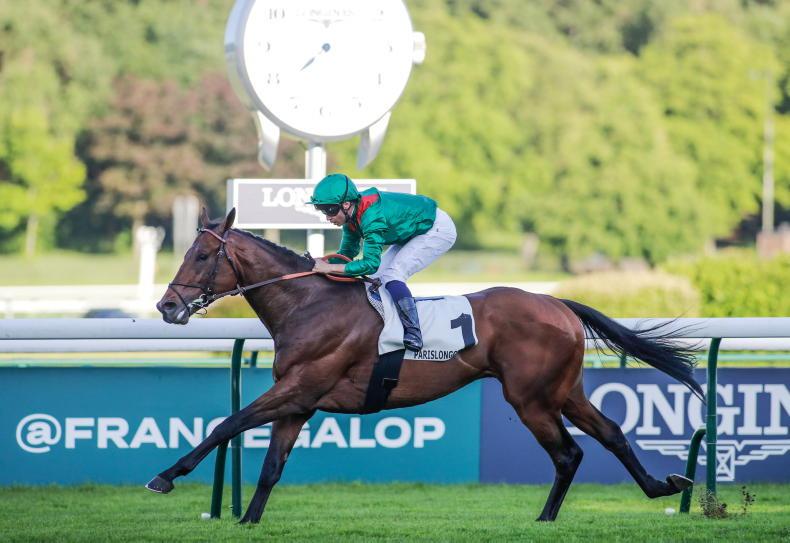
It’s certainly working, too. One of the Aga Khan Studs’ current stars, Daryz, is out of Hong Kong Vase heroine Darykana, herself by Selkirk, and also the dam of Prix Ganay winner Dariyan. Pivotal, who Princess Zahra also mentioned, rewarded them with Siyouni.
Against the grain
The team don’t shy away from what some might describe as ‘unfashionable’ or ‘cheap’ stallions. Alamshar was by Key Of Luck, conceived at Tara Stud at a fee of IR£3,500. Grand Lodge commanded IRG£9,000 when Sinndar was conceived.
“We’ve had success with horses that others haven’t, and I think that, in part, it’s my great-grandfather’s theories that he developed,” Princess Zahra reflects,
“Also, we sit down and we can spend two hours on a mare. You’re looking at all the variables, from physical form, to aptitudes, to the pedigree, to the trainer’s notes, to the vet notes; everything.
“We go through what she’s produced before - was that a good model? Was it too big? Was it too small? Was it too slow? Was it too fast - almost impossible.”
The bloodstock team also avoid blindly following the stallions of the moment, Princess Zahra explains: “If a horse is becoming what we feel is overly expensive and overly popular because of the results that we see in terms of our stock and in terms of racing stock, then we’ll probably pull back for a while and see what happens.”
Some stallions take more time to prove themselves, she adds: “We have broodmare sires that are coming out of our stock now that you would never have expected. Verglas is an example, but there are others that have been panned, completely trashed by market forces, and they were cancelled as stallions far too quickly, but it turns out that actually they have an influence, and had the market been more patient, they probably would have made quite good stallions.
“When I was a child, it would take somewhere between 15 and 20 years for people to decide whether it’s a good stallion or a bad stallion. Now you’ve maybe got six or eight years, and then you’re either popular or you’re dead.
“I personally don’t believe in big stud books. My father didn’t. My family never has, because you’re sort of skewing a percentage of the entire thoroughbred universe to one bloodline or another, and that has happened no matter what. It was inevitable since the 1980s.
“I think all of us in the business need to be conscious that without genetic diversity, we’re just going to breed weaker and weaker stock, frankly, in the long term.”
Graffard the Great
Even a top-class owner/breeder like Princess Zahra knows that pedigree is not the only ingredient of success. As she herself put it: “Probably one of the oldest questions in breeding any thoroughbred is, how much is the breeding, how much is the training, how much is the jockey and how much is the raising?”
I wonder then, how much of their current success does Princess Zahra attribute to the abilities of Francis-Henri Graffard, who took over the Aga Khan Studs’ private training centre at Aiglemont following the retirement Alain de Royer Dupré at the end of 2021.
“A huge amount,” Princess Zahra replies. “I think what we all appreciate about Francis is that he looks at the whole horse. He’s not someone who’s stuck in a rut and just does the same thing every day for every horse.
“He looks at each horse individually, but he also considers the whole horse; so he looks at whether they are happy, whether they’re engaged, whether they’re comfortable in their boxes, whether they’re tired… He’s a real attention-to-detail person.
“There have been a lot of different trainers of our horses over my 56 years of lifetime, and I knew them all, and Francis is a very different animal to any of the others that I’ve worked with.”
On how Aiglemont has developed under Graffard’s stewardship, Princess Zahra reveals: “We were the only stable yard I knew that had a sign that said, ‘no dogs.’ That’s gone - there are dogs everywhere now, it’s fantastic; it keeps the horses happy.
“He put music in the barns, so the horses are engaged, they’ve got something to listen to, they’re very much more alert than they used to be.
“I’m not knocking anyone before. I’m simply comparing that to Francis’ method of saying, that the horse needs physical care beyond just the vet or the farrier, it’s about back care, it’s about mental care, it’s about emotional care. He’s very patient as well; he will wait until the horse is at its peak to take it to the right race.”
A patient approach is also employed before the Aga Khan homebreds even make it to their trainer, Princess Zahra adds. “The whole weaning process, the whole breaking process - I hate that we still call it that - it’s all done in-house in Ireland.
“That’s very important as well, because we use the kindest possible methods to do that, and they very slowly get brought into the system.
“If Pat Downes feels that the horse isn’t ready to go, the horse doesn’t go, and we wait as long as we have to, because we breed to race.”
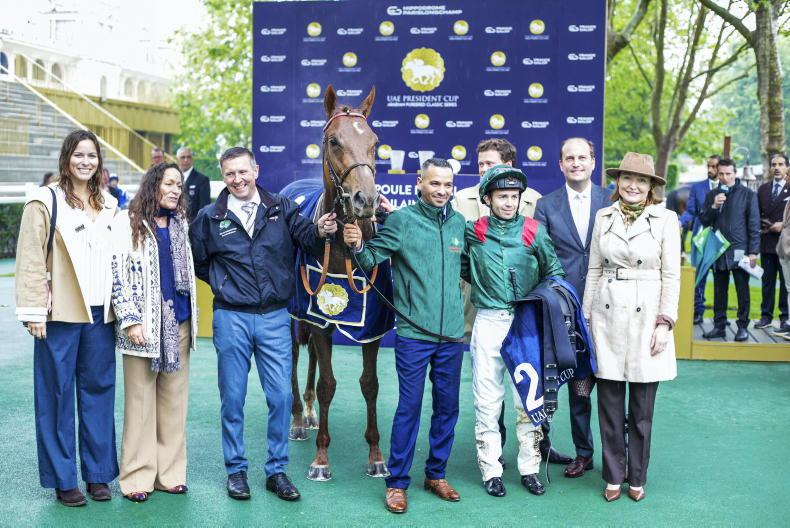
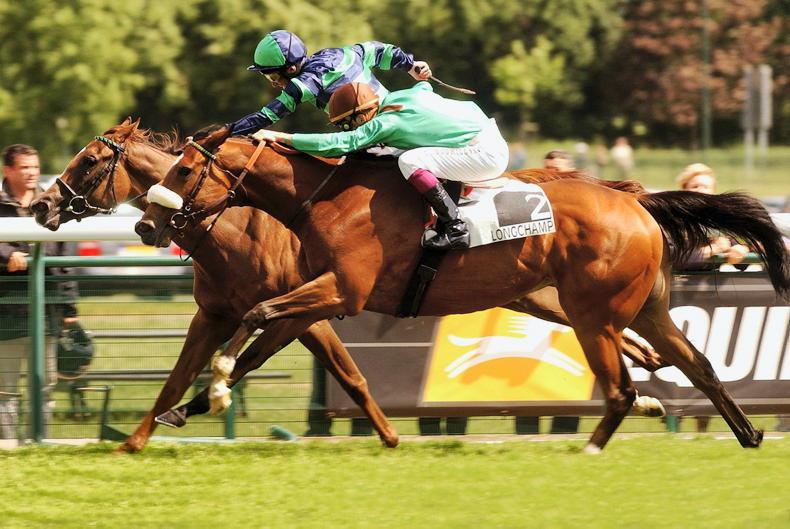
An IRE suffix and Graffard’s name both appeared alongside the Aga Khan homebreds responsible for a group double at Longchamp earlier this month, when Rayif became the ninth French 2000 Guineas winner to carry the Aga Khan silks, and half-sister Rayevka took the Group 3 Prix de Saint-Georges over the minimum distance.
“It was wonderful,” Princess Zahra reflects. “Again, I would put a lot of it down to Francis’s lack of fear of experimentation. I think that Rayevka in that race was running over the right distance for her, and the right course for her.
Rayevka was gaining an all-important first win at group level, having previously landed a listed race and finished third in the Group 1 Commonwealth Cup at Royal Ascot. Rayif, meanwhile, had already won a Group 3 as a juvenile and was last seen finishing third in the Prix Jean-Luc Lagardere.
“We knew he was good after Deauville last year when he won there,” Princess Zahra says of their latest classic winner. “He’s a lovely looking horse, he’s really gorgeous, so there was every hope that he could be a good horse. Did any of us go to the Poule d’Essai and think, oh, it’s in the bag? Absolutely not.”
On future plans for the pair, Princess Zahra reports: “Rayif and Rayef are both going to Ascot to do their brother/sister thing again.” They may be joined at Ascot by stablemate Daryzan, depending on how the impressive debut winner fares in tomorrow’s Prix du Jockey Club, where he will be joined by the Aga Khan Studs’ unbeaten Zarak colt, Dolmalan, trained by Mickael Delzangles.
No one-hit wonder
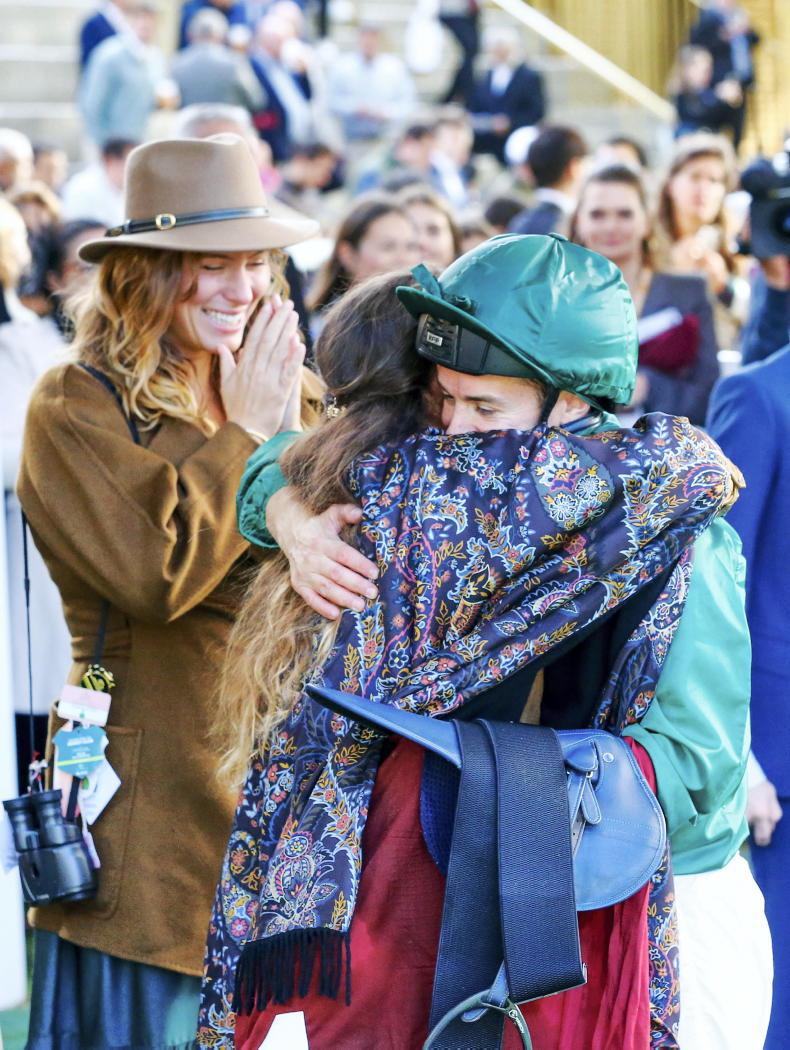 Daryzan is, of course, a half-brother to stablemate Daryz, who announced himself as a top-class colt when beating Minnie Hauk in last year’s Prix de l’Arc de Triomphe. The son of Sea The Stars rewarded connections’ decision to race on as a four-year-old when making an impressive return in the Prix Ganay and since my conversation with Princess Zahra, followed up in similar style in the Prix d’Ispahan, now run as the Prix Aga Khan IV.
“We had a team conversation after the Arc, and we all felt that it wasn’t fair to Daryz to stop racing after that race,” Princess Zahra explains.
“He would have been labelled a one-hit wonder, a heavy-going horse, a middle-distance horse, but we knew and had known all of last year, he mostly ran over shorter distances - he was running over 2000 meters.
“Going into the Arc, we knew that we had a good horse. We didn’t know he was going to win.
“Going into the Ganay, we knew that he had the speed for that, but the way he did it was astounding.”
Princess Zahra saw Daryz’s seasonal return as another testament to his trainer, she says: “I credit Francis with having the gumption to pull an Arc winner back to 2,100 metres and then go back again for the Ispahan.
“I’ve never known a trainer that would have been willing to do that. Most of them just lengthen and lengthen and lengthen, and then you end up with stayers at the end of the year.
“And that’s not useful as a breeder, because you don’t want your fillies to be stayers. You want them to show their aptitudes over the right distance.”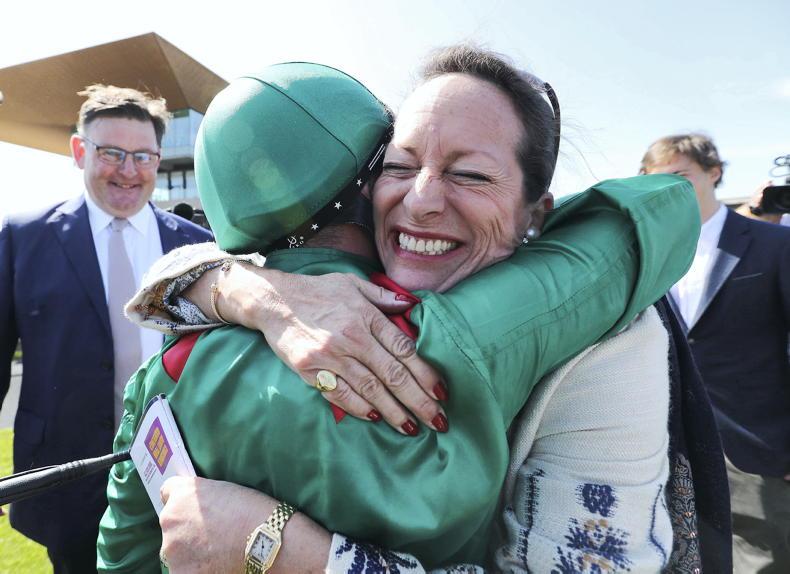
Daryz’s latest Group 1 victory held added significance as the Prix d’Ispahan was renamed in honour of Princess Zahra’s late father. I imagine it must be difficult not to get emotional so soon after his passing, but wonder, too, if the many years of family involvement increase the challenge of remaining professional, rather than sentimental, when it comes to their wins.
“I’m not that kind of person, really,” Princess Zahra replies. “I view this as a machine where all the components have to be working well.
“It’s lucky that we all get on like a house on fire, so not only does it make things work easier or better, but we also have a hell of a heck of a laugh while we’re doing it, so that’s great.
“Then I have a personal attachment to just about every horse I’ve ever known, so I’m not emotional about the horse’s results, I’m emotional for the horse itself, and that’s a different way of looking at things.
“I don’t get emotional because the horse won. I get emotional because I’m proud of the horse sometimes, but last year I was getting emotional, and it still happens to me, because some things trigger me.”
Personal favourites
A number of the Aga Khan’s horses have won racing fans’ hearts over the years. For me, it was the brilliant Daylami, and his Irish Champion Stakes win in particular (though he carried the blue Godolphin silks then), as he returned to the parade ring within touching distance of my nine-year-old self following his nine-length rout.
He only increased my lifelong love of greys, and it turns out that I’m in good company.
“My great-grandfather was obsessed with greys as well,” Princess Zahra recalls. “He had the only European breeding operation that specifically looked for and bred greys to greys in order to keep the grey lines going.
“But then, now you look at the genetic diversity of our sirelines, and we’ve lost Grey Sovereign, we’ve lost Linamix, you know, we’re losing a lot of the grey sirelines. I think we have three greys in the string, so if we can bring back some grey blood, we will.”
On her own favourites through the years, Princess Zahra reflects: “Mandanaba is a lovely character. I love Calandagan, because you go up to his box, and he puts his ears back, and he’s like, ‘stay away, lady’. [laughs]
“And Daryz can be nippy, but some of them have very nice characters; Darjina had a lovely character. I mean, you could have slept in the box with her. She was just the most adorable, lovely, calm horse.”
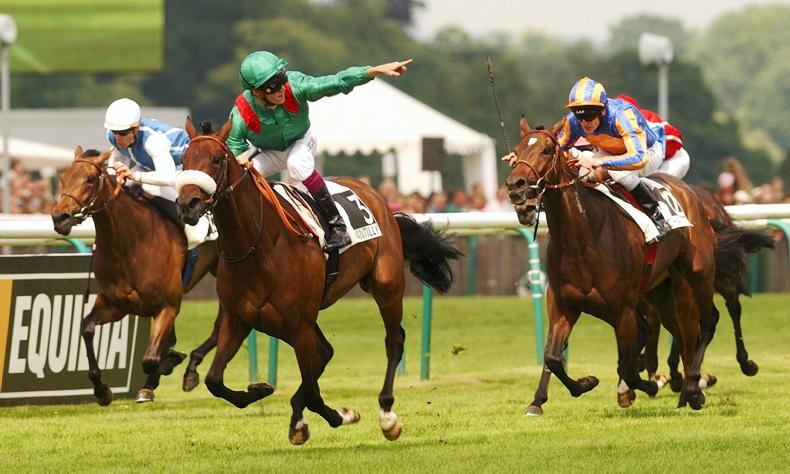
Personality isn’t the only influence, either, as Princess Zahra’s next selection illustrates.
“Obviously, Zarkava stands out as being probably the best filly that we’ve ever bred, at least during the course of my lifetime. And the fact that she descends from Mumtaz Mahal is exceptional, so for many reasons, Zarkava stands out.
“Dalakhani, for me, more than Daylami, I have to say. He was the more elegant horse, he was the better horse. Daylami was a good horse, but he was more categorized. I think Dalakhani had more aptitude to race under different conditions.”
Princess Zahra’s knowledge of the Aga Khan horses and their quirks goes back to her childhood, bringing some lessons which stay with her today.
“Growing up, we used to live in the middle of a stable yard,” she relays. “Kalamoun’s nifty trick was that every morning, he would play a game of auto football with his metal bucket every single morning at about 5 or 4. We were on the yard side of the house, so my brothers and I would be like, ‘oh no, he’s awake!’.
“He was just this mad horse, and sometimes, when you have a mad horse, it’s a good thing. I remember watching one horse win the Derby - I won’t name him - but his behaviour down to the start, and even after the race...
“We were watching it on TV, and I was like, ‘oh my God, I would never go to that horse as a stallion.’ And my dad said, ‘well, actually, sometimes breeding crazy back into a family is a good idea, and sometimes if you breed crazy to crazy, you get very normal.’
“And I thought, does that hold for humans as well?” [laughs]
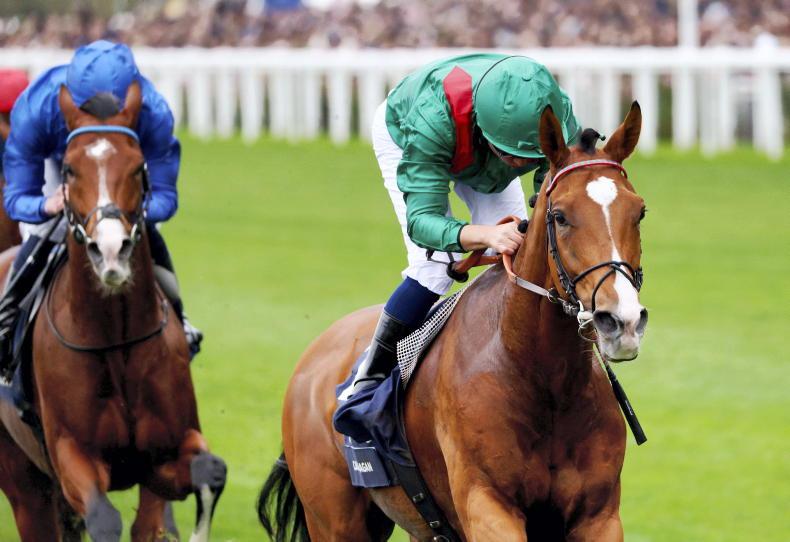
To geld, or not to geld
Personality, of course, can also pose a problem. For colts, the obvious remedy is often gelding, but many owner/breeders prefer not to go down that route in favour of producing stallions.
This makes five-year-old gelding Calandagan a rather unusual flagbearer for an owner/breeder operation like the Aga Khan Studs.
On their approach to the conundrum of gelding, Princess Zahra states: “It’s a decision that we discuss and can be quite simple. If the horse is a danger to people, then obviously we’re going to have to do that. If the horse has stallion potential, then we really get stomach ulcers, because if it’s bred well enough to become a stallion eventually, and someone asks to geld them at two, it is a very agonising decision.
“But again, if the horse is untrainable - Calandagan wouldn’t load, and Erdenali was a danger to humans when he was entire, and so, you’re forced by circumstance, but also by logic, to geld them.
“Francis knew that Calandagan had potential, but unless he could get him to behave, he wasn’t going to show it. And so, what would you rather have - an entire that’s untrainable, or a gelding that was best horse in the world last year?”
The fact that the Aga Khan Studs breed to race, rather than breed to sell, also makes their decision easier, Princess Zahra explains.
“Actually, as a long-term family breeding operation, Calandagan’s results reflect on his dam, and his brothers and sisters, and the rest of the family, going forwards,” she says.
“Calisita, his sister, won very nicely on her second start and everyone’s going to say, ‘oh, there’s Calandagan’s little sister, or someone else’s little brother,’ and it reflects on the whole family. It has a sort of halo effect.”
As well as winning the hearts of racing fans with his quirky personality and his five Group 1 wins, Calandagan is also a poster boy for those arguing that geldings should be allowed to run in the Prix de l’Arc de Triomphe.
When asked for her take on the topic, Princess Zahra comments: “Well, I can give you several different views. When I was asked that live on TV, I said, ‘that’s above my pay grade,’ because it is above my pay grade - I’m not on the committee de France Galop.
“Amongst our operation, I think most people feel that the classics should be reserved for entires, but that the Arc is one of those races that could be flexible about that.
Princess Zahra goes on to point out that the restriction didn’t hinder Calandagan’s ability to perform at the highest level, as he instead travelled to Tokyo to raid the Japan Cup.
“We built a programme for Calandagan that didn’t include the Arc, and it’s been fine, you know?” she says. “We have to be creative, but there are enough races around the world to make it acceptable, so I’m really quite agnostic on that one race.”
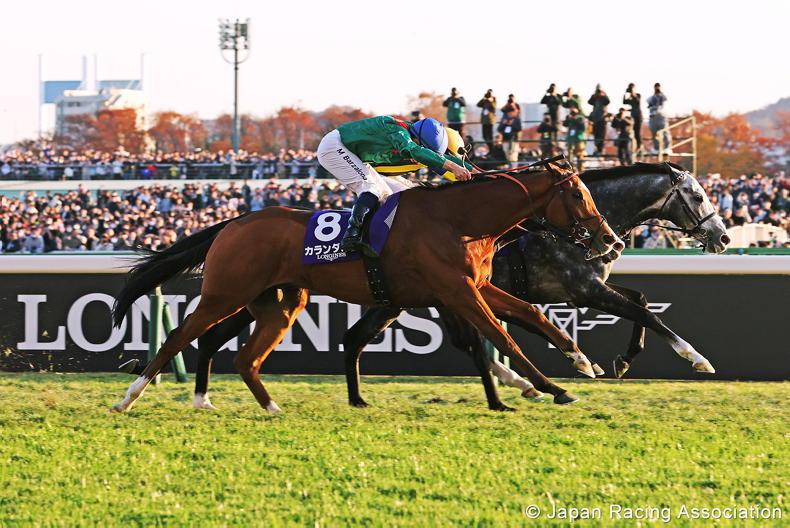
Mosaic
Calandagan’s great-grandam was acquired as part of Princess Zahra’s father’s purchase of Arnaud Lagardère’s portfolio, comprising of 222 horses, including one stallion (Linamix), 62 mares, 74 horses in training, 42 yearlings and 43 foals.
“Blending the two operations over 21 years, I think we’re now seeing the results and the horses that are coming out of that blending,” Princess Zahra reflects.
“Would I do the same? I was trying to think the other day how many owner-breeder operations are left in Europe. There’s Kirsten Rausing, there’s Wertheimer, there’s a few Niarchos mares that are still out there, but, if you were to acquire something, what would you actually acquire anymore? I don’t know.
“Obviously, Ireland has its own microcosm, and that’s a completely different story, but in continental Europe, there are some German breeders that I respect very much, they have very good rules.
“I think that for my dad, it was more opportunistic. Dupré was one type of stock, Boussac was another type of stock, Lagardère was another type of stock, and somehow, blending all of that into a sort of mosaic has been successful.”
On her mention of Ireland, I am keen to ask Princess Zahra whether she plans to maintain the Aga Khan Studs’ arrangement of splitting the bloodstock operation between Ireland and France, both with the stud farms and horses and training in both countries.
“If it’s possible to, absolutely. I don’t think we could breed such good horses and raise such good horses in the numbers that we do in any other country than Ireland.
“It’s its own microcosm, it’s very difficult to be a competitive racing entity in Ireland. But in terms of breeding land, and soil, and space, and climate… I think the whole thing is absolutely key to our operation.
“We have land in Normandy as well, but it has less resources, fewer resources. The horses just grow on Irish land like they’re born to be there.
“Is it easy running a dual operation? Not necessarily, but my father and his forebears were very, very attached to breeding in Ireland and the Irish thoroughbred industry, and I don’t think that’s going to change.”
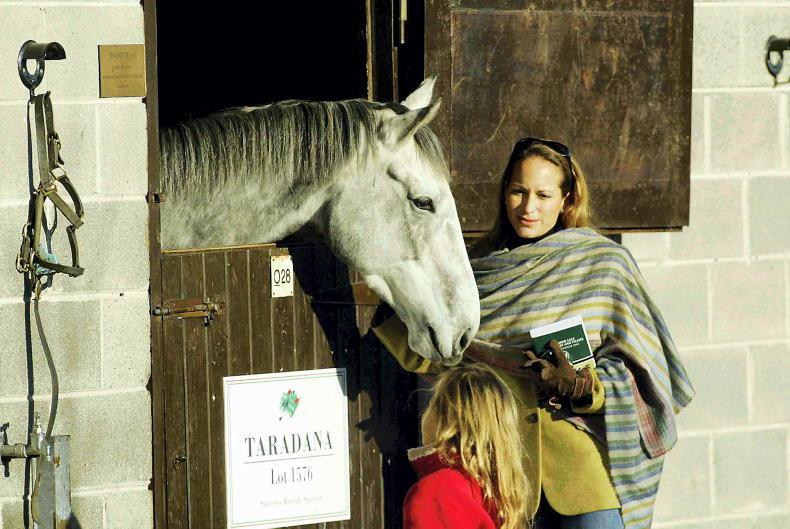
The future
With new stars emerging in the Aga Khan silks of late, is there a chance of Sea The Stars gaining a new friend at Gilltown Stud in the near future?
“Absolutely,” is Princess Zahra’s reply. “For one thing, our stallion boxes in France are full, and so if we do have another stallion or two in the foreseeable future, we have to rethink who stands where, and who should move, and who would do better in the Irish market, who would do better in the French market. And so, yes, poor old Sea the Stars, he might have a companion. I don’t think he’s lacking company, though!”
While Princess Zahra has only recently begun to lead operations officially, I know that many in the industry are also curious regarding a potential successor in the distant future, given that it’s a potential concern for similar entities.
It has therefore been heartening to see Princess Zahra’s children join her on many occasions. On her children’s interests, Princess Zahra commented: “My son is really curious about breeding and horses, but he doesn’t like to ride. My daughter rides very well, and she loves the racing aspect.
“I told them both that they had to finish their studies before they could really get involved in this activity. I used to work nights and weekends to get this part of the activity done, and I didn’t want my kids doing that while they were still at university. Sara’s doing a master’s in London, and Iliyan’s going back to university next September.
“So, if their schedules permit, and it doesn’t get in the way of their studies, I think that both of them would in time. I’ve asked them both, because obviously one has to do that kind of thing. My father asked me when I was about 20, if I would be willing to do this, and I said yes.
“My children have both said yes, and it’s better to have that sort of stewardship and long-term stewardship if people like Nemone [Routh, director and French racing manager] can put up with us,” she adds with a laugh and her trademark smile - a fitting end to a hugely enjoyable conversation.