THE part I enjoy most about interviews is picking the brains of successful individuals, charting their path to the top, gleaning the lessons they learnt along the way and understanding what made them successful. Immediately, with Peter Doyle, you understand that his personality lent itself to attracting clients.
A warm smile, easy conversation and bellowing laugh that would make any onlooker wish they were in on the joke, make him a person you want to be around, and I sometimes forgot I had a job to do as I listened to the veteran bloodstock agent recall stories from his career.
In my opinion, most successful people have two sides to them, and it appears to be the case with Doyle, too; the joviality takes a backseat when necessary, the twinkling eyes behind thick-framed glasses can quickly turn serious to scrutinise a horse’s appeal or when talking shop. It came as little surprise that I was going to have to work hard to learn Doyle’s secrets, if any at all, and in fairness, it’s what he had to do.
“They wouldn’t tell you. They weren’t going to teach you; you had to learn by watching,” Doyle says, recalling his beginnings working the sales with his father, legendary bloodstock agent Jack Doyle, and trainer Captain Ryan Price - a name unknown to me, but soon put right by Doyle.
“What a man,” Doyle continues. “Great trainer, former SAS during the war, and he was champion trainer a few times, and trained two Grand National winners.
“He said to my father one day, ‘You know what we’re going to do, Doyle? I think we go take on all these flat trainers. Must be simple, if they can have winners like this.’
“So, they started buying yearlings, that was the start. They bought lots of the best yearlings. It’s amazing, the horses they bought, and I’m running behind them trying to hear what they were saying.”
In the year that Peter left a career in accounting to join his father, he married Anna, who has since become a key cog in the wheel in what has become Peter & Ross Doyle Bloodstock, since their son Ross joined the team in 2001.
Anna learnt what she was getting into early on, she tells me. “I got a taste of what that might entail the day of our wedding, because his father left the reception to go to the sales in Doncaster,” she says.
“I remember at the time thinking it was rather rude and now I completely understand. For the last 25 or 30 years, I’ve completely understood what our priorities are. If I was on my deathbed and he had to go to a sale, I’d be saying, ‘Go! You can’t miss it!’ So, it was a learning curve, I must say.”
Perfect start
Jack Doyle’s decision to move to England was the catalyst in Peter and Anna going out on their own in 1978.
 “It was a very up and down business in the early days,” Peter recalls. “The first yearling we bought on our own was a yearling at Doncaster for £5,000 for a pal of ours in Wicklow, Pat Clark, who I played rugby against, and she won first time out.
“I sent her to Liam Browne to be trained - a break from the family altogether. [My brother] Paul was training, pals of Jack’s were all training on the Curragh. Liam looked like he was doing very well, so that started a 10-year relationship with Liam.
“Anyway, the filly won first time out and got disqualified! But I got her sold out to Canada off that. Her name was That’s A Point, she was by Sharpen Up. Liam’s secretary named her - very clever.
“The next year, Pat [Clarke] said, ‘you better buy me another one’. So, I bought another one, same sort of price, and she won first time out at Leopardstown by eight lengths, at 50/1 or something, and she was sold to Italy straight away.
“Anyway, that’s what started everything and I started buying yearlings with Liam [Browne]. We had a great time; we bought a classic winner in our second year, Dara Monarch, for five grand. It was minimum bid at the [Tattersalls] Houghton Sale, which was considered to be the best sale at the time.
“We won both of the Guineas trials that year - they were on at Fairyhouse because the Phoenix Park was being done up. A £1,500 filly won the girls’ race, and Dara Monarch won the boys’ race.”
Throughout my conversation with Peter and Anna, I’m amazed by their memory for horses, their prices, sires and underbidders, especially considering the number of horses they have seen and bought through the years. The next horse mentioned is no different, but I imagine success commits detail to memory.
“Another good horse for Liam [Browne] was Carlingford Castle, who was second in an English Derby,” Peter relays. “We bought him as a store for £7,800; Timmy Hyde was underbidder on him.”
Anna continues: “A famous judge owned him, Judge [Frank] Roe. When the horse went to run in the Derby, they only had woollen colours, and Liam wanted the judge to buy silks for the Derby. He wouldn’t, so poor Mick Kinane had to ride in the most famous races in the world, in a woollen jumper, probably on a hot day.”
It could have all been so different
Peter and Anna have stood the test of time, through various bloodstock trends, changing clients and economic turmoil. I wonder, was there ever a time in the early days of the business that they considered an easier life?
“There was one time we were really going to buy a pub, weren’t we?” Peter says, and, while I mourn the best pub that never was, Anna continues: “Actually, whatever about the sales business, but the private sales are what you depended on during the year to keep things ticking over, and during one of the recessions, it was really difficult.”
“Way, way back,” Peter adds, before Anna explains: “We were really going through a tough time financially, just trying to hang in there, and then things just changed. You know, you get something that gives you a little leg up, and a deal must have been done, and it started growing from there.”
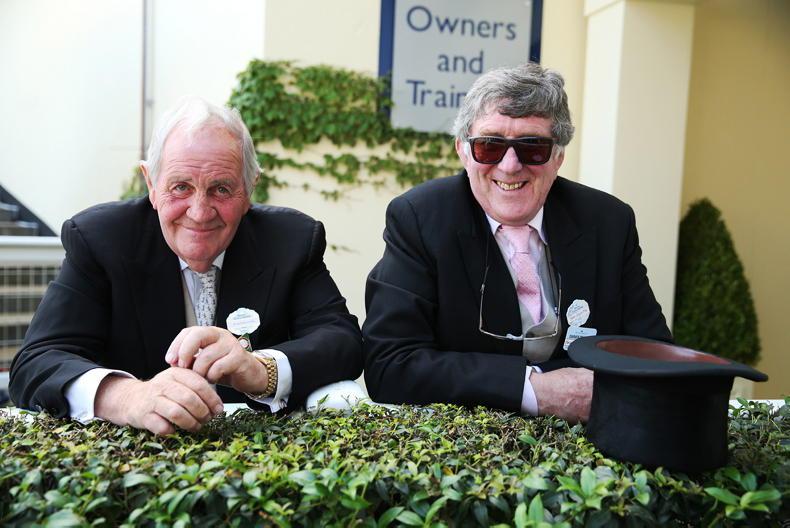 A stint in bloodstock insurance, upon a suggestion by Sally Carey, offered a lifeline, but the real turning point was the beginning of one of the most fruitful associations in racing. “I suppose the best thing that ever happened to us was when Peter’s father encouraged him to get in touch with Richard Hannon at the sales in Deauville,” Anna says. “That was sort of the turning point, probably in establishing the agency as viable.”
“Jack told me to go meet him in Deauville,” Peter recalls. “I met him coming out of the races with his wife Jo, Mick Channon and Gill [Channon]. I said, ‘My father said to say hello to you.’ ‘Yes, you’ve done that,’ he said.
“I said ‘Are you going over to the sales?’, he says ‘yes, to buy drink, not horses’. So, he went over to the sales, straight to the bar, and I bought a few drinks. And the next thing, I said, ‘Do you want to see a horse?’ ‘No’, he said.
“Anyway, I went out, came back in again, he bought another round, and I said, ‘I’m going out again to look at a horse’. And he says ‘what is it?’; I said, ‘some horse I saw yesterday, that I was going to get you to look at’.
“‘Where is it?’ ‘Just outside here.’ ‘For f*ck’s sake,’ he says, and we go out.
“Didn’t we end up buying two? And underbidder on about 25 [laughs]. The two we bought; one cost eight grand and won a listed race, and the other one cost nine grand, it broke down. Well, that was a start.”
The start of something wonderful
It didn’t take the pair long to unearth a Group 1 winner together, Peter says: “In the first year, we bought good horses that won listed races, but in the second year, we bought a horse called Tirol. He was the first good horse, really good horse we bought.”
Since then, the Doyle/Hannon honour roll has grown extensively, featuring the likes of Barney Roy, Canford Cliffs, Dick Turpin, Mehmas, Olympic Glory, Paco Boy, Pether’s Moon, Tiggy Wiggy, Toormore, and many more.
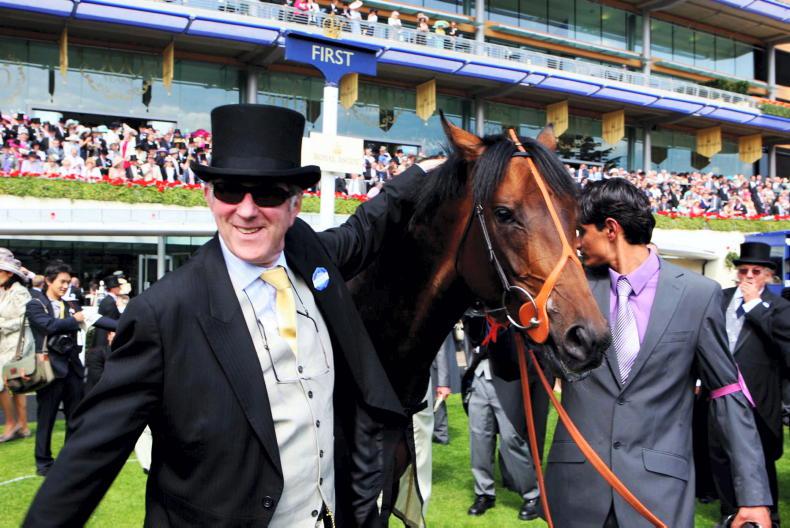 Together, the pair forged a reputation for sourcing talented individuals, often unfashionably bred, usually at an affordable price, their budgetary requirements focussing their success at two sales in particular.
“Donny (Goffs UK) and Fairyhouse (Tattersalls Ireland), in those days,” Peter confirms. “See, Richard had owners that wanted results. They weren’t into breeding or standing stallions. If they got a good horse, and somebody came with a good offer, they’d sell them, but they wanted to win early. They didn’t want to be paying keep all the time.”
Considering his success with precocious types, I’m eager to get Peter’s take on those who criticise the market’s focus on speed. The agent replies: “It’s up to everybody’s individual thoughts, what they want. I’ve always liked speed, but I’ve also always liked to have a good horse. There was Carlingford Castle, second in the Derby for Liam Browne. Ross [Doyle] bought Mojo Star for Richard Jr. They weren’t all just speed, but we just buy a nice horse.”
So, what then does he make of the planned changes to the Windsor Castle Stakes? “It’s nonsense, really,” he says. “It’s a five-furlong race, it was set up that way, and the people who set up the whole system years ago knew what they were doing. And why shouldn’t it be a five-furlong sprint?”
Anna adds: “If it ain’t broke, don’t fix it. Why would they mess with it? You need a range of distances, don’t you, to make it interesting?”
Something that keeps racing interesting is a lack of hard-set rules, with horses constantly defying odds determined by their pedigree, conformation, or stereotyped characteristics. Flashy markings are something generally frowned upon by most yearling buyers, but the Doyles bought a particularly distinctive and talented horse in Kool Kompany. Buying him demonstrated Peter’s people skills, if his recollection is anything to go by.
“I remember that distinctly well,” Peter says of the day at Goffs UK. “I saw him the day before, with a big white face, like a cow, but he walked, he had great movement, so I didn’t tell Richard about him until we were leaning over the ring.
“I said, ‘That horse walks well, Richard, doesn’t he? Look at him. Saw him yesterday. You wouldn’t like him, would you?’
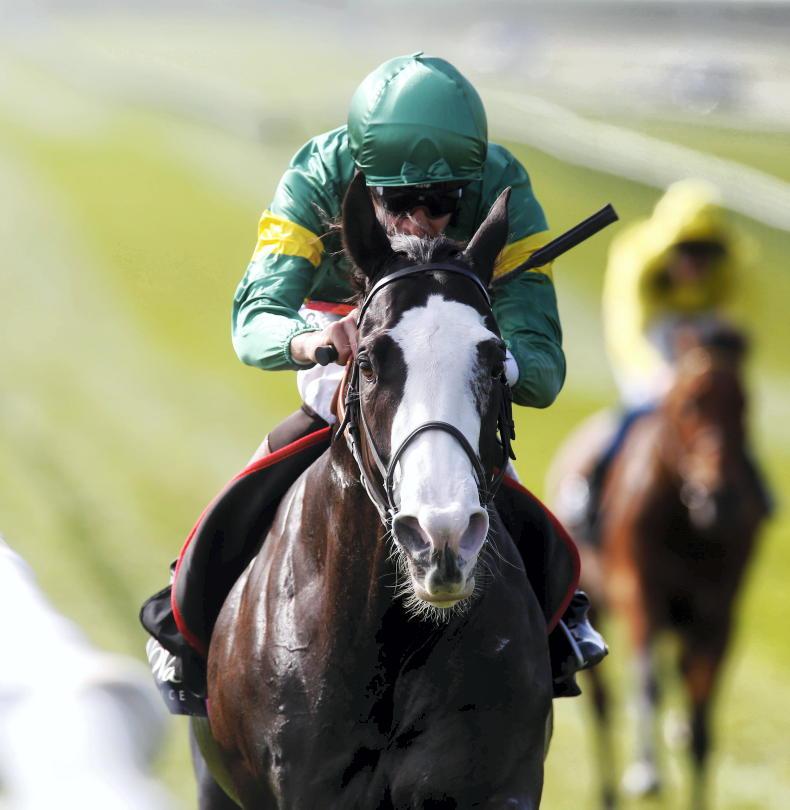 “‘What do you mean I wouldn’t like him?’ he said. ‘What about his face?’ I asked. ‘He doesn’t run with his face, you know?’ he replied.
“And we bought him, because he was a great mover. But if I had brought him down, and he came out looking like that, he might have put him back in again.”
Anna chips in: “It’s really funny like that, isn’t it? Because, generally, the Hannons didn’t like a flashy horse - most trainers don’t like four white socks and a big flashy face. But Richard was taken with the walk, which was what he loves most about a horse; a good walk.”
Eye for a horse
On the subject of Hannon’s priorities, Peter tells me: “He gave me a lesson one day in Newmarket, at the outside ring. He says, ‘look at that horse over there,’ [waves hand in time with the horse’s gait]. ‘See that? Music. See? Rhythm.’”
What’s clear is that Doyle and Hannon both have a natural instinct when it comes to spotting talent, and perhaps their often limited budget pushed them to take a chance when opportunity arose without much notice. Usually buying on spec, the pair had to trust their guts, and an established pattern of it working out only encouraged them further.
“We were in Fairyhouse one year – we’d buy six there every year – and we’d already bought six or seven when he [Richard Hannon] said it’s time for lunch,” Peter recalls. “So, we have lunch, we start drinking and decide to back to the hotel.
“We’re walking past the parade ring, and this filly goes by, and we both look at each other and walk in after her. We bought her for six grand, and she ended up being a good filly. She won the Weatherby Super Sprint. Miss Stamper was her name.”
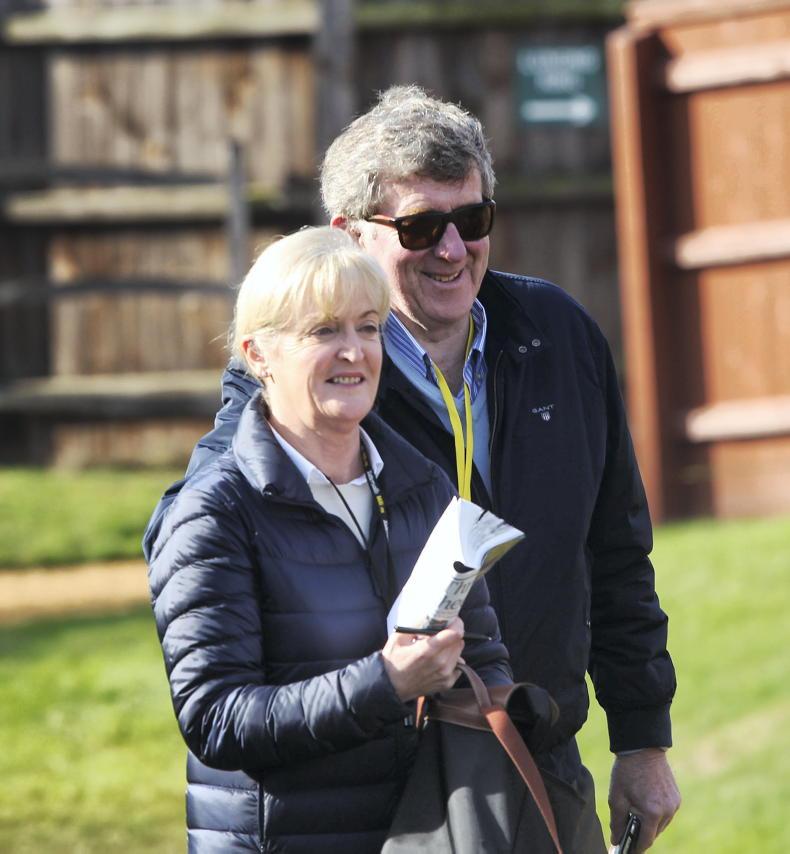 That rare good eye for a horse is something Anna shares, and it didn’t take long for her to unearth her own flagbearer, Peter tells me. “Anna was always a spotter, all the way through for us, and her claim to fame came up early enough,” he says.
“She put a filly on the list that Richard and I bought, and she was called Indian Ink. She won two Group 1s as a two-year-old and three-year-old.” Bought for 25,000gns from Killeen Castle Stud at the Tattersalls Book 1 Sale, the ‘neat filly,’ as Anna described her, later resold for 2,000,000gns after winning the Cheveley Park Stakes and Coronation Stakes.
Ross’s success in rugby (he played for Leinster and for Ireland’s seven-a-side teams) and third-level qualifications gave Peter hope that their son would choose an easier career path than he and Anna, but the signs were there from an early stage that Ross, too, was a lost cause, Peter says.
“When we came back in from the races, and Ross was only three or four, he was sitting in front of the television with Ed Byrnes’ book, The Racing Year. He had the book in front of him, watching racing on the telly.
“And he’d tell me what happened to Sandy Barclay, or what happened to Lester Piggott. How Lester let Wally Swinburn up his inside, when he won the King George on Shergar.”
By 2000, Ross’s name had joined the business and, with Richard Hannon Sr having since passed the baton to his son, the Doyle and Hannon names have continued to fly high together.
Peter and Anna have taken a step back but remain part of the spotting team at some of the sales, along with Carol Tinkler, Patrick Keogh, Catherine Greensit, Andrew Hickman and, last but not least, Fanny Hannon.
As Peter says, “It is great to see Ross and Richard Jr working so well together..”
The best horse he ever bought
Canford Cliffs. He won five Group 1s. Now, Ross and Richard Jr bought Paco Boy and he won five Group 1s as well. I mean, they’re two horses of outstanding quality.
The year Canford Cliffs came to win the Irish Guineas, while they were saddling him, he pulled his shoe off and they had to get the blacksmith. I was leaning against his box, and he put his head on my shoulder and went to sleep, and he never moved while this man fixed the shoe.
There was a legitimate reason why he didn’t give Frankel a run in the Sussex Stakes; he broke down when he came to challenge.
There was very good horse in there that doesn’t get enough credit, a horse called Barney Roy. He broke the track record at Ascot [in the St James’s Palace Stakes].
The best National Hunt horse he’s bought
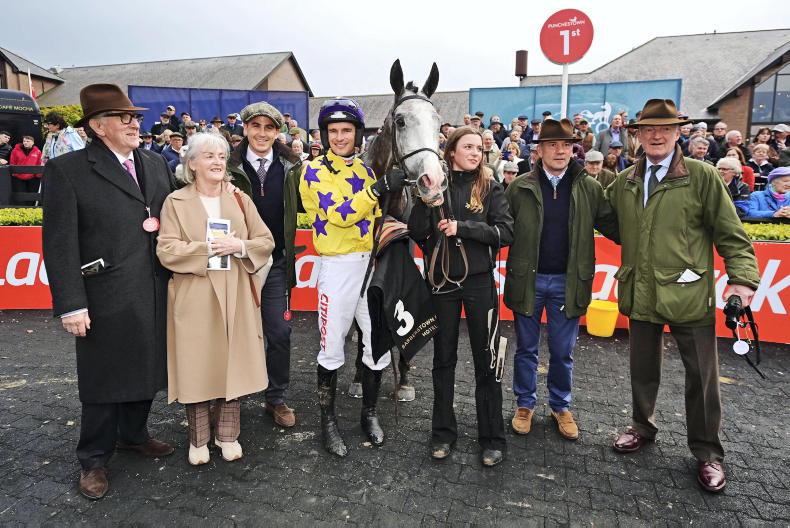 The best horse we had our hands on was probably Silver Buck, who won theGold Cup and two King Georges. That’s a long time ago now.
Ross has bought some very nice National Hunt horses in recent years including Il Etait Temps and Lost in Translation.
His favourite type of horse to buy – National Hunt, flat, foal, yearling?
A winner. Or a profit maker.
The greatest lesson learnt from his father
Listen. Listen to the people you’re dealing with. Listen to people you’re working with. Don’t always open your mouth, you know, listen and learn. Imagine what I picked up from Richard Hannon and Liam Browne. Captain Ryan Price, Jack Doyle, Jack White…
What he would like changed at the sales
Quicker selling. Why do you have to stand there at 9.30 at night waiting for another 10 horses? Particularly in England, in Newmarket in particular. The staff with the horses have been going since half five, six o’clock in the morning.
Changes he would like made in racing
Prize money; we need to do much better, in Ireland and in England. The owners are the life blood of racing.
Everything’s getting more expensive - trying to feed the kids at home, feeding the horses, everything. They make excuses with the prize money, but they’re only blowing hot air. It’s very simple. All you have to do is watch the States, Hong Kong, Australia, even in South Africa; the prize money compared to the costs is so much better.
When I went out there [South Africa] first, 32 years ago, I bought a couple of fillies and, if they won a race, they paid nearly 60% of the training fees for the year. That’s fantastic.
Trainers in England for instance, if they send their horses from Dorset up to Musselburgh or to Carlisle, to win a £2,500 race, and probably get £1,700 for winning it. Then the jockey’s fees come out, and all the little things come out, and it costs you to go to win a race.