OF the thousands of yearlings that have gone through the sales ring over the last couple of months, only a select few will end up good enough to perform, let alone win, at Group 1 level and the chances are that they won’t be those who set the ring alight this autumn - looks and talent is a rare package, as much for horses as humans.
It’s testament then to Ballyhimikin Stud, that the 13 six-figure yearlings they sold in 2022 (an achievement in itself) included Pretty Polly Stakes heroine Estrange - bred in partnership with longtime allies Anthony Stroud and Trevor Stewart - and the now five-time Group 1 winner Ombudsman, plus dual listed scorer Bright Thunder for good measure.
If four Group 1 wins wasn’t enough to make 2026 a year to remember for the Hanlys and their Co Tipperary team, they reached the million mark at Tattersalls Book 1 and came close to topping Book 2 with a 600,000gns pinhook.
Despite the gravity of the farm’s achievement, Jack Hanly remains understated when reflecting on the past 10 months. “We’ve been very fortunate this year,” he says, while taking a break from his day job as an underwriter in bloodstock insurance.
“I would say we’ve been very lucky with the people we partnered with and again, the team that we have on the farm. Being able to buy those good mares when we could, reinvesting back into them, and it has paid off.
“It’s been a huge amount of work, as you can imagine. They (the team at home) pour everything they have into these horses and we’re fortunate enough that the horses have given it back. These are the days we’ll remember forever. You never know if you’ll ever get another horse like Ombudsman or Estrange. It’s been absolutely unreal.”
Jack’s father James, regarded by many as the face of the farm, was keen to stress the number of people involved in their success when putting forward his son for this interview. With so many facets involved in running an operation like Ballyhimikin, it’s possible for Jack to fulfil certain duties from his base in London, though I do wonder how he manages to balance his career with his involvement in the family business.
“With enormous difficulty,” he explains. “I don’t get involved in the day-to-day stuff - I’m involved in the sales side of things, the matings, purchases, sales, things like that. I do have some client relationships, certain partners that I’ve brought in.
“We’re very lucky we have a very good team at home. Helen and Frisk [Jones] manage the farm - the livestock and the bloodstock. They essentially run the place, everything goes through their hands, and they’re very actively involved in deciding what we should be buying, what we should be selling - it is a team decision.
“There’s a lot goes on; you feel like you learn something new every day, really, to be honest with you. But between them (Helen and Frisk) and Dad, they would be the real core. I’m sort of just like the spin doctor, really!”
Jack’s mother Charlotte Musgrave is another key member of the team, he adds: “Mum has a role as well; she does a lot in the office with the accountant and the ops manager. It’s definitely a family business; it always has been.”
Honour roll
Jack’s grandmother Maura set the bar at Ballyhimikin originally, breeding Cheltenham Gold Cup hero Davy Lad and Irish Grand National victor Olympia, as well as Prix de l’Abbaye winner Balidar.
With that backstory, it was probably inevitable that Jack would get the bug, even if he’s involved from a distance. Perhaps his experience in a different area has been to his benefit, I suggest.
“It does give you a different view on things, and I suppose risk management is obviously something that you come across a lot in insurance, it’s pretty much the core of it,” he replies.
“And what can go wrong with horses? We insure over 10,000 horses a year, thoroughbreds all over the world, and the different regions have their own different nuances. Essentially, attention to detail is very important.
“So, I have found it beneficial in that sense. But I firmly believe you need to be living with these horses properly, in the sense that we have such an excellent team at home. I wouldn’t really be able do it otherwise.”
Since Maura Hanly established the breeding operation, horses to come off the farm include Queen’s Logic, Society Rock - co-bred with Emmanuel and Laura de Seroux, Halfway To Heaven - foaled and raised on behalf of Trevor Stewart and pinhook Kutub, to name just a few.
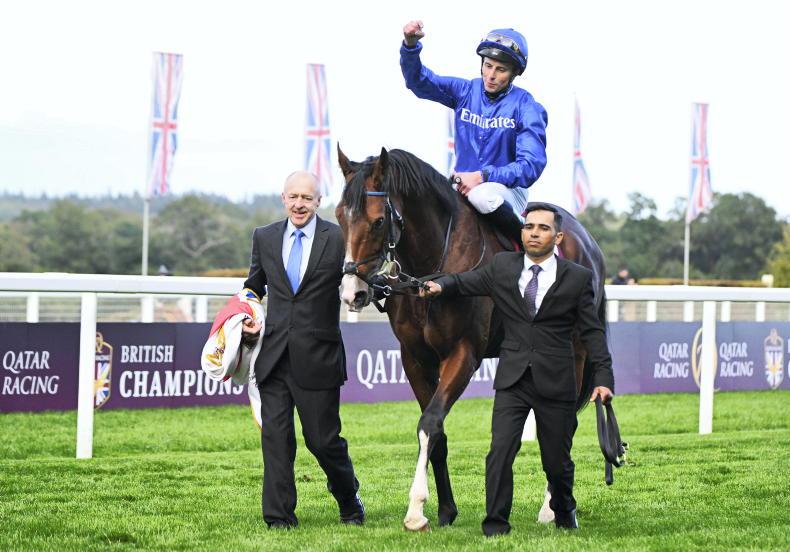 So where does Ombudsman rank among them? “Oh, he’s easily the best we’ve ever had,” Jack confirms. “If you just look at his ratings and what he’s done; he’s just an exceptional racehorse.” Ombudsman was a success story from the get go, fetching 340,000gns as a yearling, more than repaying Night Of Thunder’s then fee of €25,000 and exceeding the expectations of 25,000gns broodmare buy Syndicate.
“He was an exceptionally good-looking yearling, and he had a very, very good walk,” Jack recalls.
“The mare kind of stamps them all. I can’t remember American Belle that well, to be honest with you, but his full-sister Synchronicity was the same. She’s a big, rangy, good-moving, filly and Syndicale, their half-sister, is sort of the same. She might even have more presence than him. She never made it to the sales; she was always going to be retained.”
When Anthony Stroud signed for their dam Syndicate, the Southwell maiden winner held a rating of 74 and held added appeal as a full-sister to dual listed winner and Group 2 runner-up Stipulate (Dansili). It’s hard to believe the Juddmonte homebred cost as little as she did, but the Hanlys were there to take advantage.
Ballyhimikin silks
“When Juddmonte bring their fillies and mares to the sales, they’re there to be sold,” Jack notes. “They’re very straight to buy off, and they have a lot of them, and when you’re going around these breeding stock sales, things do fall between the cracks.
“It’s hard to find them, and sometimes, again, it’s all down to luck. We thought she was a lovely model of a filly, and we bought her to keep her in training. John Feane trained her, and we got a win out of her, and he said to us that we should breed from her. He convinced us, so a lot of credit has to go to him as well for that.”
The Hanlys have enjoyed some notable success with Feane in recent years, their shared efforts producing blacktype sprinter Fregada, 90-rated filly Charasson and the multiple group-placed Rockingham Handicap winner Ano Syra.
On the Curragh trainer, Hanly says: “The horses are looked after fantastically; nothing is lost or forgotten about. He’s a lovely man as well; he’s a genuinely good guy and he trains them well. We’ve had lots of success with him, and hopefully it continues.”
Some credit can go to Feane and Ano Syra’s exploits when it comes to her yearling half-brother by Little Big Bear, who sold for 350,000gns last week. Ano Syra was just the third foal out of her dam, and had held an entry in the yearling sales, so it’s not obvious to the outsider observer whether the Kodiac mare was retained to ‘make’ the page or to simply stay in the family.
“It’s a tricky business trying to make a family and, if you want to keep into a family, I think you have to be prepared to race them yourself,” Jack reflects.
“We loved her as a foal and a yearling and it’s quite sentimental for us, because it’s a family that goes back to Balidar. My grandmother bred Violet Somers (third dam); it goes back four generations.
“It’s a good, fast, sprinting family, and we want to keep it and improve it. We might be proven wrong, but it’s a family we believe in. They’re very good, attractive-looking horses, they look like runners, and hopefully it’ll go somewhere.”
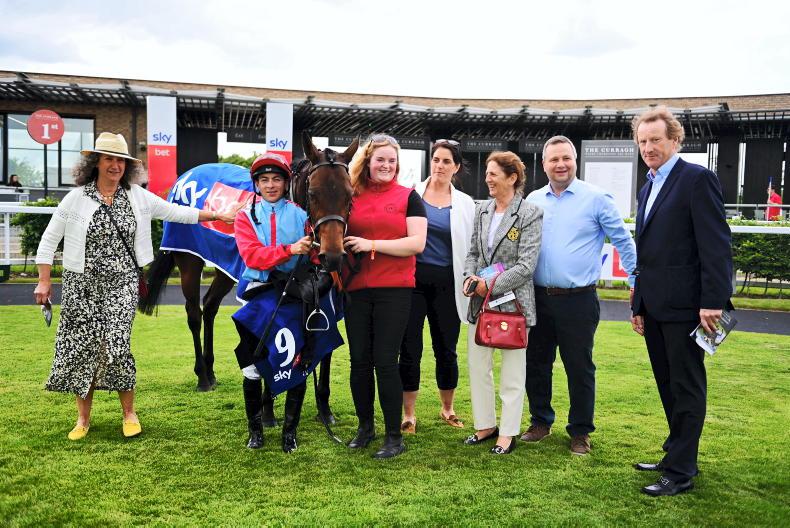
Ombudsman’s half-sister Syndicale, meanwhile, was always going to be retained and looks a promising filly having won a Wolverhampton maiden on debut for Karl Burke. A close second at Haydock next time out and now rated 85, the daughter of Ten Sovereigns has returned to Ballyhimikin for a break.
“She does have the entry in the Guineas and Karl likes her a lot - we like her a lot,” Jack reports. “Fingers crossed, she might get a bit of blacktype. I mean, you can dream about winning the Guineas, but at the end of the day, you just don’t know with these horses.”
Choosing stallions
Syndicale’s sire Ten Sovereigns is an example of the twists and turns a stallion can take during their career, having sired three top-flight winners since he was exported to Turkey. The market’s unforgiving treatment of stallions influences Ballyhimikin’s matings, with a strong preference for proven sires, though they are prepared to take some calculated risk on a select number of younger stallions, Jack explains.
“We had a very nice Little Big Bear at Tattersalls this year, and we’ll definitely be going back to him again. Based on the one we had and from what I’ve heard from other people, they have very good minds, and most of them were very good models.
“We’ll try to go to Baaeed again next year. We had a lovely Baaeed and he has been sent a lot of good mares. His horses aren’t going to be early, and I think he’s only getting going. Bayside Boy has been a very pleasant surprise for everyone.”
It’s always interesting to hear different breeders’ opinions, experience and decisions on certain stallions, and even more so when they were among the inspired who latched on to Night Of Thunder at an early stage, breeding Ombudsman and Estrange when the son of Dubawi commanded €25,000.
Blue Point is another Kildangan Stud resident repaying Ballyhimikin’s faith of late, the farm having sold his progeny for up to 1,100,000gns, 800,000gns and 600,000gns over the past two weeks. The son of Shamardal was also responsible for Rock Montreal, successful in the Group 3 Autumn Stakes earlier this month and was bred by James Hanly with Anthony Stroud and Lady O’Reilly.
Godolphin’s smart juvenile is a sibling of Group 2 victor San Donato, last year’s Gimcrack Stakes second Rock On Thunder and Group 3 performer Diablo Rojo. Hanly and Stroud bought into their dam, Boston Rocker, after she gained multiple stakes placings for O’Reilly and Edward Lynam.
On the Acclamation mare, Hanly commented: “She’s not big herself, and she never really threw overly big horses. They were always a bit on the tidy side, but they were beautiful, without exception, with a very good walk.
“Rock Montreal was probably the biggest out of them as a yearling, and just a very good mover, with very good presence, and it’s just fantastic to see him being able to perform for Sheikh Mohammed, who is such a great patron of our sport. It’s a huge privilege to be able to breed horses that run in his colours.”
Industry challenges
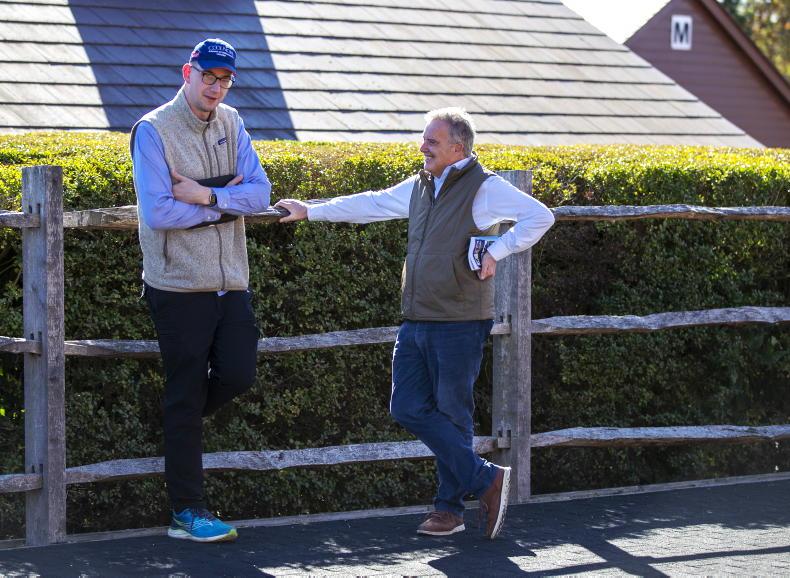 With all these success stories, it would be easy to think that this game is easy, but that’s far from the case, as Hanly recognises.
“It’s become a very polarised market,” he says, while reflecting on the yearling sales. “The demand for the top quality is obviously very strong, so, as a breeder and a vendor, you’re trying to push yourselves to try to appeal to that market, and that’s becoming more and more challenging.
“A horse that sells for 20,000 costs a similar amount of time and effort to produce as a horse that sells for 500,000. It is squeezing people, it’s very tough.”
It’s an opinion echoed by many breeders at the moment and, while they need bigger prices to make it pay, the end users have no incentive to increase their investments. It brings us to a subject discussed time and time again - “Fundamentally, I think it all really boils down to prize money,” Jack says.
“In England and Ireland, they really need to start looking after the owners better. To improve the owner experience, we need to look at different models in different countries, like Japan and Australia and Hong Kong, where they have much more sophisticated betting pools, and that in turn improves prize money.
“The Hong Kong Jockey Club is one of the largest employers in Hong Kong, and one of the largest taxpayers. It’s like a registered charity, and they build schools and hospitals - why can’t we try to emulate parts of that?
“If you had that, it would make a lot more sense for people to own a racehorse, and it would be much healthier and sustainable.”
Ownership models also need to be examined, Hanly adds. “Syndicates are another one - how do we ensure that we have these properly managed syndicates that are more fun for people to be part of? They have a great system in Australia and there are people who are trying to do that here in Ireland and in England, but it’s a tough fight for them.
“That is where our focus should be, alongside the welfare of the horse, which I think they’re doing an absolutely stellar job of in Ireland and England. Obviously, it is paramount because at the end of the day, the image of the sport is important, and if the sport has a terrible image, the general public aren’t going to come racing.”