‘ABSOLUTE lunatics’ is how Con Marnane describes breeze-up consignors, after I share that I consider them some of the bravest in the game. Marnane knows better than anyone the ‘lunacy’ required to invest in unproven yearlings, relying on them not only to be talented, but to produce it over two furlongs on a particular day. It’s something his Bansha House Stables has succeeded in doing time and time again.
Whatever you call the breeze-up brigade, they’re undoubtedly optimistic – Con particularly so, but even he finds it difficult to be upbeat as the first breeze-up sale of the 2026 season approaches, in the midst of conflict in the Middle East and related fuel wars.
“There’s a war going on, and we are very reliant on the Arab nations to buy breeze-up horses,” he comments. “They have been so successful buying at the breeze-up sales – that’s where a lot of them get their best horses, and their agents specialize in buying breeze-up horses as well. They do a very, very good job too, especially when they buy from us.”
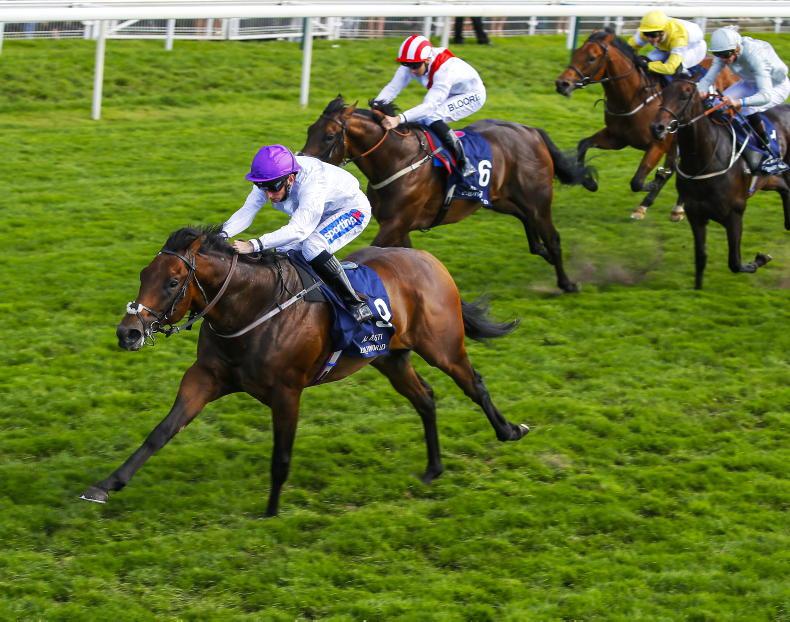
Marnane’s last comment could come across as conceited, but it’s said with some jest, albeit only slightly. Besides, he’s earned the right to be proud of Bansha’s success - Powerful Glory became the latest Group 1 winner produced by the family operation, now run alongside daughter Amy, joining an honour roll featuring the likes of Rio De La Plata, Sands Of Mali and Teppal.
Despite their proven record, the Bansha team have never been the type to rest on their laurels, as demonstrated by their decision to stage an open day three years ago, and have repeated the event every year since, come rain, hail or weather warning.
Last month’s event was another roaring success, Con Marnane reports: “There were 10 or 15 people over from England, and there were a lot of agents, and a lot of people that just came in to have a look. We’d about 400 people, I’d say.
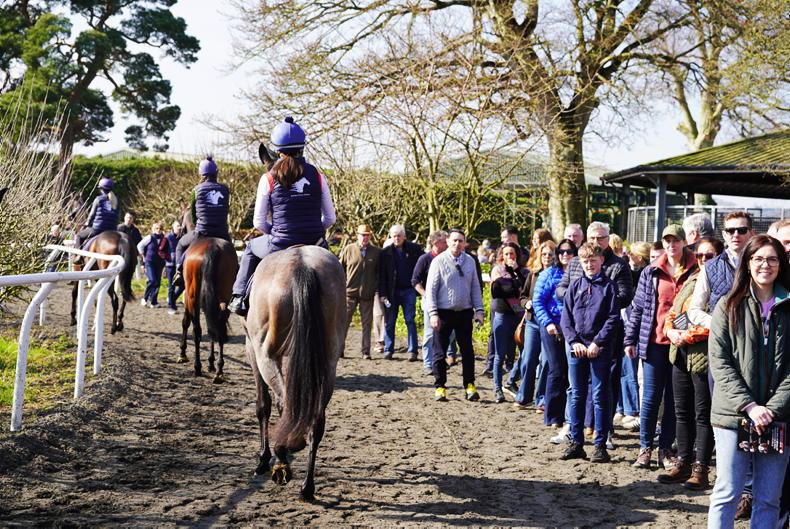
“I think we don’t open up the doors enough in our industry, and we don’t sell our wares well enough. People really enjoyed themselves for the last three years and on the top of that, they saw the horses in their home environment, they saw them cantering, they saw the staff that ride them out, and they saw the facilities. They saw a nice barbecue as well!”
A trip to Australia provided the inspiration, he explains: “The way Magic Millions looked after people was just fantastic. There’s very few pinhookers in Australia – everybody buys to race; people have 1% of a horse, 2%, 10%, 20%, whatever.
“The prize money is pathetic in Ireland and England. The powers that be should go down to Australia and have a look at how they run racing down there. There’s loads of good prize money, and they look after people very, very well when they go to the races. Owners are put up on a pedestal.
“Even in France, the prize money is still very good, and they have their premiums for French-bred horses, but the atmosphere in Australia at the races is just incredible. People love going racing, even the country tracks are jampacked with people.”
Party people
It wasn’t Con Marnane’s first time Down Under, having gained experience there with his pal Nial Brennan at 20 years of age. “We had a lot of fun, but we still worked hard,” Marnane reflects. “You were up early every morning, and some mornings you left the nightclub and went straight to work.”
It’s not hard to see where Amy gets it from, I say. “What do they say – wild rabbits don’t breed tame ones!” is Con’s reply.
The work hard/ play hard mantra has served Amy well, too, developing her own reputation as a shrewd judge at the sales, sourcing Bansha’s future breezers, as well as buying for MRC International, a syndicate developed by her uncle, trainer David Marnane.
I ask if Con considered discouraging Amy from following in his footsteps, to which he replies: “We never had a say with Amy because she’s been doing it since she was five and she doesn’t know anything else. You couldn’t put her off – absolute waste of time.”
Amy, like Con, spent time abroad before returning home, and when asked what she learned from her travels, she says: “I suppose every place I went, I tried to bring back one thing that I liked about the place, and I always tried to find one thing that I definitely wouldn’t bring back. I think when you travel and meet different people, you actually wake up to what’s going on at home.
“Because when you’re working for somebody, you kind of stand back a bit, and you can see what’s going on, and you see things that you might not if you were trying to manage a place.
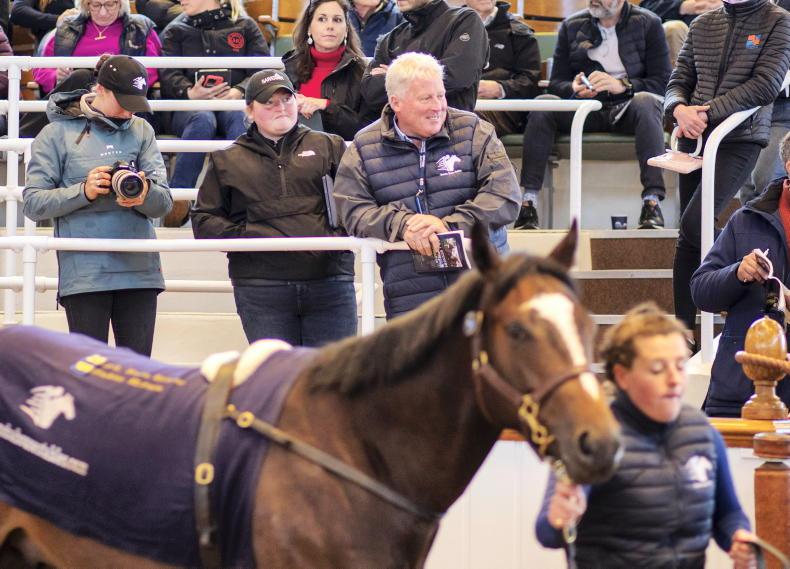 “I think the time that I spent abroad was good for my personal skills; I think that it helps me now to communicate better with the great team of people that we have. At the end of the day, if you don’t have a good team of people with you and behind you, then you have absolutely nothing.
“The people that we have here are incredible. The horses, thrive off the people here; John Cross, Mike O’Brien – our head lad, Grainne Clancy, Val, Danny, they’re just unbelievable.”
Centre of the universe
Having spent time in Bansha myself, I can understand the appeal of working there – not just being associated with top-class horses, but enjoying the jovial atmosphere, and Amy agrees.
“I’d like to think that the vibe around here is good,” she says. “I think it’s quite well managed, that everybody has their own jobs, and it all falls into place. We have a team meeting every hour, see how everybody’s getting on, and everybody kicks off again to do the next thing. We all slot in together, and the horses seem to enjoy the routine.”
So, she wasn’t tempted by the seemingly healthier industries in the likes of America, Australia or Hong Kong? “But sure, Bansha is the centre of the universe,” is her smartass reply.
“It’s like a drug; you look out the window and there’s horses in the field, and there’s horses trotting up the road – there’s no getting away from it. We’re totally immersed in it. Royal Ascot week is like Christmas for us, and my favourite time of the year is August, when the yearling sales start back.”
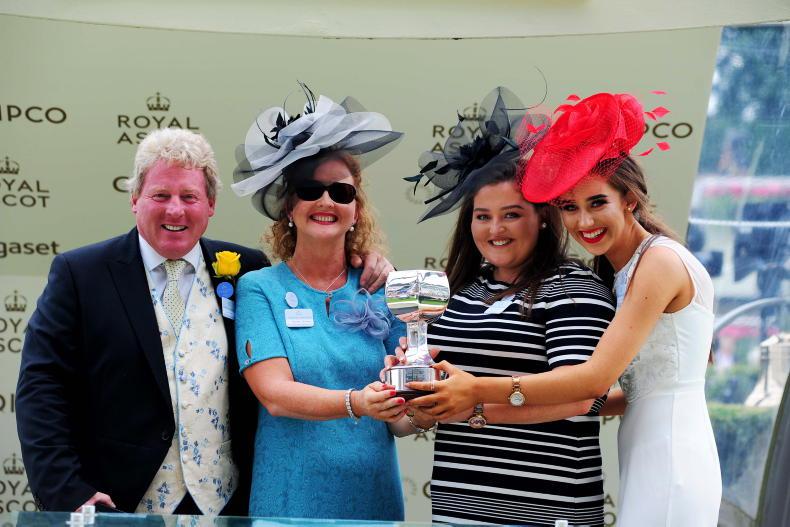 On whether buying is her favourite part of the job, she replies: “It’s a close tie – nothing beats the feeling of having a horse that you picked out as a yearling, usually a cheaper horse, that turns out to be a pretty good one. Then you nurture them through the winter, through the spring, and they turn out to be a good horse.”
The success of the yearlings she’s bought for MRC International also brings immense satisfaction, she adds. “We’re not buying them on a big budget, but he’s had stakes horses every year since the syndicate started. To do that when you have 25, 30, 40 grand to spend on a horse, it’s probably a fair result.
“It’s difficult to do, especially in Ireland. East Hampton (32,500gns yearling) finished second in the Gladness Stakes last week - he was a relatively cheap yearling compared to some of the guys he was up against.”
Con knows best
Some of Bansha House Stables’ best graduates were affordable, too, primarily due to the team’s refusal to focus on clocking fast times, despite the market’s insistence to do otherwise. Bansha isn’t changing their approach, either, Con tells me.
“We’ve had 27 Group 1, 140 listed or group horses through our hands since we started, and a lot of them would have been cheaper horses, and they’re not driven to do times. I never did it, and I never will. I want them to be racehorses.”
Instead, Marnane encourages buyers to speak to vendors, and take their recommendations. “I’m working with these horses for the last six months,” he explains. “I’ve fed them practically every morning and night. I know every little thing about them. I know if they’re genuine, I know if they’ve been a little bit lame. I know them inside out; they’re like family.
“Walking through the barn, you know straight away if one had a bit of a headache or a hangover or whatever. I know more about those horses than any agent will just by going on a clock or judging a two-furlong gallop. There’s another three, four, five, six, seven furlongs to go on the racetrack. All they’re judging is just movement and time.
“There’s an incredible bunch of people that keep buying off me every year, and they’ve been doing it for years and years. I tell them straight up what I think, and they can take it whatever way they want after that.”
And what if someone wanted to start trading horses themselves, what would Con recommend? “I’d tell them to get a few friends together and buy a nice little horse and go for auction maidens and have the craic,” he says.
“If the horse is good, they’ll get well paid for it to be sold out of Ireland, and they get a bit of prize money. They get a €10,000 IRE incentive bonus off the Irish government, which is great, and they can go back and reinvest again the following year.
“If the horse is sound, and if the horse gets to the track, they’ll have unbelievable fun out of it. There’s nothing like watching your own horse 100 yards away from the line and you’re roaring it home. There is no buzz like it.”
Special day
It’s a buzz the Marnane family know well, from horses carrying their own silks, to horses they’ve bred and/or breezed, so I’m curious what Con considers their best day on the track.
“We’ve had loads of Group 1 winners, Breeders’ Cup winners, Royal Ascot winners, but I’d say Olivia’s race at the Curragh was the one. There were so many people to thank about it too, and it was for a cause very close to our hearts,” he says, referring to his daughter Olivia winning the Pat Smullen Charity Race aboard the Jessica Harrington-trained Mo Ghille Mar.
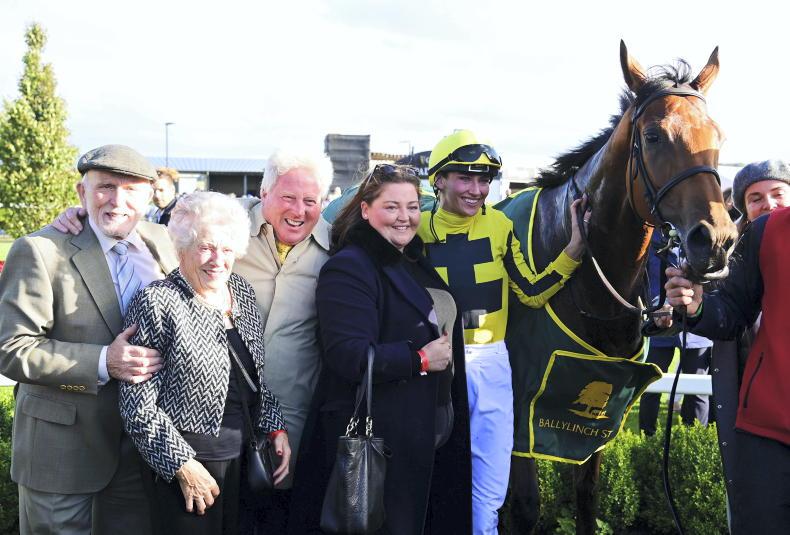
The winner was owned by the Sands family’s Bronsan Racing and they kindly allowed Olivia to wear the colours of her mother Theresa – a hugely popular figure in racing – who sadly lost her battle with cancer in late 2023.
The Pat Smullen Race Day and Curragh-to-Curragh charity cycle have collectively raised €1.2million for pancreatic cancer research in Ireland. Those interested in riding in this year’s race can register expressions of interest by April 30th.
Olivia’s win wasn’t the only time that the Marnane and Sands families have celebrated together, as Bansha House Stables sold their Marble Hill Stakes winner Givemethebeatboys to the Sands for £1.1million at the Goffs London Sale.
The €11,000 yearling went on to place at Group 1 level and win two stakes races, and recently recorded his first win since moving to Australia. The son of Bungle Inthejungle wasn’t accepted into any breeze-up sale, but the Marnanes have never been afraid to use the racetrack as a shop window, and have often been repaid handsomely for it.
It’s a practice that many consignors have been forced to adapt, due to current market trends, Marnane says. “Come down here, and I’ll show you £200,000 horses, £100,000 horses that I was left with last year because they didn’t clock a time. They were all offered for sale – if they wanted to buy them, they could buy them, and if they didn’t, we have to race – we have no other choice.
“There’s a lot of people that have to do that now. You can sell the top 30% of horses in terms of the times they clock, and the other 70% are struggling. It doesn’t mean that they’re bad horses or anything like that – most times, they’re better than the ones that do the fancy times.”