

 This is a subscriber-only article
 It looks like you're browsing in private mode


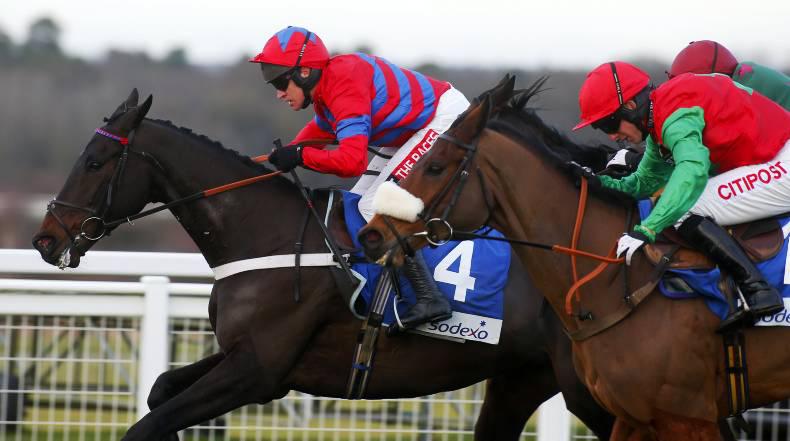
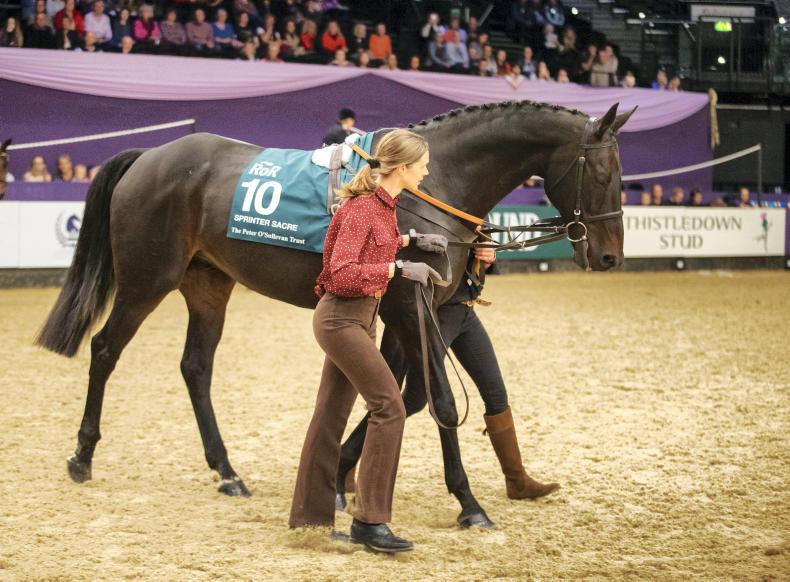
Sprinter Sacre made his long-awaited return to the racecourse at Ascot on Saturday and his performance in finishing a tenderly-handled second to Dodging Bullets in the Clarence House Chase has split opinion as to what his prospects are going forward.
To put Sprinter Sacre’s performance into context, it is worth recapping what he was at his peak. Timeform rated him 192p. That makes him the third highest-rated horse in the history of their ratings. 1lb higher than Kauto Star, 8lb higher than Moscow Flyer and 10lb higher than Best Mate. At his best, he was phenomenally good.
However, prior to Saturday, he had only run once in the last two seasons. Negative vibes and missed targets preceded a puzzlingly tame effort on his return to action just over a year ago and soon after an irregular heartbeat was diagnosed. Mixed messages abounded regarding his chances of making it back to the Cheltenham Festival until he was eventually ruled out for the season with him reportedly not sparkling at home.
The mixed messages and missed targets have again been a theme of Sprinter Sacre’s campaign this season. Even after a racecourse gallop and school at Newbury in late-December that seemed to go very well, doubts surrounding his participation in Saturday’s race persisted right up to the day of the contest.
The nine-year-old was eventually given the go-ahead and what followed was an effort that has polarised opinion. He travelled and jumped well in the main and loomed up in menacing style before the second-last fence. However, his effort quickly flattened out once challenged and Barry Geraghty handled him extremely considerately thereafter, eventually finishing three lengths behind Dodging Bullets, a horse officially rated 23lb inferior to peak-form Sprinter Sacre.
There have been many different interpretations of his performance. The optimists took great encouragement from how well he travelled and jumped on what was unsuitably soft ground. They took the view that he shaped like much the best horse, only for the lack of a recent run to tell from the second-last fence, with Geraghty applying next to no pressure thereafter. They felt that it was a more than satisfactory comeback and,with the run under his belt, he will have great prospects of reversing the form under a more forceful ride at Cheltenham.
However, I took a more pessimistic view of the run. Granted, I would usually consider a run such as that from a horse making a return from a long absence as encouraging, but when one adds in all of the available information, it becomes more difficult to be so encouraged.
Firstly, Sprinter Sacre was fit. Bullish reports were emanating from Seven Barrows about him since October, his initial target was the Tingle Creek over six weeks ago and he had a strong racecourse gallop at Newbury three weeks ago. Nicky Henderson was clearly a nervous wreck about the horse and, with the horse’s previous heart issue in mind, the last thing the trainer was going to do was send him to the races in anything but top shape, as it would be asking for trouble sending him to a race in a condition that would result in him becoming very fatigued at the business end of proceedings.
As well as that, let’s not forget that Sprinter Sacre was always an extremely generous horse on the bridle. He never needed encouragement from the saddle to go about his business and stretch away from his opposition. The fact that he couldn’t do more than he did on the bridle concerns me as to how much of his ability remains intact.
Furthermore, the fact that Geraghty was so reluctant to apply any sort of pressure, as was the case on his previous start over a year ago, was as big an indicator as any that the jockey has no faith in the horse’s constitution. For me, anyone who thinks Sprinter Sacre would have finished significantly closer for harder riding is barking up the wrong tree.
A dramatic post-script to the race was that a very small amount of blood was found in the horse’s nostrils when he was being routine tested back in racecourse stables. While most horses bleed to one extent or another in a race, the appearance of blood in the nostrils is usually an indicator of a bleed at the more serious end of the scale, so it was rather puzzling to hear Henderson state that, having had the horse scoped, both he and the racecourse vet didn’t consider it likely to have affected his performance. Whether it affected his performance or not, it cannot be spun as anything but a negative.
I feel that comparisons between Sprinter Sacre’s return and that of Big Buck’s last season are valid. The latter’s comeback performance brought about the same division of opinion, but ultimately Big Buck’s failed to progress as many hoped he would in his next outing at the Cheltenham Festival and was subsequently retired.
While Sprinter Sacre isn’t as old as Big Buck's, he has always been much more exuberant and thus harder on himself than Big Buck’s ever was and the Henderson horse has also had more than his share of physical issues between multiple wind operations and his heart problems. As much as I would love to be wrong, I wouldn’t be at all surprised to see Sprinter Sacre regress at the Cheltenham Festival and not be seen again on a racecourse.
Whatever happens from here on in, as harsh as it may be and for all that the benefit of hindsight is always invaluable, I wonder if Nicky Henderson rues his decision to run Sprinter Sacre in the Boylesports.com Champion Chase at the Punchestown Festival in 2013.
In the weeks preceding that race, the horse had put up two spectacular efforts to win the Queen Mother Champion Chase at the Cheltenham Festival and the Melling Chase at Aintree. While he may have looked to win easily, it is physically impossible to put up such immense performances without substantial physical exertion.
No horse since Istabraq had won at the Cheltenham, Aintree and Punchestown Festivals and, while Henderson was universally praised for bringing Sprinter Sacre over to Punchestown for what was an unforgettable occasion, the laboured performance he put in to see off Sizing Europe in workmanlike style on unsuitably soft ground was arguably the start of his downturn.
Perhaps that was one race too many in such a short space of time; perhaps a horse who is so hard on himself in races and has physical problems was only ever going to have a short time at the top of his game anyway. We’ll never know for sure, but I suspect when the question of where did it all go wrong is asked, history is likely to point the finger at his run at Punchestown.
Comments are welcome directly to Kevin Blake on Twitter (@kevinblake2011). The best ones may be published in The Irish Field on Saturday.


SHARING OPTIONS: